Red light therapy for hair loss is getting serious research attention, and if you’re noticing more hairs in your brush, a widening part, a thinner ponytail, or a draft in a spot that wasn’t there before, it’s worth understanding why. Hair loss isn’t what you signed up for, but you’re not alone. About 85% of men and 33% of women will experience it in their lifetime. That probably doesn’t make you feel any better. You’re in damage control mode. Before you reach for the wigs, clip-ins, and hair fiber mist, know this: several studies demonstrate the efficacy of red light therapy for hair loss, with research showing measurable improvements in hair count, thickness, and density.
Red Light Therapy for Hair Loss: How Does it Work?
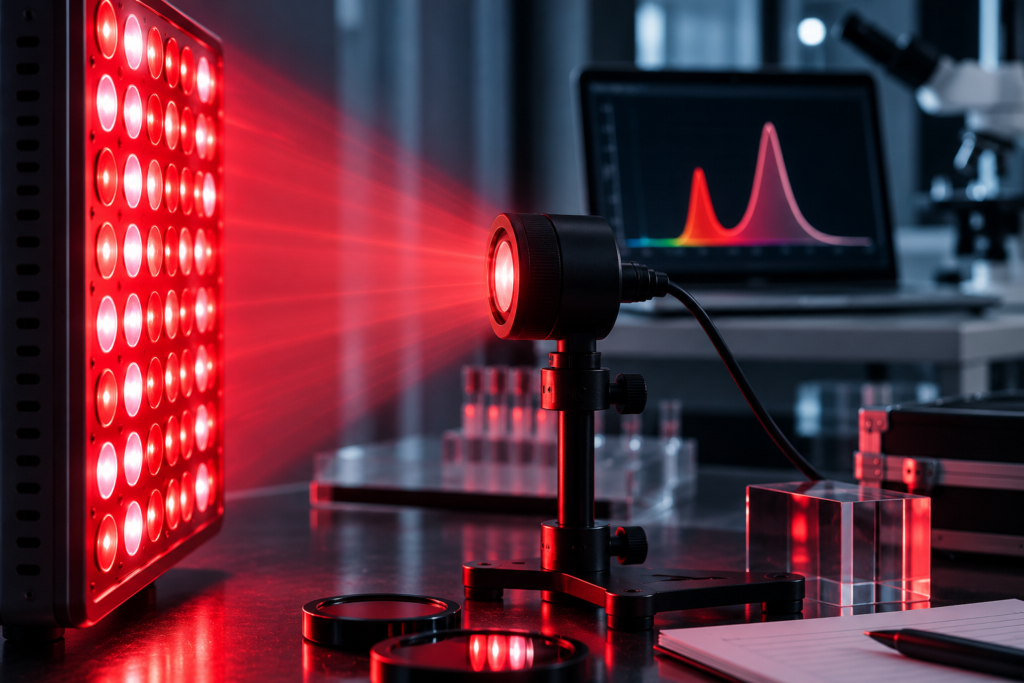
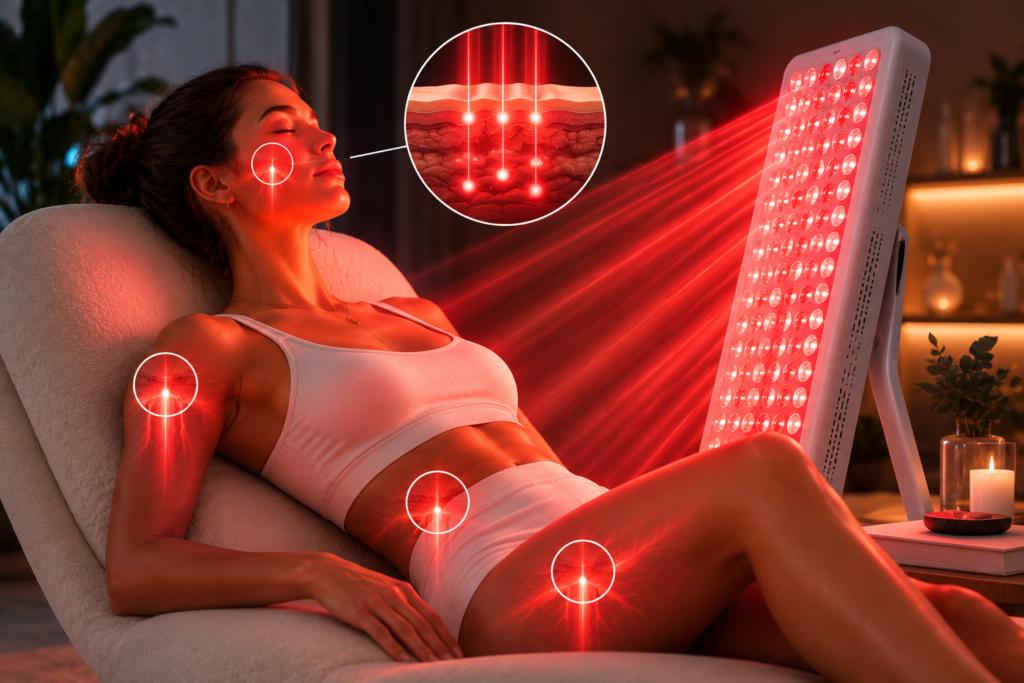
Red light therapy, also called low-level laser therapy (LLLT) or photobiomodulation, delivers specific wavelengths of red and near-infrared light to the scalp, typically between 630 and 660 nanometers. Those wavelengths penetrate the skin and are absorbed by the mitochondria inside your hair follicle cells. As your middle school biology teacher stated, they’re the cell’s energy producers. When they absorb red light, they get to work, triggering a chain of effects:
- Increased blood flow to the scalp
- Reduced inflammation around the follicle
- Reactivation of dormant or miniaturizing follicles back toward the active growth phase
The crux of the matter is that red light therapy stimulates follicles that are still present but underperforming. It cannot revive a follicle that has completely died off. Think of it less like regrowing a garden from bare soil and more like watering plants that have gone dormant. The earlier you start on red light therapy for hair loss, the more follicles you have left to work with.
Does Red Light Therapy Really Work for Hair Loss? What the Research Shows
Yes, and the research is more substantial than most people realize. Here’s what the studies actually found:
- A 2022 meta-analysis on PubMed analyzed 36 studies across 966 patients and found red light therapy effective for androgenetic alopecia, with all analyses showing results superior to control groups.
- A 12-month prospective trial in Dermatologic Therapy found hair density increased from roughly 99 hairs per cm² to over 124 hairs per cm², with shaft thickness improving approximately 15%. Those are measured, statistically significant numbers, not estimates.
- A double-blind RCT focused specifically on women found that LLLT at 655 nm significantly improved hair counts at a rate comparable to that in men. That’s worth noting because early research was heavily male-skewed.
The FDA has cleared several devices pertaining to red light therapy for hair loss in both men and women. Most studies observe visible improvement between 12 and 24 weeks of regular use, with continued gains possible beyond six months.
Who Is Most Likely to Benefit from Red Light Therapy for Hair Loss?
Fair question. Does red light therapy for hair loss work across the board? Not equally, and being honest about that is important.
- Strongest evidence: Androgenetic alopecia, also known as male and female pattern hair loss, especially in early to moderate stages. Receding hairline, thinning crown, widening part. This is where results are most consistent, and where the bulk of the research lives.
- Some evidence: Telogen effluvium, the kind of hair loss triggered by stress, hormonal shifts, or postpartum changes. Results are more variable here, and red light therapy works best as a complement to other approaches rather than as a stand-alone treatment.
- Limited evidence: Alopecia areata is autoimmune in origin, so RLT is not a primary treatment. Some studies suggest it may help reduce inflammation, but don’t go in expecting the same results.
One more thing worth knowing: hair follicles that have been idle for 5 to 7 years may still respond to red light stimulation. But follicles that are completely gone are not coming back. Start sooner rather than later.
What Consistent Use Actually Looks Like
No hair loss treatment works without consistency, and red light therapy is no exception. Clinical results came from regular, committed use. Here’s what that actually means day to day:
- Session length: 10 to 25 minutes
- Frequency: Several times per week
- Timeline: Most studies show visible improvement at 12 to 24 weeks
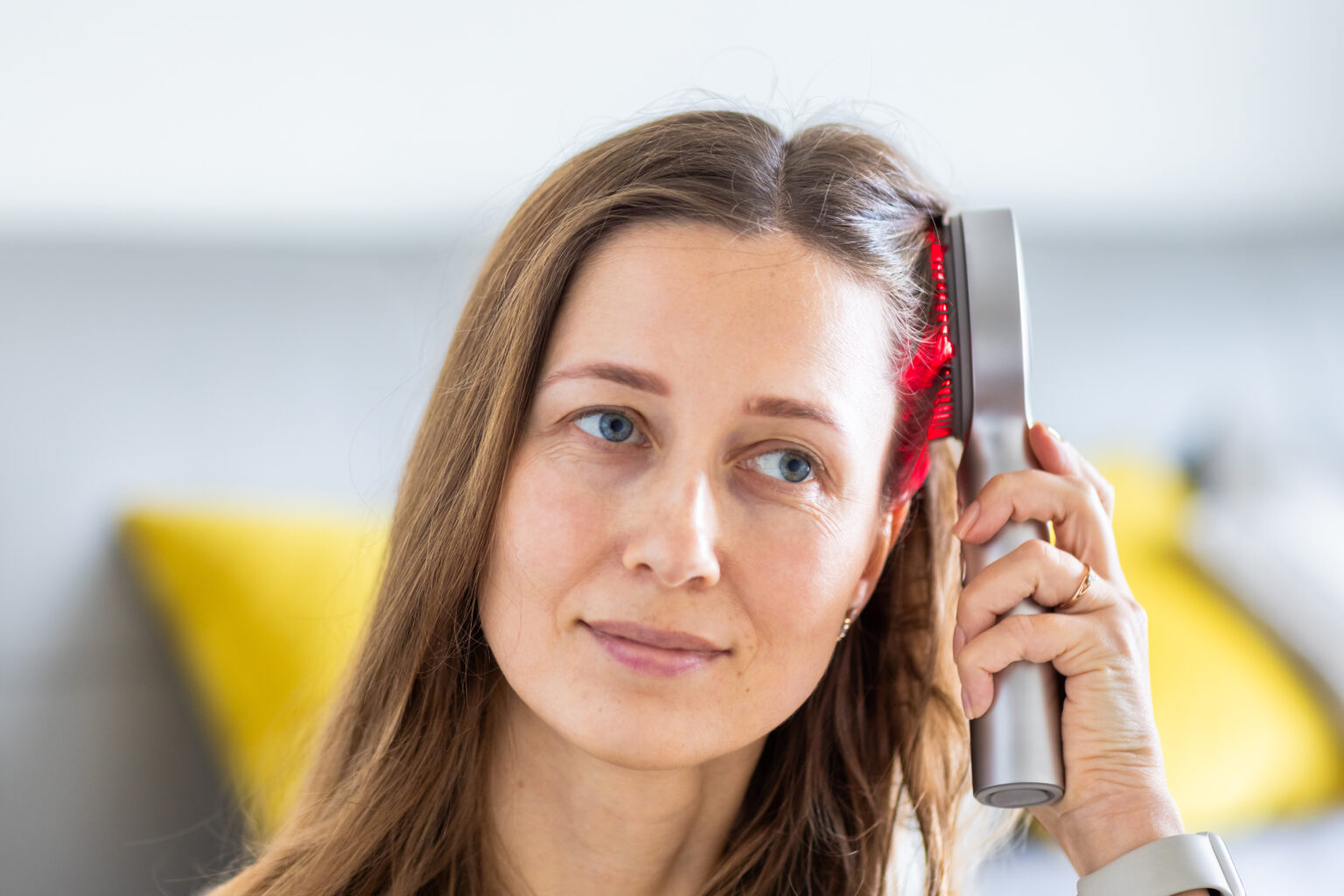
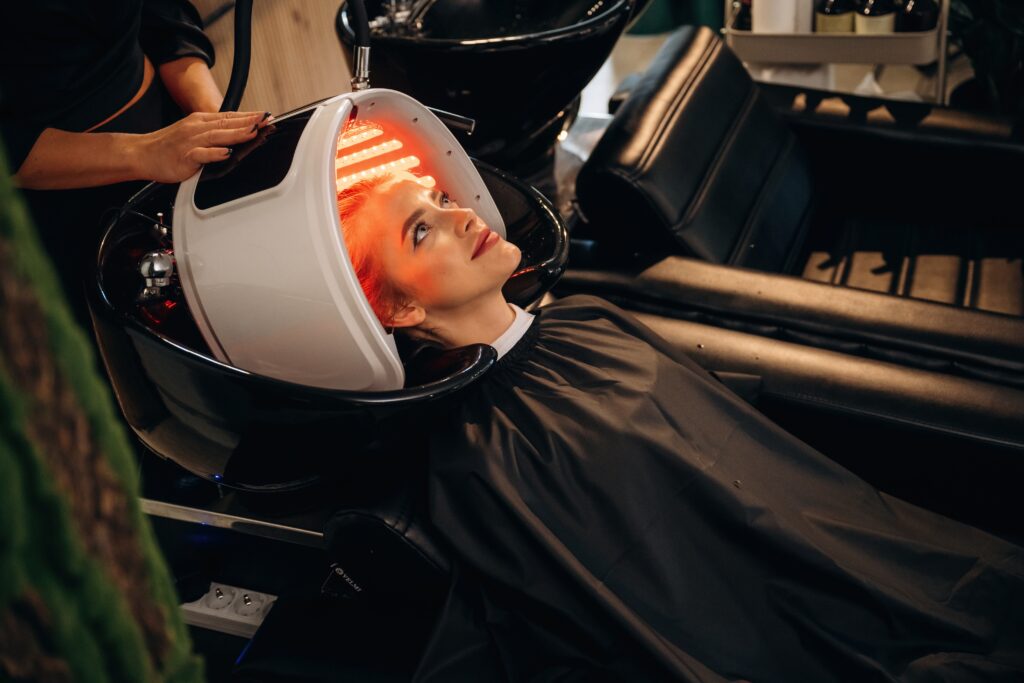
- Devices: Helmet-style caps and laser combs are the most studied options. Look specifically for FDA-cleared devices for hair loss. General red light panels used for skin or muscle recovery are not the same as those used for hair regrowth and have not been studied for hair regrowth.
Plan for the long haul, too. Like most hair loss treatments, the benefits tend to diminish if you stop. This is not a one-and-done fix.
The Bottom Line: Does Red Light Therapy for Hair Loss Work?
It is not a miracle cure, and anyone telling you otherwise is overselling it. But red light therapy for hair loss is a legitimate, research-backed option with strong clinical evidence, particularly for people dealing with early- to moderate-stage pattern hair loss who want a non-invasive, low-risk option. The studies are real. The FDA clearances are real. Results take time and consistency, but they are measurable. If you’re in damage control mode, red light therapy is worth understanding and, for a lot of people, worth trying.