Red light therapy for sleep is getting serious attention from researchers, and if you have changed your sleep routine more times than you can count, only to wake up still feeling drained, it is worth understanding why. It is a common frustration that many people have come to accept, throwing multiple cups of coffee, five-hour energy drinks, and OTC sleep meds at the problem. Before you reach for another cup of coffee or a melatonin gummy, consider this: researchers have linked red light therapy to measurable improvements in sleep quality and energy levels by targeting the root cause, your cells’ ability to produce energy effectively.
Continue on to learn more about red light therapy for sleep and energy levels
Why Your Light Environment Matters More Than You Think
Light is one of the most powerful signals your circadian rhythm receives, informing your brain when to be alert and when to wind down. The problem is that most of us are drowning in the wrong kind of light at the wrong times.
Blue light, the kind emitted by your phone, laptop, and overhead office lighting, is particularly disruptive. Research shows that blue light can stifle melatonin production for approximately twice as long as green light and shift your circadian rhythm by up to 3 hours. That means your body is still being instructed to stay awake long after you have decided to go to sleep.
Red light works differently. At wavelengths around 630 to 660 nanometers, red light has a negligible impact on melatonin suppression, enabling your body’s natural sleep-wake cycle to proceed without hindrance, according to Clinical Health Psychologist and Sleep Expert Samantha Domingo.
What the Research Says About Red Light Therapy for Sleep
One of the most-referenced studies in this space followed 20 elite female basketball players with demanding training schedules. Half of them received whole-body red light therapy at 658 nm for 30 minutes each night over two weeks. The other half used an inactive placebo device. The results, published in the Journal of Athletic Training:
- Significant improvements in global sleep quality scores on the Pittsburgh Sleep Quality Index, a validated clinical tool
- Measurably higher melatonin levels in blood tests, not just self-reported feelings
- Better subjective sleep quality, faster sleep onset, and improved sleep duration
The placebo group showed little to no change across any of those markers.
A separate study published in Sleep found that the wavelength of evening light significantly predicts slow-wave, deep sleep duration, with red and amber wavelengths preserving deep sleep better than blue or white light. Deep sleep is the stage where your body repairs tissue, consolidates memory, and regulates hormones.
Most people using red light therapy for sleep report noticeable improvements within seven to 14 days of consistent nightly use.
Red Light Therapy and Energy: The Mitochondria Connection
Sleep and energy are connected, but red light therapy may support daytime energy through a second, completely separate mechanism. It comes back to mitochondria.
Note that your brain makes up only about 2% of your body weight, but consumes roughly 20% of your total energy. That demand makes neurons especially sensitive to how well your mitochondria are functioning. When mitochondrial function is lethargic, the effects show up fast: brain fog, difficulty concentrating, mental fatigue, and that mid-afternoon wall that no amount of caffeine seems to fix.
Red light therapy, particularly near-infrared wavelengths that can penetrate deeper into tissue, stimulates mitochondria to produce more ATP, the cellular energy your brain and body run on. A study published in Photomedicine and Laser Surgery found that red light therapy increased ATP production by enhancing mitochondrial function, thereby improving cellular energy levels. Research also shows it reduces oxidative stress and supports mitochondrial biogenesis, meaning your body may actually produce more healthy mitochondria over time.
In practice, people who use red light therapy consistently report:
- Reduced brain fog and improved mental clarity
- Better focus and sustained attention throughout the day
- Improved mood and mental endurance
- Less fatigue, particularly in the afternoon
Morning vs. Evening: Timing Your Sessions
One of the most practical questions about red light therapy for sleep and energy is when to actually use it. The good news is that the timing strategy is straightforward.
- Morning sessions support energy, focus, and daytime alertness. Using red light therapy in the morning helps prime your mitochondria for the day ahead and may support mental performance during fasting periods.
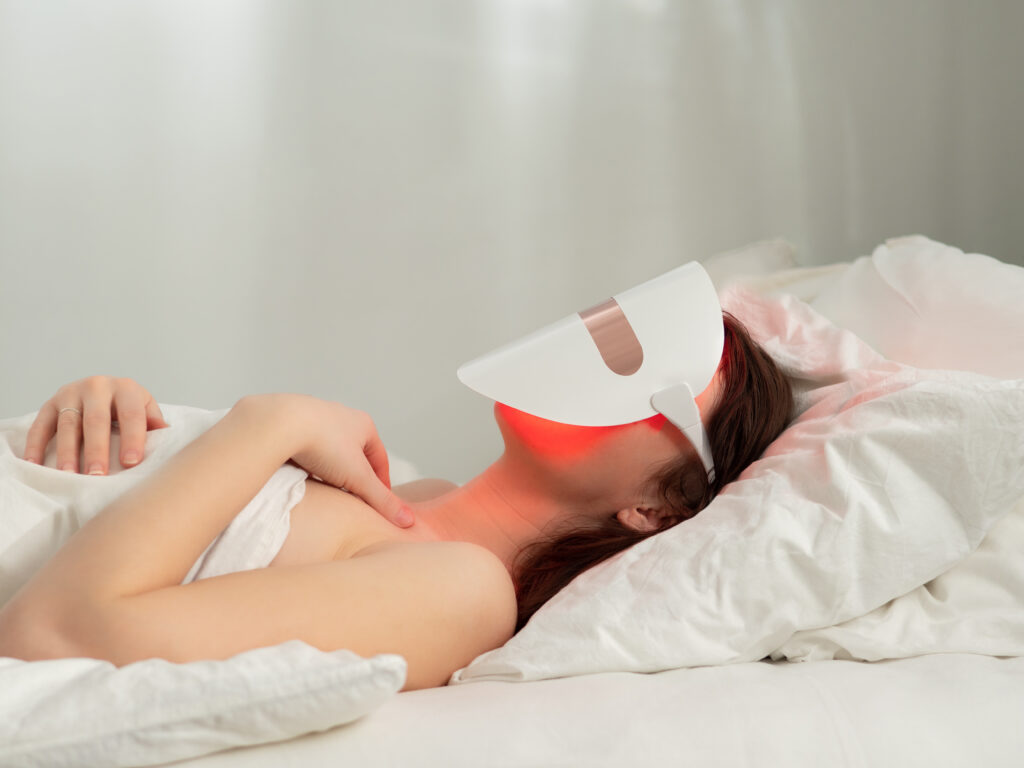
- Evening sessions support sleep onset and melatonin production. Using red light for an hour or two before bed, rather than scrolling through blue-light-emitting screens, signals to your body that it is time to wind down.
Some people do both, a short morning session for energy and a shorter evening session for sleep. Clinical results in sleep studies were typically achieved with sessions of about 20 to 30 minutes. For energy and cognitive benefits, even 10 to 20 minutes of consistent daily use has shown measurable effects in research.
The Bottom Line
If you are tired of being tired, red light therapy is worth a serious look. The science connecting red light to better sleep quality, healthier melatonin levels, and improved cellular energy is real and growing. It is not a substitute for good sleep habits or a magic fix for burnout. But as a non-invasive, drug-free tool that works with your body’s own biology rather than against it, it is one of the more compelling options out there.
Better sleep and more energy at work are not a luxury. They are what your body is supposed to feel like.