
Search “red light therapy for weight loss,” and you will find a wall of before-and-afters promising the fat just melts away. The reality is more specific, and frankly more interesting. Red light will not torch pounds off the scale while you sit there. But there is real clinical evidence that it can shrink the fat layer in treated areas, taking inches off a waistline without surgery or downtime.
That gap between “loses weight” and “loses inches” is the whole story here. Once you understand it, you can decide whether red light deserves a spot in your routine. Here are the five things that matter.
1. “Weight loss” is the wrong word. “Fat reduction” is the right one
This is the distinction that separates honest coverage from hype. Almost every study on red light therapy for weight loss does not measure pounds. It measures circumference: inches around the waist, hips, and thighs. In fact, several trials deliberately asked participants to keep their diet and exercise the same so researchers could isolate the light’s effect on the fat layer itself.
So the accurate framing is body contouring and spot fat reduction, not weight loss in the scale sense. If your goal is a smaller waist measurement or smoother contours in a stubborn area, the research is relevant. If your goal is dropping a clothing size through total-body fat loss, red light is a supporting player at best.
2. The clinical evidence is real, and it is about circumference
Here is where it gets credible. A randomized, sham-controlled trial in Lasers in Surgery and Medicine treated 67 people with a 635 nm laser three times a week for two weeks. The treatment group lost roughly 3.5 combined inches across the waist, hips, and thighs compared to the sham group, which barely moved.
A later study in individuals with obesity, registered on ClinicalTrials.gov, found that 71 percent of the laser group hit a combined circumference drop of 7.2 cm or more after four weeks, versus just 12 percent of the sham group.
And a recent 2025 systematic review and meta-analysis in BMC Complementary Medicine and Therapies pooled eleven randomized trials and reported that photobiomodulation showed potential benefits across body measurements and some metabolic markers, including waist circumference and cholesterol. The authors are measured about it, calling the effects promising rather than settled, which is the right tone given the field.
3. How it actually works on a fat cell
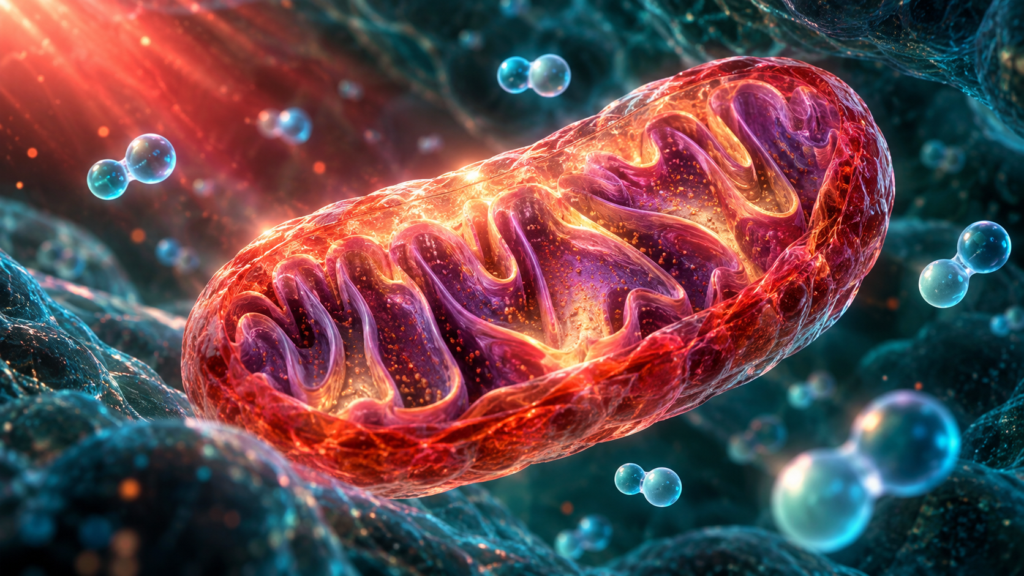
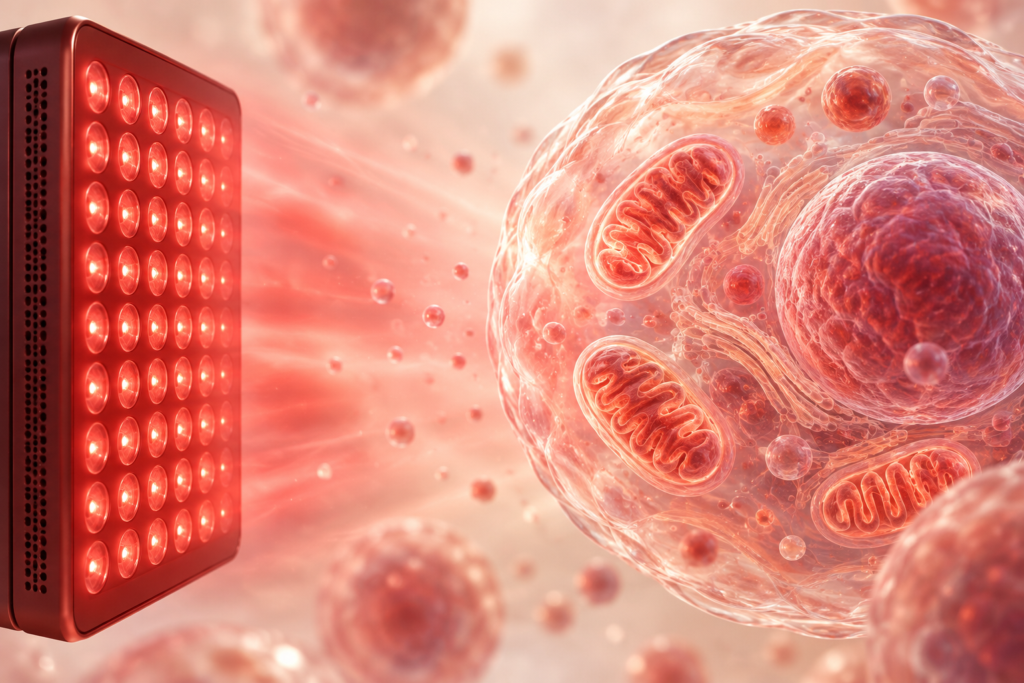
The mechanism is more clever than “light burns fat.” When red or near-infrared light hits fat tissue, it is absorbed by the mitochondria inside your fat cells and boosts their energy output. As the foundational mechanism study in Obesity Surgery showed, that cascade prompts the cell to release its stored triglycerides through a temporary pore in the cell membrane, all without rupturing or killing the cell.
Those freed lipids drain into the lymphatic system, where your body can process them. A comprehensive review of the research lays out this transient-pore theory as the leading explanation, while noting that the science on red light therapy for weight loss as a stand-alone fat treatment is still maturing.
The catch is hiding in that last step. The light empties the fat cell, but your body still has to burn or clear those lipids. If you are not in any kind of energy deficit, there is nothing stopping the cell from refilling. The light opens the door. Your metabolism has to walk the fat out.
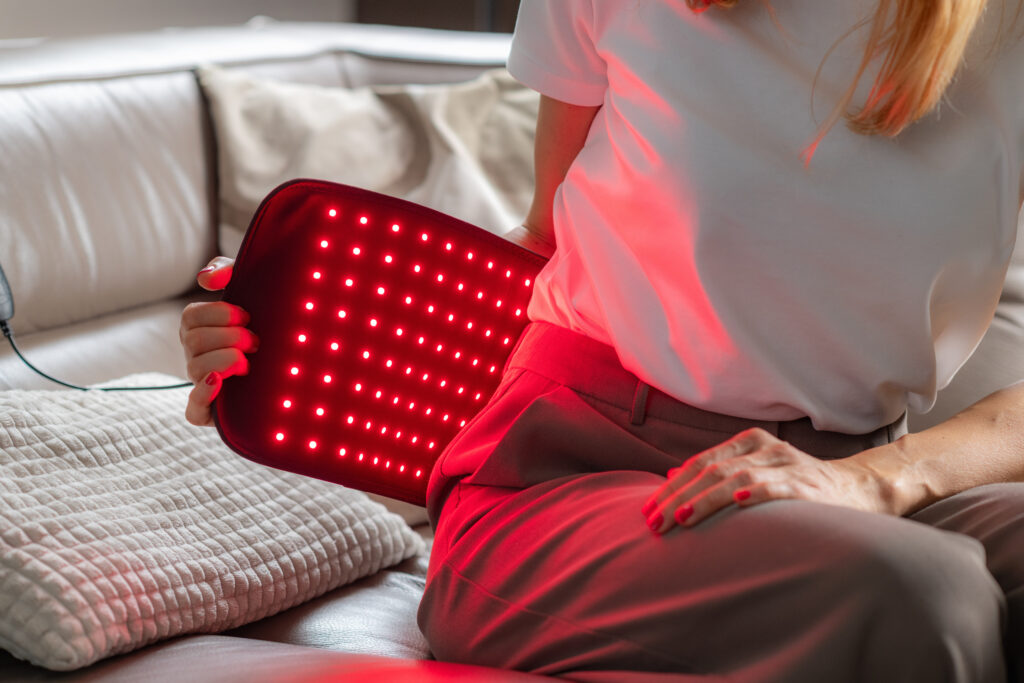
4. Red light therapy for weight loss: It is an adjunct, not a replacement
This follows directly from the mechanism. Red light for weight loss works best stacked on top of the basics, not instead of them. The releases it triggers are real, but the studies that show the cleanest results pair the treatment with, at minimum, a body that is actually using energy.
Treat it like a finishing tool. It can help with a specific area that resists everything else, or sharpen contours alongside the work you are already doing. What it cannot do is out-light a calorie surplus. Anyone selling it as a hands-off shortcut is selling the before-and-after, not the science.
5. How to use it without wasting your time
A few practical notes if you decide to try it:
- Wavelength: the body-contouring research clusters around 635 nm in the red range, with near-infrared (around 800 to 850 nm) penetrating deeper into tissue.
- Target the area: these are localized treatments. You treat the waist to affect the waist. There is no whole-body shortcut.
- Frequency and consistency: the trials ran sessions a few times a week across several weeks. This is a multi-week commitment, not a one-and-done.
- Pair it with movement: give your body a reason to clear the lipids the light releases. Even light activity after a session fits the mechanism.
- Be patient: measure inches, not pounds, and give it a few weeks before you judge it.
The honest caveats
The strongest studies are short, often industry-funded, and measure circumference rather than long-term fat loss, so manage your expectations accordingly. Red light therapy for weight loss is a low-risk, non-invasive option with a plausible mechanism and supportive trials, but it is a contouring aid, not an obesity treatment.
If you take a photosensitizing medication, are pregnant, or have a medical condition affected by light, check with your doctor first. And as always, this is general wellness information, not medical advice.
The bottom line
Red light therapy for weight loss is real in a narrow, specific way: it can reduce the fat layer and take inches off treated areas, backed by sham-controlled trials. It is not a substitute for the fundamentals, and the honest version of the pitch is “a contouring tool that works alongside your habits,” not “fat melts while you relax.” Go in with that expectation and it can earn its place. Go in expecting magic and you will be disappointed.