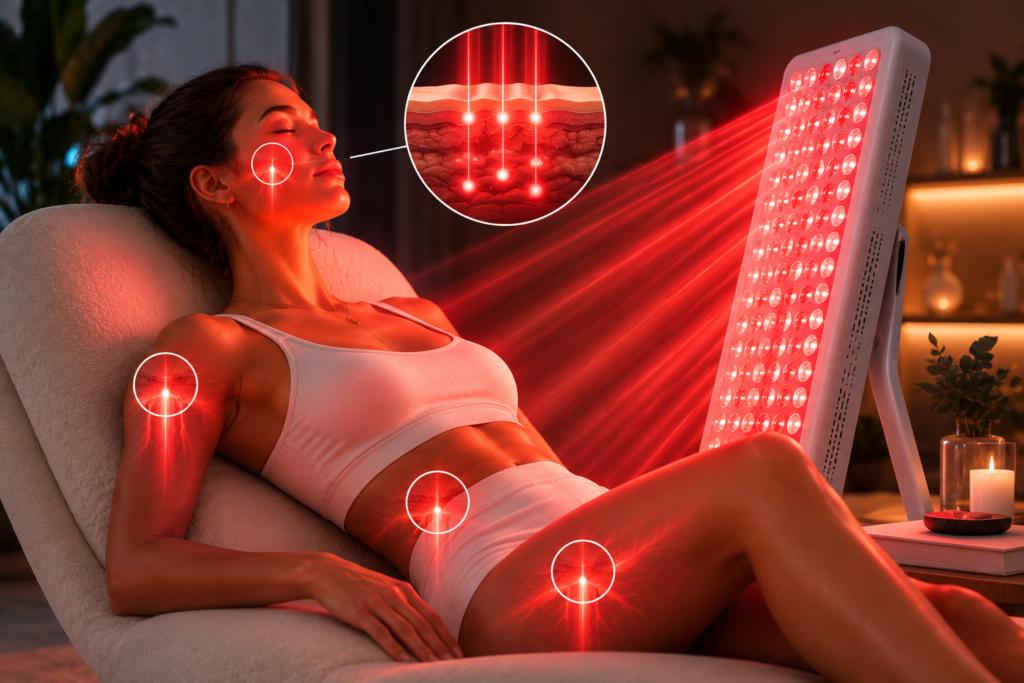
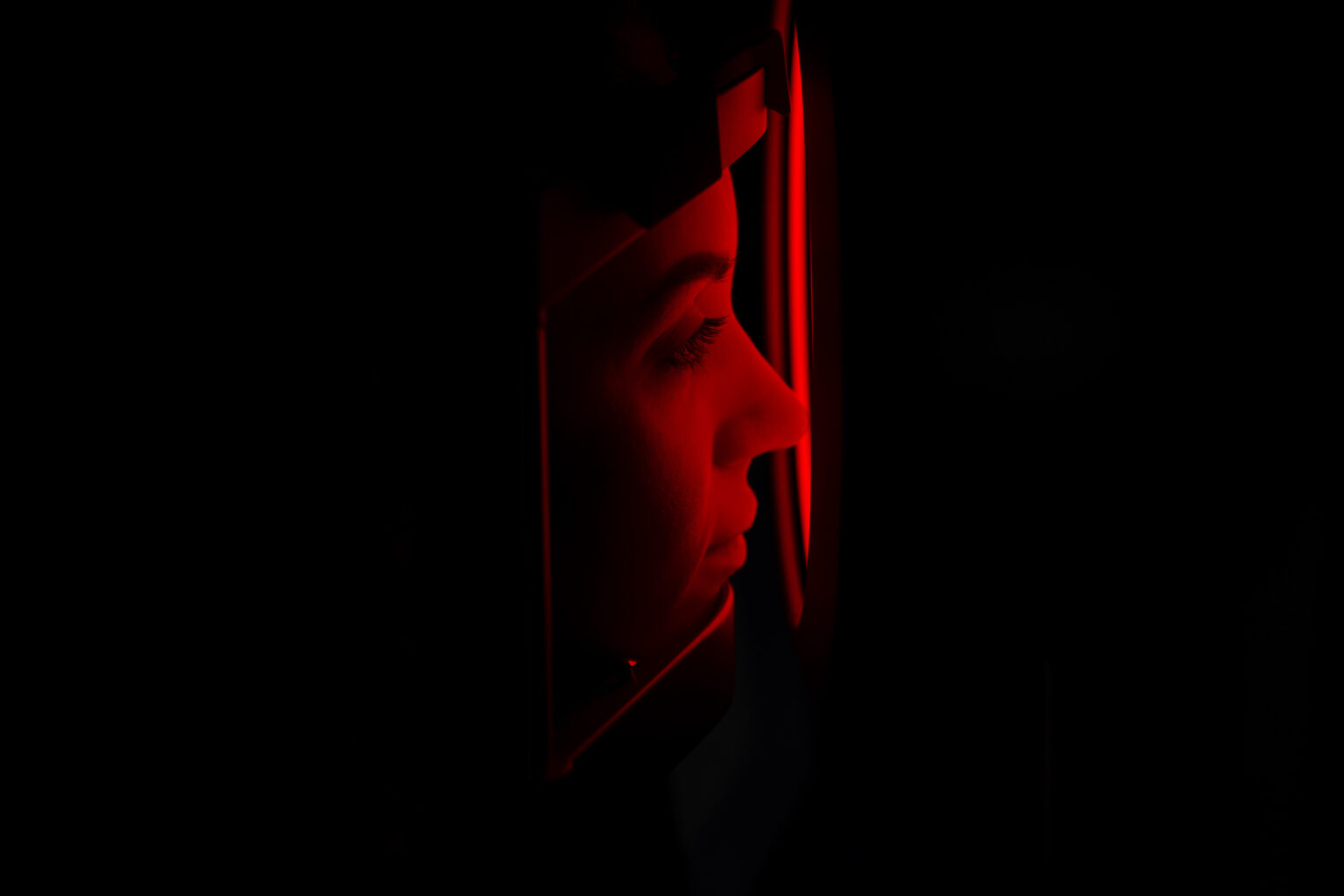
Fine lines and wrinkles are among the most common reasons people try red light therapy. Marketing often promises to “erase” them, which sets expectations that no honest reading of the research can support. This guide explores red light therapy wrinkles research, what current studies suggest about fine lines and wrinkles, realistic timelines, important limitations, and safe use.
The careful summary is that red and near-infrared light may support the look of fewer or softer fine lines for some people, gradually and modestly. It does not erase wrinkles, reverse aging, or guarantee a particular result.
Understanding Red Light Therapy Wrinkles
Fine lines and wrinkles develop through a mix of natural aging and external factors. Over time, the skin produces less collagen and elastin, the proteins that keep it firm and springy, and existing collagen breaks down. Repeated facial movement, sun exposure, and other influences contribute to creases and a rougher surface. Because collagen is so central to this process, treatments that might support collagen-related activity are of natural interest — though support is not the same as reversal.
What Red Light Therapy Wrinkles Research Shows
The most frequently cited human study in this area is a controlled trial by Wunsch and Matuschka, which examined red and near-infrared light and reported improvements in appearance-related measures, including the look of fine lines and wrinkles and skin roughness, in treated groups compared with controls. The authors also reported changes associated with collagen density.
Beyond that trial, a review of phototherapy with light-emitting diodes describes red and near-infrared LED light being used for skin rejuvenation and aging-related appearance goals, and a paper on reversing skin-aging signs through red-light photobiomodulation discusses the rationale and supporting evidence while acknowledging variability across studies. Taken together, the literature offers encouraging but limited support for the idea that red light may improve the appearance of fine lines and wrinkles — not proof that it eliminates them.
Red Light Therapy Wrinkles: Realistic Expectations
Expectations are where many people go wrong. Studies that report benefits typically involve consistent use over several weeks, sometimes longer, and the changes they measure are usually modest improvements in appearance rather than dramatic transformations. A reasonable mindset is to anticipate subtle, gradual softening in how lines look — if you respond at all — rather than a visible erasing of wrinkles.
Consistency tends to matter more than intensity. Following the device’s recommended distance and session time is sensible, since photobiomodulation research more broadly indicates that more light is not automatically better. Doubling session length in hopes of faster results is not supported by the dosing literature.

Red Light Therapy Wrinkles: Important Limitations
Several limitations keep wrinkle claims in perspective. Many studies are small, use different devices, wavelengths, and protocols, and report mixed results, which makes it hard to predict how any individual will respond. “Improvement in the appearance of fine lines” measured in a study is not the same as the deep-wrinkle reversal often implied in advertising. And results vary widely from person to person; some notice a difference, others do not.
It is also important to separate cosmetic appearance from medical treatment. Red light therapy is not a medical treatment for skin disease, and it is not a substitute for proven anti-aging fundamentals such as daily sun protection, which remains one of the most effective ways to limit the visible signs of skin aging over time.
Red Light Therapy Wrinkles Safety
For most healthy adults, red light therapy at consumer doses is generally considered low-risk, with side effects that are typically mild and temporary, such as brief warmth or mild redness. A systematic review examining the oncologic safety of low-level light therapy for aesthetic skin rejuvenation did not find evidence that it increases skin-cancer risk, while noting that more research is warranted.
Because the face is delicate and the eyes are nearby, eye protection or keeping the eyes closed during facial treatment is a reasonable precaution, and you should follow device instructions closely. People who are pregnant, who are photosensitive, who take medications that increase light sensitivity, or who have an eye condition should consult a healthcare professional before starting.
When to See a Dermatologist
If your concerns go beyond cosmetic fine lines — for example, deep wrinkles you want meaningfully addressed, significant skin laxity, or any new, changing, or suspicious spot — a board-certified dermatologist is the right resource. A dermatologist can offer an accurate assessment, discuss evidence-based options, and help you judge whether light therapy has a realistic supporting role for your goals rather than relying on marketing claims.
What Influences Red Light Therapy Wrinkles Results
Part of why responses vary so much comes down to factors that have little to do with the device itself. The depth and type of lines matter: fine surface lines are more plausibly influenced than deep, set creases. Sun history plays a large role, since cumulative ultraviolet exposure drives much of the wrinkling people want to address, and ongoing sun exposure can work against any gains.
Age, skin type, consistency of use, and whether the light is actually reaching bare skin all contribute as well. Because of this, two people using similar devices may have quite different experiences. Understanding these variables helps explain why no honest source can promise a specific outcome, and why patience and consistency — rather than a particular brand — tend to matter most.
What Red Light Therapy Wrinkles Treatment Won’t Replace
It is worth being explicit about what red light therapy does not substitute for. It does not replace daily sun protection, which remains one of the most effective, evidence-backed ways to limit the visible signs of aging over time. It does not replace the procedures a dermatologist might offer for deeper wrinkles or significant laxity. And it does not replace the fundamentals — sleep, hydration, not smoking — that influence how skin looks. Red light therapy, at most, sits alongside these as one supportive habit. Framing it this way prevents the common disappointment of expecting a device to do the work that sun protection and professional care actually do.

Common Misconceptions About Wrinkle Treatments
A few misconceptions make red light therapy harder to judge fairly. One is that it works quickly; in reality, studies that report benefits involve weeks of consistent use, and changes are gradual. Another is that more sessions or longer exposure must produce better results, when photobiomodulation research points to a moderate dose being preferable and more not being automatically better.
A third is conflating “improvement in the appearance of fine lines,” as measured in a study, with the dramatic wrinkle reversal implied in advertising — these are not the same. And a fourth is assuming the practice is either proven beyond doubt or worthless; the honest reality sits in between, with a credible mechanism and encouraging but still-developing evidence. Clearing up these points makes it far easier to use red light therapy thoughtfully.
How to Try It Sensibly
If you decide to try red light therapy for the look of fine lines, a sensible approach is to choose a quality device with clearly stated wavelengths, use it on clean, bare skin as directed, be consistent over several weeks, and judge results against realistic expectations. Pairing it with the basics — sun protection, gentle skincare, and adequate sleep — gives you the best chance of seeing your skin at its best, with red light therapy as one supportive habit rather than a standalone solution.
The Bottom Line
Red light therapy is studied as a way that may support the appearance of fine lines and wrinkles, with a controlled trial and reviews offering encouraging but limited evidence. Expect subtle, gradual changes over weeks rather than erased wrinkles or reversed aging, recognize that results vary, and use it safely with attention to the eyes and device guidance. For deeper concerns or any suspicious skin change, see a board-certified dermatologist.
Ready to get your red light therapy device? See our brand and product reviews, and try out our product comparison tool to inform your decision.
Frequently Asked Questions
Does red light therapy get rid of wrinkles?
No. It may support the appearance of softer or fewer fine lines for some people, gradually and modestly, but it does not erase wrinkles or reverse aging. Results vary and are typically subtle.
How long until I might see results on fine lines?
Studies that report appearance benefits usually involve several weeks of consistent use, sometimes longer. Changes tend to be gradual and subtle, so patience and regular sessions matter more than any single session.
Is red light therapy better than sunscreen for anti-aging?
No. Daily sun protection remains one of the most effective ways to limit the visible signs of skin aging. Red light therapy is, at most, a supportive habit and is not a replacement for sun protection or medical care.
Can I use red light therapy around my eyes?
Use caution near the eyes. Keeping the eyes closed or using appropriate eye protection during facial treatment is a sensible precaution, and you should follow device instructions. People with eye conditions should consult a professional first.
Is red light therapy safe for facial skin?
For most healthy adults at consumer doses, it is generally considered low-risk, with mild, temporary side effects, and a safety review did not find evidence of increased skin-cancer risk. Those who are pregnant or photosensitive should consult a professional.
This article is for general educational purposes only and is not medical advice. Red light therapy is not a substitute for professional care. Talk with a qualified healthcare professional about your individual situation.