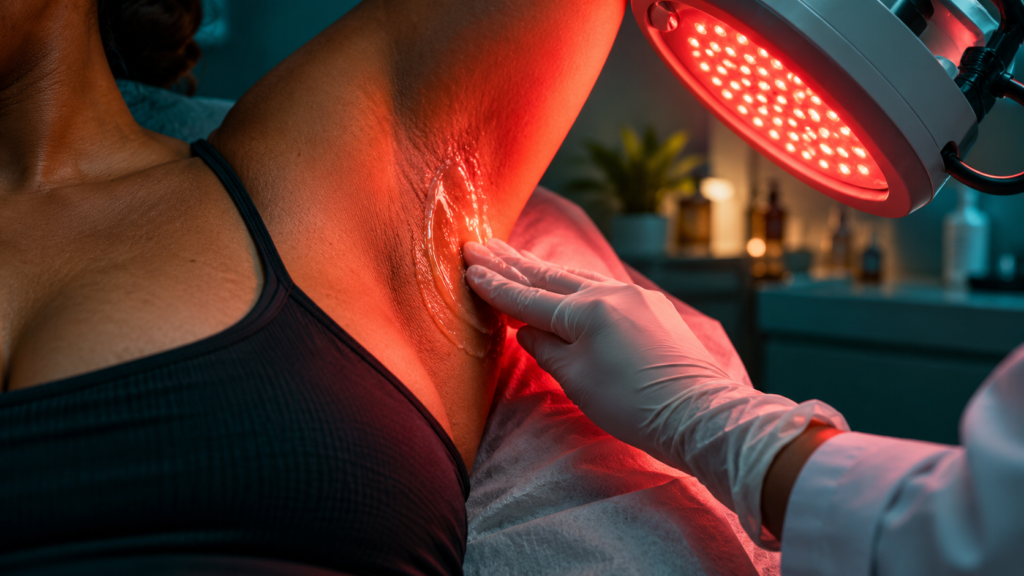
Among the many areas where red light therapy has been studied, tissue repair and wound healing are some of the most scientifically interesting. The idea that specific wavelengths of light might support the body’s own repair processes has attracted decades of laboratory and clinical research. But this is also an area where caution is essential, because wounds range from minor to serious, and the wrong assumptions can be harmful. This guide explores red light therapy wound healing research, what laboratory and clinical studies suggest, and why serious wounds always require professional medical care.
One message deserves to come first and be repeated: red light therapy is not a substitute for proper medical care of wounds. Open, deep, infected, non-healing, or serious wounds require evaluation and treatment by a healthcare professional. Nothing in this article should be taken as encouragement to self-treat such wounds with a light device.
Why Researchers Study Red Light Therapy Wound Healing
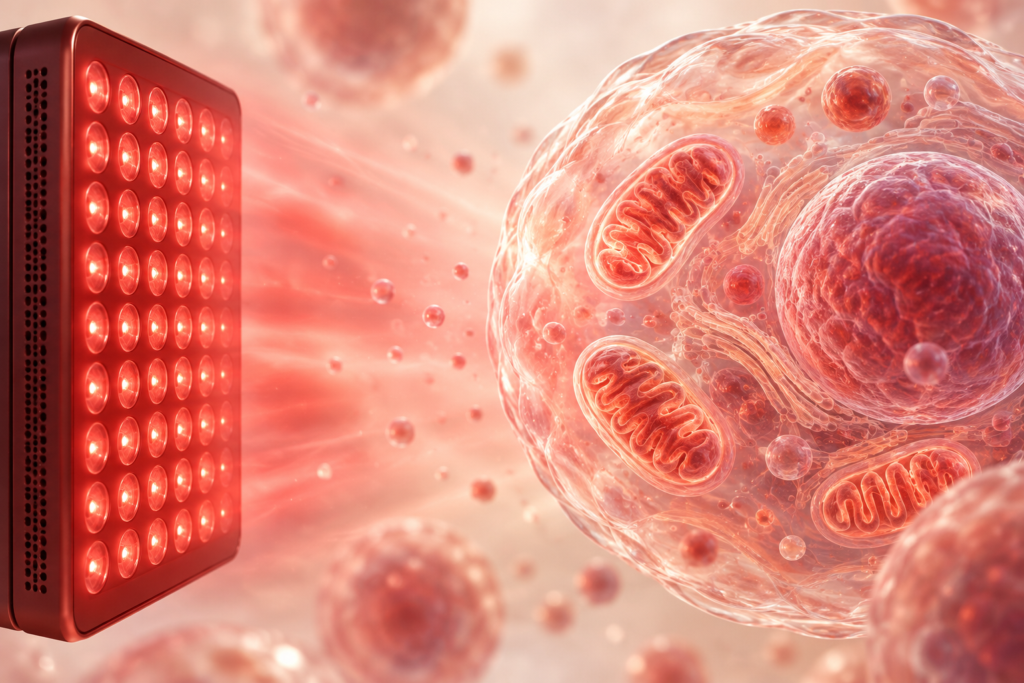
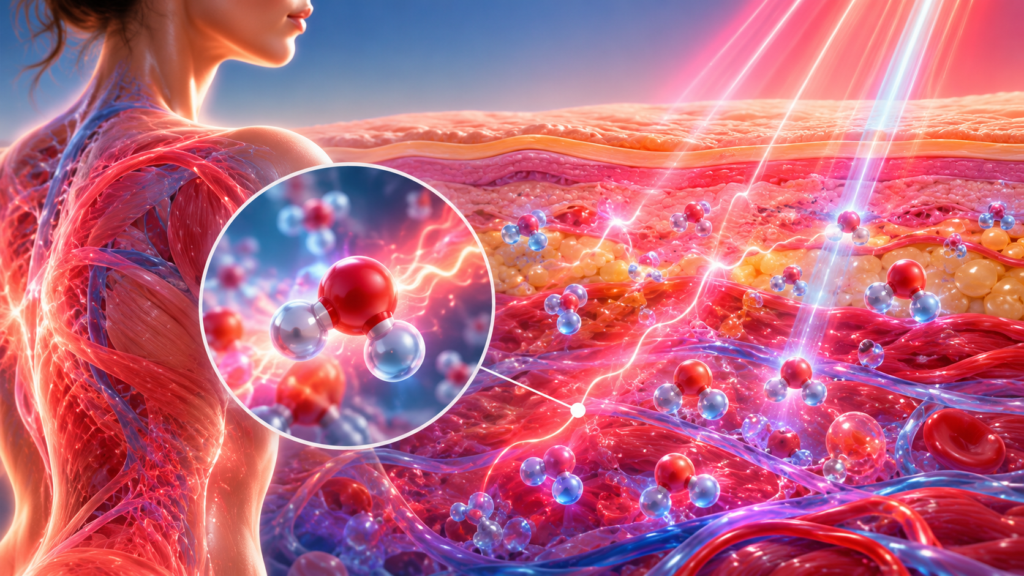
The scientific rationale connects to how red light therapy is thought to work. Red light therapy, or photobiomodulation, delivers red and near-infrared light that, according to Cleveland Clinic, interacts with skin cells using low levels of light rather than damaging ultraviolet radiation. At the cellular level, researchers such as Michael Hamblin have described how this light may be absorbed by mitochondria — the energy-producing structures in cells — potentially supporting cellular energy and influencing signals involved in repair and inflammation.
Because tissue repair depends on cells doing energy-intensive work, the hypothesis is that supporting cellular energy and signaling might help the processes involved in repair. This is a plausible, mechanism-based reason to study light and wound healing — but a plausible mechanism is not the same as proven, reliable real-world benefit.
Understanding Red Light Therapy Wound Healing
To understand where light is studied, it helps to know that healing typically unfolds in overlapping phases. After an injury, the body works to control bleeding and clean the area, then enters an inflammatory phase, followed by a phase of building new tissue, and finally a longer phase of remodeling and strengthening. Each phase involves many different cell types and signals working in coordination.
Research into photobiomodulation often explores whether light might influence one or more of these phases — for example, by supporting the activity of cells involved in building new tissue. Reviews of low-level light therapy in skin describe this stimulating and restoring potential as an active area of investigation.
What Red Light Therapy Wound Healing Research Shows in the Lab
Much of the foundational work on light and tissue repair comes from laboratory studies, including cell cultures and animal models. A frequently cited review by Avci and colleagues on low-level laser (light) therapy in skin describes evidence that light can stimulate skin cells and processes associated with repair under controlled conditions. These studies help explain how light might influence repair-related activity at a cellular level.
Laboratory findings are valuable for understanding mechanisms, but they come with an important limitation: results in a dish or in an animal model do not automatically translate to consistent benefits in people. The conditions are tightly controlled, the doses are precise, and the biology, while informative, is not identical to a complex human being with a real wound. This is why mechanism-focused research must be read cautiously.
What Red Light Therapy Wound Healing Clinical Research Shows
Beyond the laboratory, photobiomodulation has been explored in clinical settings for various repair-related goals. The overall picture from reviews is one of cautious interest: some studies report encouraging results, while others are small, vary in their methods and devices, and produce mixed outcomes. Reviewers consistently emphasize that the evidence, while promising in places, is not yet strong or standardized enough to support broad, confident claims.
In practical terms, this means it is fair to say research suggests red light may support tissue-repair processes in some contexts, but it is not fair to claim that red light therapy reliably heals wounds. The honest scientific position is that more rigorous, well-controlled research is needed.
Why Red Light Therapy Wound Healing Studies Differ
One reason the research feels unsettled is that studies are difficult to compare with one another. Different investigations use different wavelengths, different power levels, different distances, and different total doses, and they apply light over different schedules. They also study very different starting points — from cells in a dish, to animal models, to people with widely varying skin and health. When the inputs differ this much, it becomes hard to pool results into a single confident conclusion, and it is easy for marketing to cherry-pick the most favorable studies.
This variability is a major reason reviewers keep calling for larger, standardized trials, and it is why a thoughtful reader should resist sweeping statements in either direction. The mechanism is genuinely interesting, but the path from interesting mechanism to dependable, real-world wound-healing benefit has not been firmly established, and pretending otherwise would not serve anyone trying to make a careful decision about their own skin.
Red Light Therapy Wound Healing Safety
This is the part that matters most for everyday readers. Wounds are not all alike. A serious wound — one that is deep, large, bleeding heavily, open, infected, caused by trauma, or failing to heal — is a medical situation. Such wounds can involve risks like infection and complications that require professional assessment, cleaning, and treatment. Reaching for a light device instead of medical care in these situations could delay appropriate treatment and cause harm.
Even for minor skin irritations, it is wise to be conservative. You should not use red light therapy on a wound, especially an open or serious one, without medical guidance. If you have any wound that concerns you, that is not healing as expected, or that shows signs of infection such as increasing redness, warmth, swelling, pus, or fever, seek professional medical care promptly. Certain conditions, such as diabetes, can also affect healing and make professional oversight especially important.
Evaluating Red Light Therapy Wound Healing Claims
Because the mechanism is genuinely interesting, marketing sometimes leaps ahead of the evidence, presenting red light devices as proven wound-healing tools. A more accurate reading of the research is restrained. There is a credible mechanism by which light may support repair-related cellular activity, there is encouraging but mixed clinical evidence, and there is a clear and repeated call from researchers for larger, standardized trials. Holding all three of these together is the honest way to understand the field.
If you encounter a product promising guaranteed or rapid wound healing, treat that claim with skepticism. The science does not support guarantees, and responsible sources describe the area with words like “may,” “suggests,” and “more research is needed.”
Using Red Light Therapy Wound Healing Safely
For general skin-wellness goals on intact, healthy skin, red light therapy at consumer doses is generally considered low-risk for most healthy adults, with side effects that tend to be mild and temporary. Protecting the eyes from bright light and following device guidance on distance and time remain sensible. But the moment a true wound is involved — particularly anything open, deep, infected, or serious — the appropriate step is professional medical care, not self-directed light therapy. People who are pregnant, have a light-sensitive condition, take photosensitizing medication, or have a condition affecting healing should consult a healthcare professional before use.
The Bottom Line
Red light therapy wound healing research suggests light may support tissue-repair processes in some contexts, but the clinical evidence remains mixed and it should never replace appropriate wound care. Research suggests light may support tissue-repair processes in some contexts, but the clinical evidence is mixed and more rigorous research is needed before strong claims are justified. Most importantly, red light therapy is not a reliable wound treatment and is not a substitute for medical care. Open, deep, infected, or serious wounds should always be evaluated and treated by a healthcare professional.
Ready to get your red light therapy device? See our brand and product reviews, and try out our product comparison tool to inform your decision.
Frequently Asked Questions
Does red light therapy heal wounds?
Research suggests red light may support tissue-repair processes in some contexts, but the clinical evidence is mixed and more research is needed. It is not a reliable wound treatment and should not be presented as one.
Can I use red light therapy on an open or serious wound at home?
No, not without medical guidance. Open, deep, infected, or serious wounds require professional evaluation and treatment. Using a light device instead of medical care could delay appropriate treatment and cause harm.
What does the laboratory research show?
Laboratory studies, including cell and animal models, suggest light can stimulate skin cells and repair-related activity under controlled conditions. However, lab results do not automatically translate into reliable benefits for people.
When should I see a doctor about a wound?
Seek prompt medical care for any wound that is deep, large, bleeding heavily, open, caused by trauma, not healing as expected, or showing signs of infection such as increasing redness, warmth, swelling, pus, or fever.
Why do some products claim red light heals wounds quickly?
Marketing sometimes outpaces the evidence. The research does not support guarantees of rapid wound healing, and responsible sources describe the area cautiously, with phrases like ‘may support’ and ‘more research is needed.’
This article is for general educational purposes only and is not medical advice. Red light therapy is not a substitute for professional care. Talk with a qualified healthcare professional about your individual situation.