
That heavy-legged, worn-out feeling after a hard workout is familiar to anyone who trains. It is also a popular selling point for recovery gadgets, including red light therapy. If you have wondered whether a few minutes under a panel can take the edge off post-exercise fatigue, this article offers a careful answer. There is some research worth knowing about, the findings are mixed, and the most reliable tools for managing fatigue remain the unglamorous fundamentals: rest, sleep, and nutrition. Studies on red light therapy fatigue recovery have drawn increasing attention from researchers.
Post-exercise fatigue is a normal, healthy response to training. The goal of recovery is not to erase it but to support the body as it adapts. With that framing, red light therapy is best understood as a possible minor helper, not a shortcut. When examining red light therapy fatigue recovery, it helps to look carefully at the underlying research.
What Red Light Therapy Is
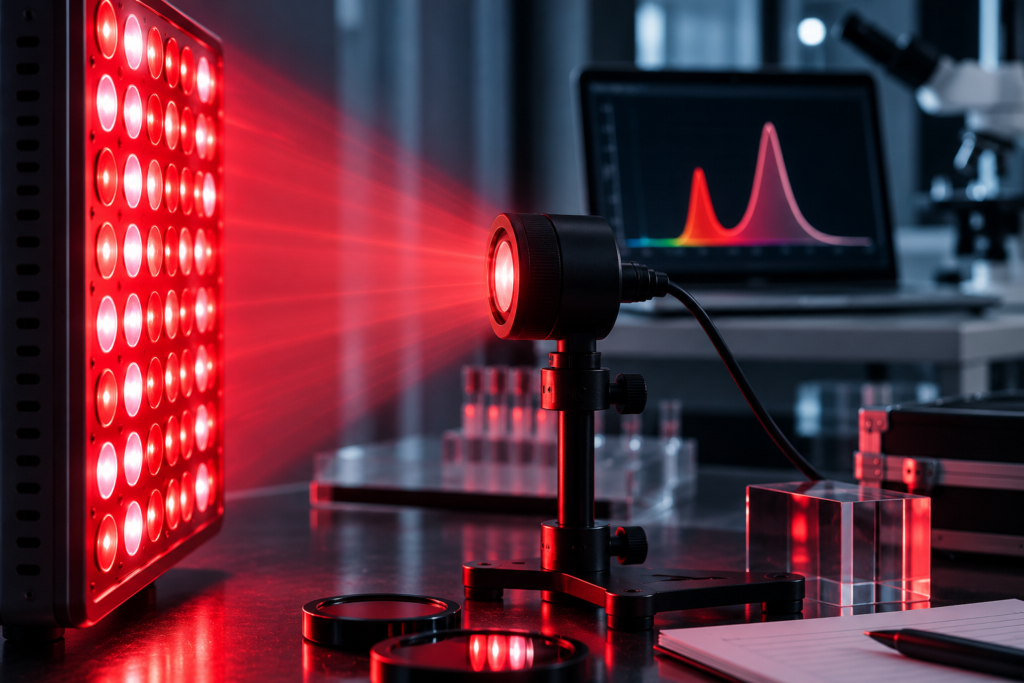
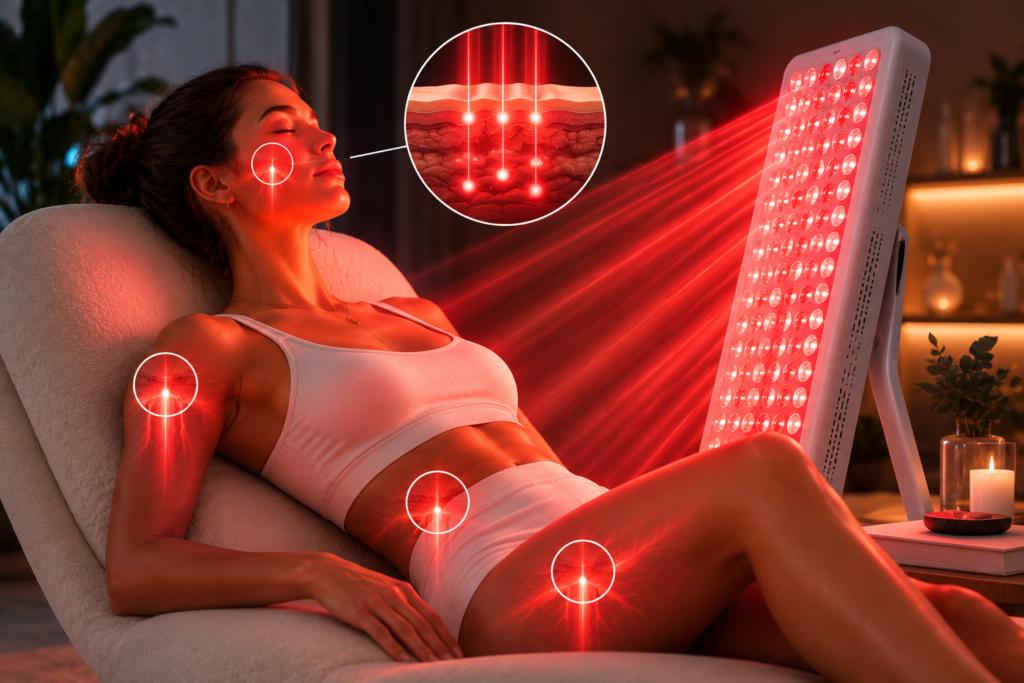
Red light therapy, also called photobiomodulation (PBM), delivers low doses of red and near-infrared light to the body. The leading explanation for how it might work involves light being absorbed by the mitochondria, the energy-producing structures inside cells. As research by Michael Hamblin and colleagues describes, red and near-infrared light may be absorbed by a component of the cellular energy chain called cytochrome c oxidase, potentially supporting how cells produce energy and influencing signals tied to repair and inflammation. [source] The evidence around red light therapy fatigue recovery remains an active area of investigation.
This is the theoretical reason some researchers have explored light for muscle performance and recovery. A plausible mechanism, however, is not the same as proof of a reliable real-world effect, and that distinction matters throughout this topic. For those exploring red light therapy fatigue recovery, setting realistic expectations matters.
Understanding Post-Exercise Fatigue
Before weighing any device, it helps to understand what post-exercise fatigue actually is. After a demanding session, muscles can feel tired and heavy for a mix of reasons: the temporary depletion of energy stores, the accumulation and clearance of metabolic byproducts, microscopic stress to muscle fibers that the body then repairs, and the general systemic cost of hard effort. This fatigue is not a malfunction. It is part of the stimulus that prompts the body to adapt and grow stronger over time. Some of it resolves within hours, while delayed soreness can build over a day or two and then fade. Because several different processes are involved, no single intervention erases fatigue, and the body’s own repair systems do most of the work given time and support. [source] Understanding red light therapy fatigue recovery requires separating marketing claims from published data.
Why People Connect Light to Fatigue and Recovery
The interest is intuitive. If light can modestly support cellular energy production, perhaps it could help muscles feel less depleted after exertion or recover a little faster. This idea has prompted a body of research specifically on photobiomodulation for muscular performance, fatigue, and recovery in healthy people. [source] Anyone researching red light therapy fatigue recovery will find the science is still developing.
What the Research Suggests
Here the evidence is more encouraging than for some other uses, though still far from settled. A systematic review and meta-analysis of photobiomodulation therapy for muscular performance and fatigue in healthy people reported that light, applied before or after exercise in studied protocols, was associated with improvements in some measures of performance and fatigue. That is a genuinely interesting signal and suggests the topic deserves serious attention rather than dismissal. The current state of red light therapy fatigue recovery research points to early, modest findings.
At the same time, a broader review of photobiomodulation as medicine, including low-level laser therapy for acute tissue injury and sport performance recovery, frames the field as promising but still developing, with variation across devices, doses, and study designs. The honest reading is that some evidence points toward possible benefits for fatigue and endurance, while results remain mixed and the best protocols are not established. Interest in red light therapy fatigue recovery has grown alongside broader photobiomodulation research.
An Honest Summary
So the careful statement is this: red light therapy may offer modest support for post-exercise fatigue or recovery for some people, based on early and mixed evidence. It does not eliminate fatigue, guarantee faster recovery, or replace the basics of recovery. Anyone promising dramatic, reliable results is going beyond what the research supports. Most published reviews on red light therapy fatigue recovery call for larger, better-controlled trials.
The Fundamentals Come First
Whatever role light might play, it sits on top of the genuine drivers of recovery, not in place of them. Sleep is foundational, since much of the body’s repair and adaptation happens during rest. Adequate nutrition, including enough overall energy and protein, gives the body the raw materials to rebuild. Hydration, sensible training progression, and rest days that let tissues adapt all matter more than any device. If those fundamentals are shaky, no amount of red light will compensate. A clear-eyed look at red light therapy fatigue recovery means separating anecdote from controlled evidence.
Framed correctly, red light therapy is a possible small addition for people who already have the basics in place — not a substitute for them. That order of priorities is the single most useful takeaway in this article. Consulting a healthcare provider about red light therapy fatigue recovery is always a sensible step.
A Simple Way to Prioritize
If you are deciding where to spend your time and attention on recovery, a sensible order is to secure consistent, sufficient sleep first, then adequate nutrition and hydration, then sensible training load and rest days, and only then consider optional extras such as red light therapy. Spending money or effort on a recovery gadget while shortchanging sleep is a common mistake. When the foundations are solid, a tool like light becomes a reasonable thing to experiment with; when they are not, it cannot make up the difference, and chasing devices can distract from the changes that would actually help. Devices marketed for red light therapy fatigue recovery vary widely in power output and wavelength.
If You Want to Try It for Recovery
For healthy adults, red light therapy at consumer doses is generally considered low-risk, with side effects that tend to be mild and temporary. If you choose to experiment with it after training, expose the relevant muscle areas, follow the device’s guidance on distance and time, and keep sessions consistent over weeks so you can judge fairly. Remember the biphasic dosing principle: a moderate dose may help, while more is not automatically better and very high doses can be counterproductive. Practitioners field frequent questions about red light therapy fatigue recovery from clients.
Track how you feel over time and be honest about whether it adds anything beyond your sleep, nutrition, and training adjustments. Individual responses vary, and it is reasonable to conclude that it does little for you. Studies on red light therapy fatigue recovery have drawn increasing attention from researchers.
When Fatigue Is More Than Normal: Red light therapy fatigue recovery Notes
Ordinary post-exercise tiredness fades with rest. Fatigue that is persistent, severe, or out of proportion to your activity is different and deserves attention. If you experience unusual or prolonged exhaustion, fatigue accompanied by pain, swelling, fever, or other symptoms, or a sudden drop in performance that rest does not fix, talk with a healthcare professional. Persistent fatigue can have many causes, and red light therapy is not a diagnosis or a treatment for it. When examining red light therapy fatigue recovery, it helps to look carefully at the underlying research.
It is also worth noticing patterns over time. Fatigue that steadily worsens across weeks of training, or that comes with disturbed sleep, irritability, nagging aches, or a stalled or declining performance, can sometimes reflect doing too much without enough recovery. The remedy in that situation is usually rest and a sensible reduction in load, guided where needed by a professional — not a recovery gadget. No amount of red light substitutes for the rest a depleted body is asking for, and treating a device as a way to keep pushing through warning signs can do more harm than good.
Keeping Expectations Realistic
If red light therapy helps your recovery at all, expect a subtle effect rather than a transformation, and expect variation from person to person and session to session. Treating it as one optional layer on a solid recovery routine — sleep, food, hydration, sensible training — is the mindset most consistent with the evidence.
The Bottom Line
Red light therapy and post-exercise fatigue is one of the more promising corners of the muscle-and-joint research, with some evidence suggesting possible benefits for fatigue and performance. The findings are still mixed, the effects are modest, and the fundamentals of recovery — rest, sleep, and nutrition — remain primary. Approached as a possible small helper rather than a fix, and with any unusual or persistent fatigue taken to a professional, it can be a reasonable thing to try.
Frequently Asked Questions
Does red light therapy get rid of muscle fatigue?
No. It does not eliminate fatigue or guarantee faster recovery. Some research suggests it may offer modest support for fatigue and performance in healthy people, but results are mixed and the basics of recovery matter most.
Should I use red light therapy before or after exercise?
Studies have looked at both timings. Because protocols vary and evidence is still developing, follow your device’s guidance, keep sessions consistent, and treat it as an optional addition rather than an essential step.
Is red light therapy better than rest and sleep for recovery?
No. Rest, sleep, and nutrition are the primary drivers of recovery. Red light therapy is at most a small addition on top of those fundamentals, not a replacement for them.
Is it safe to use red light therapy after workouts?
For most healthy adults at consumer doses it is generally considered low-risk, with mild, temporary effects. Follow device guidance, and consult a professional if you are pregnant, photosensitive, or have a relevant condition.
When should I see a professional about fatigue?
See a professional if fatigue is persistent, severe, or out of proportion to your activity, or if it comes with pain, swelling, fever, or a sudden drop in performance that rest does not resolve.
Ready to get your red light therapy device? See our brand reviews and product reviews, and try out our product comparison tool to inform your decision.