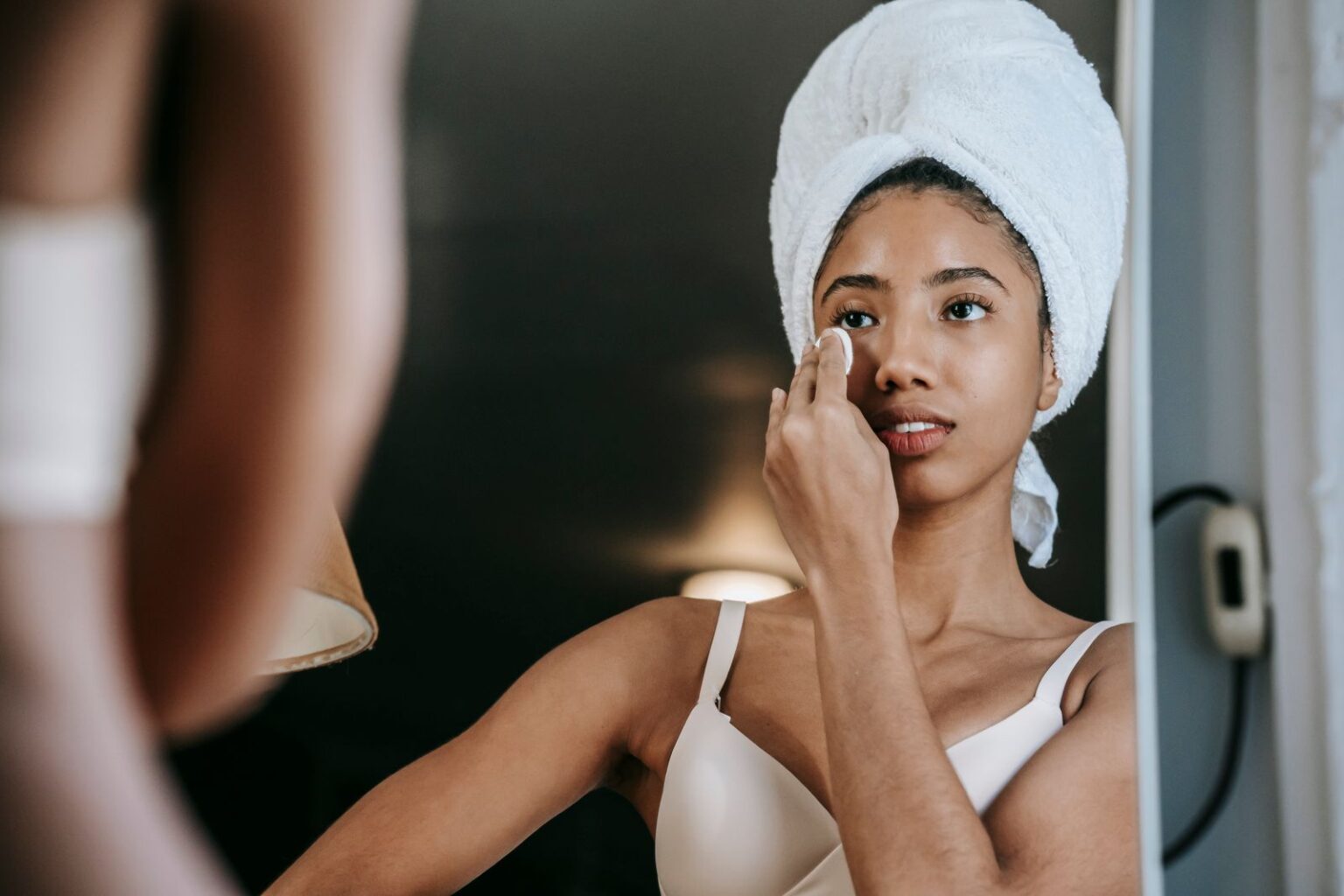
Red light therapy rarely happens in isolation. Most people who use it also have a skincare routine full of cleansers, serums, and moisturizers, which raises a practical question: how do you combine red light therapy with topical ingredients safely and sensibly? Should you apply serums before or after? Are some ingredients risky to pair with light? This guide explains how to combine red light therapy and skincare products safely, including layering order, bare-skin use, and important precautions for active ingredients.
The overarching principle is simple: red light therapy and skincare can coexist comfortably for most people, but a little thoughtfulness about timing, ingredients, and skin sensitivity goes a long way. None of the guidance here replaces personalized advice from a dermatologist, especially if you use active ingredients or have reactive skin.
Red Light Therapy and Skincare Products: Why Bare Skin Matters
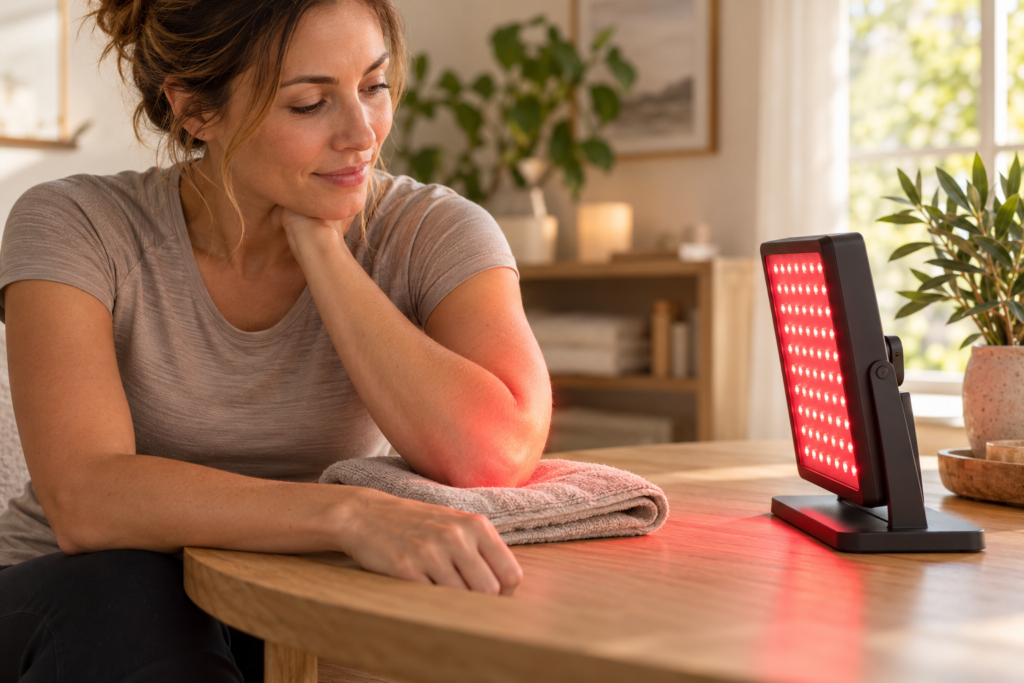
Red light therapy works by delivering red and near-infrared light to the skin, where, according to Cleveland Clinic, it interacts with skin cells using low levels of light rather than ultraviolet radiation. For that light to reach the skin effectively, the surface needs to be clean and unobstructed. Heavy creams, makeup, sunscreen, and thick occlusive layers can sit on top of the skin and may block or scatter some of the light before it is absorbed.
For this reason, a common and reasonable approach is to use red light therapy on freshly cleansed, bare skin. Removing makeup and washing away the day’s buildup gives the light an unobstructed path and keeps your routine straightforward. After the session, you can apply your usual serums and moisturizers.
How to Layer Red Light Therapy and Skincare Products
While there is no single rule mandated by research, a practical and widely used sequence looks like this. First, cleanse to remove makeup, oil, and debris. Second, with skin clean and dry, perform your red light therapy session at the recommended distance and time. Third, once the session is finished, apply your treatment products — lighter serums first, richer moisturizers last — as you normally would.
Applying most active serums after light therapy has a logical appeal: the light reaches bare skin, and your products are not physically in the way. Some people prefer to apply a simple hydrating product before light therapy if their skin feels dry, which is generally fine as long as it is lightweight and not a thick occlusive layer. The key is keeping the skin reasonably clear during the actual light exposure.
Red Light Therapy and Skincare Products: Photosensitivity
Photosensitivity means the skin becomes more reactive to light. Certain topical ingredients can make skin more delicate, more prone to irritation, or more reactive to light exposure in general. While red light therapy does not use the ultraviolet rays most associated with sun-related sensitivity, it still delivers bright light to the skin, so it is wise to be thoughtful about pairing it with ingredients that can leave skin more sensitive or irritated.
This is a general-caution point rather than a precise rule for every ingredient. Skin varies, products vary, and the way an individual reacts can be hard to predict. The safe approach is to treat potentially irritating or sensitizing ingredients with extra care around light therapy, and to pay attention to how your own skin responds.
Red Light Therapy and Skincare Products With Active Ingredients
Retinoids (such as retinol)
Retinoids are popular for skin renewal but can leave skin drier, flakier, and more easily irritated, particularly when you are starting out or using higher strengths. Because of this, many people choose to separate strong retinoid application from their light therapy session — for example, doing light therapy on bare skin and applying a retinoid afterward, or using them at different times of day. If your skin is already irritated from a retinoid, it is reasonable to ease off and let it settle before adding other treatments.
Vitamin C
Vitamin C is a common antioxidant serum. Some people apply it as part of their post-session routine. As with any active, the main consideration is irritation: if a particular vitamin C formula stings or makes your skin reactive, be cautious about layering it close to light exposure. Gentler, well-tolerated formulas are generally easier to combine.
Exfoliating acids and other strong actives
Exfoliating acids, benzoyl peroxide, and other potent actives can leave skin more sensitive. The cautious approach is to avoid stacking several strong, potentially irritating products together with a light session on the same area at the same time. Spacing them out reduces the chance of cumulative irritation.
Patch Testing Red Light Therapy and Skincare Products
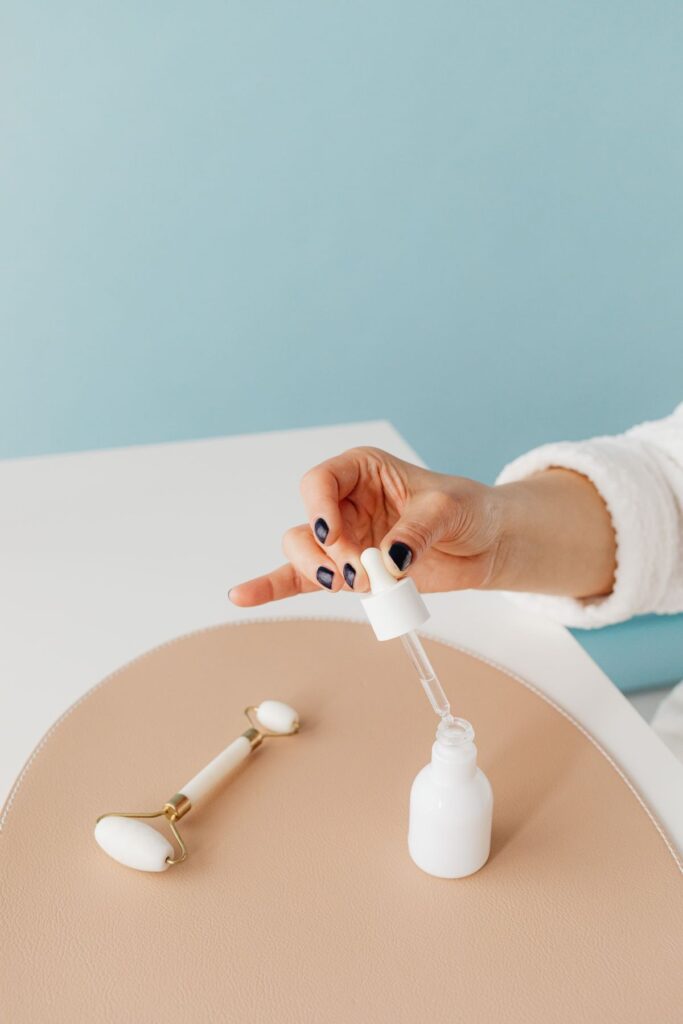
Whenever you introduce a new product or a new combination — including a new pairing with red light therapy — patch testing is a sensible safeguard. Apply the product to a small, discreet area of skin and watch for a day or two to see whether irritation, redness, or discomfort develops before using it more widely. The same patience applies to your light routine itself: start gradually, observe how your skin feels, and build up slowly rather than overwhelming it with several new variables at once.
If at any point your skin becomes irritated, red, stinging, or uncomfortable, the wise move is to pause, simplify your routine to gentle basics, and let your skin recover before reintroducing actives or resuming combined use.
Keeping Red Light Therapy and Skincare Products Simple
It is easy to fall into the trap of adding more and more products around a new light device in the hope of amplifying results, but a crowded routine often works against you. Each additional active is another chance for irritation, and when several are layered together it becomes impossible to tell which product is helping, which is doing nothing, and which is causing a reaction. A simpler routine is not only gentler on the skin barrier but also far easier to troubleshoot.
A reasonable approach is to keep the essentials — a gentle cleanser, any treatment your skin already tolerates, a moisturizer, and daytime sun protection — and to add your red light session into that framework rather than overhauling everything at once. If you want to introduce a new active alongside light therapy, do it one product at a time, give your skin a couple of weeks to adjust, and only then consider another change. Restraint tends to produce a calmer, more predictable result than enthusiasm, and it makes any genuine benefit much easier to recognize.
Red Light Therapy and Skincare Products: What Research Says
It is worth being candid: rigorous research on the precise interactions between specific topical ingredients and red light therapy is limited. Reviews of LED phototherapy in dermatology support red light’s general role in skin-related goals, and the American Academy of Dermatology discusses light-based approaches for concerns like acne while emphasizing that results vary. But the literature does not provide a detailed, ingredient-by-ingredient rulebook for combining actives with at-home light devices.
In the absence of that detailed guidance, caution is the responsible default. Use bare skin for sessions, introduce one change at a time, be gentle with potentially irritating actives, patch test, and watch your skin’s response. These habits keep you on safe ground while the science continues to develop.
When to Ask a Dermatologist About Red Light Therapy and Skincare Products
A dermatologist’s input is especially valuable in certain situations. If you use prescription-strength actives, have sensitive, reactive, or compromised skin, are treating a specific skin condition, or take any medication that affects how your skin reacts to light, professional guidance can help you build a routine that fits your skin rather than guessing. A dermatologist can also tell you whether combining a particular product with light therapy makes sense for you, and how to sequence everything safely.
Remember that red light therapy is a wellness practice that may support appearance goals; it is not a medical treatment, and it does not replace professional care for skin conditions.
The Bottom Line
Combining red light therapy with topical skincare is reasonable for most people, provided you keep a few principles in mind: use clean, bare skin during sessions, apply most serums and moisturizers afterward, treat potentially irritating or sensitizing actives like retinoids and exfoliating acids with extra care, patch test new combinations, and watch how your skin responds. Because detailed research on specific ingredient interactions is limited, caution is the sensible default, and a dermatologist is the right resource whenever actives, sensitive skin, or medications are involved.
Ready to get your red light therapy device? See our brand and product reviews, and try out our product comparison tool to inform your decision.
Frequently Asked Questions
Should I apply serums before or after red light therapy?
A common, practical approach is to use red light therapy on clean, bare skin and apply most serums and moisturizers afterward, so the light reaches the skin without products in the way. Lightweight hydration beforehand is usually fine.
Can I use retinol with red light therapy?
Many people separate strong retinoids from their light session, for example by applying the retinoid afterward or at a different time, because retinoids can leave skin drier and more easily irritated. If your skin is already irritated, ease off and let it settle.
Does red light therapy cause photosensitivity?
Red light therapy does not use the ultraviolet rays most linked to sun sensitivity, but it still delivers bright light. Because some topical ingredients can leave skin more reactive, it is sensible to be cautious when pairing them with light and to watch how your skin responds.
Why should I patch test new combinations?
Patch testing on a small, discreet area for a day or two helps you spot irritation before using a product or combination more widely. Introducing one change at a time makes it easier to identify what your skin tolerates.
When should I ask a dermatologist about combining products with light therapy?
Consult a dermatologist if you use prescription actives, have sensitive or reactive skin, are treating a skin condition, or take medication that affects light sensitivity. Red light therapy is not a medical treatment and does not replace professional care.
This article is for general educational purposes only and is not medical advice. Red light therapy is not a substitute for professional care. Talk with a qualified healthcare professional about your individual situation.