If you have read that red light therapy “boosts collagen,” you have encountered one of the most common claims in skincare marketing. It is rooted in real science, but it is often stretched well beyond what the evidence supports. This guide explains red light therapy collagen research, what collagen is, how researchers think light may influence it, and what the current evidence actually supports.
The careful version of the claim is that red and near-infrared light may support the skin’s collagen-producing activity, and some research points in that direction. That is meaningfully different from a promise to rebuild collagen on demand or to firm and tighten skin in a guaranteed way.
Red Light Therapy Collagen Explained
Collagen is the most abundant structural protein in the skin. It forms a supportive scaffold in the dermis — the layer beneath the surface — helping skin feel firm, resilient, and smooth. The cells that produce collagen are called fibroblasts. As we age, fibroblast activity tends to slow, collagen breaks down faster than it is replaced, and skin gradually loses some of its firmness and develops fine lines. Sun exposure and other factors accelerate this process.
Because collagen is so central to how skin looks and feels, anything that might support its production is naturally appealing — which is exactly why collagen claims are so common, and why they deserve careful scrutiny.
How Red Light Therapy Collagen May Work
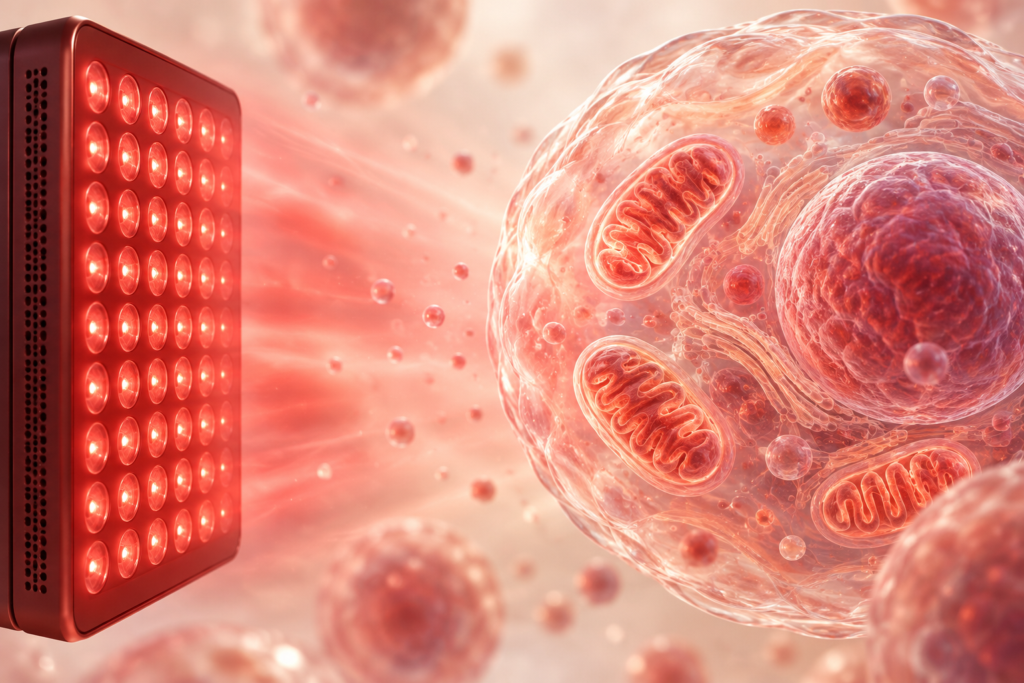
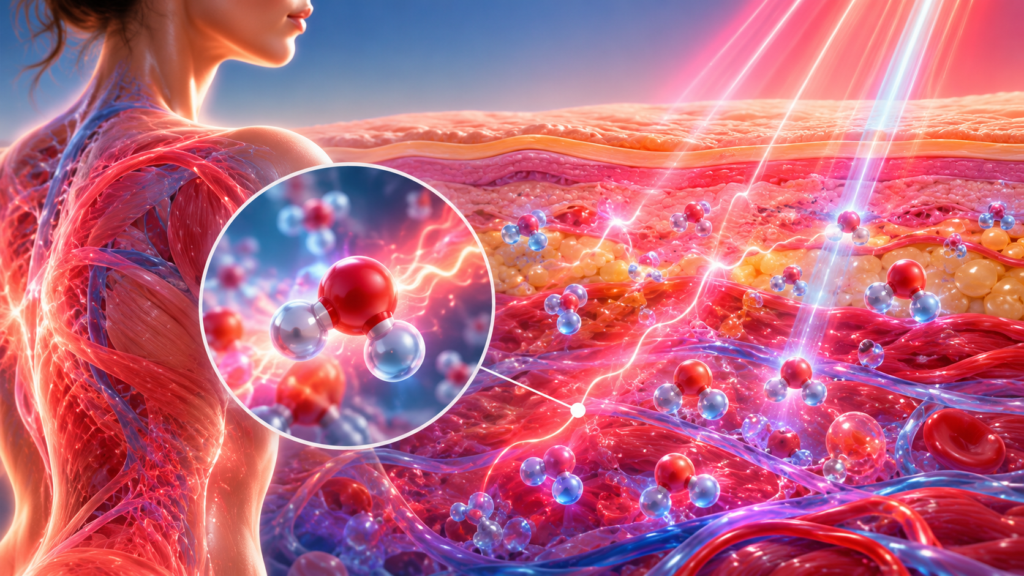
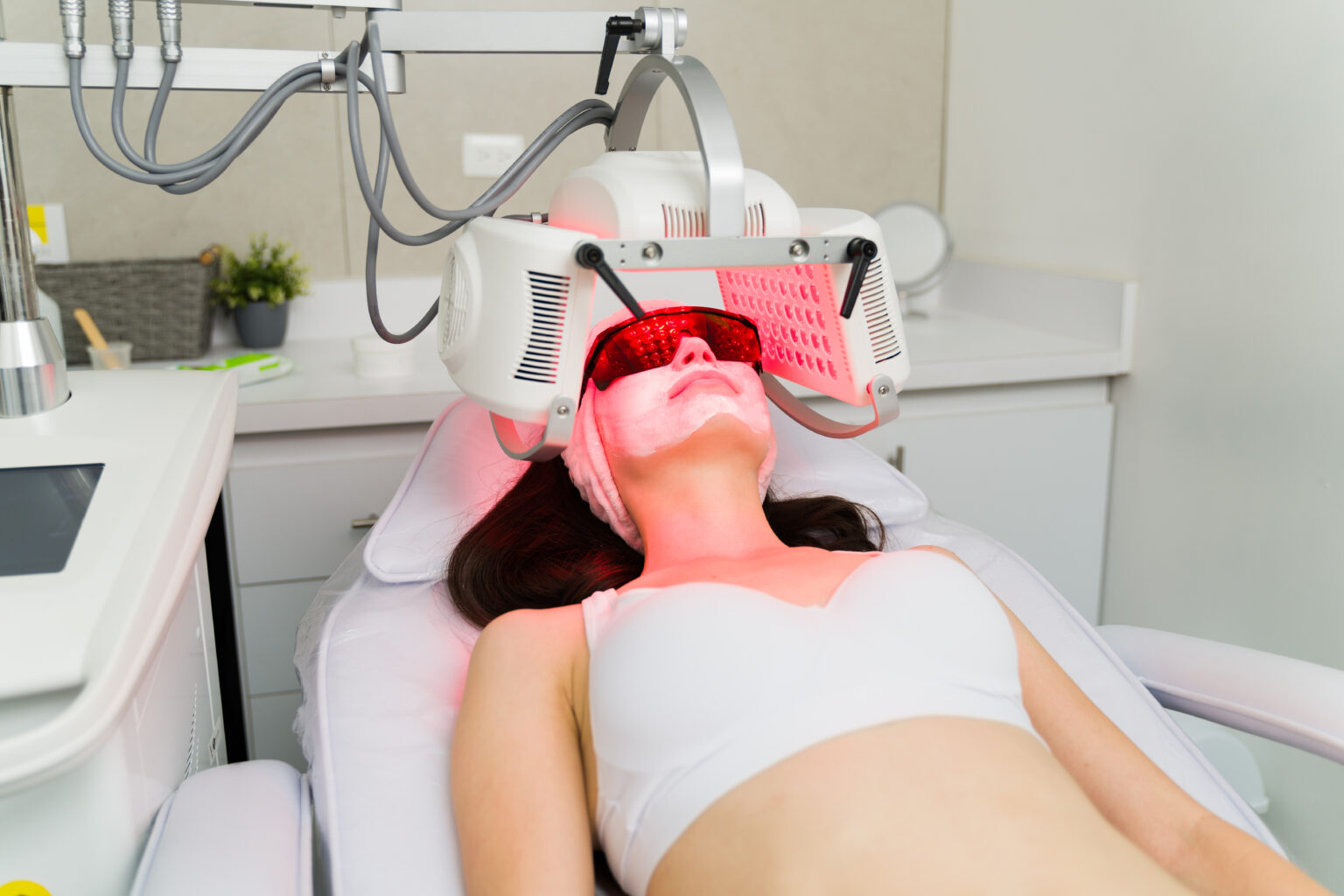
The proposed mechanism starts inside the cell. Researchers such as Michael Hamblin and colleagues describe how red and near-infrared light is absorbed by mitochondrial targets in the cellular energy chain, which may help cells produce energy more efficiently and influence signaling related to repair. In the skin, reviewers suggest this could stimulate fibroblasts and support processes associated with collagen production.
A review of low-level laser (light) therapy in skin discusses this fibroblast-stimulating effect as part of how light may help with skin repair and rejuvenation. The key word, again, is may: the laboratory mechanism is plausible and reasonably well described, but translating it into reliable, visible firming for a specific person is a separate and harder question.
What Red Light Therapy Collagen Studies Show
One of the more frequently cited human studies is a controlled trial by Wunsch and Matuschka, which examined red and near-infrared light treatment and reported improvements in measures relevant to skin appearance — including the look of fine lines and wrinkles — along with changes the authors associated with collagen density. Participants in the treated groups generally showed favorable results compared with controls.
This kind of evidence is encouraging and is part of why collagen-related claims persist. At the same time, it is one study, and its findings should be read as supportive rather than definitive. A single trial, even a well-designed one, does not settle a question on its own.
What Red Light Therapy Collagen Reviews Suggest
Looking beyond any single trial, review articles offer a more measured picture. A paper on reversing skin-aging signs through red-light photobiomodulation discusses the rationale and evidence for light influencing skin structure, including collagen-related pathways, while acknowledging the variability across studies. Taken together with the LLLT-in-skin review, the literature suggests red and near-infrared light may support collagen-related activity, but with results that vary by device, dose, and individual.
Early research indicates a plausible benefit; it does not establish a guaranteed or dramatic one. That nuance is the heart of an honest collagen discussion.
Red Light Therapy Collagen Limitations
Several limitations keep collagen claims grounded. Many studies are small and use different wavelengths, doses, and treatment schedules, which makes results hard to compare. “Collagen density” measured in a study is not the same as visibly firmer skin that a person notices in the mirror. And marketing often blurs the line between a modest, gradual effect on appearance and a sweeping promise of regenerated, tightened skin.
It is also worth remembering the dosing principle from photobiomodulation research more broadly: more light is not automatically better, and following device guidance on time and distance is part of using it sensibly. A device cannot “force” collagen production simply by being used longer or held closer.
Other Factors That Affect Red Light Therapy Collagen Goals
It is easy to fixate on a single device and forget that collagen is shaped by many factors, several of them more influential than any gadget. Sun exposure is among the most significant: ultraviolet light accelerates the breakdown of collagen and is a major driver of visible skin aging, which is why daily sun protection is one of the most evidence-backed habits for preserving the skin’s structure over time.
Age itself gradually slows fibroblast activity. Smoking, poor sleep, chronic stress, and a diet lacking in the building blocks the body needs can all work against collagen as well. Viewing red light therapy in this context is clarifying. Even if it offers genuine support, it is one modest input among many, and it cannot offset habits that actively undermine the skin. The people most likely to be satisfied tend to be those who pair any device with these fundamentals rather than hoping it will compensate for their absence.
Evaluating Red Light Therapy Collagen Claims
Because “collagen-boosting” is such a powerful marketing phrase, it pays to read claims carefully. Be cautious of language that promises to “rebuild,” “regenerate,” or “restore” collagen as though the effect were certain and dramatic; the evidence supports a possible, gradual, modest influence, not a guaranteed overhaul. Be skeptical of before-and-after images that imply rapid, striking firming, since study results are typically subtle and measured over weeks.
And notice whether a product distinguishes between a laboratory measure like collagen density and a visible, real-world change a person would actually see. Responsible descriptions tend to use measured language — “may support,” “some research suggests,” “results vary” — while overreaching ones substitute confident absolutes. When the strength of the language exceeds the strength of the evidence, that mismatch is a useful warning sign.
Combining Red Light With a Sensible Routine
If you do try red light therapy with collagen-related goals, the most reasonable approach is to fold it into a routine that already covers the basics rather than treating it as the centerpiece. Use a quality device with clearly stated wavelengths on clean, bare skin, follow the recommended distance and session time, and be consistent over several weeks before judging results. Around that, keep daily sun protection, gentle skincare, hydration, and adequate sleep in place. Used this way, red light therapy becomes one supportive habit that may contribute to the look of firmer, smoother skin, layered on top of the practices that most reliably support the skin’s structure.
Realistic Expectations
If you are considering red light therapy with collagen-related goals in mind, the most realistic expectation is gradual, subtle support for the look of firmer, smoother skin in some people — not a transformation. Studies that report benefits typically involve weeks of consistent use, and the measured changes are modest. Some people notice a difference in how their skin looks; others do not. Results vary, and red light therapy is not a replacement for medical care or for proven fundamentals like daily sun protection.
When to See a Dermatologist
Collagen loss and skin aging are normal, but some skin changes warrant professional attention. If you have concerns about skin laxity, scarring, persistent texture changes, or any new or changing lesion, a board-certified dermatologist can offer an accurate assessment and discuss evidence-based options. A dermatologist can also help you decide whether light therapy has a reasonable supporting role alongside other approaches, rather than relying on marketing alone.
The Bottom Line
Red light therapy and collagen is a story grounded in real biology: light may stimulate fibroblasts and support collagen-related activity, and a controlled trial and reviews offer encouraging but limited evidence. The careful conclusion is that it may support the look of firmer, smoother skin for some people, gradually and modestly — not that it rebuilds collagen on demand or guarantees results. Treat the science as promising and still developing, keep expectations realistic, and see a dermatologist for any medical skin concern.
Ready to get your red light therapy device? See our brand and product reviews, and try out our product comparison tool to inform your decision.
Frequently Asked Questions
Does red light therapy really boost collagen?
It may support the fibroblast activity associated with collagen production, and a controlled trial and reviews offer encouraging evidence. However, results vary and the effect appears gradual and modest rather than guaranteed.
How does red light affect collagen in the skin?
The leading theory is that red and near-infrared light is absorbed by cellular energy structures, which may stimulate fibroblasts — the cells that produce collagen — and support repair-related signaling. This mechanism is plausible but still being studied.
How long does it take to see collagen-related changes?
Studies that report benefits usually involve weeks of consistent use, and changes tend to be subtle. Patience and regular sessions matter more than any single session, and individual responses vary.
Will red light therapy firm or tighten my skin?
It may support the look of firmer, smoother skin for some people, but it is not guaranteed to tighten skin and should not be expected to produce dramatic results. For concerns about skin laxity, consult a dermatologist.
Is more light better for collagen?
No. Research on light therapy describes a dose relationship where more is not automatically better. Following the device’s recommended time and distance is more sensible than overusing it.
This article is for general educational purposes only and is not medical advice. Red light therapy is not a substitute for professional care. Talk with a qualified healthcare professional about your individual situation.