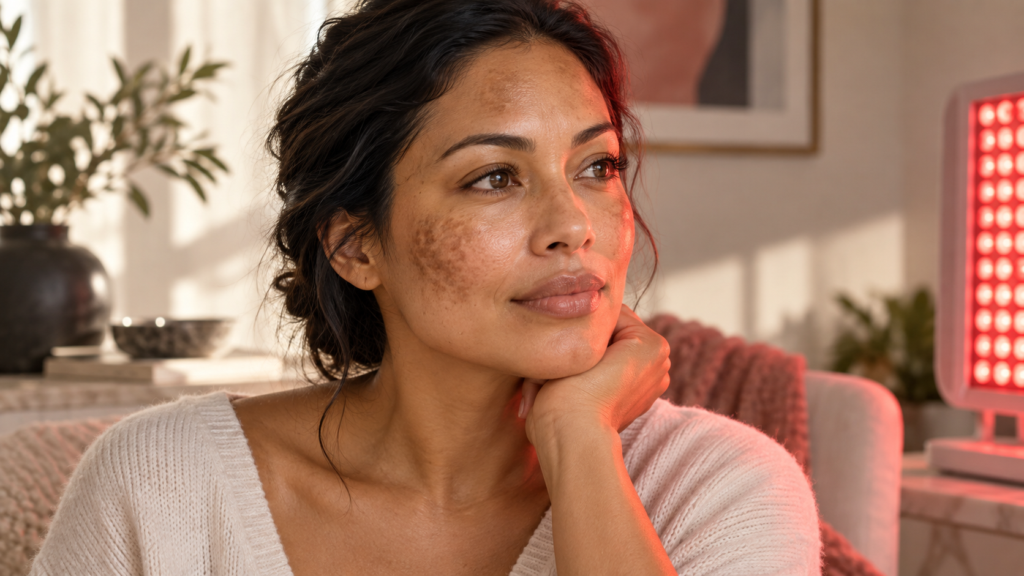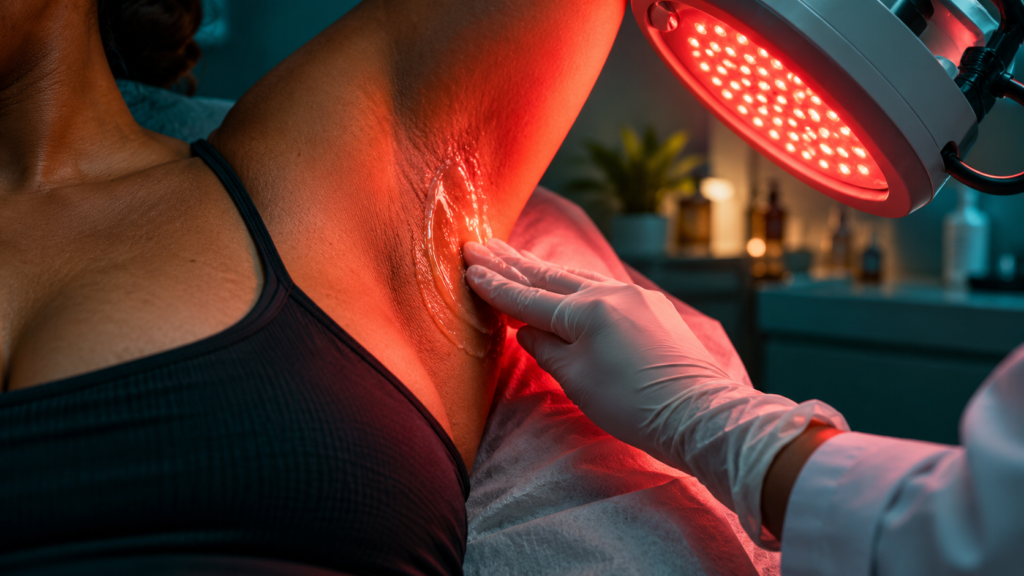

Red light therapy has become one of the most talked-about additions to modern skincare, appearing in face masks, handheld wands, and full-size panels marketed for a smoother, more even, more youthful-looking complexion. With that popularity comes a fair amount of exaggeration, which makes it harder to understand what the practice can reasonably do for your skin. This overview explains red light therapy for skin, the appearance-related goals it has been studied for, how it may work, what the evidence supports, and when to see a dermatologist.
The honest starting point is this: red light therapy may support appearance-related goals such as the look of fine lines, tone, and texture, and it has a plausible biological mechanism behind it. It is not, however, a cure or a medical treatment for skin conditions, and it should not replace professional care when one is needed.
What Red Light Therapy for Skin Is
Red light therapy — also called photobiomodulation or low-level light therapy — delivers specific wavelengths of red and, in some devices, near-infrared light to the skin. The light is bright but not hot enough to burn, and crucially it does not contain the ultraviolet (UV) rays that cause sunburn, tanning, and skin damage. According to Cleveland Clinic, red light therapy uses low levels of red or near-infrared light to influence cells without damaging the skin’s surface.
In a skincare context, that means the goal is to gently support the skin’s own processes rather than to force a dramatic, immediate change. Devices range from small masks and wands intended for the face to larger panels designed to treat broader areas.
What Red Light Therapy for Skin Has Been Studied For
Most of the research relevant to everyday users focuses on the appearance of the skin rather than on treating disease. A review of phototherapy with light-emitting diodes describes red and near-infrared LED light being explored for a broad range of aesthetic goals in dermatology, including skin rejuvenation and the look of aging skin. A separate review of low-level laser (light) therapy in skin discusses its study for stimulating, healing, and restoring skin, including effects associated with the appearance of fine lines and overall skin quality.
In plain terms, the goals with the most supporting research tend to be cosmetic and appearance-related: the look of fine lines, skin tone, texture, and a general sense of radiance. These are different from medical treatment of conditions, and that distinction matters when setting expectations.
How Red Light Therapy for Skin May Work to Work in the Skin
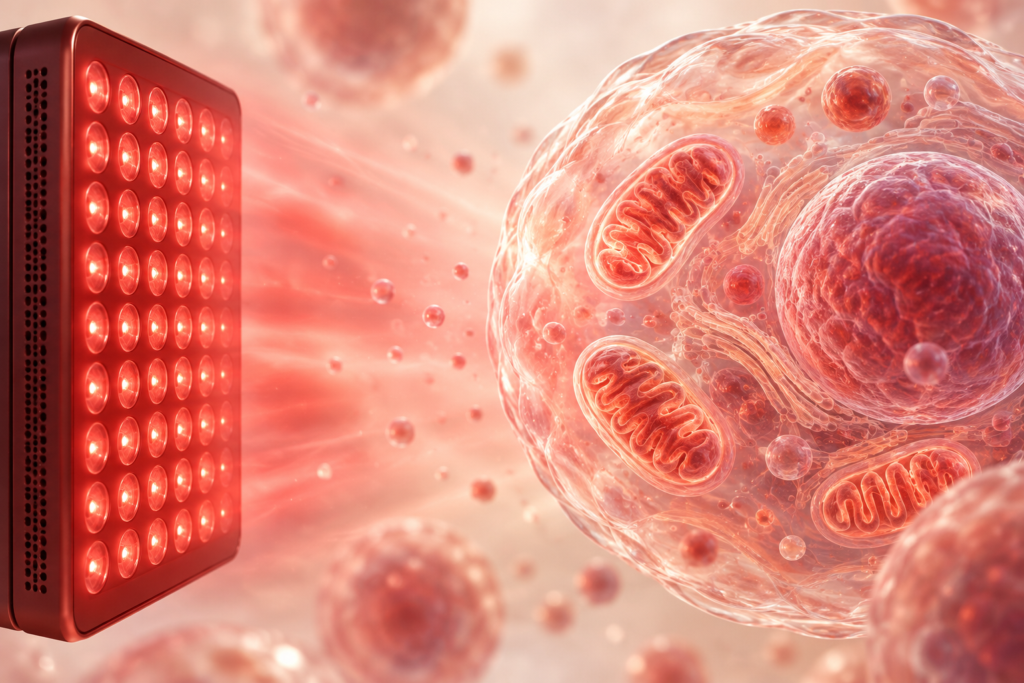
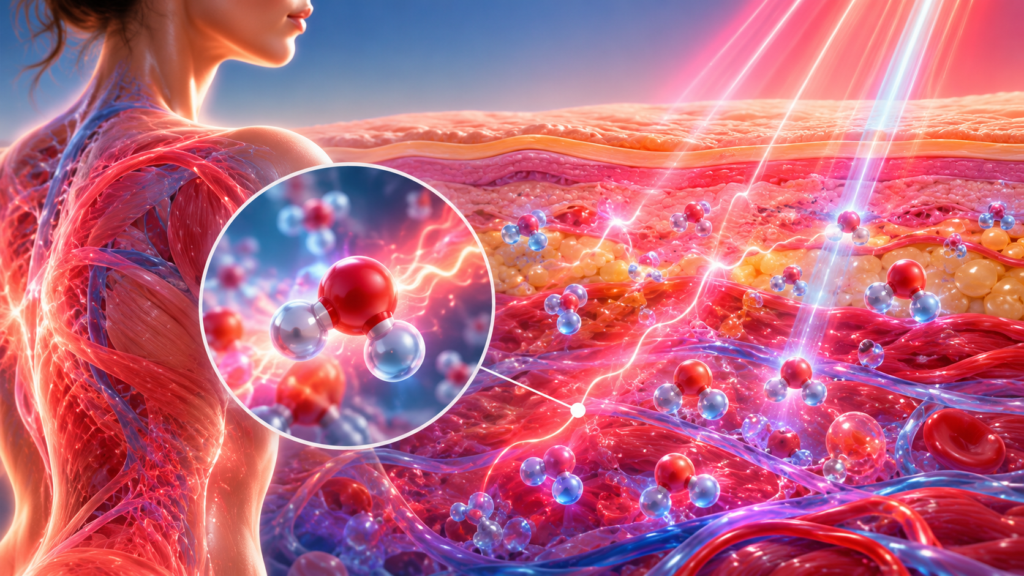
The leading explanation centers on the mitochondria, the energy-producing structures inside skin cells. Researchers propose that red and near-infrared light is absorbed by components of the cellular energy chain, which may help cells produce energy more efficiently and influence signaling involved in repair and inflammation. In the skin specifically, reviewers suggest this could support the activity of fibroblasts, the cells responsible for producing collagen and other components that give skin its structure.
It is worth being candid about the state of the science. The cellular mechanism is well studied in laboratories, but exactly how reliably those effects translate into visible skin changes for any given person is still being investigated. Red light therapy is best understood as something that may support normal skin-cell function, not a guaranteed transformation.
What the Evidence Says About Red Light Therapy for Skin
A growing body of small and medium-sized studies suggests that red and near-infrared light, delivered at appropriate doses, may help with certain appearance-related skin goals. At the same time, many studies are small, use different devices and settings, and report mixed results. Reviewers consistently note that larger, more standardized research is needed before strong claims can be made.
So while it is reasonable to say red light therapy may support the look of healthier skin, it is not accurate to claim it erases wrinkles, reverses aging, or cures any skin condition. Some users notice gradual, subtle improvements in appearance; others notice little. Results vary from person to person, and red light therapy is not a replacement for medical care.
A Note on Acne, Rosacea, and Other Conditions
Red light is sometimes discussed alongside blue light for acne-related goals, and LED phototherapy is studied across a range of dermatologic uses. However, conditions such as acne, rosacea, eczema, and hair loss are medical issues that deserve proper diagnosis and treatment. If you are dealing with a persistent or worsening skin condition, the most reliable path is to see a board-certified dermatologist, who can recommend evidence-based care and advise whether light therapy has any supporting role for you.
Red Light Therapy for Skin Safety
For most healthy adults, red light therapy at consumer doses is generally considered low-risk, with reported side effects typically mild and temporary, such as brief warmth or mild redness. Encouragingly, a systematic review examining the oncologic safety of low-level light therapy for aesthetic skin rejuvenation did not find evidence that such treatment increases skin-cancer risk, though the authors emphasize that more research is warranted.
Even with a reassuring general profile, red light therapy is not automatically right for everyone. People who are pregnant, who have a condition that makes them sensitive to light, who take medications that increase light sensitivity, or who have an eye condition should consult a healthcare professional first. Protecting the eyes from bright light is also a sensible precaution, particularly with larger panels.
Realistic Expectations for Red Light Therapy for Skin
Perhaps the most useful mindset is patience. Studies that report benefits typically involve weeks of consistent use, not a single session, and the changes they measure tend to be modest improvements in appearance rather than dramatic before-and-after transformations. Following a device’s guidance on distance and time matters too, because research on dosing suggests that more light is not automatically better.
Viewing red light therapy as one supportive habit within a broader routine — alongside sun protection, gentle cleansing, moisturizing, and, when needed, professional skincare — tends to lead to a more satisfying and realistic experience than expecting it to work like a switch.
What Red Light Therapy Is Not
Some of the confusion around skincare claims comes from mixing up red light therapy with other light-based approaches. It is not a tanning bed, which emits ultraviolet light to darken skin and carries skin-cancer risk. It is not an ablative or resurfacing laser, the kind a clinician uses to intentionally heat or remove tissue. And it is not a high-intensity light “facial” that promises instant results. Red light therapy is a low-intensity, non-UV practice meant to gently support the skin’s own processes over time. Keeping these distinctions clear helps explain why its effects, when they occur, are subtle and gradual rather than immediate and dramatic — and why it carries a more reassuring safety profile than UV-based or ablative treatments.
Red Light Therapy for Skin Devices
Red light therapy for the skin comes in several formats, and the right one depends on your goal and budget. Handheld wands are small and inexpensive, useful for spot-treating a specific area but slow for larger goals. LED face masks are shaped to deliver red — and sometimes near-infrared — light evenly across the face, which is why they are popular for facial skin goals.
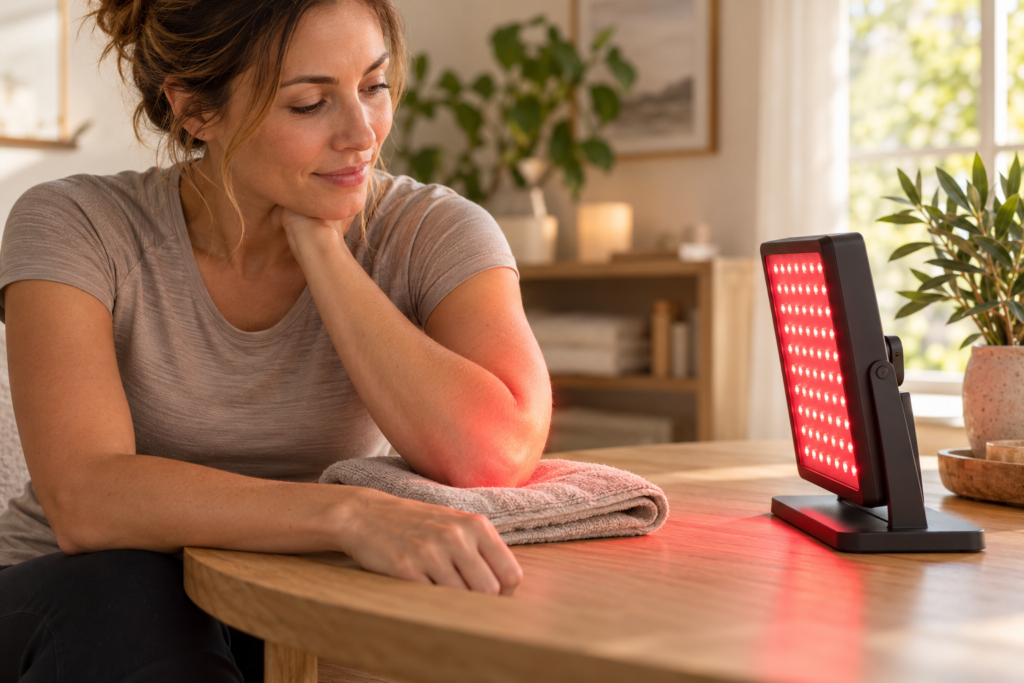
Panels, ranging from desktop size to full-length, cover larger areas and can be used for both skin and broader wellness routines. Larger systems found in clinics and studios treat more of the body at once. None of these is inherently superior for the skin; what matters more is using a device with clearly stated wavelengths, at the recommended distance and time, consistently over weeks. A modest device used correctly is generally a better choice than an impressive-looking one used carelessly.
How to Use Red Light Therapy for Skin
If you decide to try red light therapy, a few habits help you get a fair trial. Use it on clean, bare skin, since makeup and heavy products can block some of the light. Follow the manufacturer’s guidance on distance and session length rather than improvising, because dose — not enthusiasm — is what the research ties to results. Be consistent over several weeks before judging whether it helps, and track changes honestly rather than relying on memory. Most importantly, treat it as one supportive element within a complete routine rather than a replacement for the basics.
Who Should Consider Red Light Therapy for Skin
Red light therapy may appeal to people whose goals are primarily cosmetic and who are comfortable with gradual, modest results. If your interest is the general look of fine lines, tone, or texture, and you have realistic expectations, a careful trial of a quality device used as directed is reasonable for most healthy adults. If, on the other hand, you are seeking treatment for a diagnosed or suspected medical skin condition, a dermatologist should guide that decision rather than a marketing claim.
The Bottom Line
Red light therapy is a low-intensity, non-UV light practice with a plausible mechanism and encouraging but still-developing evidence for appearance-related skin goals. It may support the look of fine lines, tone, and texture for some people, but it is not a cure, does not reverse aging, and does not replace medical care. Approached with patience, attention to device guidance, and a willingness to see a board-certified dermatologist for any medical skin concern, it can be a reasonable part of a thoughtful skincare routine.
Ready to get your red light therapy device? See our brand and product reviews, and try out our product comparison tool to inform your decision.
Frequently Asked Questions
Is red light therapy good for your skin?
It may support appearance-related goals such as the look of fine lines, tone, and texture for some people, and it has a plausible mechanism. Evidence is still developing, results vary, and it is not a cure or a substitute for medical care.
Does red light therapy damage the skin like the sun?
No. Red light therapy does not use ultraviolet (UV) light, which is the part of sunlight associated with sunburn, tanning, and skin damage. Reported side effects at consumer doses are typically mild and temporary.
Can red light therapy treat acne or rosacea?
Acne and rosacea are medical conditions that deserve proper diagnosis. While light therapy is studied for some skin goals, it is not a cure, and a board-certified dermatologist should guide treatment of these conditions.
How long until I might see a difference in my skin?
It varies. Studies that report appearance benefits typically involve several weeks of consistent use, so patience and regular sessions matter more than any single session, and changes tend to be gradual and subtle.
Is red light therapy safe for the skin?
For most healthy adults at consumer doses it is generally considered low-risk, and a safety review did not find evidence of increased skin-cancer risk. People who are pregnant, photosensitive, or on photosensitizing medication should consult a professional first.
This article is for general educational purposes only and is not medical advice. Red light therapy is not a substitute for professional care. Talk with a qualified healthcare professional about your individual situation.