
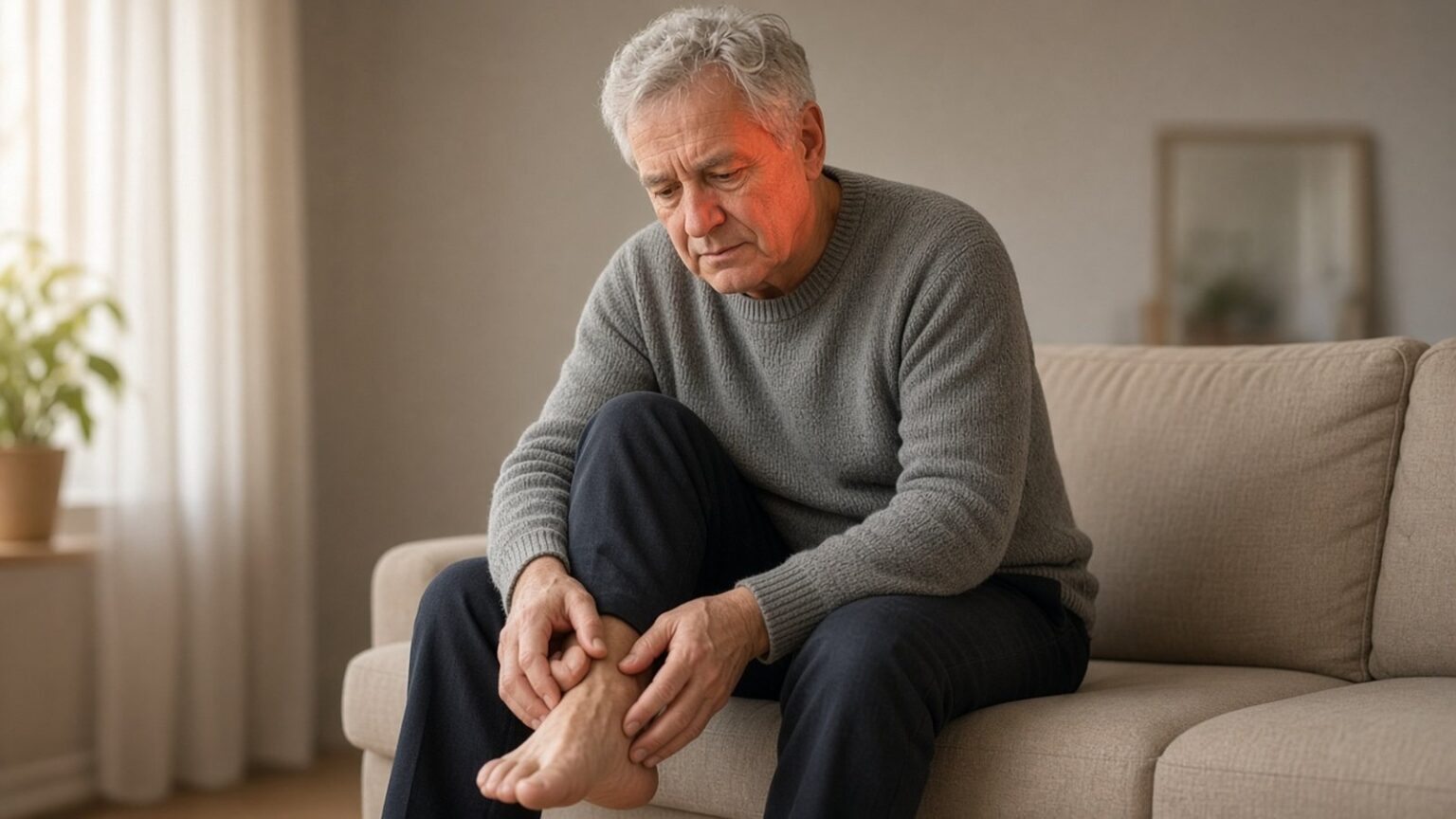
Burning toes, pins and needles at night, feet that feel numb on cold floors: peripheral neuropathy can wear you down, and the usual medicines do not work for everyone. So it is no surprise that red light therapy for neuropathy is a common search. The research is genuinely mixed. Some small trials of red and near-infrared light report less pain or fewer symptoms, while one of the best-designed home-use studies found no difference from a sham device. Here is what the studies actually show, where they fall short, and how to talk to your doctor about it.
What Is Peripheral Neuropathy?
Peripheral neuropathy means damage to the nerves outside the brain and spinal cord. According to the NIDDK, people with peripheral neuropathy may feel burning, tingling, numbness, pain or weakness in the feet, legs, hands or arms. Symptoms are often worse at night and usually affect both sides of the body. Some people also lose the ability to feel pain or temperature in their feet, which raises the risk of unnoticed cuts, burns and ulcers.
Diabetes is the most common cause, but chemotherapy, vitamin B12 deficiency, heavy alcohol use and some other conditions can also damage nerves. Standard care focuses on the cause (for example, managing blood glucose), daily foot checks, physical therapy for strength and balance, and prescription medicines for nerve pain. The NIDDK notes that these medicines can help with pain but do not change the nerve damage itself. That gap is a big reason people look at light-based options.
How Is Red Light Therapy Supposed to Help Nerves?
Red light therapy is part of a field researchers call photobiomodulation (PBM). It uses red or near-infrared light from lasers or LEDs at levels that do not heat or cut tissue. The working idea is that the light is absorbed by mitochondria, the energy-producing parts of cells, which may influence inflammation, blood flow and cell repair signals. Researchers have tested whether that could reduce nerve pain or improve sensation, mostly by shining light on the feet, lower legs or along the spine.
Two different kinds of devices appear in the research, and they are worth keeping apart:
- Low-level lasers applied in a clinic at measured doses.
- Monochromatic infrared energy (MIRE) pads, a near-infrared LED approach (about 890 nm) that was often used at home.
If you want more background on the difference between laser and LED light, see our guide to laser vs LED red light therapy.
Does Red Light Therapy for Neuropathy Work? What Studies Show
The answer depends a lot on the type of neuropathy and the type of device. Here is the evidence by category.
Diabetic neuropathy and low-level laser
A 2019 systematic review in Diabetes and Metabolic Syndrome screened 627 studies and included 6 on low-level laser therapy for painful diabetic neuropathy. The authors concluded that the evidence showed a positive effect on controlling diabetic nerve pain, using outcomes such as pain scores, nerve conduction tests and quality of life.
A 2023 systematic review in Current Diabetes Reviews, from the same research center, included eight studies and reported improvements in neuropathic pain, nerve conduction velocity and plantar pressure distribution with PBM. Both reviews included randomized and non-randomized studies, so the overall quality of evidence is still limited.
Diabetic neuropathy and home infrared pads
The picture looks different for MIRE. In a double-blind, sham-controlled trial published in Diabetes Care in 2008, 69 people with diabetes and reduced foot sensation were assigned to active or sham Anodyne MIRE units, used at home for 40 minutes a day for 90 days. Sixty people completed the study. There were no significant differences between groups in nerve conduction, vibration sense, monofilament testing, neuropathy scores or quality of life. The authors concluded that the treatment was no more effective than sham.
A 2017 meta-analysis in the Brazilian Journal of Physical Therapy pooled six randomized trials with 304 patients. It found no overall improvement in foot sensitivity, only a short-term gain in studies with follow-up of up to two weeks, and no relief of neuropathic pain. The reviewers rated the evidence as low quality.

Chemotherapy-induced neuropathy
Cancer treatment can damage nerves too, and this is where some of the more interesting trials are happening. In a 2017 randomized, double-blind, sham-controlled trial in Gynecologic Oncology, 70 patients with chemotherapy-induced peripheral neuropathy received PBM or sham therapy in 30-minute sessions three times a week for six weeks. Neuropathy scores dropped by about a third at 4 weeks and about half at 8 weeks in the PBM group, with little change in the sham group.
A 2022 randomized phase II trial in Supportive Care in Cancer gave 44 cancer survivors laser PBM or sham twice a week for 12 sessions. Symptoms improved in both groups, which shows how strong placebo effects can be. At 12 weeks, improvement was sustained in the laser group while the sham group drifted back toward baseline. The authors called for a larger study.
Another 2022 pilot trial with 32 breast cancer patients tested PBM during chemotherapy to see if it could prevent neuropathy. Neuropathy scores rose in both groups, but sensory symptoms stayed more stable and quality of life was better with PBM. All of these studies used clinical protocols with trained staff, often alongside oncology care.
What Are the Limits of the Evidence?
- Small studies. Most trials have dozens of patients, not thousands, and several reviews mix randomized and non-randomized data.
- Mixed results. Clinic laser studies lean positive, but the larger sham-controlled home infrared trial found no benefit.
- Different devices and doses. Wavelength, power, session length and treatment area vary widely, so there is no agreed protocol.
- Strong placebo effects. Sham groups often improve too, which is why blinded trials matter so much.
- Nerve damage is not reversed. No study shows that red light repairs damaged nerves or replaces medical care.
Is Red Light Therapy Safe if You Have Neuropathy?
The trials above reported only low-grade side effects, but neuropathy creates a specific risk: if you cannot feel heat or pressure well, you may not notice if a device gets too warm or rubs your skin. Our general red light therapy safety guide covers the basics. For neuropathy in particular:
- Talk to your doctor or podiatrist first, especially if you have diabetes, poor circulation, foot ulcers or are in cancer treatment.
- Check your skin before and after each session. Look for redness, blisters or marks, since you may not feel them.
- Follow the device directions for distance and time, and do not press a device into numb skin.
- Do not use light on an open wound unless your care team says it is appropriate.
- Keep your usual care. Do not stop or change medicines, foot checks or blood glucose management because of a light device.
How Could Red Light Fit Into a Neuropathy Plan?
If your doctor agrees it is reasonable to try, treat red light as an add-on experiment rather than a fix. Keep a simple symptom diary for a few weeks before and during use, rating pain, tingling and sleep. Use the device on a consistent schedule, and stop if symptoms worsen or skin changes appear. Bring the diary to your next appointment so you can decide together whether it is worth continuing. If you are new to light therapy, our beginner’s guide explains how to start.
Frequently Asked Questions
Can red light therapy cure neuropathy?
No. There is no evidence that red light cures neuropathy or reverses nerve damage. Some trials report less pain or fewer symptoms, but results are mixed.
Does infrared light help diabetic neuropathy in the feet?
The evidence is weak. A sham-controlled home trial of 890 nm infrared pads found no benefit over sham, and a meta-analysis found no lasting improvement in sensation or pain.
Is red light therapy used for chemotherapy-induced neuropathy?
It is being studied. Some small randomized trials report fewer symptoms with clinical laser PBM, but larger trials are still needed. Ask your oncology team before trying it.
Can I use a red light device if I cannot feel my feet well?
Only after talking to your doctor, and with extra care. Reduced sensation means you may not notice heat or skin damage, so check your skin after every session.
How long do studies use red light for neuropathy?
Protocols vary. Examples include three 30-minute sessions a week for six weeks in one cancer trial and daily 40-minute home sessions for 90 days in a diabetes trial.
Sources
- NIDDK. Peripheral Neuropathy. niddk.nih.gov
- Anju M, et al. Low level laser therapy for the patients with painful diabetic peripheral neuropathy: a systematic review. Diabetes Metab Syndr. 2019. PubMed 31405692
- Korada HY, et al. Effectiveness of photobiomodulation therapy on neuropathic pain, nerve conduction and plantar pressure distribution in diabetic peripheral neuropathy: a systematic review. Curr Diabetes Rev. 2023. PubMed 37622461
- Lavery LA, et al. Does anodyne light therapy improve peripheral neuropathy in diabetes? A double-blind, sham-controlled, randomized trial. Diabetes Care. 2008. PubMed 17977931
- Robinson CC, et al. Effects of monochromatic infrared phototherapy in patients with diabetic peripheral neuropathy: a systematic review and meta-analysis. Braz J Phys Ther. 2017. PubMed 28571697
- Argenta PA, et al. The effect of photobiomodulation on chemotherapy-induced peripheral neuropathy: a randomized, sham-controlled clinical trial. Gynecol Oncol. 2017. PubMed 27887804
- Teng C, et al. Evaluating laser photobiomodulation for chemotherapy-induced peripheral neuropathy: a randomised phase II trial. Support Care Cancer. 2022. PubMed 36526802
- Lodewijckx J, et al. The use of photobiomodulation therapy for the prevention of chemotherapy-induced peripheral neuropathy: a randomized, placebo-controlled pilot trial (NEUROLASER trial). Support Care Cancer. 2022. PubMed 35312857
This article is for general education and is not medical advice. Talk with your doctor before using red light therapy for neuropathy, especially if you have diabetes, circulation problems or are receiving cancer treatment.