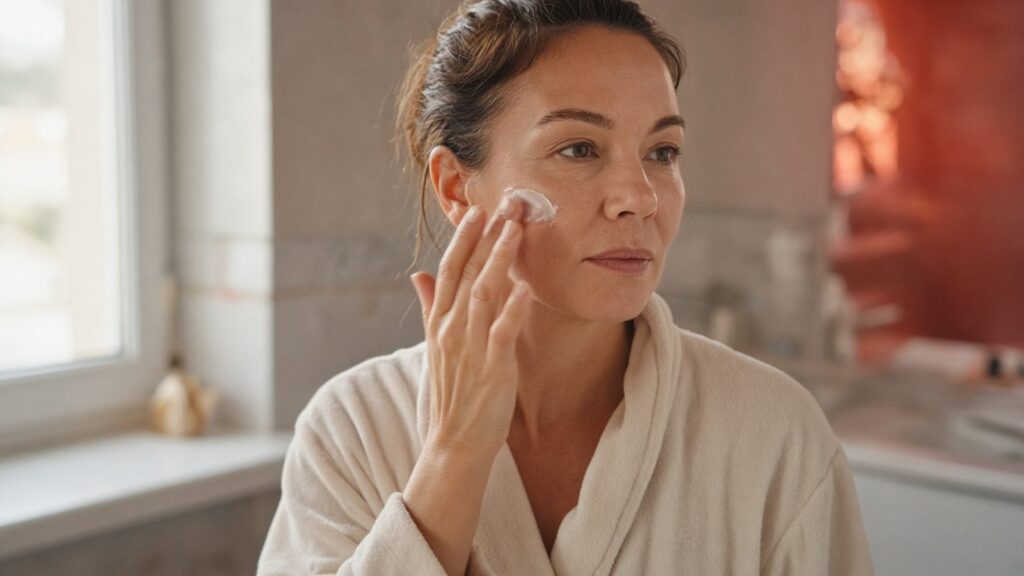

Does red light therapy tan you? It is one of the most common questions people ask before they buy a panel or book a session at a salon that offers “red light beds.” The short answer is no: red and near-infrared light do not contain the ultraviolet (UV) rays that drive a tan, and the studies that have tested red light on skin pigment have not found it darkens skin the way UV does. There are a few useful nuances, though, especially if you have a deeper skin tone, use a combination tanning bed, or are hoping red light will give you a “safe glow.” This guide walks through what the research shows.
Does Red Light Therapy Tan You? The Short Answer
A tan is your skin’s response to damage from UV light. According to the U.S. Food and Drug Administration, once skin is exposed to UV radiation it ramps up production of melanin, the brown pigment, “in an attempt to protect the skin from further damage.” The FDA puts it plainly: “There is no such thing as a safe tan.”
Red light therapy devices use visible red light (usually around 630 to 670 nanometers) and often near-infrared light (around 810 to 850 nanometers). Both sit well outside the UV range, which ends at 400 nanometers. Without UV, the main trigger for a classic tan is missing. If you want a refresher on how these two wavelength bands differ, see our explainer on red light vs near-infrared light.
What Actually Causes a Tan?
UV light comes in two main types that matter for skin: UVB, which mostly affects the outer layer and causes sunburn, and UVA, which reaches a little deeper. Both can trigger melanocytes, the pigment-making cells, to produce more melanin and pass it to surrounding skin cells. That shift shows up as a tan over the next day or two.
The FDA also notes that a tan offers very little protection. The extra melanin in tanned skin provides a sun protection factor of only about 2 to 4, far below the SPF 15 minimum usually recommended. So even if red light did tan you, the tan itself would not be a useful shield.
Can visible light change skin color at all?
Yes, and this is where the “no” gets more interesting. Researchers have shown that some visible light, not just UV, can deepen pigment in certain skin types. The key detail is which part of the visible spectrum does it.
What Do Studies Show About Red Light and Skin Pigment?
Three studies help answer this question.
- Broad visible light can pigment darker skin. A 2010 study in the Journal of Investigative Dermatology exposed 20 volunteers with skin types IV to VI to visible light spanning 400 to 700 nanometers. It induced pigmentation that was darker and longer lasting than long-wave UVA. Volunteers with skin type II (fair skin that burns easily) showed no pigmentation. Importantly, this light source covered the whole visible range, including blue and violet, not red alone.
- Red light did not darken skin in a head-to-head test. A 2014 study in Pigment Cell & Melanoma Research compared single wavelengths at opposite ends of the visible spectrum in people with skin types III and IV. Blue-violet light at 415 nanometers caused a clear, dose-related darkening that lasted up to three months. Red light at 630 nanometers did not induce hyperpigmentation.
- Blue light did most of the work. A 2023 study in the Journal of the European Academy of Dermatology and Venereology split visible light into color bands. In volunteers with skin types III and IV, blue light accounted for most of the visible-light pigmentation, and the authors reported “no significant effect for Red light.”
Taken together, the evidence points the same way: the shorter, higher-energy end of visible light (violet and blue) can deepen pigment, especially in medium to deep skin, while red light has not shown that effect in these studies. Near-infrared light was not tested in them, so we cannot say as much about it, but it also lacks UV energy.
What about melasma and dark spots?
If you have melasma or other pigment conditions, visible light can matter more than average, which is why some dermatologists recommend tinted sunscreens that block visible light. We cover this in more detail in red light therapy and melasma. Since skin tone also affects how much light reaches deeper tissue, our piece on skin pigmentation and light is a useful companion read.
Why Might Your Skin Look Darker or Redder After a Session?
Some people notice a temporary change in skin color after using a panel and wonder if it is a tan. More often it is one of these:
- Warmth and flushing. Many panels, especially those with near-infrared LEDs, feel warm. Warm skin can look pink for a short time after a session, much like it does after a warm shower.
- Lighting contrast. After several minutes under bright red light, your eyes adjust, and normal room light can make skin look different for a moment.
- A combination bed. Some salon beds pair red light lamps with UV tanning lamps. If the bed has UV, any tan comes from the UV, not the red light. Ask the salon exactly which lamps a bed uses.
- Self-tanner or medication effects. Sunless tanning products darken skin on their own, and some medications make skin more sensitive to light. If you notice unusual redness, stop and check with your doctor or pharmacist.
A tan that builds over days with regular sessions on a red-only device would be unusual based on current research. If that happens, it is worth confirming the device’s actual wavelengths with the manufacturer.

Can Red Light Therapy Replace a Tanning Bed or Sunscreen?
No. Red light therapy will not give you a tan, so it is not a substitute for a tanning bed if color is your goal. It also does not protect you from the sun, so it is not a substitute for sunscreen, shade, or protective clothing. The FDA links tanning to a greatly increased risk of skin cancer, as well as premature skin aging and eye damage.
If you like the look of a tan, sunless tanning lotions or sprays are a lower-risk option than UV. If you use red light for skin goals such as texture or fine lines, keep using daily sunscreen too. The two do different jobs.
How Can You Use Red Light Safely if You Are Worried About Pigment?
- Check the wavelengths. Look for published specifications. A red light device should list peaks in the red and near-infrared range, not blue or UV.
- Protect your eyes. Bright LEDs can be uncomfortable. Use the goggles that come with your device.
- Follow the manufacturer’s session time. More is not always better. See can you overdo red light therapy? for why.
- Watch for heat. Keep a comfortable distance so skin feels warm, not hot.
- Talk to a dermatologist first if you have melasma, a history of skin cancer, a light-sensitive condition, or take medications that increase light sensitivity. Our guide on when to consult a doctor lists more situations.
Frequently Asked Questions
Does red light therapy tan you like the sun?
No. A sun tan comes from UV light, and red light therapy devices do not emit UV. In a controlled study, 630 nanometer red light did not cause hyperpigmentation in people with skin types III and IV.
Can red light therapy darken dark spots?
The studies above did not find red light darkens skin, but blue and violet light can deepen pigment in some people. If you have melasma or dark spots, ask a dermatologist before starting and choose a device without blue LEDs unless your clinician recommends them.
Are red light beds at tanning salons safe?
It depends on the bed. Some are red light only, while others combine red light with UV tanning lamps. UV exposure from any tanning bed carries the risks the FDA describes, so confirm what lamps are inside before you use one.
Can I use red light therapy after tanning or sun exposure?
If your skin is sunburned, let it heal before using any heat-producing device, and ask your doctor if you are unsure. Red light will not undo UV damage or replace sunscreen.
Does near-infrared light tan you?
Near-infrared light contains no UV, and it was not tested in the pigment studies discussed here. There is no good evidence that it tans skin, but research specific to near-infrared and pigment is limited.
The Bottom Line
Red light therapy does not tan you. Tanning is a UV damage response, and red and near-infrared devices do not emit UV. Studies that isolated red light found no meaningful darkening, while blue and violet light did deepen pigment in medium skin tones. If your skin looks different after a session, warmth, a combination UV bed, or a medication effect are more likely explanations. Keep using sunscreen, and talk to your dermatologist if you have a pigment condition.
Sources
- U.S. Food and Drug Administration. The Risks of Tanning. fda.gov
- Mahmoud BH, et al. Impact of long-wavelength UVA and visible light on melanocompetent skin. J Invest Dermatol. 2010. PubMed 20410914
- Duteil L, et al. Differences in visible light-induced pigmentation according to wavelengths: a clinical and histological study in comparison with UVB exposure. Pigment Cell Melanoma Res. 2014. PubMed 24888214
- Marionnet C, et al. A precise analysis of the relative contribution of UVA1 and visible light colour domains in solar light-induced skin pigmentation. J Eur Acad Dermatol Venereol. 2023. PubMed 36994912
This article is for general education and is not medical advice. Talk with your doctor or dermatologist before starting red light therapy if you have a skin condition or take light-sensitizing medication.