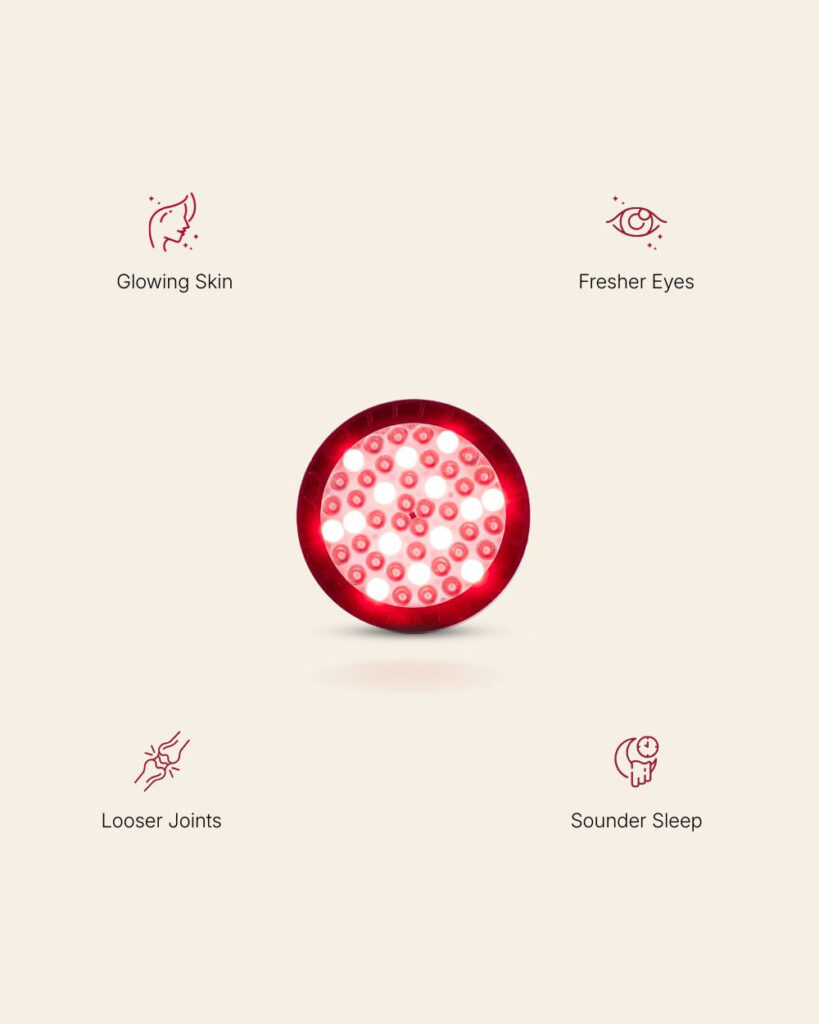
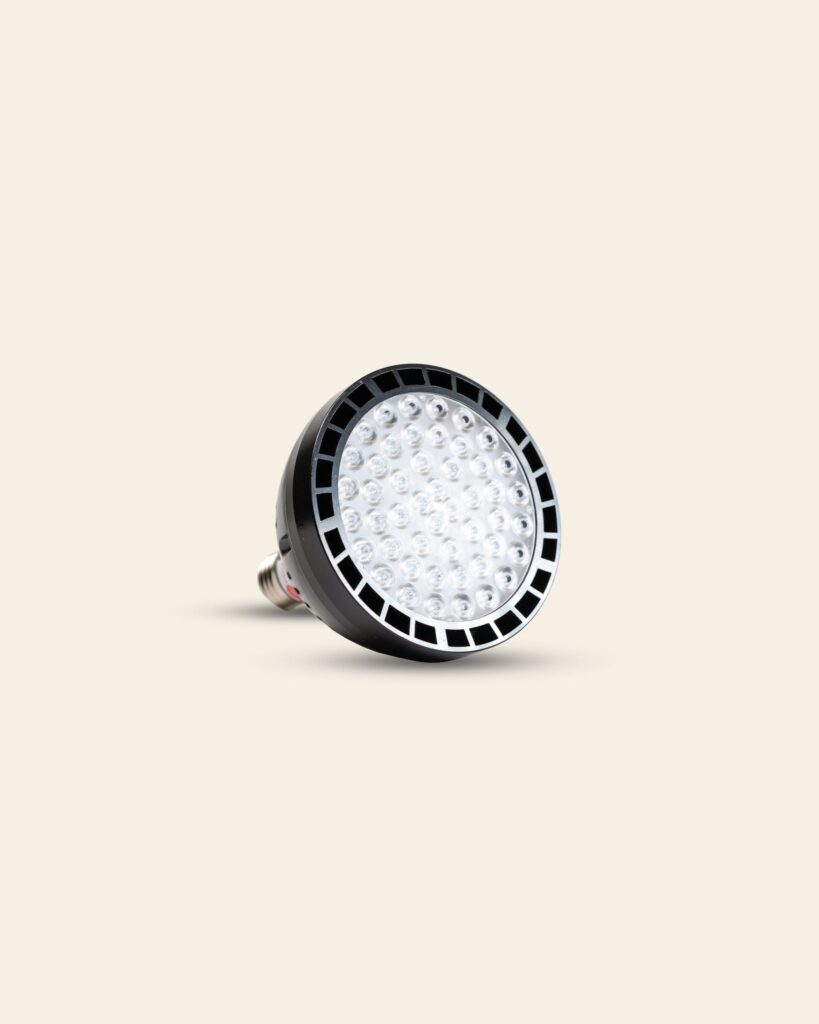
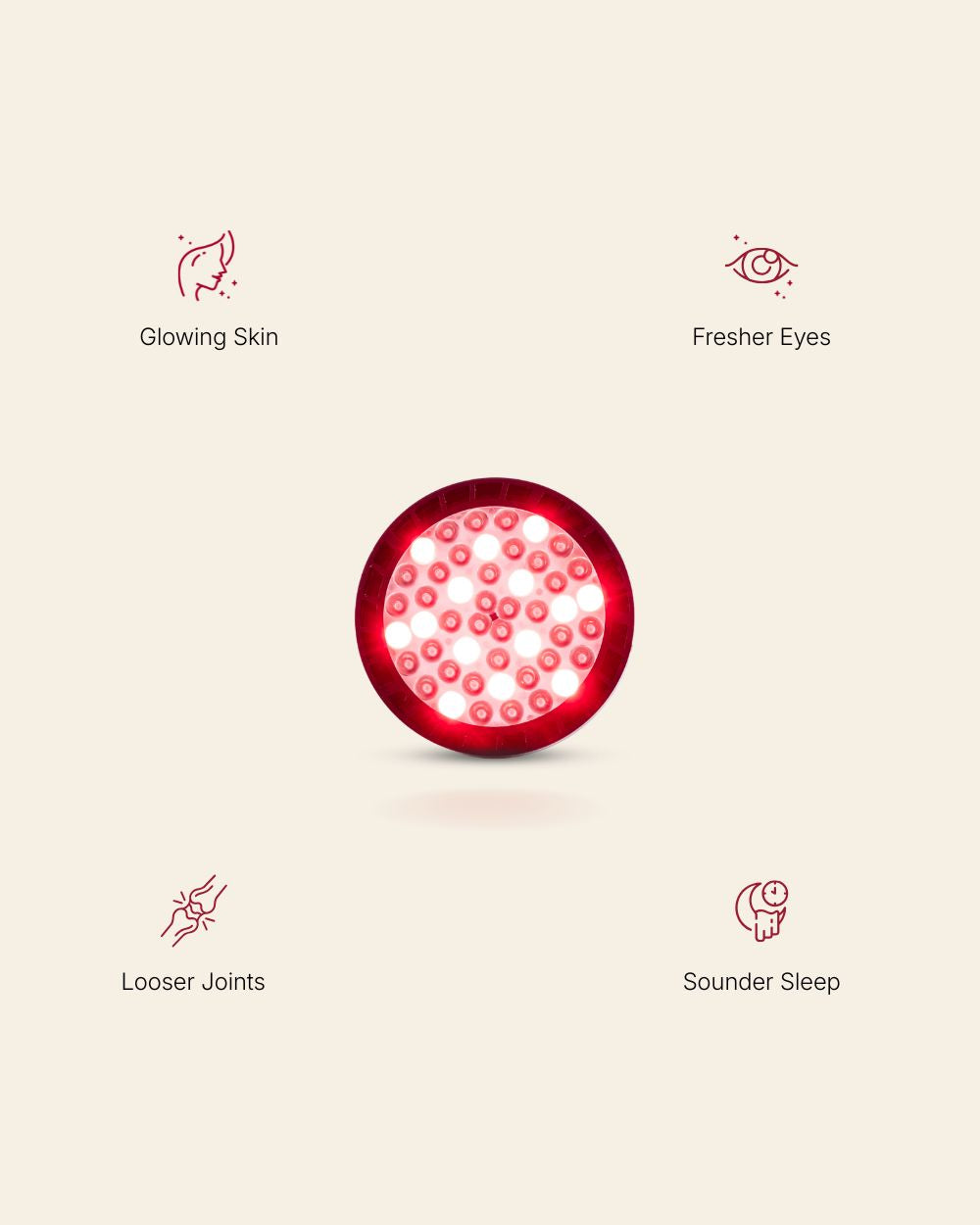
The Red Light Rising Target Light 2.0 is designed for buyers who want red light therapy focused on small, specific areas rather than broad body coverage. Its compact size makes it suitable for areas such as the face, scalp, knees, elbows, shoulders, and individual muscles, while taking up considerably less space than a conventional panel.
The device uses 660nm red light and 850nm near-infrared light. These are two of the most common wavelengths found in home red light therapy equipment, with 660nm primarily used for more superficial exposure and 850nm intended to reach deeper tissue. It is a straightforward combination, although buyers looking for the wider wavelength selection found on newer premium devices will find the Target Light 2.0 fairly basic.
Portability is one of its strongest advantages. The Target Light 2.0 is much easier to move, store, and travel with than a large panel. Someone primarily interested in treating one joint, a small muscle group, or the face may find this format more practical than paying for a device with significantly more coverage than they actually need.
The small treatment area is also its biggest limitation. Treating the entire back, torso, or both legs would require repeatedly moving the light and completing multiple exposures. This can quickly become inconvenient for someone who wants regular large-area sessions. The Target Light 2.0 therefore works best when the intended treatment area is genuinely small.
Another consideration is positioning. A compact targeted light does not provide the same hands-free flexibility as Red Light Rising’s larger Target Light 4.0 with its adjustable floor stand. Depending on the area being treated, users may need to hold or carefully position the device during a session. That is relatively easy for accessible areas but can become awkward when trying to reach the back or other difficult locations.
The simplicity can work in its favor. There are no complicated treatment programs or extensive controls to learn, making the Target Light 2.0 approachable for someone who wants basic red and near-infrared therapy. On the other hand, users interested in adjustable intensity, multiple wavelengths, pulsing, or other advanced features may find the older design limiting.
The Target Light 2.0 also makes sense as a secondary device. Someone who already has a larger panel at home may appreciate having a smaller light for quickly targeting a knee, shoulder, or other specific area without setting up a full session. Its compact format also makes it more practical for travel than most conventional red light panels.
Value depends heavily on how the device will be used. Basic 660nm and 850nm targeted lights are widely available, including inexpensive alternatives. The Target Light 2.0 therefore has to compete on factors such as construction, portability, ease of use, and Red Light Rising’s customer support rather than offering a particularly unusual wavelength combination.
It is also worth considering that the Target Light 2.0 belongs to an older generation of Red Light Rising products. Newer Target Light models have improved portability, controls, output, or positioning depending on the model. Unless the 2.0 is available at an attractive price, buyers should compare it carefully with the newer versions before deciding that the lower-specification model offers better value.
As with any red light therapy device, results can vary considerably. Its compact size and familiar wavelengths can make regular targeted sessions convenient, but the device should not be judged by expectations of immediate results. Consistency and the intended application will play a major role in whether someone ultimately finds it worthwhile.
The Red Light Rising Target Light 2.0 is a straightforward option for someone who wants basic red and near-infrared light therapy for small areas without buying a large panel. Its compact design and 660nm and 850nm wavelengths cover the essentials for targeted use, but its limited treatment area and relatively simple feature set make it less appealing beside newer devices. It makes the most sense if it can be purchased at a meaningful discount or if portability and simplicity are the buyer’s main priorities. Anyone paying close to the price of a newer Target Light should consider the newer model instead, while users interested in treating large areas will be better served by a conventional panel.