
Quick Answer
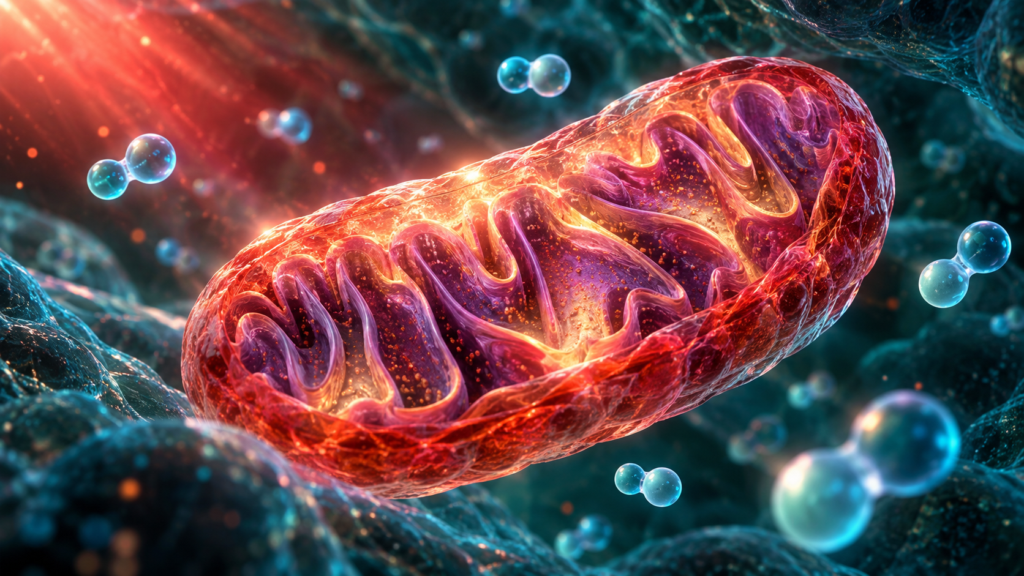
Mitochondrial redox signaling helps cells communicate through changes in oxidation and reduction. Reactive oxygen species can participate in these messages. Laboratory research suggests red and near-infrared light can influence this activity, but the response depends on the cells and exposure conditions. These findings do not establish the same benefits for every person or home device.
Key Takeaway
Mitochondrial redox signaling involves more than energy production. Molecules associated with oxidative stress can also carry useful signals. Understanding that distinction helps explain why researchers study light-triggered changes in these molecules without assuming every increase is harmful or every cellular response produces a health benefit.
You have probably heard that oxidative stress damages cells. You may also have read that red light therapy can increase reactive oxygen species, molecules often discussed alongside that damage.
So why would researchers investigate both?
The answer starts with what those molecules are doing, where they appear, and how long they remain active. A brief chemical message and an uncontrolled oxidative reaction can have very different consequences.
Mitochondrial redox signaling helps explain this distinction. It also gives you a more useful way to understand the research behind claims that light “supports cellular function.”
What is mitochondrial redox signaling?
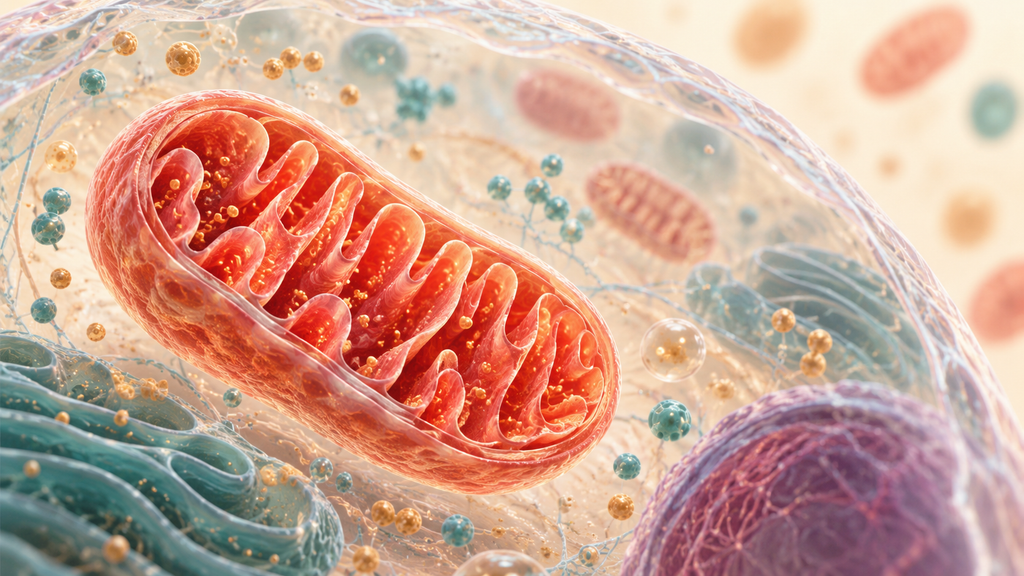
Mitochondria help convert energy from food into adenosine triphosphate, or ATP. Your cells use ATP to power many of their everyday tasks.
But mitochondria also participate in communication. Changes in their activity can influence how the rest of a cell responds.
“Redox” combines two terms. Oxidation means losing electrons. Reduction means gaining them. These linked chemical processes are essential to the reactions that keep cells working.
Mitochondrial redox signaling involves messages connected to this chemistry. Reactive oxygen species, often shortened to ROS, can participate by changing the activity of proteins involved in cellular responses.
Think of a power station with monitoring equipment. It supplies electricity, but its sensors also send information about operating conditions. Mitochondria likewise contribute to energy production and communication, although the biology is more complex than that comparison.
ATP production and chemical signaling are related processes. Measuring a change in one does not automatically tell researchers what happened to the other.

What are reactive oxygen species?
ROS is a group of reactive, oxygen-containing molecules. Examples include superoxide and hydrogen peroxide.
You may see ROS used interchangeably with “free radicals,” but the terms are not identical. Superoxide is a free radical. Hydrogen peroxide is not.
Their biological effects depend on context. A controlled hydrogen peroxide signal can alter protein activity. Excessive or poorly controlled oxidant activity can damage proteins, lipids, and DNA.
That’s why a study reporting “more ROS” needs explanation. Researchers must consider which molecules changed, where they were measured, and what happened afterward.
For mitochondrial redox signaling, location and timing matter alongside amount. A measurement taken shortly after exposure may capture a different response from one taken hours later.
The useful question is, what does that change mean for the cell? Detecting ROS alone does not establish damage, protection, or a successful treatment.
How might red light affect mitochondrial redox signaling?
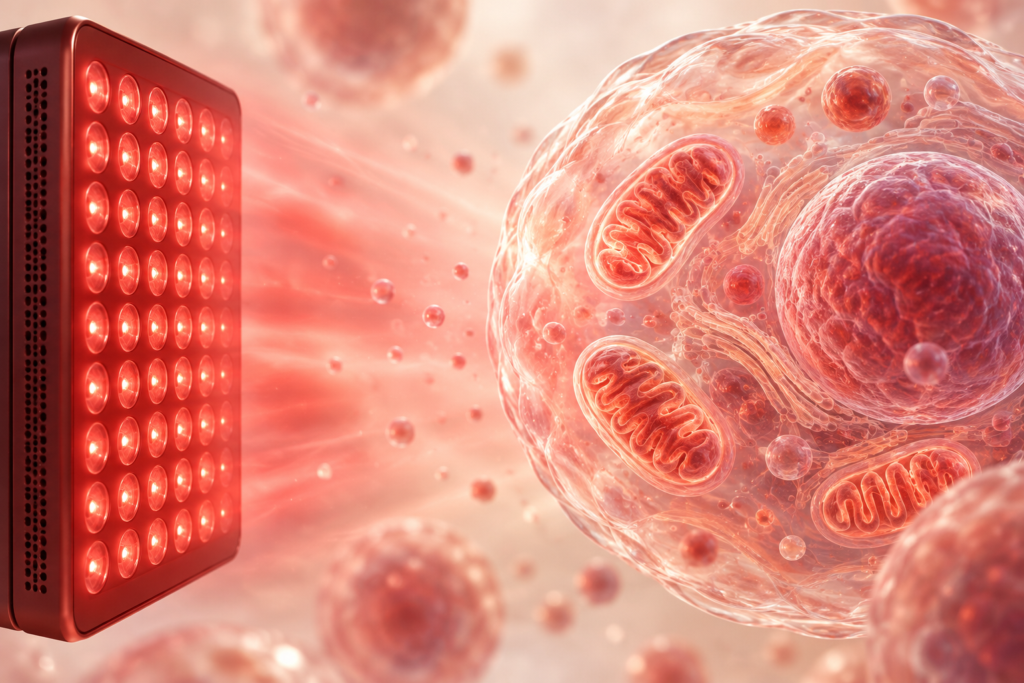
Photobiomodulation, or PBM, uses light to influence biological activity. Research in this field includes red and near-infrared wavelengths delivered through LEDs, lasers, or combinations of sources.
For a photochemical effect to occur, a molecule must absorb light.
One proposed target is cytochrome c oxidase, an enzyme in the mitochondrial electron transport chain. Researchers continue to investigate its contribution and other possible starting points for PBM.
The electron transport chain helps build an electrochemical gradient across the inner mitochondrial membrane. Its electrical component is called the mitochondrial membrane potential. ATP synthase uses the broader gradient to help make ATP.
Changes in this system may also influence cellular signals. However, a change in membrane potential alone does not prove increased ATP production or better mitochondrial health.
Scientists investigating mitochondrial redox signaling therefore measure several outcomes rather than treating any single marker as proof of improvement.
Our guide to nitric oxide explores another proposed part of light’s interaction with cellular respiration.
How could a light-triggered message affect gene activity?
A mouse-cell study published in 2011 offers a specific example.
Researchers exposed mouse embryonic fibroblasts to an 810 nm near-infrared laser. They observed increased intracellular ROS, increased ATP, and activation of NF-κB.
NF-κB is a protein complex that acts as a transcription factor. Transcription factors help regulate which genes a cell reads and uses.
Antioxidants inhibited the light-induced NF-κB response in this experiment. This supported a role for ROS in carrying the signal.
This makes the study relevant to mitochondrial redox signaling, but its boundaries matter. It examined isolated mouse cells under controlled conditions.
Also, NF-κB is involved in several processes, including inflammatory responses and cell survival. Its activation cannot simply be translated into “less inflammation.”
The experiment provides evidence for a signaling pathway. It does not demonstrate that an at-home panel will activate that pathway in your body or produce a particular clinical result.
What did researchers find in human skin cells?
Research on mitochondrial redox signaling also includes experiments using human cells grown in culture.
A skin-cell study published in 2023 compared six wavelengths in human fibroblasts. These cells help maintain the skin’s structural framework.
Researchers measured mitochondrial membrane potential, ROS, and cell death. A selected 645 nm exposure protocol produced a preconditioning effect that protected cells against a later hydrogen peroxide challenge.
Preconditioning means an earlier exposure changes how cells respond to a later stressor.
You can picture a practice drill that changes how a team handles a later emergency. That comparison explains the sequence, although cells respond through chemical pathways rather than conscious preparation.
The researchers tested a specific laboratory challenge. Their findings do not establish that the same exposure prevents skin aging, treats disease, or protects everyone’s skin.
They also do not make 645 nm the best wavelength for every purpose. The finding belongs to the cells, measurements, and conditions tested.
What has been demonstrated in people?
Studying mitochondrial redox signaling in people is more complicated than exposing cells directly in a dish. Light must pass through tissue, and researchers need measurements that meaningfully test their hypothesis.
A small human study published online in August 2026 illustrates why this matters.
Twelve healthy adults received PBM on one leg and sham treatment on the other. Researchers then collected skin and muscle samples.
They found no increase in mitochondrial respiration in the treated tissue under that protocol.
This finding challenges a blanket claim that PBM always increases mitochondrial respiration. However, respiration and redox signaling are different outcomes. The study also examined one treatment session, rather than every possible schedule.
For mitochondrial redox signaling, the remaining questions include which responses occur in living human tissue, how long they last, and whether they contribute to meaningful clinical changes.
A proposed mechanism, a measured cellular response, and a demonstrated health benefit each require appropriate evidence.
What does this mean when you read red light therapy claims?
Understanding mitochondrial redox signaling gives you a way to assess phrases such as “activates your cells” or “boosts mitochondrial function.”
Look for what researchers actually measured. Was it a fluorescent marker in cultured cells, respiration in tissue samples, or an outcome people could notice?
Then check whether the claim matches the study. An LED experiment in human fibroblasts does not validate every red light product. An experiment using a near-infrared laser should be identified that way.
Wavelength, irradiance, exposure time, and treatment conditions help define what was tested. A wavelength number alone cannot establish effectiveness.
Nor does this research provide a reason to keep extending your sessions. Our overuse guide explains why following your device’s instructions matters.
Mitochondrial redox signaling is a useful research area because it explores how cells respond and communicate after light exposure. Its value comes from asking precise questions and testing them carefully.
Frequently asked questions
What does mitochondrial redox signaling mean?
Mitochondrial redox signaling describes communication linked to oxidation and reduction processes involving mitochondria. ROS can participate in these messages by influencing proteins and downstream cellular responses.
Are reactive oxygen species always harmful?
No. Some participate in normal signaling. Excessive or poorly controlled oxidant activity can cause damage. The effect depends on the molecule, its location, concentration, and how long the exposure lasts.
Does red light therapy increase or decrease ROS?
There is no universal answer. Experimental responses vary with the cells, their starting condition, and the exposure protocol. Mitochondrial redox signaling research examines how those changes relate to later responses. A higher or lower ROS reading alone does not establish a treatment benefit.
Is this the same as producing more ATP?
No. ATP helps power cellular tasks. Redox signals influence cellular responses. These processes can interact, but a study measuring ATP has not necessarily demonstrated a specific signaling pathway.
Can a home device guarantee these effects?
No. Mitochondrial redox signaling findings from controlled experiments do not guarantee a particular response from a home device. Evidence supporting a product or treatment outcome must match the relevant exposure conditions and intended use.