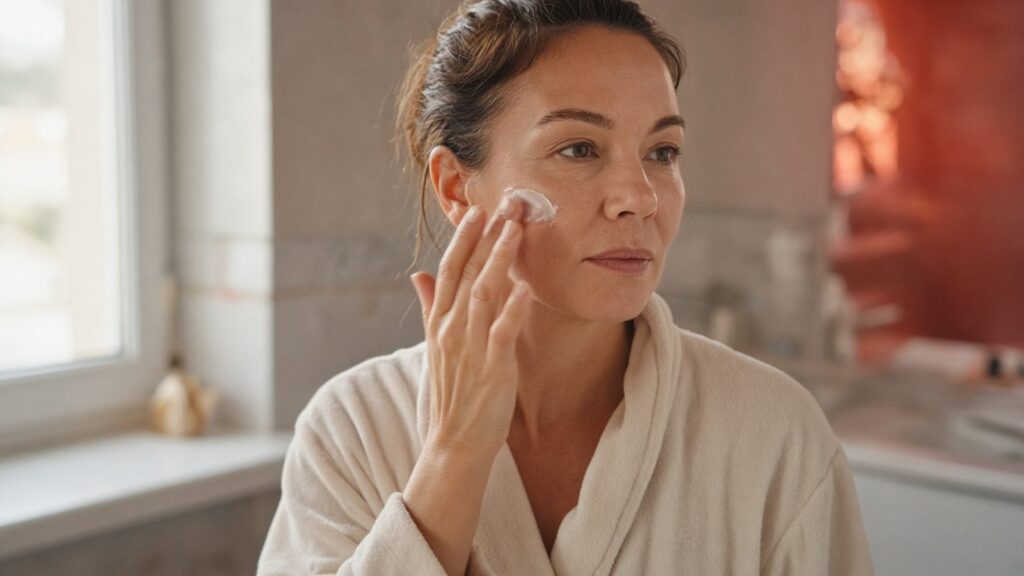

If your cheeks flush at the first sign of heat, sun or stress, you have probably wondered: does red light therapy help rosacea, or is it one more gadget that promises calm skin? The honest answer is that the research is early and small. Some clinical observations suggest LED light may help as an add-on to standard care, and dermatologists already use other light-based tools for rosacea. But there is no large trial showing that a home red light device can control rosacea on its own. This guide walks through what rosacea is, how the different light options compare, what the LED studies actually measured, and how to avoid turning a session into a flare.
What Is Rosacea and What Triggers It?
The National Institute of Arthritis and Musculoskeletal and Skin Diseases (NIAMS) describes rosacea as a long-term inflammatory skin condition that causes redness and a rash, usually on the nose and cheeks, and sometimes affects the eyes. Symptoms tend to come and go in flares. NIAMS notes there is no cure, but treatment can keep it under control, and improvement is usually gradual, often taking three months or longer.
Triggers vary from person to person. In a National Rosacea Society survey of 1,066 people with rosacea, the most common triggers were:
- Sun exposure (81%)
- Emotional stress (79%)
- Hot weather (75%)
- Wind (57%)
- Heavy exercise (56%)
- Alcohol (52%)
- Hot baths (51%)
Notice how many of those involve heat. That matters when you think about any device that sits close to your face.
Which Light Treatments Are Used for Rosacea?
“Light therapy” covers very different tools. Knowing the difference helps you read claims more clearly.
Intense pulsed light (IPL) and vascular lasers
These are in-office treatments. NIAMS lists lasers and intense pulsed light among rosacea treatments, noting they can help shrink visible blood vessels so they are less noticeable. A 2024 meta-analysis in the Journal of Cosmetic Dermatology pooled four studies (141 participants) comparing IPL with pulsed-dye laser (PDL). Both appeared effective; IPL had a slight edge in reaching more than 75% clearance, while PDL caused less pain. The authors stressed that direct comparisons are limited.
LED light (red, near-infrared, yellow)
LED devices deliver low-power light without the intense pulses used to target blood vessels. This is the category that includes most home red light panels and masks. The idea, often called photobiomodulation, is that certain wavelengths may influence inflammation and tissue repair rather than heat or destroy vessels.
What about blue light or UV?
UV is a common rosacea trigger, so it is not part of rosacea care at home. Blue light is mainly studied for acne, which can look similar to rosacea but is a different condition. If you are not sure which you have, a dermatologist can tell you.
Does Red Light Therapy Help Rosacea? What LED Studies Show
Here is what the published research looks like right now.
A 2025 review asked the question directly. Writing in Lasers in Medical Science, researchers reviewed photobiomodulation studies for rosacea. Based on the clinical and experimental work they found, they wrote that photobiomodulation could reduce rosacea hallmarks by lowering pro-inflammatory signals and immune cell infiltration. They also concluded that because few studies exist, more experimental and clinical research is needed to confirm efficacy.
A 2025 clinical observation tested LED as an add-on. In a retrospective study of 90 rosacea patients, also in Lasers in Medical Science, one group received oral hydroxychloroquine plus a topical growth-factor product; a second group added IPL; a third group added LED therapy. Physician-rated effective rates were 73.3% with IPL, 66.7% with LED and 40% with medication alone, and no significant adverse reactions were reported. The two light groups were statistically similar to each other. Keep in mind this was an observational clinic study, not a randomized trial, and LED was used on top of prescription treatment, not instead of it.
Earlier clinical experience was mixed. A 2015 review with clinical experience in the Journal of Clinical and Aesthetic Dermatology treated 21 patients with a yellow LED device for several conditions, including rosacea. Results for satisfaction and appearance were mixed and likely depended on device settings.
Put together, the evidence supports cautious curiosity, not confident promises. LED light looks reasonably well tolerated in these small studies and may help some people as part of a dermatologist’s plan. It has not been shown to replace prescription treatment.
Can Red Light Therapy Make Rosacea Worse?
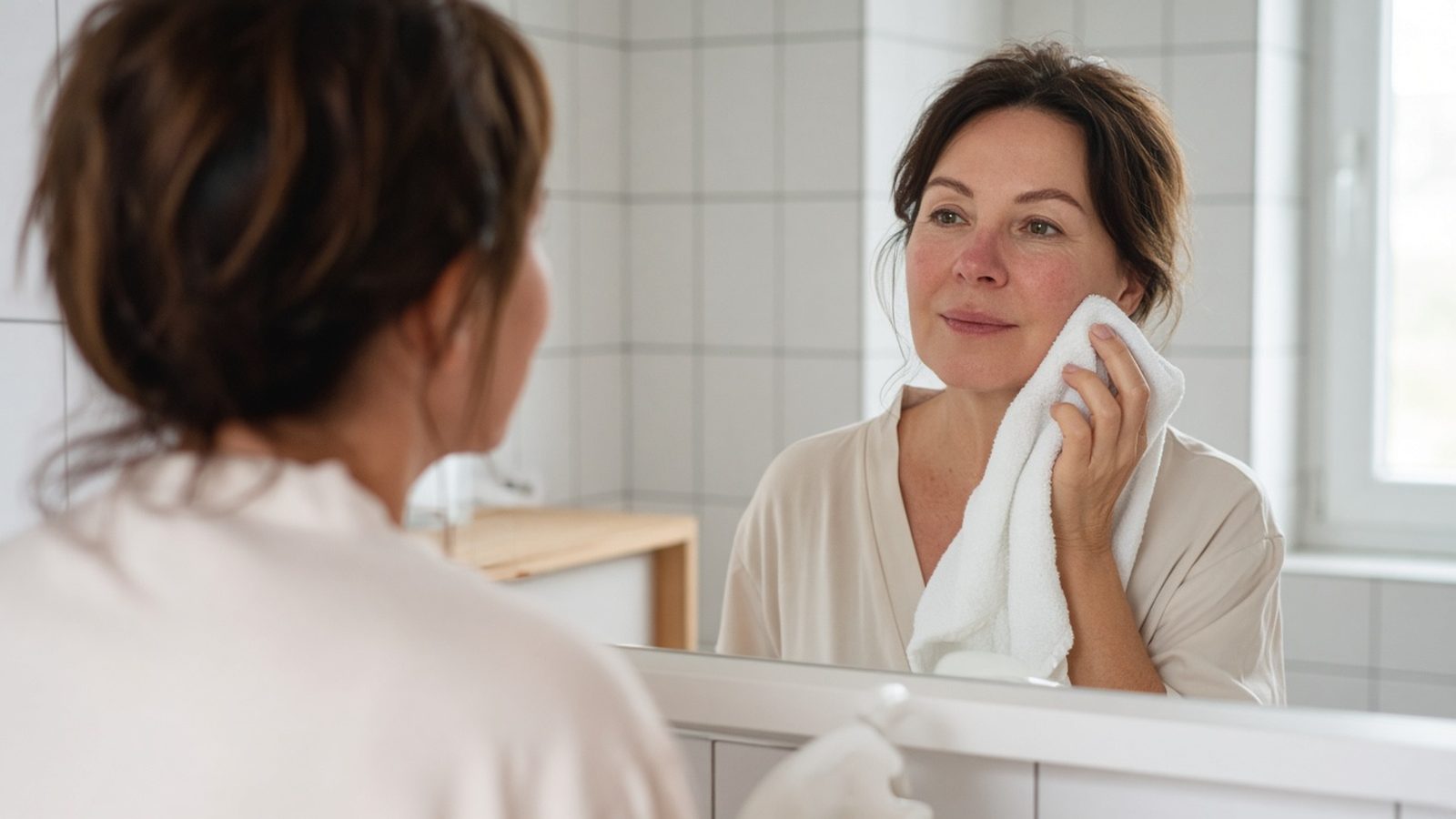
It can if the session adds heat. Hot weather, indoor heat and hot baths all show up near the top of the trigger list, and some higher-power panels feel warm at close range. Rosacea-prone skin is also often sensitive to products and friction.
Ways to lower the risk:
- Start farther away and shorter. Begin with a few minutes at the distance the manufacturer recommends, or a little farther, and see how your skin looks over the next 24 hours.
- Watch for warmth. If your face feels hot during a session, increase the distance or stop. Comfort is the goal.
- Use clean, bare skin. Skip active ingredients and fragrance right before a session.
- Protect your eyes. Use the eyewear that comes with your device, especially if you have ocular rosacea symptoms. NIAMS advises seeing a doctor promptly for eye irritation.
- Check your medications. Some drugs increase light sensitivity. Ask your pharmacist or doctor.
For dose basics, see our guide to red light therapy irradiance and dosage and our red light therapy safety guide.
How Can You Build a Rosacea-Friendly Routine With Red Light?
- Get a diagnosis first. Rosacea, acne, seborrheic dermatitis and other conditions can look alike.
- Keep your prescribed treatment. In the 2025 clinic study, LED was added to medication, not used alone.
- Track triggers. NIAMS suggests keeping a written record of what seems to make symptoms worse. Add your red light sessions to the same log.
- Be consistent but gentle. Short, regular sessions are easier to judge than occasional long ones.
- Protect from the sun daily. NIAMS recommends an SPF 30 or higher facial sunscreen every day.
- Give it time, then reassess. If you see more redness, burning or bumps, stop and check in with your dermatologist.
If you are comparing devices, our guide on how to choose a red light therapy device covers wavelengths, irradiance and treatment area. For general redness questions, see red light therapy and skin redness, and for reactive skin, red light therapy for sensitive skin.
What Should You Ask Your Dermatologist?
- Is this rosacea, and which subtype or symptoms do I have?
- Would IPL or a vascular laser make sense for my visible blood vessels?
- Is an LED device reasonable to add to my current treatment?
- Do any of my medications or skincare products make my skin more light-sensitive?
- What signs mean I should stop a session?
Learning how to read red light therapy studies can also help you weigh marketing claims against the actual data.
Frequently Asked Questions
Is red light therapy approved for rosacea?
We are not aware of a home red light device that has been cleared specifically to treat rosacea. Check each product’s labeling and talk with your dermatologist about whether it fits your plan.
Is red light the same as IPL?
No. IPL is an in-office treatment that uses intense pulses of broad-spectrum light to target blood vessels. LED red light is low-power, continuous light used at home or in clinics.
How long until I would notice a difference?
There is no reliable timeline for LED and rosacea. NIAMS notes that rosacea treatments in general often take three months or longer to show results.
Can I use red light therapy during a flare?
Many people choose to pause during an active flare, since warmth can add to redness. Ask your dermatologist what makes sense for you.
Can red light help ocular rosacea?
Do not shine light into irritated eyes. Eye symptoms need a doctor’s evaluation, because untreated ocular rosacea can affect vision.
The Bottom Line
Red light therapy for rosacea is a promising but thinly studied idea. Small studies suggest LED light may help as an add-on to standard care, with few side effects reported, but the research is not strong enough to call it a rosacea treatment on its own. Keep sessions cool and short, track your triggers, and talk with your dermatologist before adding a device to your routine.
Sources
- NIAMS. Rosacea: Overview, Symptoms and Causes. niams.nih.gov
- NIAMS. Rosacea: Diagnosis, Treatment and Steps to Take. niams.nih.gov
- National Rosacea Society. Rosacea Triggers Survey. rosacea.org
- Boaretto Netto JC, et al. Could photobiomodulation be used for treatment of rosacea? Lasers Med Sci. 2025. PubMed 40439755
- Zhang C, Song L. Intense pulsed light, light-emitting diode, and hydroxychloroquine in the treatment of rosacea: a clinical observation. Lasers Med Sci. 2025. PubMed 41073773
- Zhai Q, et al. Meta-analysis of the efficacy of intense pulsed light and pulsed-dye laser therapy in the management of rosacea. J Cosmet Dermatol. 2024. PubMed 39240125
- Opel DR, et al. Light-emitting diodes: a brief review and clinical experience. J Clin Aesthet Dermatol. 2015. PubMed 26155326
This article is for general education and is not medical advice. Talk with your doctor or dermatologist before starting any new treatment for a skin condition.