OVERALL
4.9
BEST FOR
Home User, Wellness Buyers, Premium Shopper
$699
WAVELENGTHS
660nm-850nm
IRRADIANCE
95 mW/cm²
COVERAGE AREA
720 sq in
WEIGHT
12 lbs
Our Review
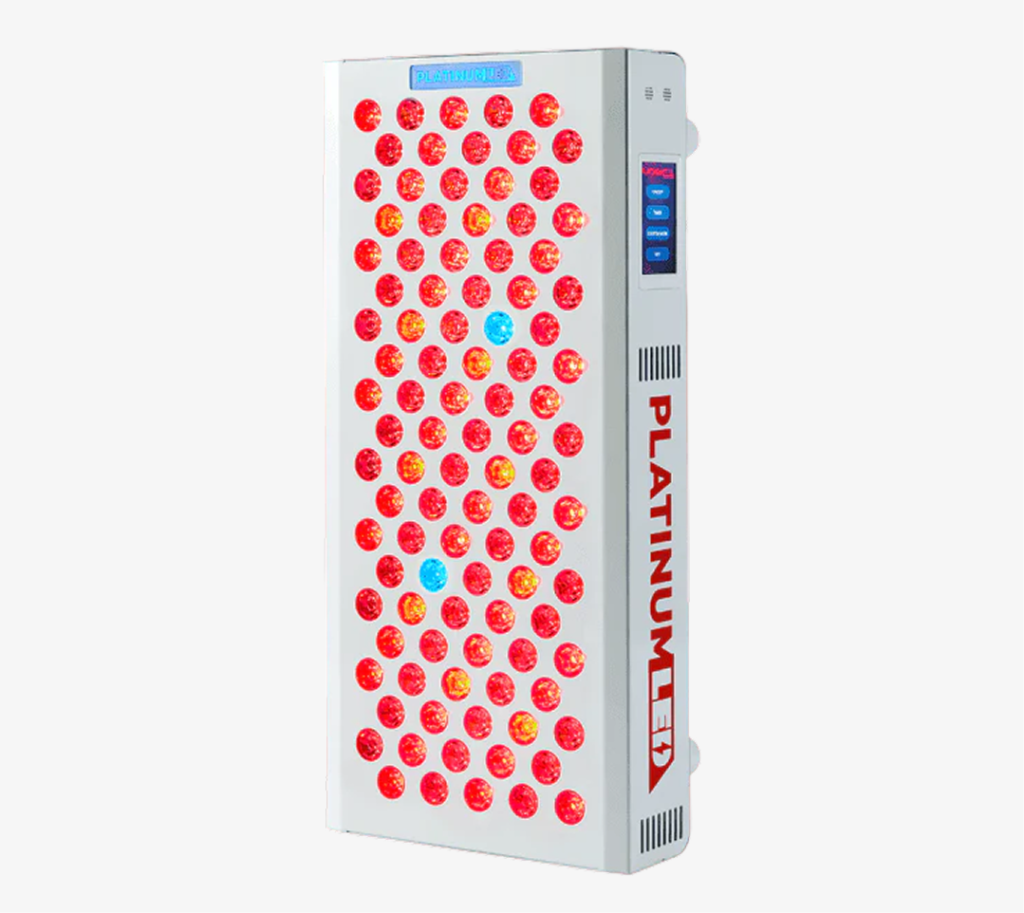
The PlatinumLED BIOMAX 300 is the smallest current panel in the BIOMAX lineup, but it carries many of the same features found on the larger models. Its 19-by-9-inch size makes it much better suited to targeted treatments than full-body sessions, while seven wavelengths, touchscreen controls, and modular support give it more flexibility than a basic tabletop panel.
At $659, though, this is a premium-priced compact panel. Someone who simply wants 660nm red and 850nm near-infrared light can find less expensive ways to get it. The BIOMAX 300 makes more sense for someone who specifically values the broader wavelength selection, control system, and ability to expand the setup later.
The BIOMAX 300 keeps everyday operation relatively straightforward despite having more features than a basic targeted panel. A digital touchscreen provides access to the main controls, while a built-in timer makes it easy to manage session length without keeping track separately.
A simple remote is also included, which is useful when the panel is positioned slightly farther away or somewhere that makes reaching the touchscreen inconvenient.
PlatinumLED offers additional app and remote options for buyers who want more control, although the standard BIOMAX line does not include the Smart Modes available with the newer BIOMAX Pro models.
At approximately 19 inches tall and 9 inches wide, the BIOMAX 300 is primarily a targeted panel. It works well for areas like the face, shoulder, knee, abdomen, individual muscles, and smaller sections of the torso.
The size becomes limiting when treating the back, legs, or several large areas during the same routine. Those sessions will require repeated repositioning, which can quickly make a larger BIOMAX panel more practical.
For someone who primarily wants targeted sessions, the smaller dimensions are an advantage. The BIOMAX 300 takes up less space, is easier to position, and does not require the kind of dedicated treatment area that a large full-body setup does.
The current BIOMAX 300 uses seven wavelengths at 480nm, 630nm, 660nm, 810nm, 830nm, 850nm, and 1060nm. That is an unusually broad wavelength selection for a compact panel and gives buyers considerably more variety than the traditional 660nm and 850nm combination.
The panel contains 100 LEDs and draws approximately 180 watts. PlatinumLED also lists a 100,000-hour rated LED lifespan, which provides plenty of theoretical operating life for regular home use.
Published EMF output is 0.0 µT at four inches. Those are strong electrical specifications for a panel of this size, although treatment coverage, positioning, and how consistently the device is used will have a greater impact on the everyday experience.
The touchscreen is one of the BIOMAX 300’s better features. It gives the small panel a more polished control system than basic devices that rely on a few physical switches.
The included timer and remote also make regular sessions easier to manage, particularly when the panel is positioned at a treatment distance that makes reaching the screen inconvenient.
Someone looking at the standard BIOMAX should understand that it does not include all of the functionality available on the BIOMAX Pro line. Buyers specifically interested in Smart Modes and the newer control experience will need to compare the two ranges rather than assuming those features are included here.
Modular support is one of the strongest reasons to consider the BIOMAX 300 instead of a less expensive standalone targeted panel. BIOMAX panels can be connected into larger configurations as treatment needs grow.
That means starting with the 300 does not necessarily leave the buyer with a redundant small panel if broader coverage becomes important later. It can become part of a larger BIOMAX setup instead.
This makes the BIOMAX 300 particularly interesting for someone who wants to start small but already suspects that full-body red light therapy may eventually become part of the routine.
The BIOMAX 300 does not use dual-chip LEDs. PlatinumLED favors a single-chip arrangement across the BIOMAX system rather than combining multiple wavelength chips within individual LED lenses.
That is primarily a design choice rather than an automatic advantage or disadvantage. Someone specifically looking for dual- or multi-chip LEDs and more blended wavelength distribution should keep the difference in mind when comparing panels.
At $659, the BIOMAX 300 is expensive for a panel of this size. There are considerably cheaper compact systems available for someone whose main priority is simply getting red and near-infrared light on a targeted area.
The additional cost makes more sense when the seven-wavelength spectrum, touchscreen controls, modular compatibility, timer, remote, and broader BIOMAX ecosystem are features the buyer will actually use.
Coverage should also factor into the decision. Someone already expecting to treat the back, legs, torso, and several other areas regularly may be better off putting the $659 toward a larger panel rather than repeatedly repositioning the 300.
The BIOMAX 300 comes with a three-year warranty, which provides useful protection for a premium-priced electronic device.
That warranty is particularly valuable for someone planning to build a larger modular BIOMAX system over time, since the original panel may remain part of the setup for years rather than being replaced when more coverage is added.
PlatinumLED’s return conditions should be reviewed more carefully. Buyers should understand any return shipping costs or applicable fees before purchasing, particularly if they are uncertain whether the BIOMAX 300 provides enough coverage for their intended routine.
For the BIOMAX 300, the most useful customer feedback concerns build quality, controls, reliability, fan noise, positioning, and whether the smaller treatment area remains convenient with regular use.
Coverage is particularly worth paying attention to because the 300 can look substantial in product photos while still being a relatively compact panel in practice. Long-term owner feedback can help show whether buyers remain satisfied with that size or eventually decide to expand their setup.
The seven-wavelength spectrum gives the BIOMAX 300 considerably more wavelength variety than most basic compact panels.
The touchscreen, built-in timer, and included remote make everyday operation straightforward while still providing more control than a simple on-and-off panel.
Modular support is another strong feature. Buyers can start with the BIOMAX 300 and incorporate it into a larger system later rather than replacing it completely when they want more coverage.
We also like the 100,000-hour rated LED lifespan, low published EMF output, and three-year warranty, which give the panel a solid supporting set of specifications.
The $659 price is high for a targeted panel. Someone who only wants basic red and near-infrared light can find considerably less expensive options.
Coverage is limited by the 19-by-9-inch size. Treating the back, thighs, torso, or several areas during one routine requires enough repositioning that a larger panel may be worth the additional investment.
The standard BIOMAX 300 also misses some of the newer features available on the BIOMAX Pro range, including Smart Modes.
Buyers specifically looking for dual- or multi-chip LEDs will not find them here, since PlatinumLED uses a single-chip approach.
The PlatinumLED BIOMAX 300 packs a surprisingly broad feature set into the smallest panel in the current BIOMAX lineup. Seven wavelengths, 100 LEDs, touchscreen controls, a timer, remote, low published EMF, modular compatibility, and a three-year warranty make it considerably more sophisticated than a basic targeted light.
The main question is whether those features justify paying $659 for a 19-by-9-inch panel. Someone who only needs basic red and near-infrared light can spend less, while someone who already wants extensive body coverage may be better served by starting with a larger model.
It’s ideal for someone who wants a premium compact panel with broad wavelength coverage and the ability to expand into a larger modular system later. Buyers primarily concerned with price or maximum treatment coverage will find stronger value elsewhere in the market.
Key Features
Runs 480, 630, 660, 810, 830, 850 and 1060nm together, spanning blue through deep near-infrared in a single panel.
Forty-eight red, fifty near-infrared and two blue LEDs draw 180W and measure 90 mW/cm2 at six inches from centre.
Backed by a three-year manufacturer warranty across a 19 x 9 inch treatment area.
Full Specifications
Wavelengths:

Final Verdict
4.9
Tec Specs
Wave Lengths
660nm-850nm
IRRADIANCE:
95 mW/cm²
Coverage Area:
720 sq in
Overall Category Scores
Category
Score
Best Quality
Ease of Use
Features
Value
Support
Staying informed with the latest research and reviews.

10 Minute Read
10 Minute Read
10 Minute Read