OVERALL
5
BEST FOR
Home User, Wellness Buyers, Premium Shopper
$999.00
WAVELENGTHS
630nm-850nm
IRRADIANCE
150–210mW/cm²
COVERAGE AREA
Full-Body
WEIGHT
15 lbs
Our Review
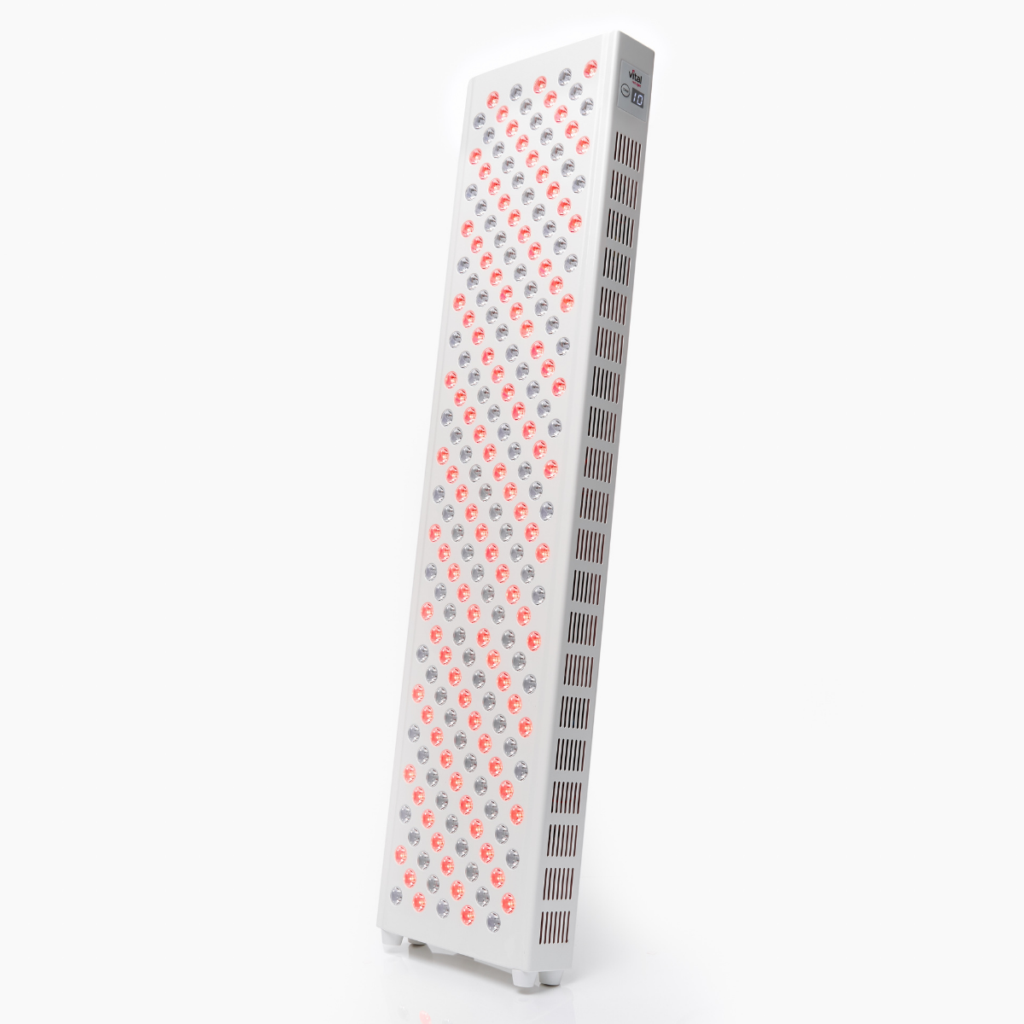
If what you really want from a red light therapy panel is enough coverage to stop treating your body one small section at a time, the Vital Elite is where we’d start. Its taller treatment area makes sessions across the torso, back, legs, and larger muscle groups considerably more practical than they are with a compact panel, while the relatively slim design keeps it realistic for home use. At $999, you’re getting the kind of coverage that meaningfully changes the treatment experience without having to move into an oversized or commercial-style system.
The Elite is also a strong option if you already know you prefer traditional red and near-infrared light and don’t need every newer feature available on the Elite 2.0. Its four-wavelength platform keeps the experience focused and straightforward, and there’s something appealing about that. You can walk up to the panel, start your session, and get the broad coverage you paid for without navigating additional colors, presets, or touchscreen controls. The Elite 2.0 is the better choice if you specifically want those capabilities, but for $999, the original Elite delivers the premium large-area experience exceptionally well.
The Vital Elite uses four wavelengths: 630nm and 660nm red light alongside 810nm and 850nm near-infrared light. It’s a deliberately focused combination that gives you multiple wavelengths across both red and near-infrared light without adding modes you may never use.
That’s an important distinction when comparing it with the Elite 2.0. The newer model expands into nine wavelengths spanning blue, yellow, red, and near-infrared light. The original Elite isn’t trying to duplicate that. It’s built around the core red and near-infrared experience, which makes it especially appealing if that’s what brought you to red light therapy in the first place.
We actually think that simplicity works in the Elite’s favor for the right person. More wavelengths can absolutely provide more flexibility, but they also matter only if you’re going to use them. If you’re primarily interested in broad red and near-infrared exposure, paying for blue light, yellow light, additional wavelengths, and a more advanced control system isn’t automatically a better investment.
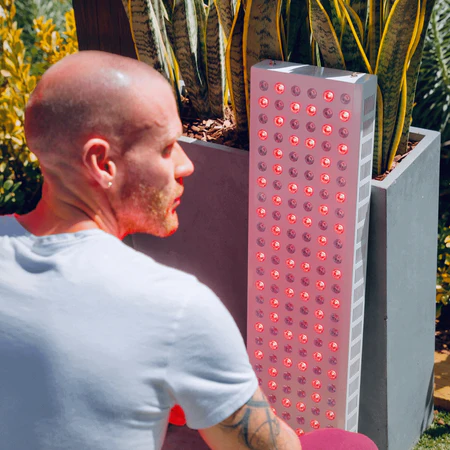
Where the Elite earns its premium is size. At approximately 36.6 inches tall, it gives you almost three times the treatment height of the Pro while remaining relatively narrow at 8.5 inches wide. That combination gives you substantially more vertical coverage without requiring the kind of wall space associated with much larger full-body systems.
That’s what we’d focus on when deciding whether the Elite is worth moving up to. The difference isn’t simply that you’re buying a bigger piece of equipment. You’re buying your way out of a lot of the repositioning that comes with smaller panels. Over months or years of regular use, that’s the kind of upgrade you’re likely to appreciate far more than another feature buried in a settings menu.
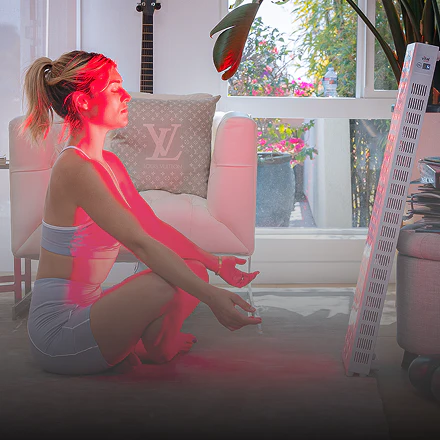
The Elite starts making sense the moment you use red light therapy across more than one small area. With a compact panel, treating your upper body and then your legs can quickly become a sequence of separate positions. The Elite gives you enough vertical treatment area that considerably more of the body can receive light at the same time.
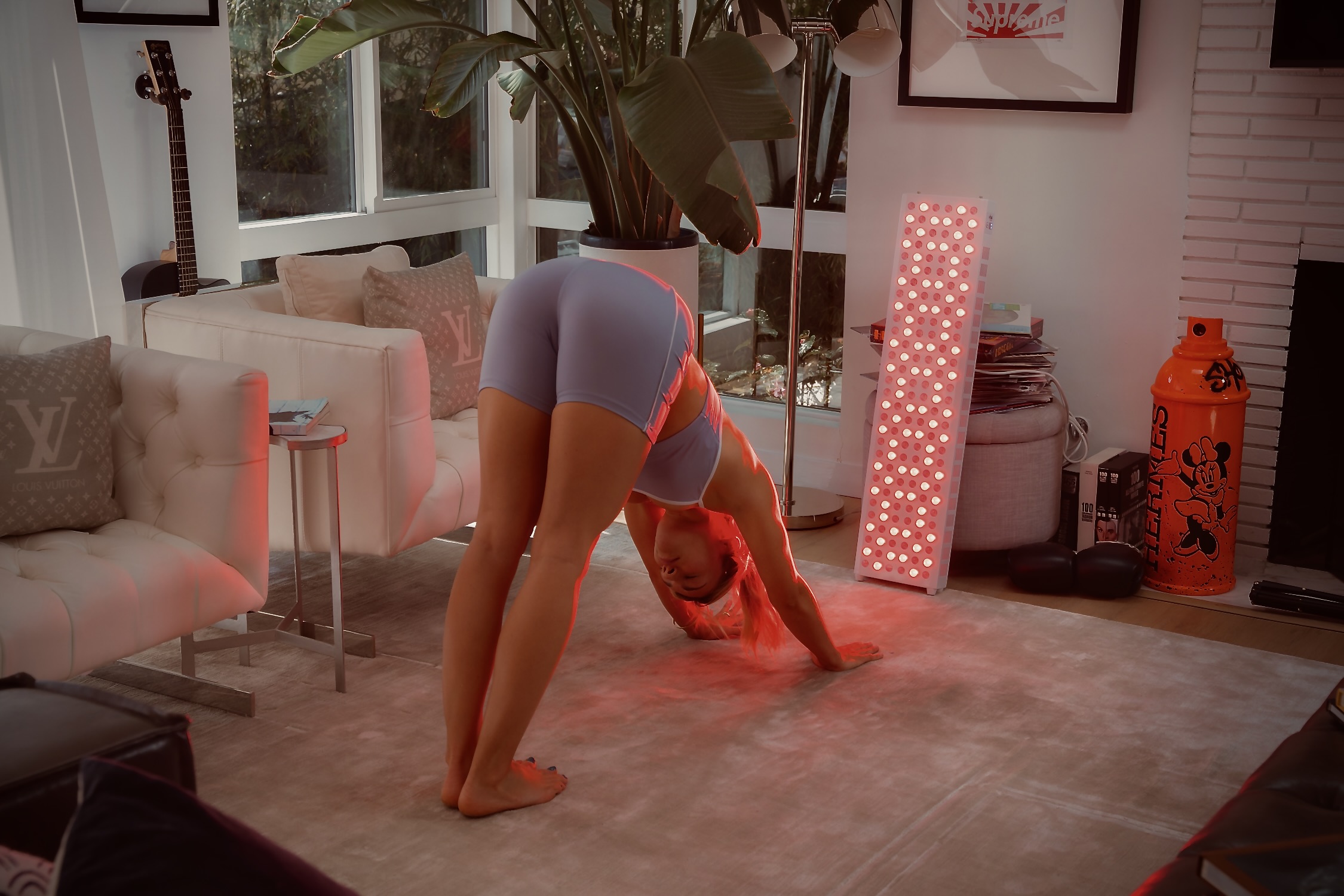
For torso and back sessions, that’s a particularly noticeable advantage. Instead of illuminating one small section and then moving the panel or yourself several times, you can work across a much larger area in one position. The same applies when you’re focusing on larger muscle groups or want more extensive leg coverage.
It’s still important to understand what the Elite isn’t. At 36.6 inches tall, this isn’t a true head-to-toe system. Depending on your height and what you’re treating, some repositioning will still be necessary for complete full-body sessions. You’ll also need to turn around if you want equal exposure across your front and back.
We don’t think that undermines the Elite’s value. There’s a substantial difference between repositioning once to reach another major section of the body and repeatedly working your way across multiple small treatment zones. The Elite eliminates enough of that inconvenience to make broad routines feel considerably more polished.
The straightforward red and near-infrared platform contributes to that simplicity. There isn’t much standing between you and actually completing a session. For someone who wants red light therapy to become a consistent part of the week rather than another wellness routine requiring constant adjustment, that’s exactly how we’d want a large home panel to behave.
At $999, the Vital Elite is where we’d spend more specifically for coverage. You’re not paying a premium because the device has a longer feature list than everything below it. You’re paying because the larger treatment area can save you time and repositioning every single time you use it.
We think that’s a much easier upgrade to justify than paying for technology you aren’t sure you’ll need. If you’ve been looking at smaller panels and already know that treating your torso, back, legs, and other large areas individually sounds tedious, the Elite addresses that problem directly.
The Elite 2.0 is naturally the comparison we’d make before buying. It costs more, but you get nine wavelengths, blue and yellow light, additional red and near-infrared wavelengths, touchscreen controls, presets, and a more advanced overall platform. For someone who wants maximum versatility, we’d spend the additional money and buy the 2.0 once.
But we wouldn’t upgrade automatically. If your routine is centered around traditional red and near-infrared light, the original Elite gives you the part of the experience you’re likely to notice most often: substantial coverage. Saving the difference while keeping the same general large-panel format can make the $999 Elite the smarter purchase.
That’s why we think it holds such a strong position in Vital’s lineup. It’s premium where it matters physically. The panel is large enough to noticeably improve how you complete broad treatments, but the price hasn’t been pushed higher by adding an entire suite of capabilities that some owners simply don’t need.
The Elite measures approximately 36.6 x 8.5 x 2.3 inches, so we’d approach setup differently than we would with the Pro or Charge. This is a panel that benefits from having its own place. Once you’ve found the right treatment location, we’d leave it there and make starting a session as effortless as possible.
Vital includes wall-hanging and door-mount hardware, which gives you practical options without immediately requiring another accessory purchase. A door-mounted setup can be particularly useful if you want the larger treatment area but don’t want the panel permanently occupying floor space.
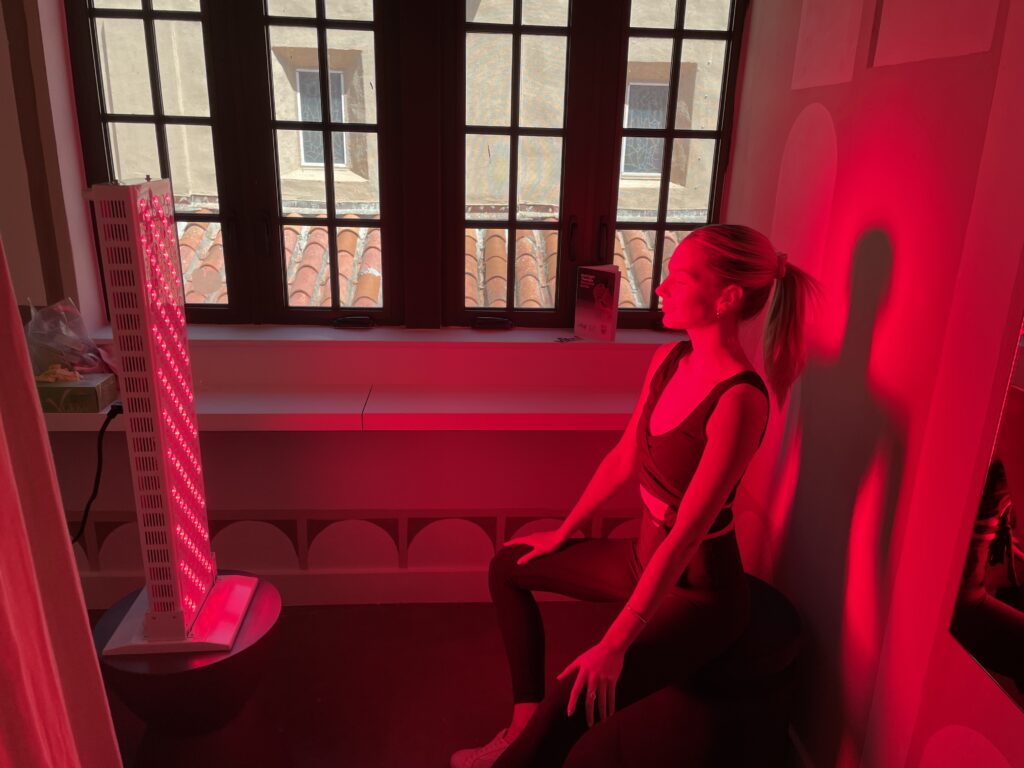
If you’re planning a more dedicated wellness area, wall mounting can make the Elite feel like a much more integrated part of the room. Either way, we’d measure more than the panel itself before deciding where it goes. You’ll want enough space in front of it to position yourself comfortably, adjust your distance, and turn around without moving furniture every time.
We wouldn’t buy the Elite expecting it to move around the house with you. That’s what the Charge and smaller Pro are better at. The Elite’s advantage comes from being ready when you are: walk over, start the panel, complete a broad session, and move on with your day.
Vital backs the Elite with a three-year warranty and a 30-day trial period. We think three years is meaningful protection at this price because the Elite is the kind of panel you’re purchasing with long-term use in mind. You’re not spending $999 on something you expect to replace as your routine becomes more established.
The trial period is particularly useful for figuring out whether the treatment area is the right size for you. Specifications can tell you the Elite is 36.6 inches tall, but actually standing in front of it will tell you much more about whether that amount of coverage feels substantial enough for the areas you regularly want to treat.
We’d use that first month to pay attention to positioning. If broad torso, back, and leg sessions suddenly feel much easier than they would with a smaller panel, the Elite is doing exactly what you paid for. If you immediately wish you had more coverage or more advanced controls, we’d rather recognize that during the trial than spend years wishing you’d chosen the Elite 2.0 or a larger configuration.
The three-year warranty also fits the premium positioning well. A device at this level should come with enough manufacturer support that you’re comfortable making it part of a long-term routine, and the Elite delivers that reassurance without asking you to pay separately for basic protection.
Vital has accumulated substantial customer feedback across its broader red light therapy lineup, with owners frequently discussing build quality, ease of use, treatment routines, and their overall experience with the company’s devices. We’d still separate that brand-level reputation from feedback clearly tied to the Elite rather than treating every Vital review as though it came from someone who owns this exact panel.
For the Elite, the ownership experience we’d care about most is coverage. Does the taller panel actually reduce how often people reposition themselves? Is the 8.5-inch width sufficient for the way they use it? Does having the panel permanently mounted make them more consistent? Those practical details tell us considerably more about whether the Elite succeeds than a general comment about how bright the LEDs appear.
We’d also pay attention to whether owners continue appreciating the simpler controls over time. The Elite 2.0 unquestionably gives you more technology, but not everyone wants their red light routine to involve choosing between nine wavelengths and multiple treatment options. There is still real value in equipment that does the fundamentals extremely well and remains easy to use.
That’s ultimately what makes the Vital Elite compelling. Its 630nm, 660nm, 810nm, and 850nm wavelength combination gives you a strong red and near-infrared foundation, while the substantially taller treatment area addresses one of the biggest frustrations people encounter when moving beyond targeted red light therapy: constantly repositioning a smaller device.
The Elite isn’t Vital’s most technologically advanced consumer panel, and we don’t think it needs to be. At $999, you’re getting a premium large-area system that prioritizes the two things many people actually want from red light therapy equipment: substantial coverage and an experience simple enough to use consistently. If you specifically want blue light, yellow light, nine wavelengths, touchscreen controls, and more customization, we’d move straight to the Elite 2.0. But if your priority is excellent red and near-infrared therapy across much larger areas of the body without paying for capabilities you don’t need, the original Elite remains an exceptionally strong value. It feels less like the older model and more like the deliberately streamlined choice.
Key Features
Broad vertical coverage for torso, back and legs.
Four red and near-infrared wavelengths.
Larger high-output LED array.
More setup flexibility out of the box.
Simple timed sessions.
Designed for low exposure during normal use.
Full Specifications
Wavelengths:
Final Verdict
5

Join red light therapy users comparing devices, sharing protocols, and posting honest results. Free to join, no sales pitch.
Protocol sharing
Device comparisons
Safety-first advice
Tec Specs
Wave Lengths
630nm-850nm
IRRADIANCE:
150–210mW/cm²
Coverage Area:
Full-Body
Overall Category Scores
Category
Score
Best Quality
Ease of Use
Features
Value
Support
Staying informed with the latest research and reviews.
10 Minute Read
10 Minute Read