Red light therapy for dogs is having a moment. Pet owners are buying at-home devices for their dogs, and more vet clinics are adding them to their treatment menus. But does it actually work, or is it just another wellness trend riding the hype? The short answer: there’s real science behind it, with some important catches. Here’s what the research says and what you should know before trying it on your own dog.
What Is Red Light Therapy for Dogs?
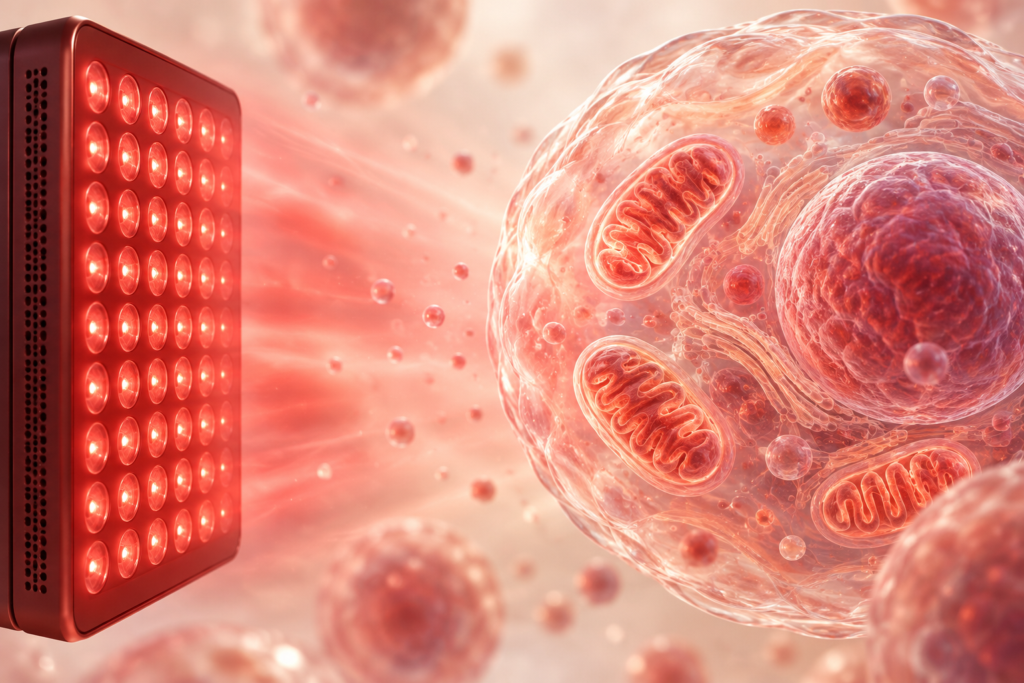
Red light therapy goes by a more technical name: photobiomodulation, or PBM. It uses red and near-infrared light to reach the cells under your dog’s skin. The light doesn’t burn or heat the tissue. Instead, it gives the cells a gentle boost.
Here’s the simple version of how it works. The light helps cells make more energy, a fuel called ATP. With more energy, cells can do their jobs better. That can mean less inflammation, less pain, and faster healing. The best part is that this same biology works across people and animals, so the idea isn’t far-fetched at all.
Red Light Therapy for Dogs: What does it help?
Not every claim about red light holds up, but a few uses have solid support. These are the ones backed by the strongest research:
- Arthritis and joint pain. This is the area with the best evidence. Red light can ease stiff, sore joints and help dogs move better.
- Wound healing. It may speed up healing for surgical cuts, hot spots, and bite wounds.
- Post-surgery recovery. It can help reduce swelling and support tissue repair after an operation.
- Soft tissue and muscle injuries. Sprains, strains, and similar injuries may recover faster.
- Certain skin problems. Stubborn spots like lick granulomas sometimes respond well.
One honest note: red light works best as an add-on to regular vet care, not as a cure-all. Think of it as a helper, not a replacement for proper treatment.
What the Research Proves
This is where red light therapy earns its keep. The evidence in red light therapy for dogs is real, though still growing.
The standout study is a 2018 randomized, placebo-controlled trial in the Canadian Veterinary Journal. Researchers treated 20 dogs with elbow arthritis. The results were striking: 9 out of 11 dogs (about 82%) in the red light group were able to cut back on their pain medication, compared to none of the dogs in the placebo group. The treated dogs also showed clear improvements in pain and limping. That’s a strong result for a non-drug option.
A more recent 2022 trial in the American Journal of Veterinary Research also tested photobiomodulation in dogs with osteoarthritis and added to the case that it helps with joint pain.
The benefits aren’t limited to arthritis. A 2017 study, also in the American Journal of Veterinary Research, looked at dogs recovering from spinal surgery. It found that pairing red light therapy with physical rehab supported their early recovery. That backs up its use after operations.
Want the big-picture view? A 2023 systematic review in the journal Animals pulled together the research on laser and light therapy in animals. It found a growing body of evidence, with the strongest support for pain and wound healing.
Maybe the most telling sign is who now backs it. The 2022 AAHA Pain Management Guidelines for Dogs and Cats, published by the American Animal Hospital Association, list photobiomodulation as a recommended non-drug option for managing chronic pain. When a major vet body puts it in their official guidelines, that’s about as solid as endorsements get.
Not All Home Devices Are the Same: Choose Your Red Light therapy for Dogs Carefully
Here’s the part that trips up most pet owners. Red light devices are not all built the same, and the gap between a good panel and a cheap one is huge. This is where you need to pay attention, because the wrong device can leave you thinking red light doesn’t work at all.
The bargain gadgets flooding online marketplaces often promise the world and deliver almost nothing. They put out weak light, skip the wavelengths that matter, and cover only a tiny patch of skin. A device like that may do little more than glow. That’s the kind of overpromised product that gives the whole category a bad name.
A quality panel is a different story. When you shop, these are the features that actually drive results:
- Power, also called irradiance. This is how much light energy truly reaches the tissue. Too little and the light never gets deep enough to help. A strong, well-built panel delivers a real dose that can reach sore joints and muscles, not just the surface.
- The right wavelengths. The research points to red light around 630 to 660nm and near-infrared around 810 to 850nm. Near-infrared goes deeper, which matters for joints and muscles. A good panel uses both. Cheap ones often skip near-infrared completely.
- Coverage area. A larger panel treats more of your dog in one session, so you get real, even coverage instead of trying to spot-treat a hip through a tiny beam.
- Honest specs. Trustworthy makers publish their exact wavelengths and irradiance numbers. If a device hides its specs and leans only on flashy before-and-after photos, treat that as a red flag.
So the takeaway isn’t to skip home devices. It’s to choose carefully. A cheap, overpromised gadget wastes your money and your dog gets nothing out of it. A properly built panel, used at the right dose and on a steady schedule, can deliver the kind of results the studies describe. If you’re not sure how to match the dose to your dog’s needs, your vet can help you dial it in.
Is Red Light Therapy for Dogs?
The good news is that red light therapy is very well tolerated. Side effects are rare, which is part of why vets are comfortable adding it to a care plan.
Still, a few safety rules matter:
- Never aim it at or near the eyes. This holds true even when your dog’s eyes are closed. Light can damage the eyes, so keep it well away.
- Skip it over lumps or suspected tumors. Don’t use red light on a growth without your vet’s sign-off.
- Avoid active infections. These need proper medical treatment first.
- Check with your vet. Always loop them in before you start, especially if your dog has a health condition.
Treat red light as a low-risk helper, not a substitute for a real diagnosis.
Should You Try Red Light Therapy for Your Dog?
The evidence is promising, especially for joint pain, wound healing, and recovery after surgery. Major vet groups recommend it, and the studies keep stacking up in its favor.
But it works best when three things line up: the right device, the right dose, and the guidance of your vet. Used that way, red light therapy can be a genuinely useful tool in your dog’s care. Just go in with clear eyes. It’s one helpful piece of the puzzle, not a miracle cure.
If your dog is dealing with arthritis, a slow-healing wound, or a tough recovery, talk to your vet about whether red light therapy for dogs could be a smart addition to the plan.