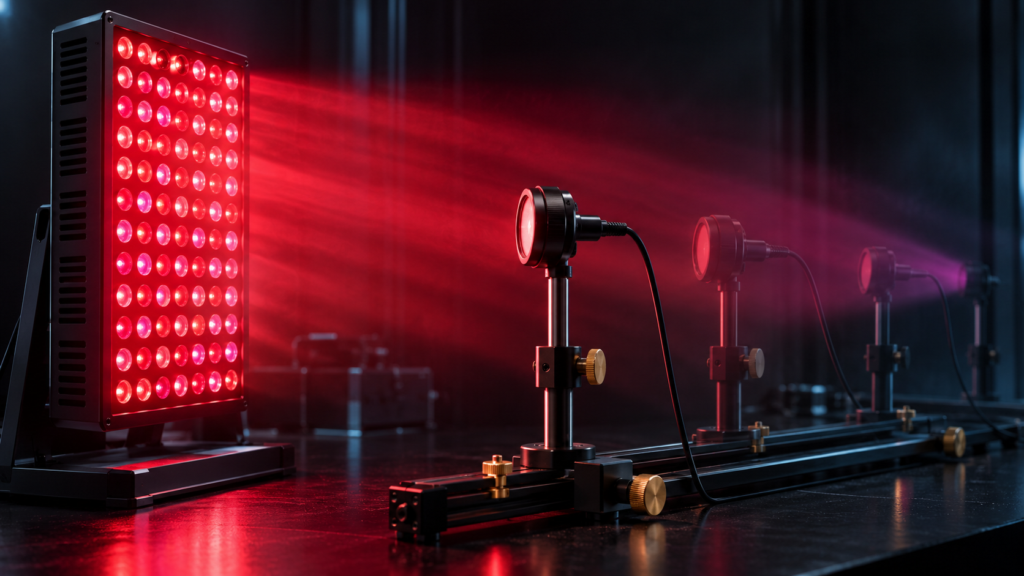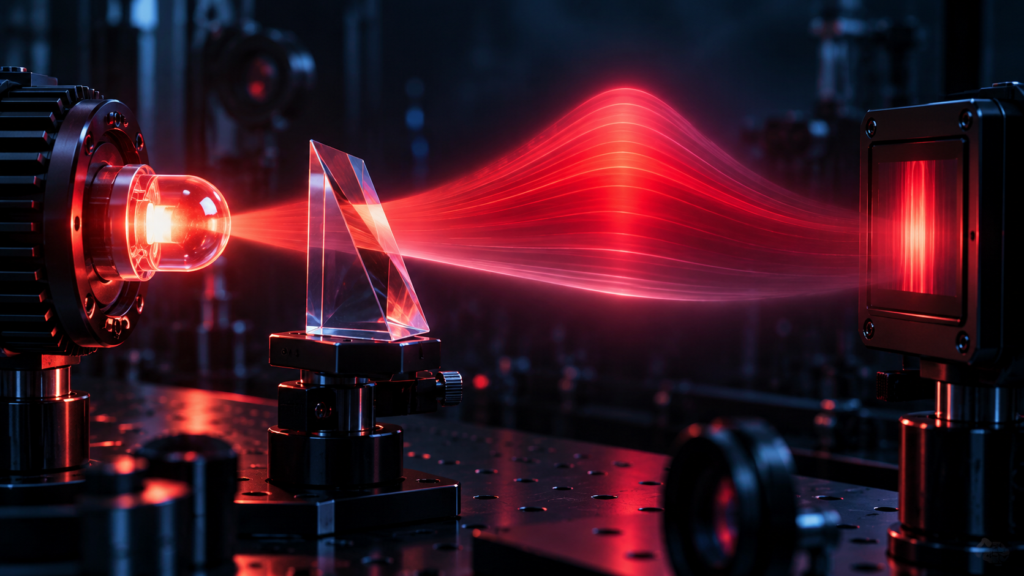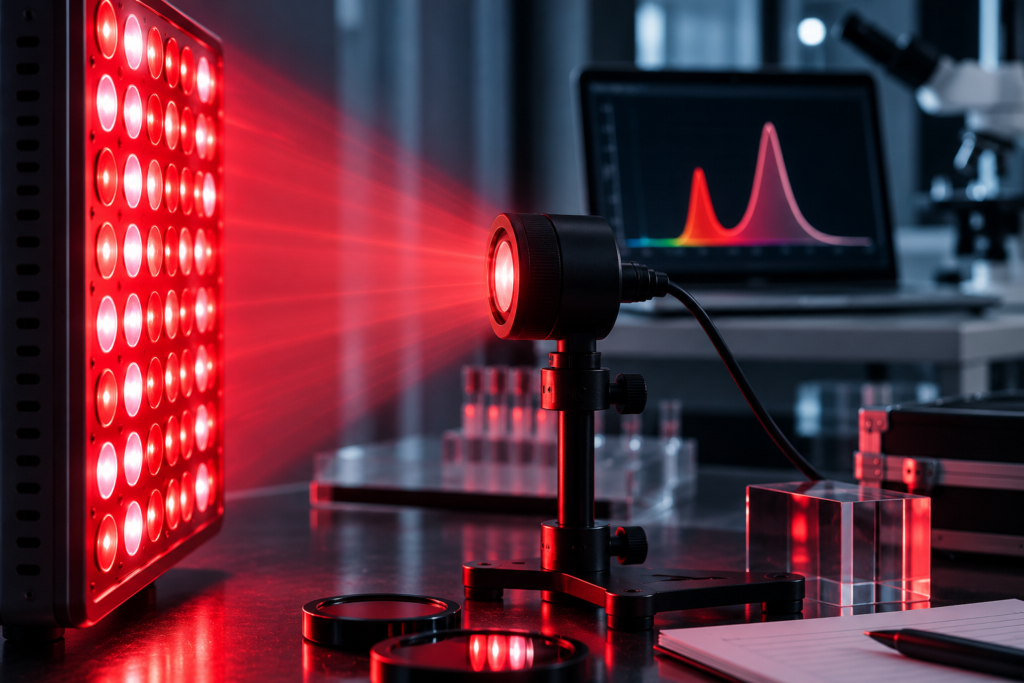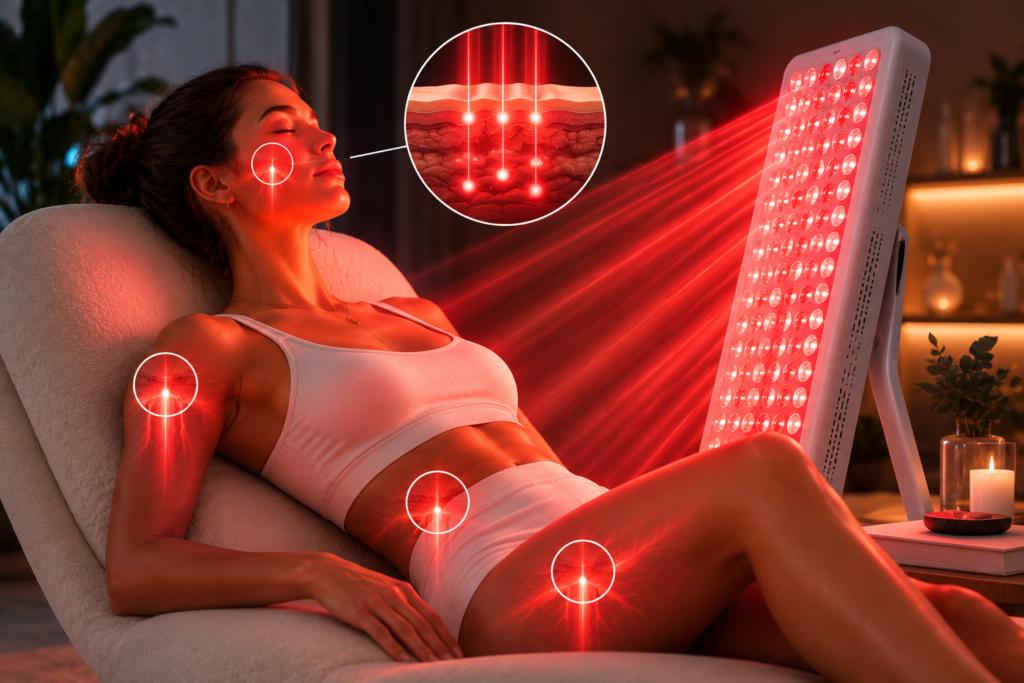

Spend five minutes shopping for a red light therapy device and you will see numbers like 660 nm and 850 nm everywhere. These figures are not marketing decoration — they describe the wavelength of light a device emits, and wavelength is one of the most important factors in how light interacts with your body. This guide explains red light therapy wavelengths, what those numbers mean, and how to use them to make sensible decisions when comparing devices.
Understanding red light therapy wavelengths doesn’t require a physics degree. A few core ideas will help you read a spec sheet with confidence and avoid marketing hype.
What Red Light Therapy Wavelengths Actually Mean
Light travels in waves, and the distance between wave peaks is the wavelength, measured in nanometers (nm). Different wavelengths appear as different colors, and they behave differently when they meet skin and tissue. In red light therapy, the wavelengths of interest fall roughly between 600 and 900 nm — the red and near-infrared portion of the spectrum.
Within that band, two values dominate consumer devices: around 660 nm (visible red) and around 850 nm (near-infrared). You will also see 630 nm and 810 nm and similar figures. These are not random; they sit within ranges researchers associate with absorption by cellular targets and reasonable passage through skin.
Why Red Light Therapy Wavelengths Matter
Two things change with wavelength: how deeply light travels, and how well cellular molecules absorb it.
Depth of Penetration
Research measuring light in human tissue shows that longer wavelengths generally penetrate deeper. Shorter red wavelengths act mainly at the surface and just below; longer near-infrared wavelengths reach further into tissue. Computational and laboratory studies on light–tissue interaction reinforce that penetration increases with wavelength across this range.
Absorption by Cellular Targets
The mitochondrial enzyme cytochrome c oxidase, a leading candidate for light absorption in photobiomodulation, responds to particular bands of red and near-infrared light. This is part of why devices cluster around specific wavelengths rather than using just any red-looking light.
Matching Red Light Therapy Wavelengths to Your Goal
Because depth differs, wavelength choice often follows your goal. Visible red around 630–660 nm is commonly emphasized for skin-surface goals such as the appearance of fine lines, tone, and texture. Near-infrared around 810–850 nm is commonly emphasized for goals involving deeper tissue, like muscle and joint recovery.
Many devices include both so you are not locked into one goal. If you primarily care about skin, prioritize a strong red output; if you care about recovery, make sure near-infrared is well represented.

Is There a Best Red Light Therapy Wavelength?
No. Despite confident marketing claims, there is no universally proven “best” wavelength for all purposes. The most appropriate wavelength depends on what tissue you are trying to reach and what you are trying to support. Studies use a range of wavelengths and report a range of results, which is exactly why blanket claims should be treated with caution.
Red Light Therapy Wavelengths Aren’t the Whole Picture
It is tempting to obsess over nanometers, but wavelength works together with dose. Irradiance (how much light energy reaches a surface) and time combine to determine the total dose, and research shows a biphasic response — a moderate dose helps, while too much can backfire. A device with ideal wavelengths used at the wrong distance or for too long will not necessarily deliver better results.

How to Compare Red Light Therapy Wavelengths
When evaluating a device, look for clearly stated wavelengths (for example, 660 nm and 850 nm), an honest description of whether it is red, near-infrared, or both, and information about irradiance at a stated distance. Be skeptical of vague claims like “advanced healing light” without specific numbers. Transparency about wavelength and output is a reasonable signal of a serious product.
Irradiance: The Other Half of the Dose
Wavelength tells you what kind of light a device emits, but it says nothing about how much. That is where irradiance comes in. Irradiance is the amount of light energy reaching a surface, usually expressed in milliwatts per square centimeter (mW/cm²). Multiply irradiance by exposure time and you get the total dose, often expressed in joules per square centimeter (J/cm²).
Two devices with identical wavelengths can deliver very different doses if their irradiance differs, or if you sit at different distances. Irradiance also falls off quickly as you move farther from a panel, which is why the manufacturer’s stated distance matters so much. A device with ideal wavelengths used too far away may deliver too little light to matter; used too close or too long, it may push past the helpful range described by the biphasic dose curve.
Red Light Therapy Wavelength Marketing Traps
Wavelength is a favorite marketing hook, so it pays to stay grounded. Be wary of vague phrases like “advanced therapeutic light” with no specific nanometer values listed. Be skeptical of the assumption that more wavelengths automatically means a better device; additional wavelengths only help if they match your goals and are delivered at a useful dose. Watch for products that highlight wavelength while staying silent about irradiance or distance, since both are essential to dose. And treat any claim of being “FDA approved” with care: many consumer light devices are cleared, registered, or simply marketed as general wellness products rather than formally approved for specific medical uses, and that distinction is meaningful.
A Simple Way to Think About It
If wavelength is the “type” of light, irradiance and time together are the “amount.” Getting good results means getting both right: a wavelength suited to your goal, delivered at a sensible dose and distance. Neither number alone tells the whole story, and a device that is honest about all three — wavelength, irradiance, and recommended distance — gives you the information you need to use it well and to compare it fairly against alternatives.
Questions to Ask Before You Buy
A short checklist can keep wavelength claims in perspective when you compare devices. What exact wavelengths does the device emit, in nanometers? Does it offer red, near-infrared, or both, and does that match your goal? What is the irradiance, and at what distance was it measured? What distance and session time does the manufacturer recommend? And does the company describe what the device does in measured language, or does it lean on dramatic promises? Devices that answer these questions clearly tend to be more trustworthy than those that hide behind vague terms. You do not need the highest numbers on the market — you need honest numbers that fit your goal and a dose you can use consistently and safely.
The Bottom Line
Red light therapy wavelengths determine how deeply light travels and how well cells absorb it, which is why 660 nm and 850 nm appear so often in quality devices. Use wavelength to match a device to your goal — red for the surface, near-infrared for depth — but remember that correct dosing matters just as much as the number on the box.
Ready to get your red light therapy device? See our brand and product reviews, and try out our product comparison tool to inform your decision.
Frequently Asked Questions
What do red light therapy wavelengths 660 nm and 850 nm mean?
The most common red light therapy wavelengths are 660 nm for visible red light and 850 nm for near-infrared light, with each suited to different depths and goals.
Is a higher nanometer number better?
Not necessarily. Higher numbers penetrate deeper, which helps for deep-tissue goals, but surface goals like skin appearance are better matched to red wavelengths.
Should I buy a device with multiple wavelengths?
If you have varied goals, a combined red and near-infrared device offers flexibility. For a single, specific goal, a focused wavelength can be appropriate.
Does wavelength matter more than time and distance?
No single factor dominates. Wavelength determines reach and absorption, but dose (irradiance and time) determines whether the effect is helpful or excessive.
Are wavelengths outside 600–900 nm used?
Some devices use other colors like blue light for specific skin goals, but the red and near-infrared band (about 600–900 nm) is central to most photobiomodulation.
This article is for general educational purposes only and is not medical advice. Red light therapy is not a substitute for professional care. Talk with a qualified healthcare professional about your individual situation.