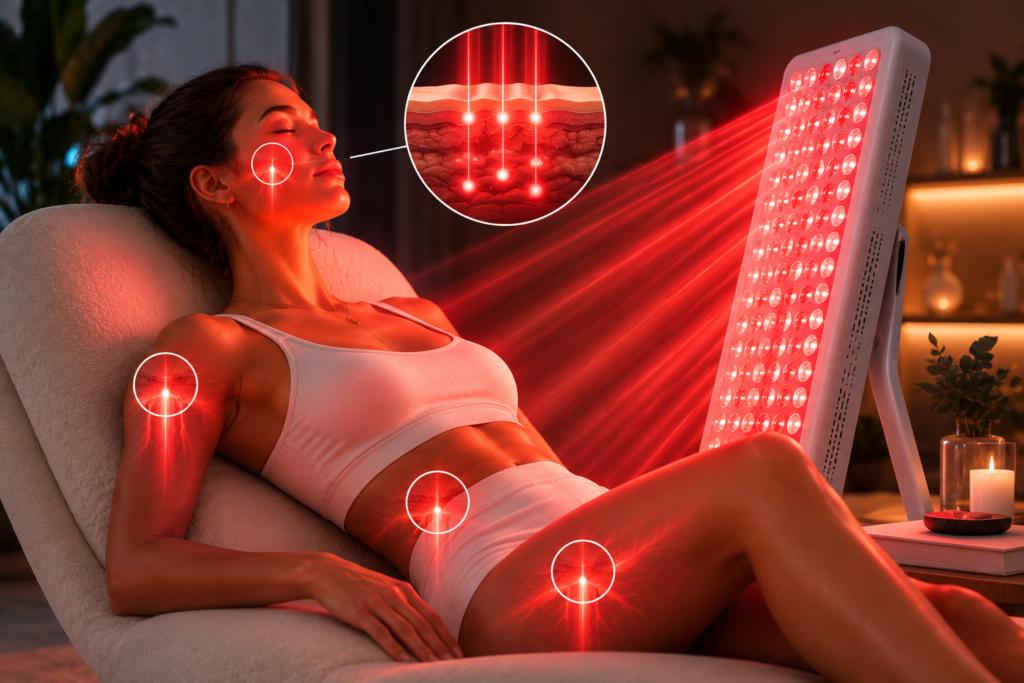
If you’ve been having trouble sleeping, you’ve probably come across two popular non-prescription options: red light therapy and melatonin supplements. Both are marketed as natural ways to support better sleep, but they work through very different mechanisms. Here’s an honest look at how each one holds up against the research, so you can decide which might be worth trying first.
How Red Light Therapy for Sleep Works
Light exposure plays a major role in regulating your body’s internal clock. Evening exposure to blue light, the kind emitted by phones and screens, has been shown to suppress melatonin secretion, delay sleep onset, and disrupt circadian rhythms.
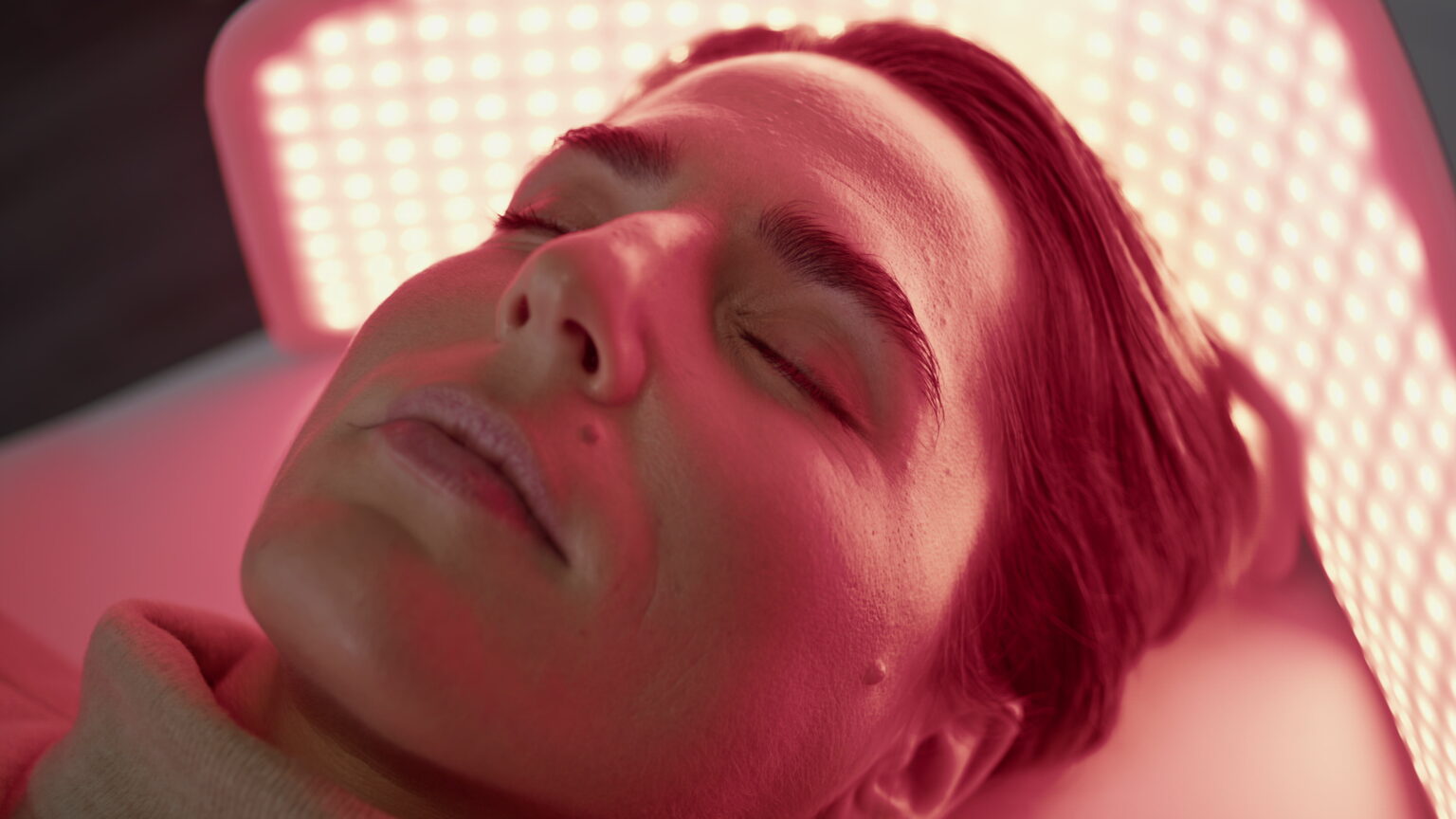
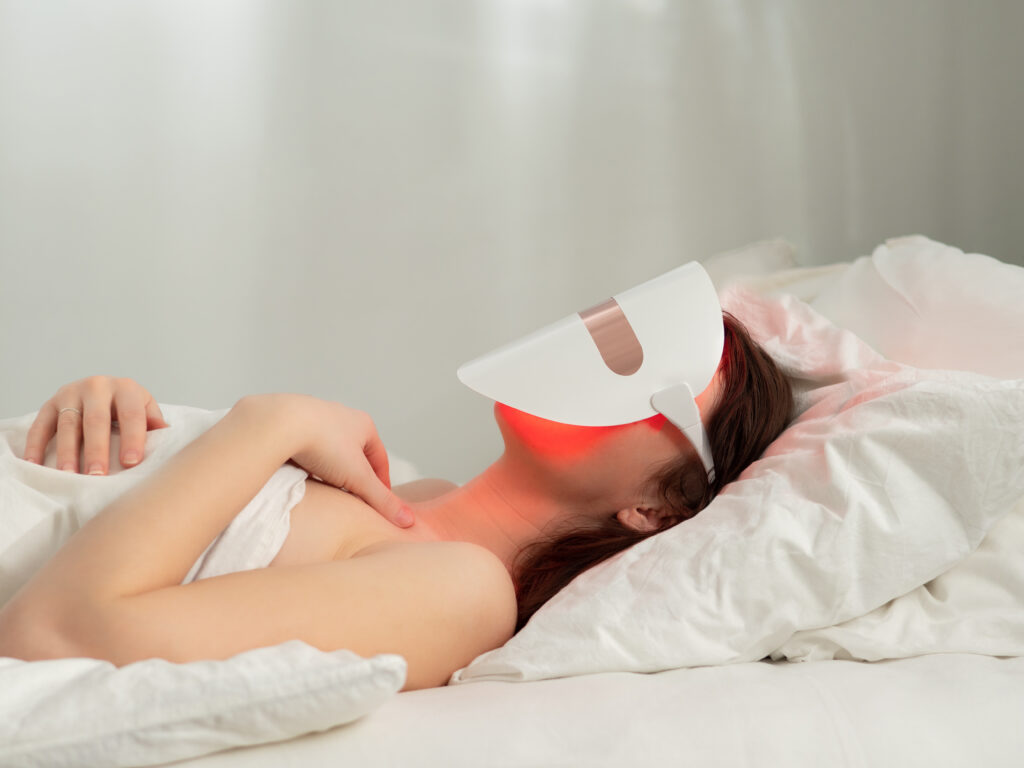
Red light appears to work differently. In a study on Chinese female basketball players, participants who received 30 minutes of red light exposure nightly for 14 days showed improved sleep quality and higher serum melatonin levels compared to a placebo group. Researchers suggested the positive sleep effect may be tied to that increase in melatonin following red light exposure.
Pros of Red Light Therapy for Sleep
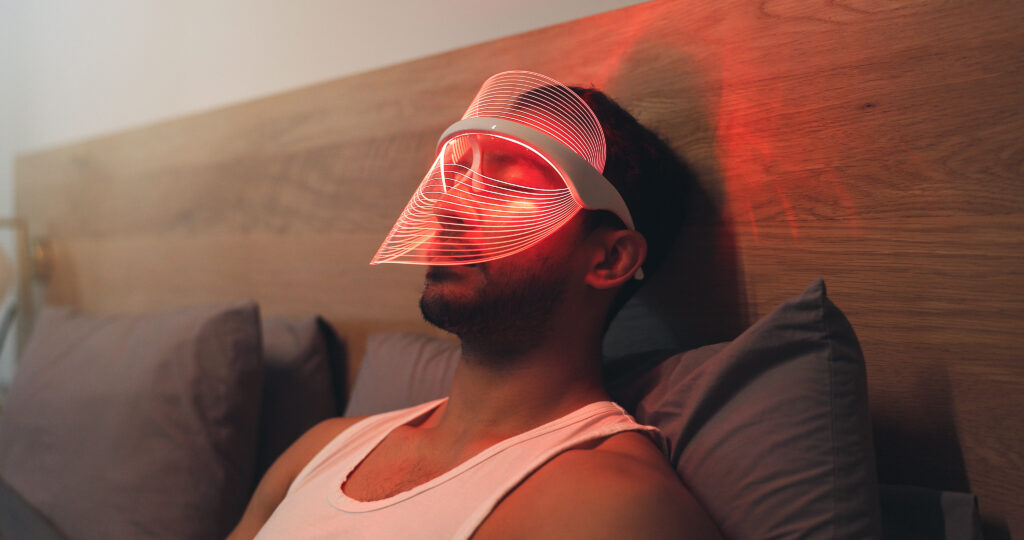
There’s a real appeal to red light therapy for sleep as a non-pharmacologic option. It doesn’t involve ingesting anything, so there’s no risk of morning grogginess the way some sleep aids can cause.
A randomized, sham-controlled trial found that red and near-infrared phototherapy directed at the neck before bed improved perceived relaxation, sleep quality, and next-day function compared to a sham device. For people looking for a screen-free, ingestion-free evening routine, this is a meaningful upside.
Cons of Red Light Therapy for Sleep
The research base is still fairly limited. Many studies involve small sample sizes or specific populations, like elite athletes, which makes it harder to generalize results to the general public.
Worth noting: in that same sham-controlled trial, objective sleep parameters measured by actigraphy did not differ between the active and sham groups, even though participants reported feeling improvements. That gap between subjective and objective results is an honest limitation to keep in mind.
Pros of Melatonin Supplements
Melatonin has a much larger body of research behind it, and it’s well established as a tool for specific circadian issues.
A randomized controlled trial on melatonin for sleep disturbance following traumatic brain injury found that supplementation significantly improved subjective sleep quality and increased sleep efficiency, with no serious adverse events reported. A broader network meta-analysis of interventions for insomnia also found support for melatonin’s effectiveness specifically for sleep-onset difficulties.
Cons of Melatonin Supplements
Melatonin isn’t a cure-all, and it tends to work best as part of a longer-term, consistent routine rather than an occasional fix.
A trial on bright light and melatonin for delayed sleep phase disorder found that while long-term treatment over three months helped maintain an advanced sleep phase, stopping treatment caused a relapse back into delayed sleep patterns. That same network meta-analysis on insomnia interventions also noted that none of the options studied, including melatonin, outperformed cognitive behavioral therapy for insomnia, which remains the first-line recommendation for chronic sleep issues.
Red Light Therapy for Sleep vs. Melatonin: Which Should You Try First?
There’s no universal answer here. Red light therapy for sleep may appeal more to people who want a screen-free wind-down routine and are wary of taking a supplement nightly. Melatonin may make more sense for people dealing with a specific circadian issue, like jet lag or a delayed sleep schedule, where the research base is more established.
Some people find value in combining both as part of a broader evening routine. Either way, if sleep issues are persistent or significantly affecting daily life, it’s worth talking to a doctor rather than relying solely on either option.
The Bottom Line
Red light therapy for sleep and melatonin supplements work through different pathways, and each comes with real strengths and real limitations. Neither is a guaranteed fix, but understanding what the research actually supports can help you set realistic expectations before choosing where to start.
Ready for your red light therapy device? Check out our product and brand reviews to help inform your decision, or use our comparison tool.