OVERALL
4.4
BEST FOR
Full-Body Sessions, Multi-Panel Coverage
$3,299 USD
WAVELENGTHS
630nm-850nm
IRRADIANCE
250 mW/cm² (no published distance)
COVERAGE AREA
Full-body light therapy
WEIGHT
Our Review
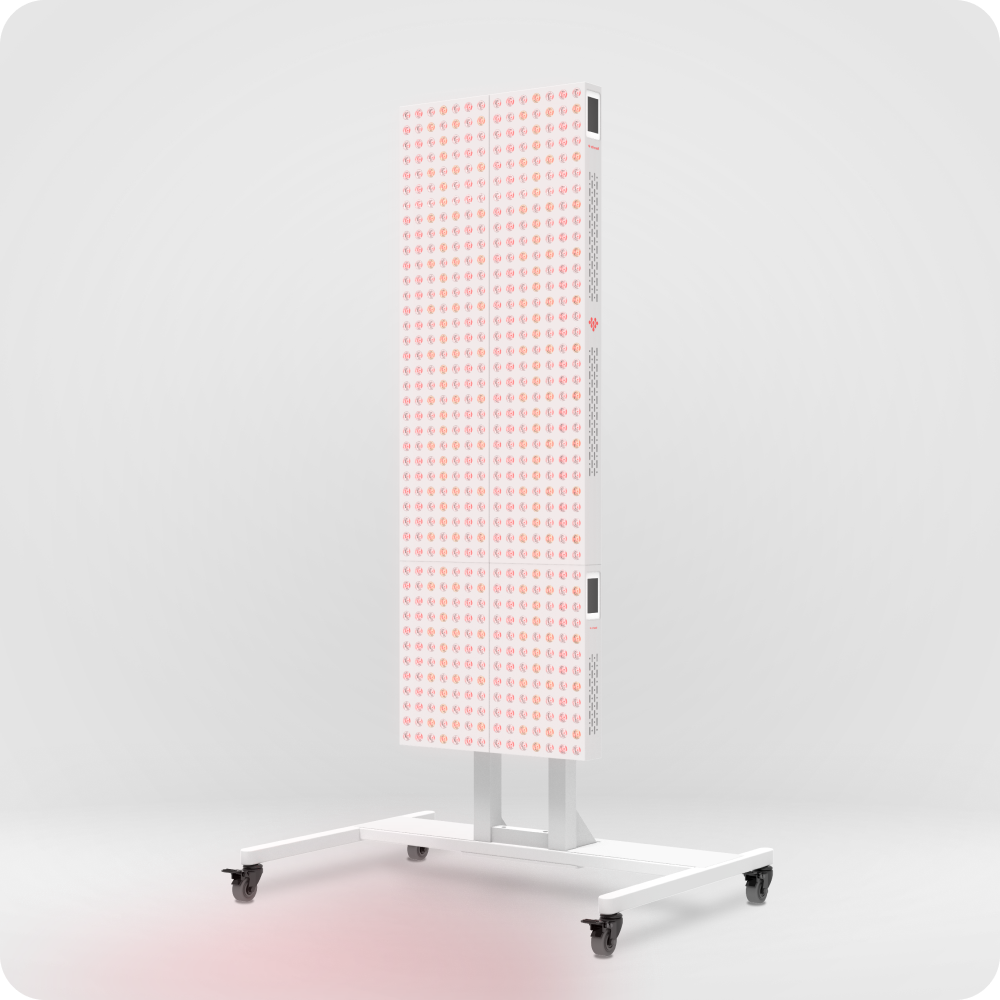
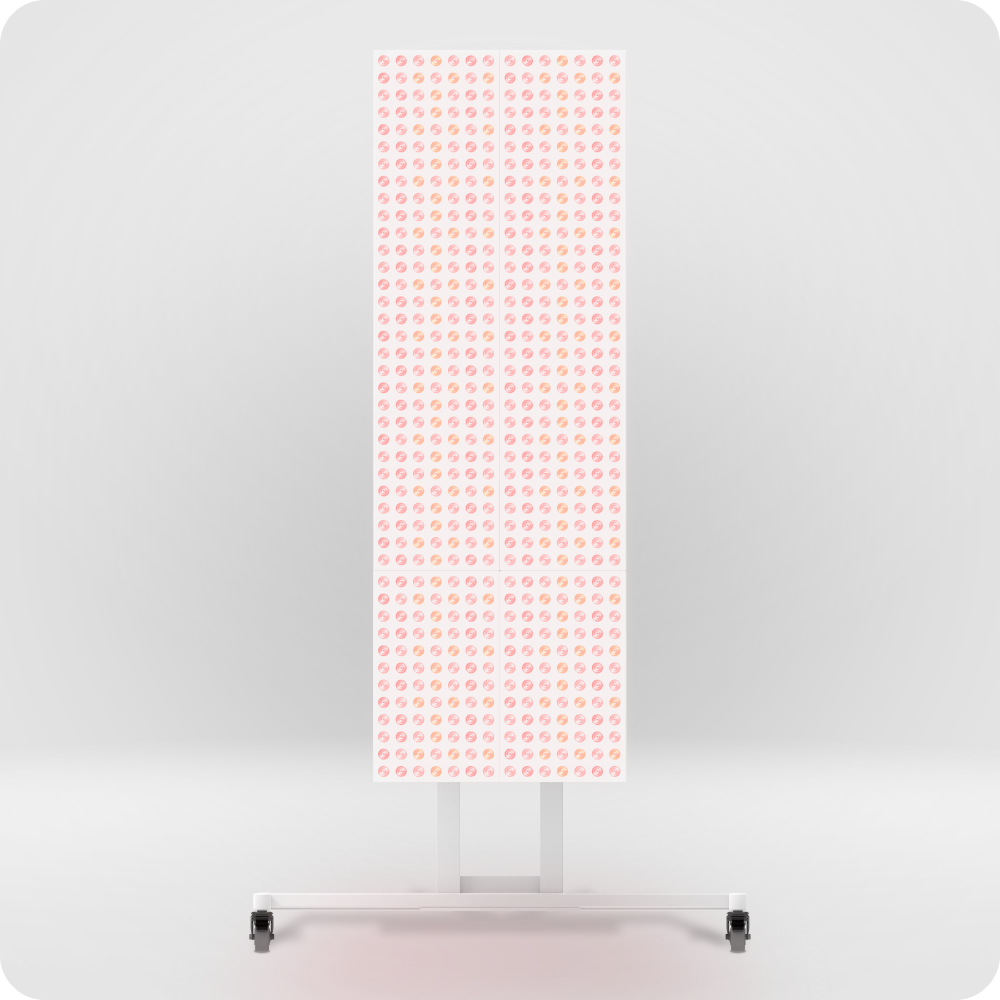
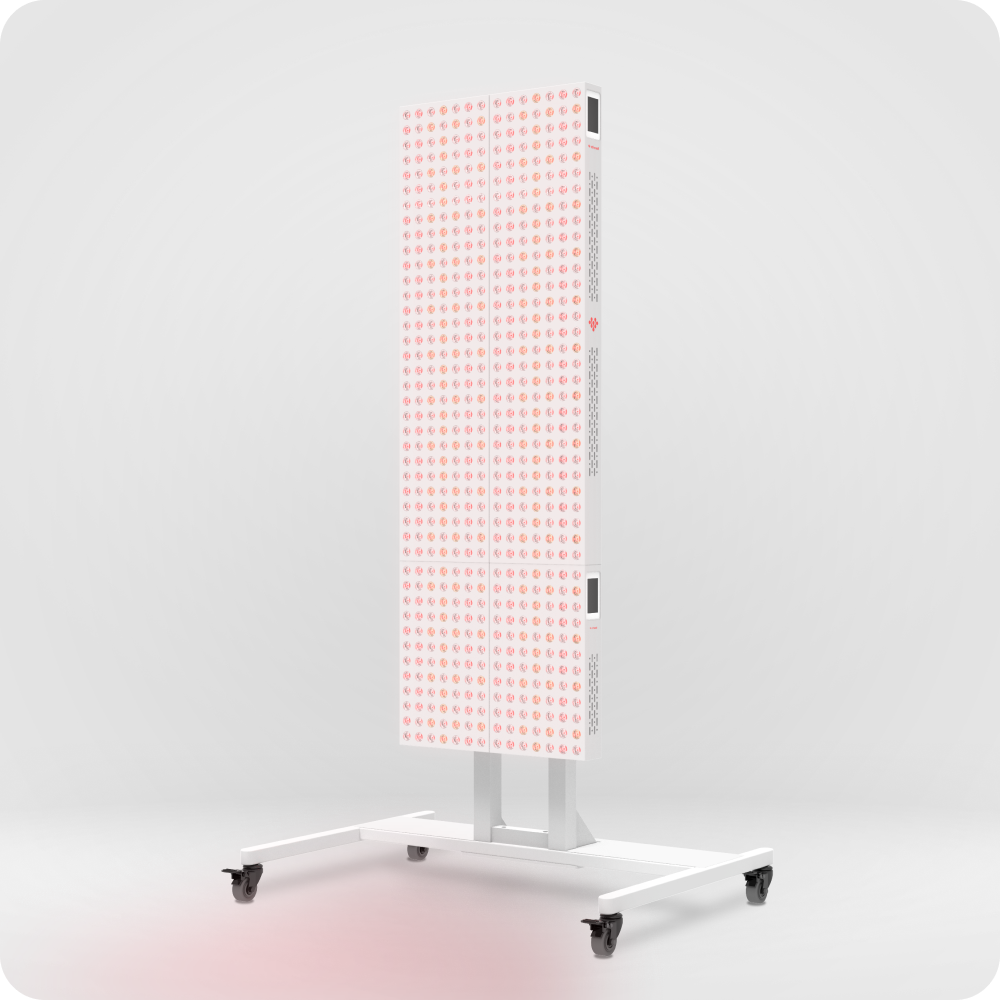
The Infraredi Pro Ultra 2.0 is a little different from the other full-body systems in the Pro lineup, and that’s actually the reason we’d consider it. Instead of simply stacking identical panels into one long, narrow column, Infraredi combines two larger Pro Max 2.0 panels with two smaller Pro Mini 2.0 panels. The result is a full-body setup with additional light positioned around the sides, giving you broader coverage where a traditional narrow panel can sometimes leave you wishing for a little more.
That’s really the question we’d want you to answer before spending the money: do you want full-body height, or do you want full-body coverage that spreads out a little more around you? If you’ve used a narrow panel before and found yourself shifting your shoulders, arms, or body around to get the exposure you wanted, the Ultra’s layout starts to make a lot more sense. At a regular price of $3,299, though, we’d want that extra coverage to solve a problem you actually have rather than simply look impressive in your home gym.
The Ultra 2.0 combines two Pro Max 2.0 panels and two Pro Mini 2.0 panels into one system. What we like about that arrangement is that Infraredi isn’t simply giving you more panel for the sake of saying it’s bigger. The smaller panels extend the treatment area around the main vertical setup, creating a shape that’s intended to give you broader exposure than you’d get from standing in front of one narrow column of LEDs.
That can matter more in everyday use than another impressive number on a specification sheet. Full-body panels tend to be very good at covering you vertically, but your body obviously isn’t 10 or 15 inches wide. Shoulders extend outward. Arms sit at your sides. If you’re spending thousands of dollars because you want the convenience of broad treatments, constantly adjusting yourself to compensate for a narrow light source starts to defeat some of the purpose.
The Ultra isn’t going to completely surround you, though, and we’d want you to understand that before looking at the configuration and assuming you’re getting 360-degree treatment. You’re still receiving light primarily from one direction, and you’ll still need to turn around if you want comparable exposure across your front and back. Think of the additional panels as giving you more generous coverage, not eliminating positioning altogether.
Infraredi uses the same five-wavelength Pro Series platform here, with red and near-infrared light, adjustable brightness, pulsing, and preset programs. Those features give you plenty to experiment with, but we wouldn’t make them the main reason to choose the Ultra. You can get much of the same underlying technology elsewhere in the Pro lineup. The Ultra earns the additional investment through its physical coverage.
This is where we’d really think about your habits. A large red light system is wonderful when it’s standing somewhere you can walk up to it whenever you want. It becomes considerably less appealing when using it means moving equipment, finding space, plugging everything in, and then putting it away afterward.
If you’re considering the Ultra, we’d want you to have somewhere it can basically live. A home gym, wellness room, large bedroom, or dedicated treatment area makes sense. Trying to squeeze it into a small apartment and telling yourself you’ll move it out of the way after every session probably doesn’t.
Once it has a permanent home, though, the convenience becomes much easier to appreciate. Infraredi recommends standing roughly 6 to 12 inches away, and sessions typically run around 10 to 20 minutes. You don’t have to work your way down your body with a small panel. Walk up, choose your settings, complete your session, turn around if you want your other side exposed, and you’re done.
Brightness is adjustable, which we appreciate on something you’re going to stand this close to. You may not always want maximum output, particularly around your face or later in the day. Pulsing is available as well, although we wouldn’t tell you that you need to use it simply because the feature exists. If continuous light and a straightforward routine are what you’ll actually stick with, there’s nothing wrong with keeping things simple.
That’s worth mentioning because Infraredi gives you quite a few controls across the Pro Series. If you’re someone who enjoys tweaking settings, you’ll probably appreciate that. If you’re someone who just wants to turn the thing on and get your session done, don’t feel like you’re somehow wasting the device by not constantly adjusting it.
We think this is the most important part of the review because the Ultra sits in an interesting place within Infraredi’s lineup. There are cheaper ways to get full-body height, and there are more expensive ways to get even more coverage. So you shouldn’t choose the Ultra simply because “full body” is written on the product page.
We’d look at it specifically if you want more coverage around your body than a narrow vertical system gives you, but you don’t feel the need to move into one of Infraredi’s much larger Elite configurations. That’s where the two additional Mini panels start earning their place.
It can also make sense if more than one person in your household will use the system. Different body sizes and builds don’t always line up equally well with a narrow treatment area, so having additional light extending outward gives everyone a little more room to position themselves comfortably.
On the other hand, if you’re mainly treating your face, knees, back, or a couple of specific areas, we’d stop here. You don’t need an Ultra. You can spend considerably less within the same Pro Series and still get the core red light therapy features you’re looking for.
The Infraredi Pro Ultra 2.0 has a regular price of $3,299. Infraredi does run promotions, so you may see it selling for less, but we’d make the buying decision based on whether the system makes sense at its normal price rather than letting a temporary discount convince you to buy more equipment than you need.
At more than $3,000, convenience needs to be doing a lot of the work. You’re not simply paying for red and near-infrared light. Smaller devices can give you that. You’re paying so that treating a large portion of your body doesn’t require several separate positions and so that you have additional coverage extending beyond one narrow column.
If that’s something you’ll appreciate four or five times a week for years, the price becomes easier to understand. If you’re imagining yourself using the Ultra occasionally when something feels sore, we’d save the money.
We’d also compare it carefully with the Pro Dual Plus 2.0 because the two systems occupy a similar price range but approach coverage differently. The Dual Plus gives you a straightforward tall, wider vertical treatment area. The Ultra uses its additional Mini panels to spread the treatment area outward. Neither configuration is automatically better. We’d choose based on how you want the light positioned around your body.
Infraredi includes free shipping with the Pro Ultra 2.0, which is something we’d expect at this price but still appreciate with a multi-panel system. The company ships through local warehouses using express courier.
Before you order, we’d actually measure the space where you think you’re going to use it. Not just whether the system fits against the wall, either. Give yourself room to stand several inches away, turn around comfortably, and use the setup without feeling like you’re wedged between your red light system and the rest of the furniture.
Infraredi offers different setup options, including vertical and horizontal arrangements. We’d decide how you realistically want to use the Ultra before choosing your mounting option. If you picture yourself standing for most sessions, prioritize making that effortless. If lying down during treatment is what will actually make you use it consistently, plan around that instead.
That’s one of those things that sounds minor while shopping but matters a lot six months later. The best configuration isn’t necessarily the most impressive one. It’s the one that makes starting a session require almost no thought.
Infraredi gives the Pro Ultra 2.0 a 60-day risk-free trial and three-year warranty. We like the 60-day window because with a system this large, you need enough time to figure out whether it genuinely improves your routine or whether you accidentally bought more red light equipment than your home and habits can accommodate.
We’d keep the packaging during those 60 days. It isn’t glamorous advice, but we’d rather have a pile of boxes sitting around temporarily than decide the Ultra isn’t right for you and suddenly have to work out how to safely return four panels without their original packaging.
The three-year warranty is decent, but we’d still like longer coverage here. Once you’re spending several thousand dollars on a system you expect to use regularly for years, three years doesn’t feel particularly generous. It isn’t necessarily a reason we’d avoid the Ultra, but it is something we’d factor into the value.
Infraredi’s Pro Series has very strong customer feedback overall, with owners frequently talking about ease of use, build quality, output, and how they’ve worked the panels into their routines. That’s reassuring because the Ultra is built from the same Pro Max and Pro Mini platform used throughout the lineup.
But there’s an important distinction we’d want you to know before seeing a high star rating and assuming hundreds of Ultra owners are all saying the same thing. Infraredi combines reviews from multiple Pro Series products. The review section includes feedback from people who purchased smaller configurations such as the Pro Mini, Pro Max, and Pro Max Plus, so the overall rating isn’t an Ultra 2.0-specific owner score.
We don’t think that makes the feedback useless. If someone owns a Pro Max 2.0, their comments about construction, controls, brightness, or the general experience of using the panel can still tell you something about the components making up the Ultra. What they can’t tell you is whether this particular four-panel configuration still feels convenient after living with it for a year.
That’s the feedback we’d really like more of. With the Ultra, we’re less concerned about whether the LEDs turn on and people enjoy red light therapy and more interested in whether owners feel the unusual panel arrangement gives them enough additional coverage to justify choosing it over the simpler Dual configurations.
We’d also keep customer-reported results in perspective. Some Infraredi owners describe improvements involving soreness, recovery, skin, sleep, pain, or general wellbeing. Those experiences may be meaningful to the people reporting them, but we’d never tell you to expect the same outcome on the same timeline. You’re buying a device, not somebody else’s results.
If we were choosing between Infraredi’s larger systems ourselves, we’d start with one question: what annoys us about the smaller option?
If the answer is that it’s too short and we’re tired of moving it between our upper and lower body, we’d look at one of the straightforward full-height systems. If the answer is that the light source feels too narrow and we’re constantly shifting around to expose more of our shoulders, arms, and torso, that’s when we’d start paying much closer attention to the Ultra.
That distinction can save you a lot of money. It’s very easy when shopping for red light therapy to keep moving one model higher because each upgrade sounds better on paper. More LEDs. More coverage. More panels. Eventually you’ve talked yourself into a $3,000-plus setup without stopping to ask what problem the additional equipment is solving for you.
The Pro Ultra 2.0 actually does solve a specific problem. It gives you full-body treatment while spreading additional light beyond the narrow center column. If that’s the type of coverage you’ve been looking for, the configuration makes sense. If it isn’t, we’d choose something simpler and keep the difference.
Ultimately, the Infraredi Pro Ultra 2.0 is ideal for someone who is already committed to regular full-body red light therapy and wants more forgiving coverage than a traditional narrow vertical system. We like that the extra panels serve an actual purpose rather than simply making the system larger, and Infraredi’s modular Pro platform means you’re getting the same customization and wavelength options found throughout the premium lineup.
But we’d only spend this much once you know why you’re spending it. If you’re new to red light therapy, treating only a few areas, or don’t have somewhere permanent for a four-panel setup, we’d go smaller. If you’ve already figured out that coverage is the thing that determines whether your sessions feel effortless or annoying, the Ultra becomes much easier to appreciate. At this level, that’s what we’d want your money buying you: not more numbers on a product page, but a setup that makes you more likely to actually walk over and use it.
Key Features
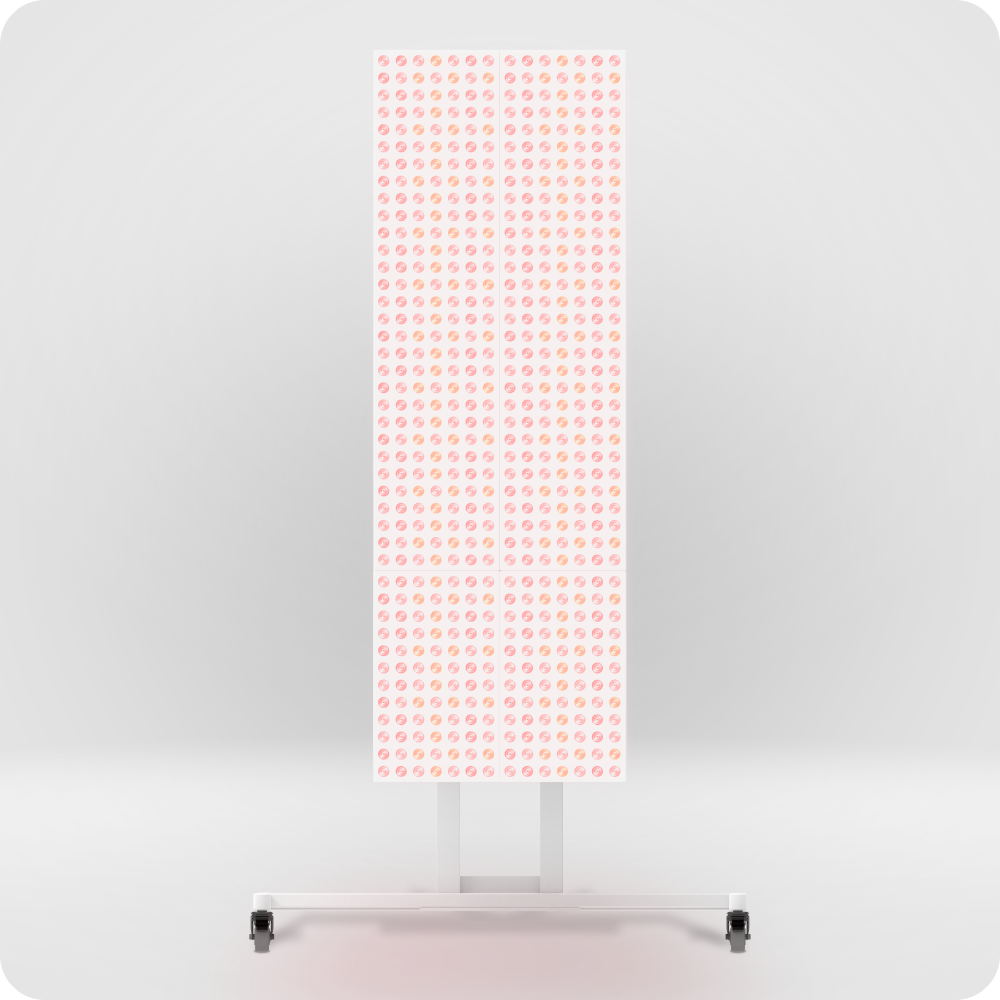
The combination of larger center panels and small side panels spreads light beyond a traditional narrow vertical setup, giving you more coverage around the shoulders, arms, and torso.
The Ultra combines two Pro Max 2.0 and two Pro Mini 2.0 panels into one system, creating a more expansive treatment area while keeping the individual panels modular.
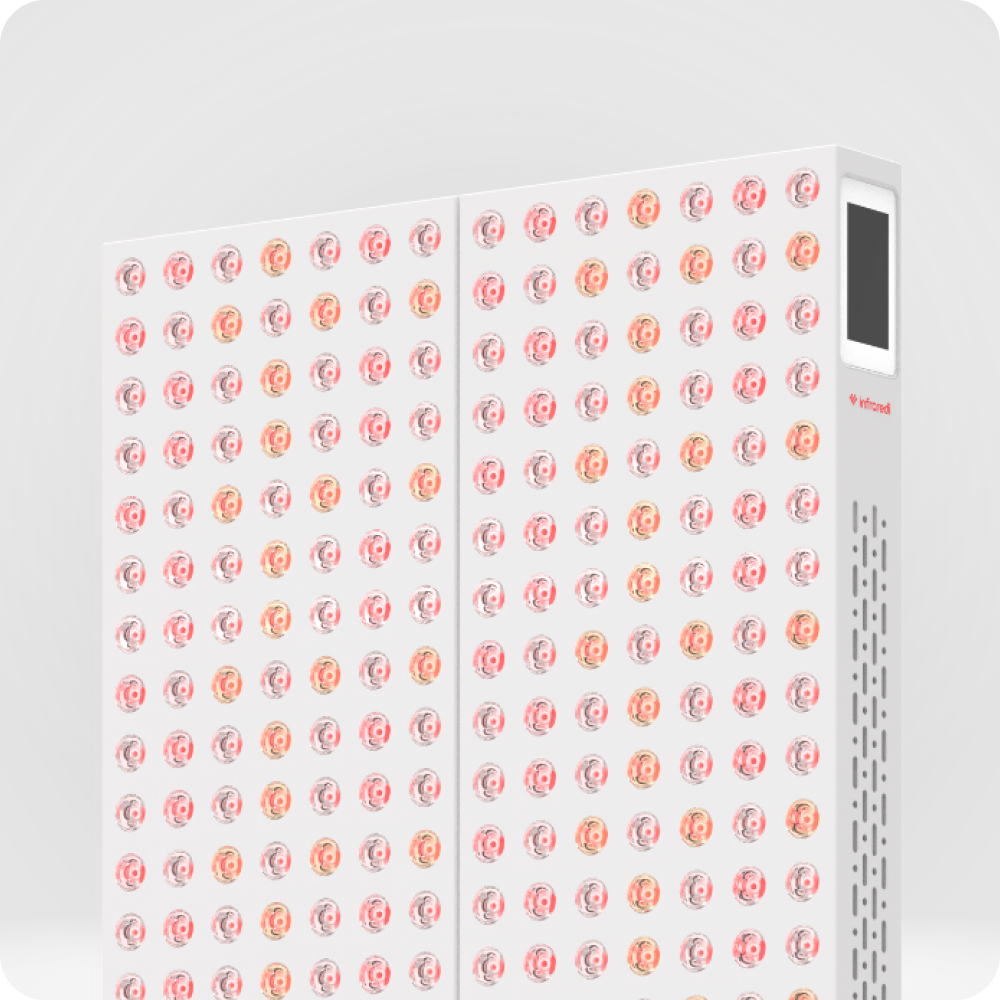
Uses 588 dual-lens LEDs throughout the four-panel configuration for broad light distribution across the treatment area.
Combines 630nm, 660nm, 810nm, 830nm, and 850nm red and near-infrared wavelengths, giving you a broader spectrum than traditional two-wavelength panels.
Brightness can be lowered or increased depending on how you want to use the system, rather than requiring every session to run at maximum output.
Adjustable pulsing gives you another way to customize sessions, while continuous light remains available when you want to keep things simple.
Full Specifications
Wavelengths:
Final Verdict
4.4

Join red light therapy users comparing devices, sharing protocols, and posting honest results. Free to join, no sales pitch.
Protocol sharing
Device comparisons
Safety-first advice
Tec Specs
Wave Lengths
630nm-850nm
IRRADIANCE:
250 mW/cm² (no published distance)
Coverage Area:
Full-body light therapy
Overall Category Scores
Category
Score
Best Quality
Ease of Use
Features
Value
Support
Staying informed with the latest research and reviews.
10 Minute Read
10 Minute Read