OVERALL
4.3
BEST FOR
Home User, Flicker-Sensitive Buyers, Deep Tissue Recovery
$631.99
WAVELENGTHS
630nm-850nm
IRRADIANCE
1,400 mW/cm² (no published measured distance)
COVERAGE AREA
Half body
WEIGHT
19.51 Ibs (approx. 8.85 kg)
Our Review
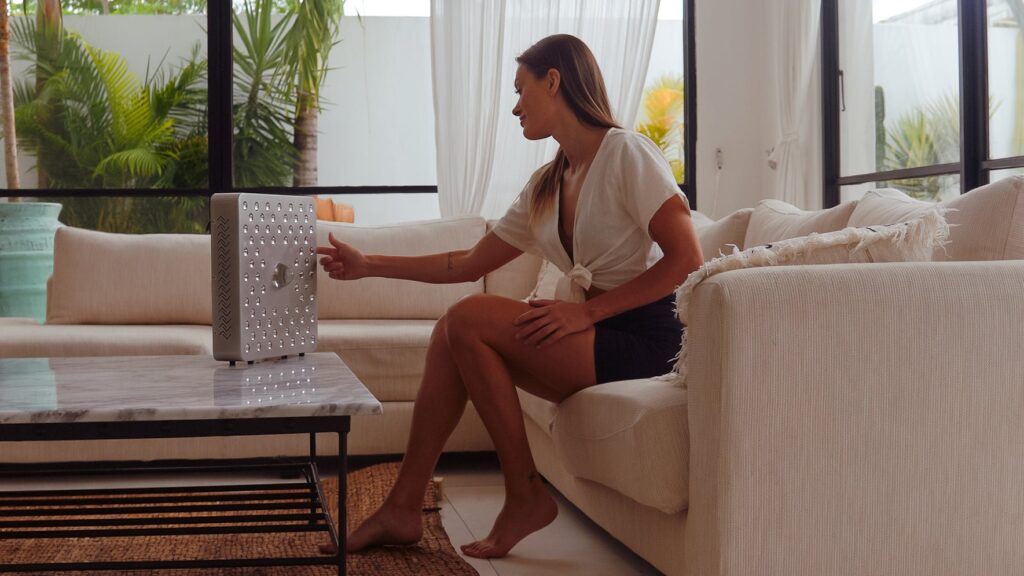
The Firedragon Pro hits a useful middle ground in EMR-TEK’s lineup. At $699.99, you’re getting a much more substantial treatment area than a handheld, six red and near-infrared wavelengths, upgraded Pro electronics, built-in controls, and an adjustable stainless steel stand without having to make room for one of the brand’s massive panels. We’d consider it particularly strong for someone who expects to move between specific areas like the face, shoulder, knee, abdomen, or lower back. Where we’d look elsewhere is full-body treatment. The Firedragon Pro is powerful, but its roughly 12-by-12-inch face can only cover so much at once.
What makes the price easier to understand is that you’re buying a fairly complete setup rather than just a powerful box of LEDs. The stand solves positioning from the beginning, the LCD gives you controls directly on the device, and the Pro version adds zero-flicker operation and upgraded electrical components. There are still things we’d want you to know before ordering, particularly EMR-TEK’s restrictive return terms and relatively short two-year warranty. But if targeted treatment is what you actually want, the Firedragon Pro has fewer compromises in everyday use than its compact size initially suggests.
The Firedragon Pro uses six wavelengths: 630nm, 660nm, 670nm, 810nm, 830nm, and 850nm. That gives you three wavelengths in the red range and three in the near-infrared range rather than the more common setup built around only 660nm red and 850nm near-infrared.
We wouldn’t buy it simply because six wavelengths sounds better than two. The more useful takeaway is that EMR-TEK has built a relatively broad red and near-infrared spectrum into one targeted device. You aren’t buying separate lights depending on whether you want red or near-infrared exposure, and you have more wavelength variety than you’ll find in several of the company’s other panels.
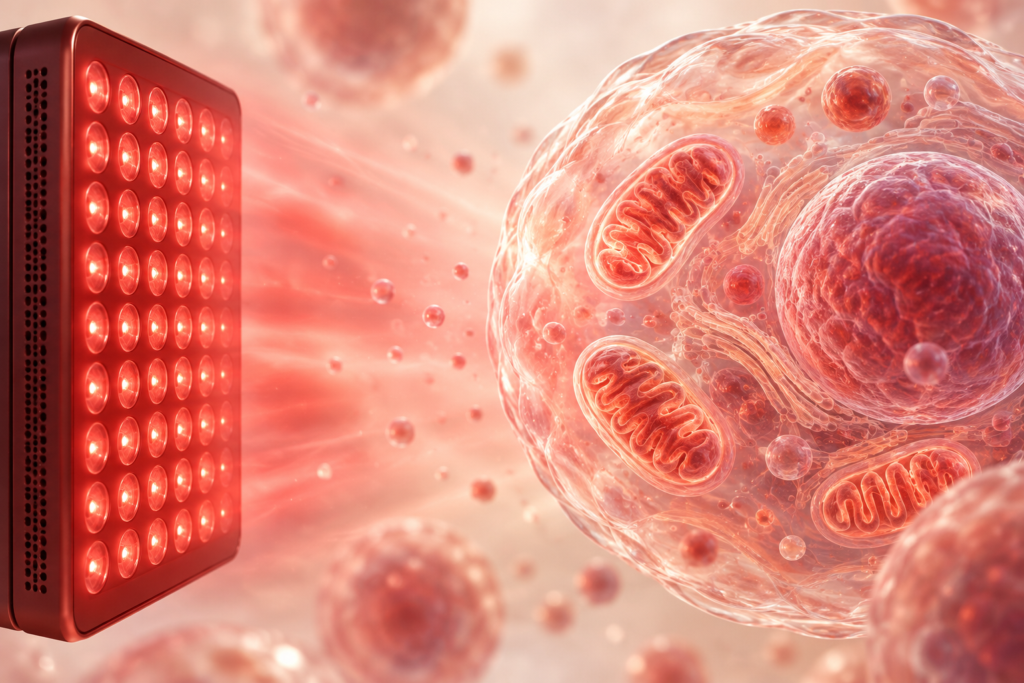
Then there’s the COB at the center of the device. COB stands for chip-on-board, which sounds far more complicated than you need it to be. Essentially, many small light-emitting components are packed closely together to create one concentrated source of light. The Firedragon Pro pairs a 288W COB with 72 surrounding LEDs rather than relying exclusively on rows of conventional LEDs.
For you, the important part isn’t knowing what a COB is called. It’s understanding what you’re buying it for. The Firedragon Pro is designed to put substantial light onto a targeted area from a relatively compact device. That’s useful when you’re working on one section of the body at a time. It doesn’t magically turn a roughly foot-wide device into a full-body system.
The Pro hardware is another meaningful distinction. EMR-TEK uses upgraded Mean Well drivers and promotes zero-flicker operation along with very low magnetic fields. These aren’t necessarily features you’ll consciously notice every time you turn it on, but they’re part of what separates the Pro model from simply buying the cheapest light capable of producing high output.
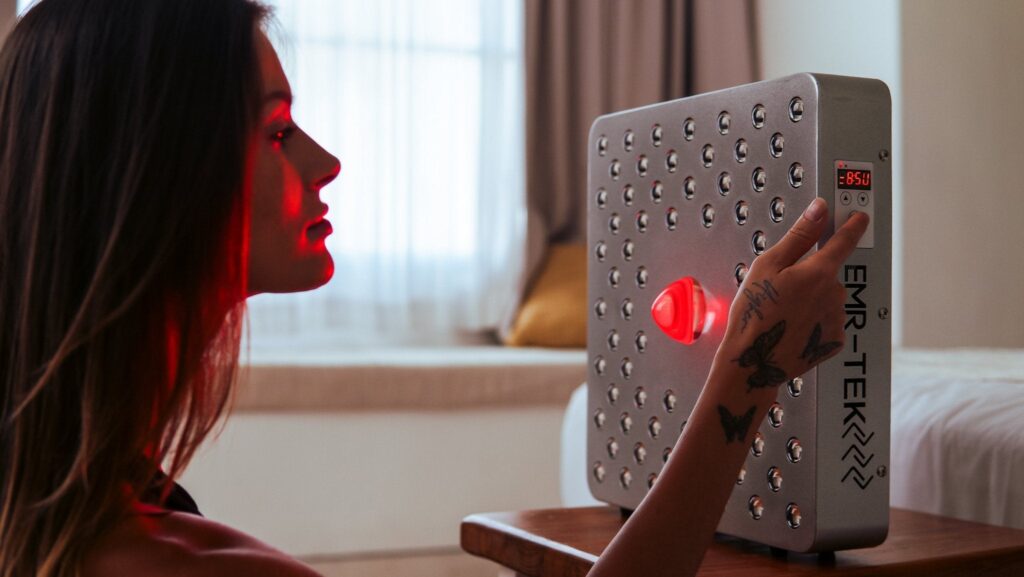
The adjustable stainless steel stand may actually be one of the Firedragon Pro’s most important features. Targeted red light therapy becomes tedious surprisingly quickly when you’re trying to balance a panel on furniture or adjust your body to wherever the light happens to be pointing. Here, you can move the light toward the area you want to treat instead.
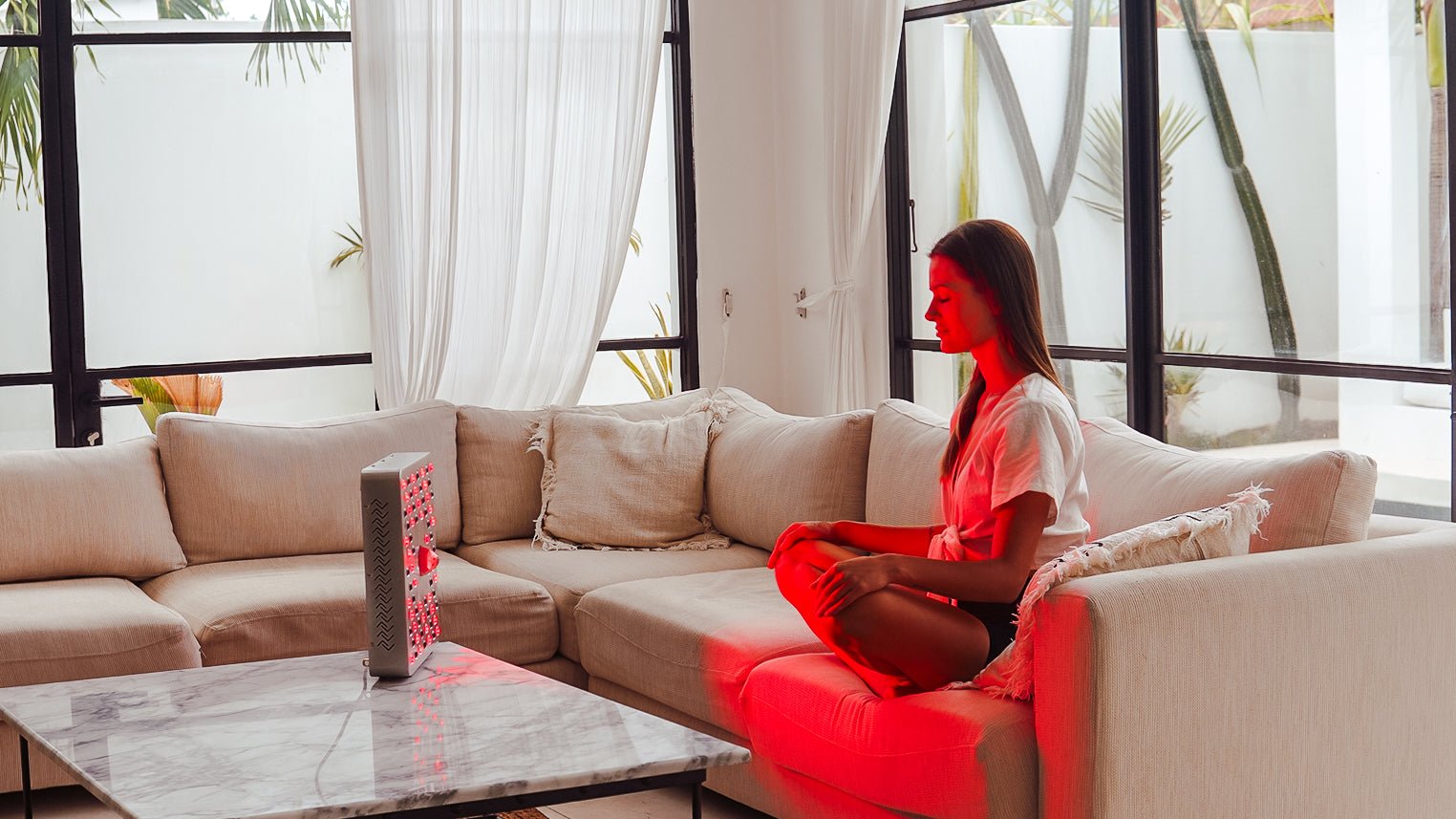
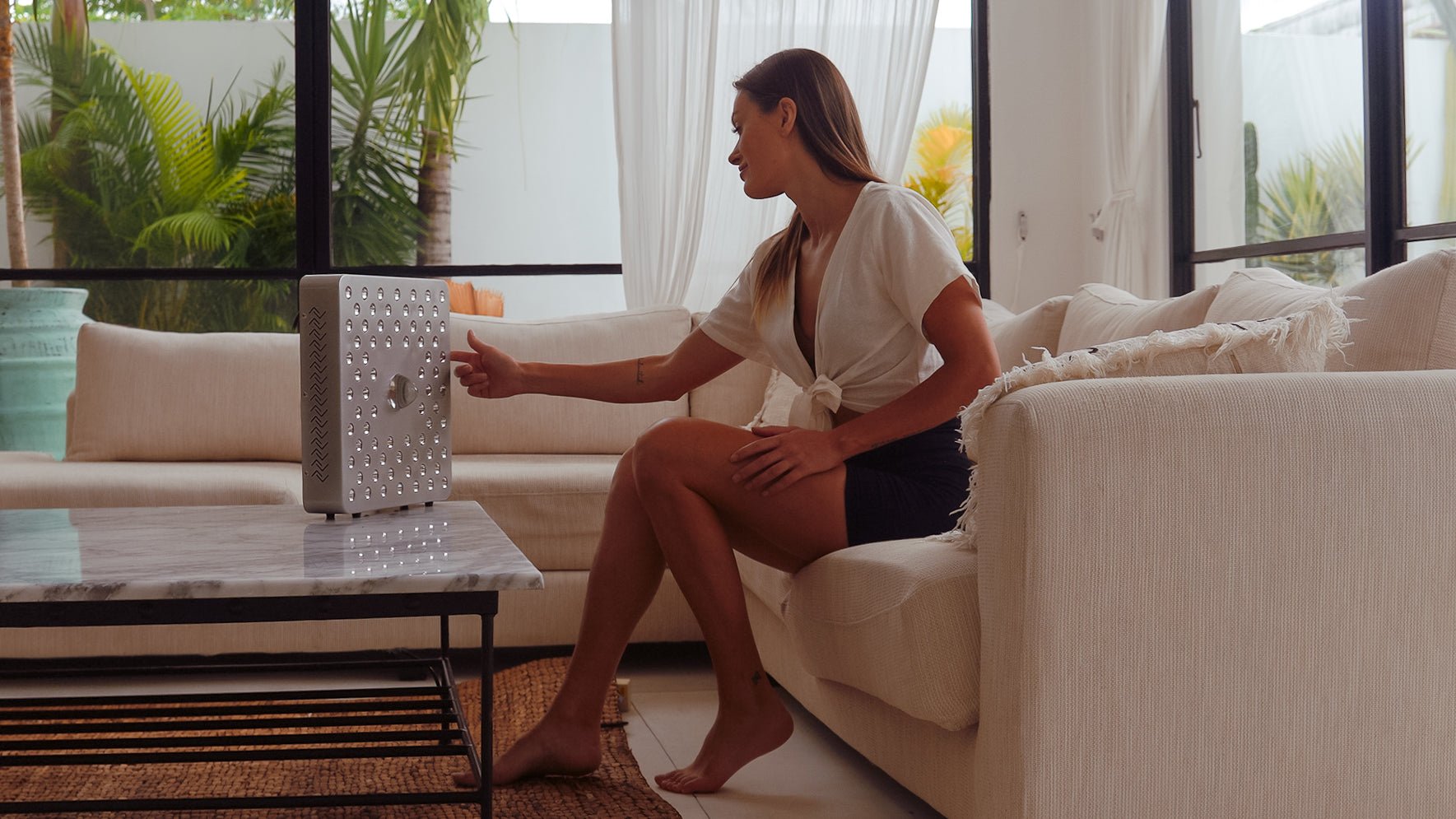
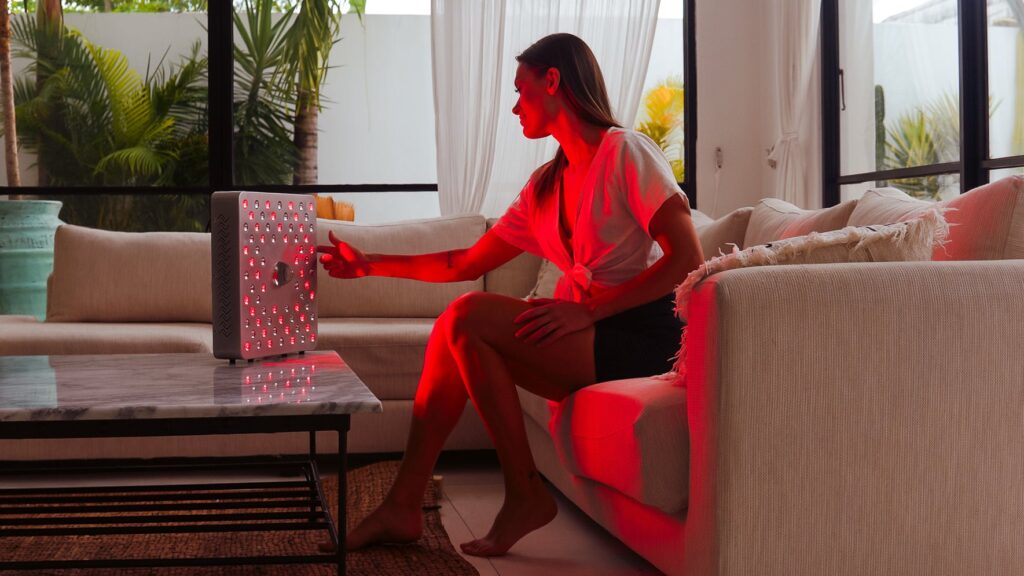
That opens up quite a few practical uses. Raise it for the face or shoulder. Reposition it around the abdomen or lower back. Bring it down for a knee, calf, ankle, or foot. The Firedragon Pro isn’t portable in the handheld sense, but it gives you enough positioning flexibility that one device can realistically serve several different treatment areas.
The built-in LCD controls and timer help too. These are small ownership details that don’t look particularly exciting on a comparison chart, but they’re exactly the things that make a device easier to live with. Once you’ve positioned the panel, you can manage the session from the unit rather than relying on a separate timer or repeatedly checking your phone.
At approximately 300 x 300 x 65mm and around 5kg, or 11 pounds, the panel itself is manageable without feeling flimsy. We wouldn’t call it something you’ll casually carry everywhere, especially once the stand is involved, but moving it around a treatment room is much more realistic than repositioning one of EMR-TEK’s large systems.
Coverage is where we’d set expectations carefully. The Firedragon Pro works well when “targeted” means a meaningful section of the body rather than one tiny spot. But trying to cover your entire back, both legs, and your torso in the same routine means multiple positions. No amount of output changes the physical dimensions of the treatment field.
That’s the question we’d answer before buying. If being able to angle one substantial light toward different parts of your body sounds more useful than having one enormous stationary panel, the Firedragon Pro’s design works in your favor. If you’re already picturing yourself moving it six times to complete a full-body session, we’d take that as a sign to buy something larger.
At $699.99, the Firedragon Pro isn’t competing with inexpensive handheld red lights. You’re paying for a more substantial treatment area, the six-wavelength platform, concentrated COB-and-LED design, Pro electronics, built-in controls, and an adjustable stand that makes the whole thing usable without immediately buying another positioning solution.
We think the included stand is particularly important when judging the price. With some premium panels, the number you see on the product page isn’t really what it costs to create the setup pictured in your head. By the time you add the appropriate floor stand or mounting hardware, the final bill can look considerably different. Firedragon Pro arrives with one of its biggest practical accessories already accounted for.
We still wouldn’t spend $699.99 solely for high output. Smaller devices can handle a knee, elbow, or other very localized area for less money. Likewise, someone committed to regular full-body sessions may get better long-term value by putting that $700 toward a larger system.
The price makes the most sense in between those two extremes. You want more than a little handheld light, but you don’t want to dedicate a wall or a large portion of a room to red light therapy. That’s the niche the Firedragon Pro fills particularly well.
Setup should be considerably easier than with EMR-TEK’s larger systems because you aren’t trying to install a huge treatment station. The adjustable stainless steel stand gives the Firedragon Pro a defined way to be positioned from the beginning, which removes one of the more annoying decisions that comes with buying a standalone panel.
We’d still decide where it’s going to live before ordering. At roughly 11 pounds plus the stand, this isn’t something we’d want to assemble, disassemble, and put into a closet after every treatment. It makes more sense to give it a convenient spot where the stand can remain ready and the panel can simply be adjusted when you need it.
Make sure that spot gives you enough room to move both yourself and the light. The whole advantage of an adjustable stand disappears if it’s wedged between furniture and can only point in one direction. We’d think about the highest and lowest areas you expect to treat and make sure the setup can comfortably accommodate both.
We’d also inspect the device and stand carefully when they arrive. Make sure all of the hardware is present, the stand adjusts properly, the panel matches the configuration you ordered, and everything appears correct before beginning regular sessions. That advice matters more with EMR-TEK because of what happens to your return options after use.
This is the fine print we’d pay the most attention to. EMR-TEK’s 30-day return period isn’t the same thing as getting 30 days to use the Firedragon Pro at home and decide whether you like it. The company’s return terms are considerably more restrictive once a product has actually been used.
That means we’d make the basic ownership decision before beginning treatments. Check the dimensions. Set up the stand. Make sure the coverage looks appropriate for the areas you intend to treat. Verify that all components are present. If you realize immediately that you really needed a larger full-body panel, it’s better to figure that out before regular use rather than assume the return window gives you a month to reconsider.
The Firedragon Pro carries a two-year warranty. That’s adequate, although we’d prefer longer coverage on premium wellness equipment with electronic components and an original price approaching $700. We’d read the actual warranty conditions too, particularly how claims are handled and what costs could remain your responsibility.
It’s also important to separate those two policies in your mind. A two-year warranty can provide protection against covered defects. It doesn’t necessarily help if the device works perfectly and you simply decide the treatment area is too small. That’s why EMR-TEK’s used-return restrictions deserve attention before you start using the device.
The Firedragon Pro doesn’t yet have the volume of model-specific owner feedback we’d ideally like to see. The direct feedback available is generally positive, but there isn’t enough of it for us to make sweeping claims about long-term reliability or satisfaction. We’d rather be clear about that than turn a handful of reviews into a consensus that doesn’t exist yet.
There has also been at least one online owner complaint involving LEDs that appeared not to be illuminating and dissatisfaction with the subsequent support experience. There’s an important wrinkle with that type of complaint: near-infrared LEDs aren’t necessarily visibly bright to the human eye in the same way red LEDs are, and other users questioned whether the supposedly failed emitters were actually NIR lights operating normally.
We wouldn’t use one disputed complaint to conclude that the Firedragon Pro has an LED reliability problem. What it does highlight is the importance of good technical support. Most buyers aren’t expected to know which diodes should visibly glow and which shouldn’t. When someone spends hundreds of dollars on specialized light therapy equipment and thinks something has failed, we’d expect the manufacturer to make the answer clear.
The more convincing ownership story is the physical design itself. The included stand, built-in LCD controls, relatively manageable size, and ability to reposition the device around different areas solve several everyday annoyances that aren’t captured by wavelength or irradiance numbers.
That’s ultimately why we’d choose the Firedragon Pro. It isn’t trying to be the smallest light you can travel with or the biggest panel you can stand in front of. It’s a substantial targeted system for someone who wants six wavelengths, Pro-level electronics, concentrated COB-and-LED output, and enough positioning flexibility to use one device across several areas of the body.
The limitation is equally straightforward: it won’t make full-body treatment particularly efficient. If that’s your end goal, we’d put the $699.99 toward a larger panel. But when your routine revolves around individual areas and you want something considerably more capable than a handheld without creating a permanent red light wall, the Firedragon Pro gets the balance right. Just make that decision before regular use, because EMR-TEK’s return policy doesn’t give you the same freedom to experiment with the purchase that some competing brands do.
Key Features
630nm, 660nm, 670nm, 810nm, 830nm, 850nm
Hybrid compact architecture
Upgraded electrical components
Stable Pro output
Full Specifications
Wavelengths:
Final Verdict
4.3

Join red light therapy users comparing devices, sharing protocols, and posting honest results. Free to join, no sales pitch.
Protocol sharing
Device comparisons
Safety-first advice
Tec Specs
Wave Lengths
630nm-850nm
IRRADIANCE:
1,400 mW/cm² (no published measured distance)
Coverage Area:
Half body
Overall Category Scores
Category
Score
Best Quality
Ease of Use
Features
Value
Support
Staying informed with the latest research and reviews.
10 Minute Read
10 Minute Read