OVERALL
4.7
BEST FOR
Near Full-Body Sessions, Serious Recovery, Spec-Literate Buyers
$1,199.99
WAVELENGTHS
630nm-830nm
IRRADIANCE
138.39 mW/cm² at 6 inches and 67.22 mW/cm² at 12 inches
COVERAGE AREA
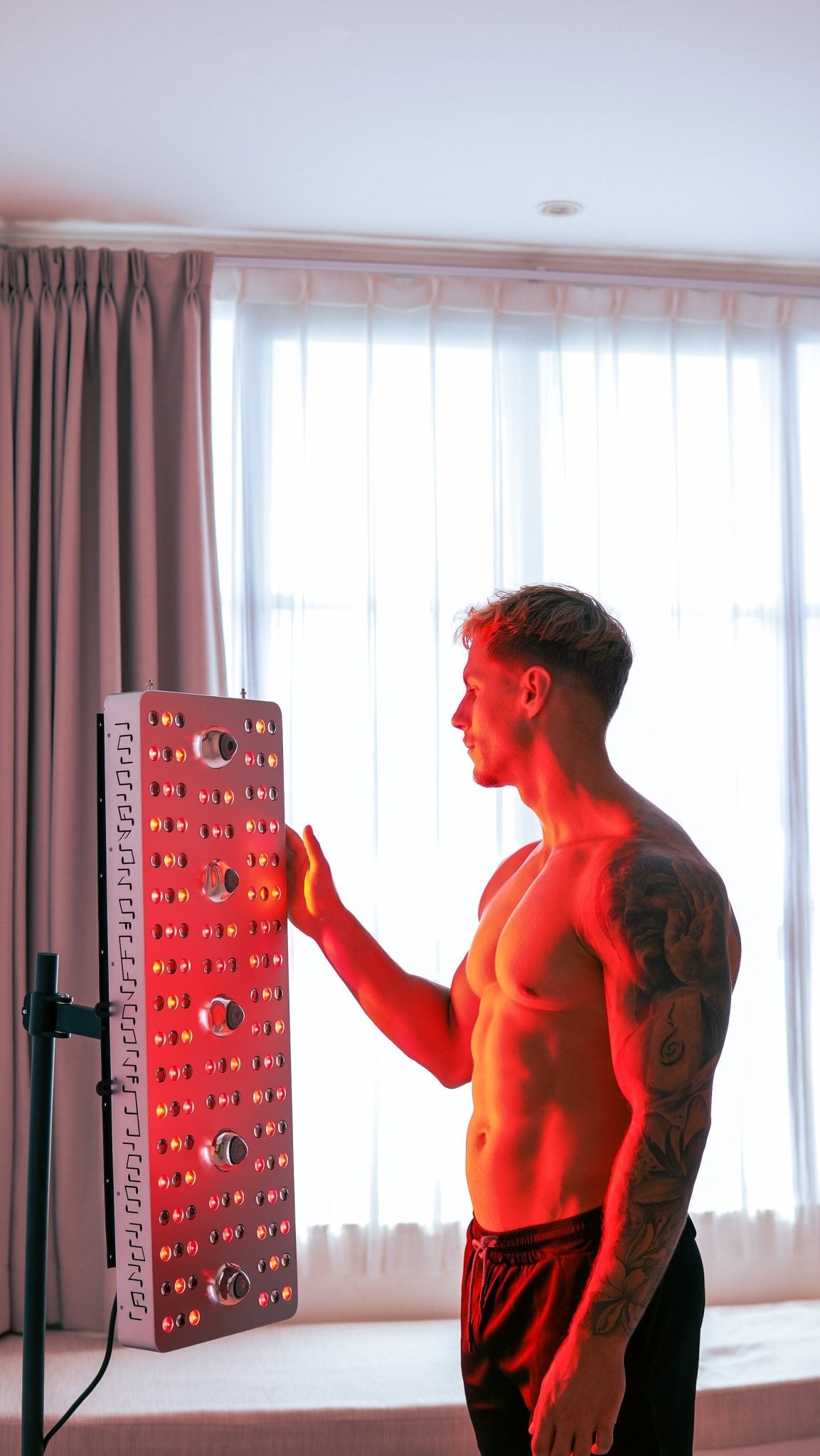
Near full body at standing distance
WEIGHT
10.1 kg (~22.3 lbs)
Our Review
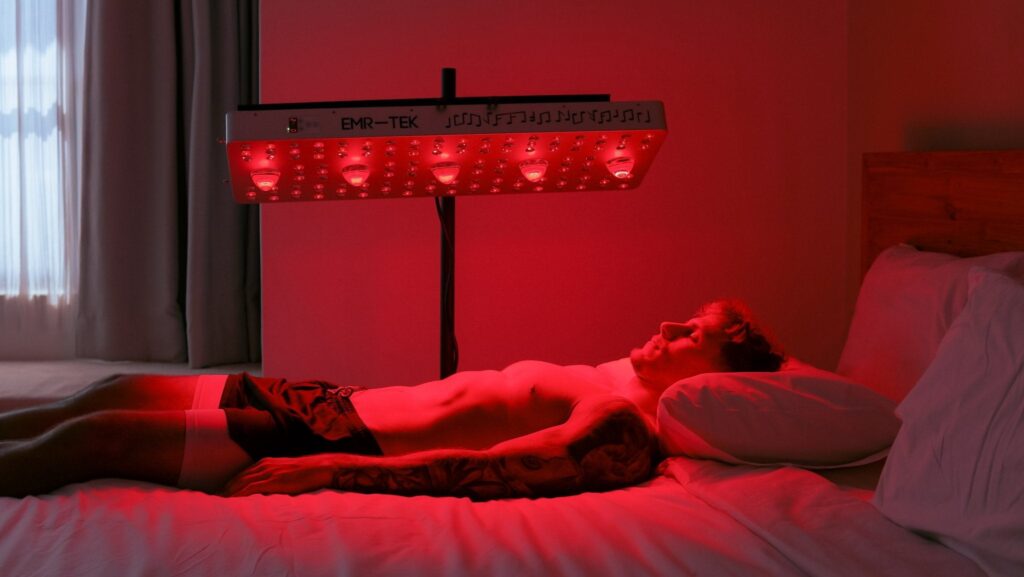
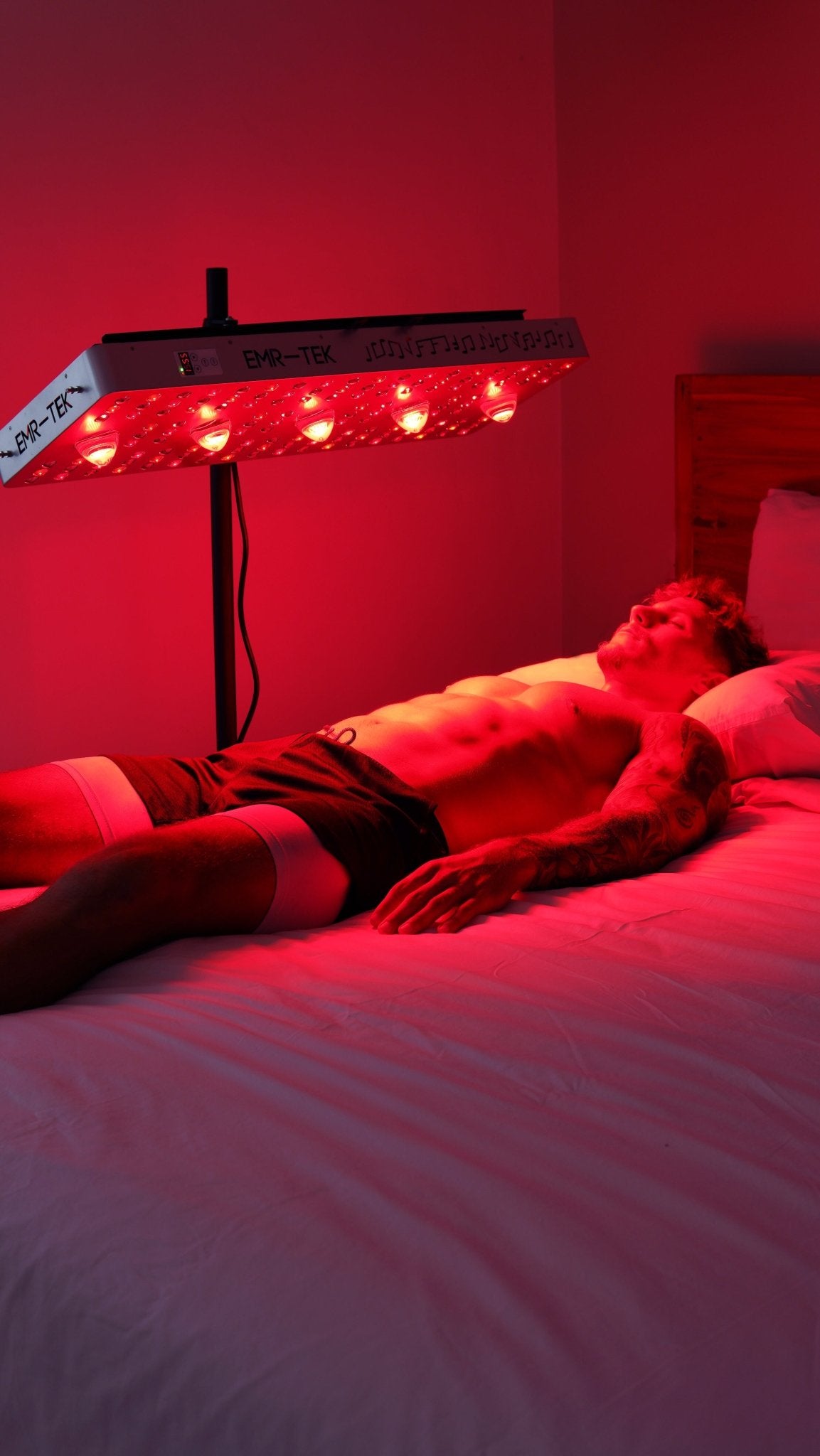
The standard Inferno is the version we’d consider if you like EMR-TEK’s tall hybrid COB format but don’t need the additional hardware and expansion features of the Inferno Pro. It gives you enough treatment area to make torso, back, leg, and larger muscle-group sessions practical without moving all the way into the size and price territory of the Firehawk.
For the right buyer, that makes the Inferno an appealing middle ground. You’re getting the larger treatment format and concentrated COB-and-LED approach that distinguish EMR-TEK’s bigger systems, but you’re not paying for Pro features you may never use. The biggest thing we’d settle before ordering is the exact wavelength configuration. EMR-TEK’s public listings have not always been consistent for this model, and at this price, we’d want the specifications of the actual unit being shipped confirmed rather than making assumptions based on another Inferno listing.
The Inferno uses EMR-TEK’s hybrid COB-and-LED design, combining concentrated COB light sources with a larger LED array rather than relying exclusively on a conventional grid of individual diodes. That gives the Inferno a different approach to delivering light across its larger treatment area and is one of the main reasons someone may choose it over a more traditional panel.
The wavelength specification is less straightforward. Current EMR-TEK regional materials have shown the Inferno with either 630nm, 670nm, and 830nm or 630nm, 660nm, and 830nm. We wouldn’t pretend that discrepancy doesn’t exist. We’d confirm the wavelength label on the exact version being sold before purchasing, particularly if 660nm versus 670nm is important to your comparison.
More importantly, we’d avoid assuming the standard Inferno is simply a less expensive Inferno Pro with essentially identical hardware. The Pro is where EMR-TEK adds its upgraded Mean Well driver package, zero-flicker operation, lower electromagnetic-field performance, and modular connectivity. The standard Inferno is the more straightforward option for someone primarily interested in the treatment area and hybrid COB format.
The Inferno makes the most sense once your routine has moved beyond treating one small area at a time. Its larger format gives you enough coverage to work across the torso, back, legs, and other substantial areas without constantly moving a smaller device from one position to another.
That’s where we’d focus when deciding between this and one of EMR-TEK’s smaller models. If you’re primarily treating a knee, shoulder, face, or another localized area, buying a large Inferno creates more equipment than the routine really requires. If you’re regularly working across larger areas, the additional treatment surface can remove enough repositioning to make sessions considerably easier.
There is a practical tradeoff with a larger, high-output panel: cooling. Independent owner feedback has included comments about noticeable fan noise. That won’t matter equally to everyone, but we’d take it seriously if you’re planning to use the Inferno in a quiet bedroom, meditation space, or wellness room where noise could interfere with the experience you’re trying to create.
We’d also think about positioning before purchasing. A panel can deliver excellent performance and still become frustrating if you’re constantly trying to find the right height or angle. The Inferno is large enough that we’d want its location and positioning setup established rather than treating it like something we’ll casually move around every day.
The standard Inferno earns its place primarily by giving you access to EMR-TEK’s larger hybrid COB-and-LED format without requiring you to pay for the full Pro hardware package. If coverage and the COB design are the features you care about most, that can make the standard model the more sensible value.
The decision becomes more complicated if the Pro’s electrical upgrades already appeal to you. The Inferno Pro is where EMR-TEK emphasizes Mean Well drivers, zero-flicker operation, lower electromagnetic fields, and modular expansion. Those aren’t cosmetic differences, and we’d consider them before choosing the standard model purely to save money.
If none of those features materially change how you plan to use the panel, we’d have no problem choosing the standard Inferno and keeping the difference. You’re still getting the larger treatment format and core EMR-TEK approach. But if you’re already thinking about future expansion or specifically shopping for cleaner electrical performance, we’d rather pay for the Pro once than buy the Inferno and immediately start wishing we’d moved up.
Before ordering the Inferno, we’d decide exactly where it’s going to live. This isn’t the kind of targeted device we’d expect to pull out for ten minutes and put back into a cabinet. A larger panel becomes much more useful when it has a dedicated position where you can walk up, start a session, and leave everything in place afterward.
We’d also account for whatever stand or positioning solution you plan to use as part of the setup rather than treating it as an afterthought. Height and angle can have a significant effect on how convenient a large panel feels in everyday use, particularly if several areas of the body are part of your routine.
Fan noise is worth considering here as well. If the Inferno is going into a home gym or recovery area, it may barely register. In a quiet bedroom or relaxation-focused space, the active cooling could become considerably more noticeable. We’d rather know that before deciding where the panel belongs.
EMR-TEK’s return policy is one of the areas we’d pay particularly close attention to with the Inferno. The current policy generally limits the 30-day return period to unused products, which is very different from a true trial period where you’re encouraged to run treatments for several weeks and decide whether the panel works for you.
That means we’d resolve the major ownership questions before powering it on. Confirm the dimensions, wavelength configuration, stand package, expected noise level, and where the panel will go. Once you’ve begun using the device, we wouldn’t assume changing your mind will result in a straightforward return.
The Inferno carries a two-year warranty. That’s useful protection, although we’d prefer stronger coverage on premium equipment intended for regular long-term use. We’d also read the warranty conditions carefully so there’s no confusion about what is covered, how service is handled, and whether shipping costs become the owner’s responsibility if something needs attention.
The inconsistent wavelength information makes written confirmation particularly valuable with this model. We’d keep the order documentation and any specification confirmation from EMR-TEK so there’s a clear record of exactly which version was purchased and what was represented at the time of sale.
Owner feedback around EMR-TEK tends to reinforce what we’d already consider before buying the Inferno. The brand has users who speak very positively about the intensity and performance of its lights, while other discussions raise concerns around shipping, communication, and after-sale support. For equipment at this price, we’d consider the ownership experience alongside the hardware rather than evaluating output alone.
Fan noise is one of the more useful model-specific observations because it’s something a specification table doesn’t communicate particularly well. A powerful light can look perfect online and feel very different once it’s operating several feet away in a quiet room. If silence is important to your routine, we’d factor that into the decision rather than assuming you’ll stop noticing it.
The bigger comparison is ultimately between the standard Inferno and Inferno Pro. The standard model gives you lower-cost access to the larger hybrid COB-and-LED format, which is a meaningful advantage if broad treatment coverage is what you’re after. The compromise is giving up some of the electrical refinements and expansion capabilities that make the Pro the more complete long-term system.
We wouldn’t automatically call either one the better purchase. If you want a substantial EMR-TEK panel for regular large-area treatments and don’t care about modular expansion or the Pro electrical package, the standard Inferno can save you money without sacrificing the basic format you came for. If zero-flicker operation, upgraded drivers, lower EMF performance, or future expansion are already on your priority list, we’d move to the Inferno Pro instead. The Inferno works best when you’re deliberately choosing the simpler system, not when you’re settling for it because it’s cheaper.

Key Features
A hybrid array independently confirmed by LightLab, with COBs over the transcranial, thyroid, cardiac, abdominal and pelvic regions and an SMD field around them.
Designed for broad body areas.
Fans support the high-output hardware.
Standard EMR-TEK panel coverage.
Full Specifications
Wavelengths:
Final Verdict
4.7

Join red light therapy users comparing devices, sharing protocols, and posting honest results. Free to join, no sales pitch.
Protocol sharing
Device comparisons
Safety-first advice
Tec Specs
Wave Lengths
630nm-830nm
IRRADIANCE:
138.39 mW/cm² at 6 inches and 67.22 mW/cm² at 12 inches
Coverage Area:
Near full body at standing distance
Overall Category Scores
Category
Score
Best Quality
Ease of Use
Features
Value
Support
Staying informed with the latest research and reviews.

10 Minute Read

10 Minute Read