OVERALL
4.7
BEST FOR
Joint pain, osteoarthritis, targeted recovery
$499
WAVELENGTHS
660nm-808nm
IRRADIANCE
5mW per laser diode; 50mW per module
COVERAGE AREA
Targeted joint
WEIGHT
0.79 kg (about 1.74 lbs)
Our Review
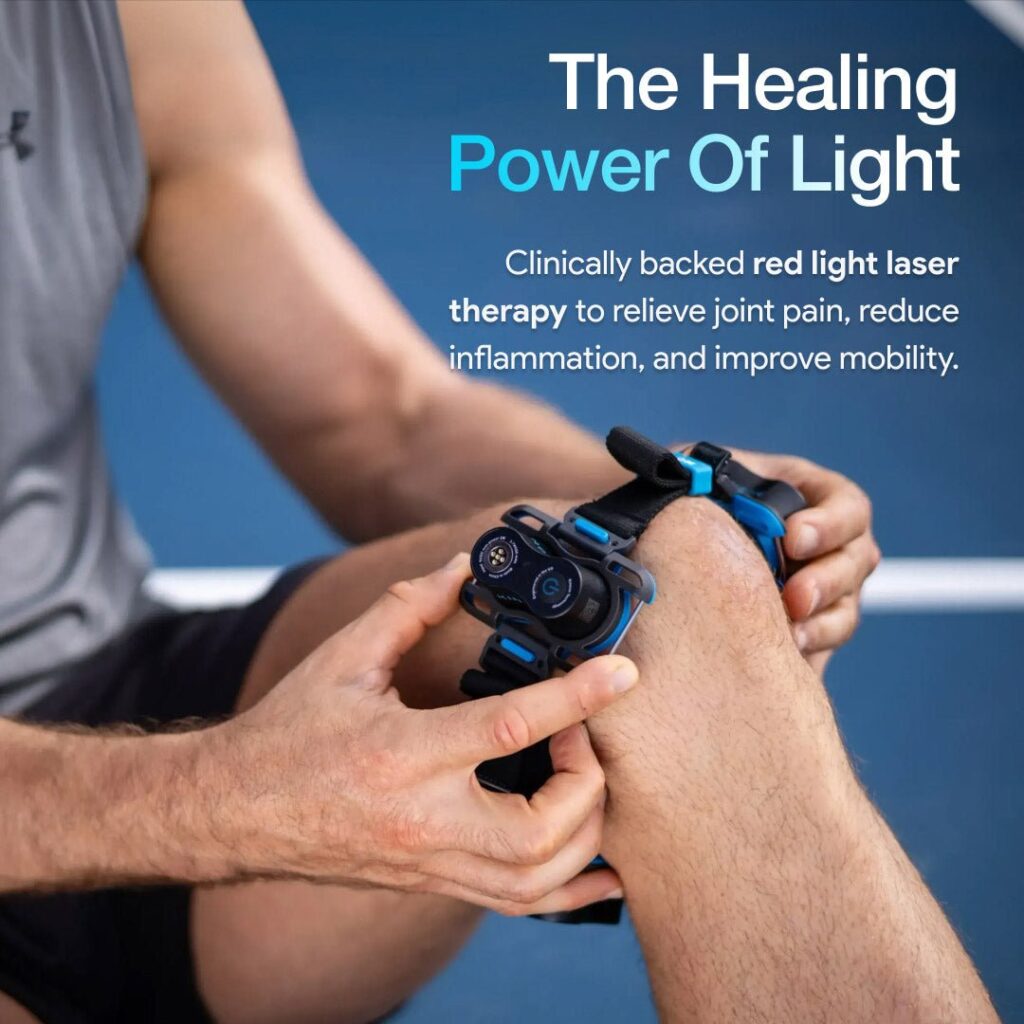
The Kineon MOVE+ makes the strongest case for itself when your priority is a specific joint rather than large-area red light therapy. At $499, you’re paying for three small treatment modules that can be positioned closely around areas like the knee, shoulder, elbow, ankle, or wrist, combining 660nm red LEDs with 808nm laser diodes. That’s expensive if you’re comparing it with a panel based purely on treatment area. But if you’d rather strap a device directly around a joint, keep your hands free, and use the same system on several different areas, the MOVE+ offers something a conventional panel doesn’t.
We’d also separate the word “laser” from the hype that naturally comes with it. Kineon isn’t selling a high-powered medical laser for home use. The MOVE+ uses Class 1 laser diodes alongside LEDs in a consumer wearable designed to be used close to the body. The more important question is whether the three movable modules and strap system make treating your particular area easier. That’s what you’re really paying the premium for.
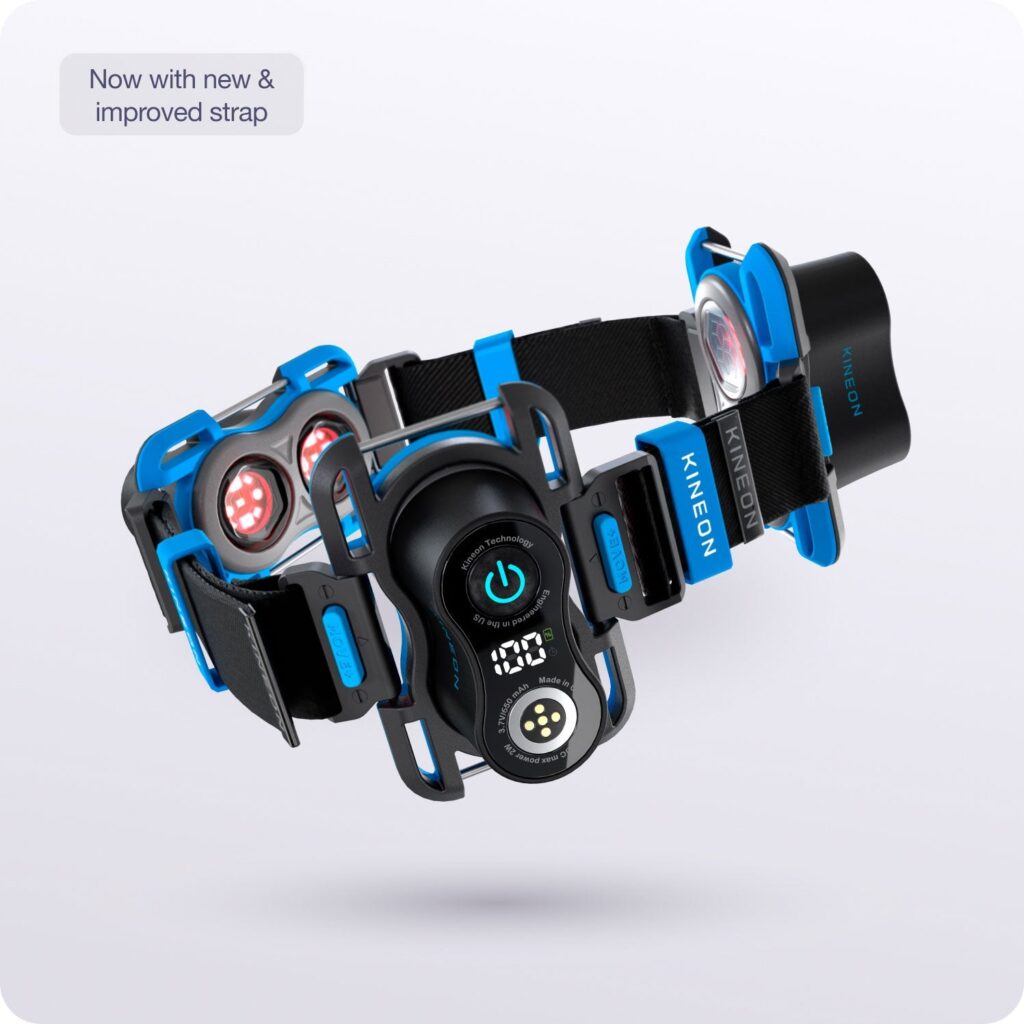
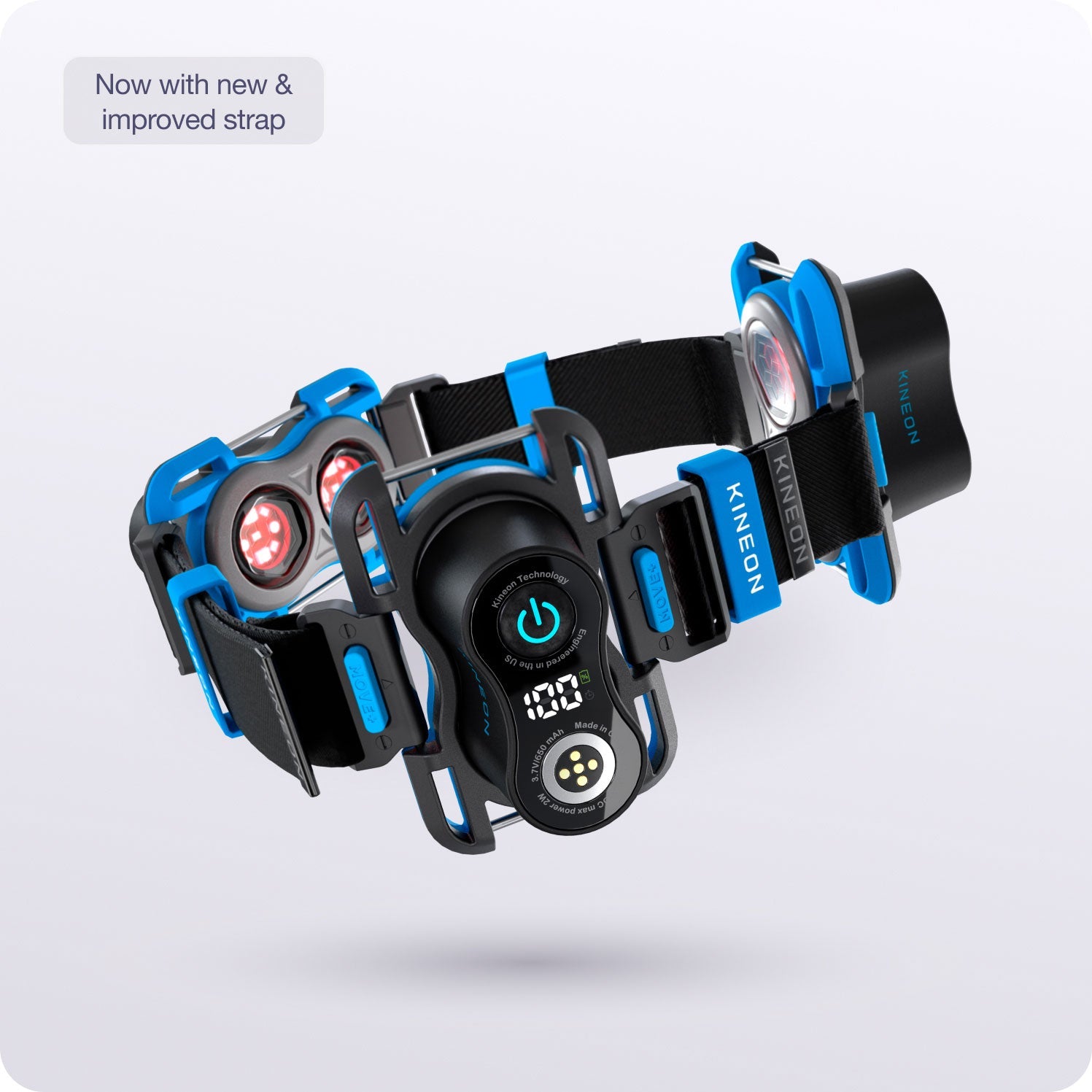
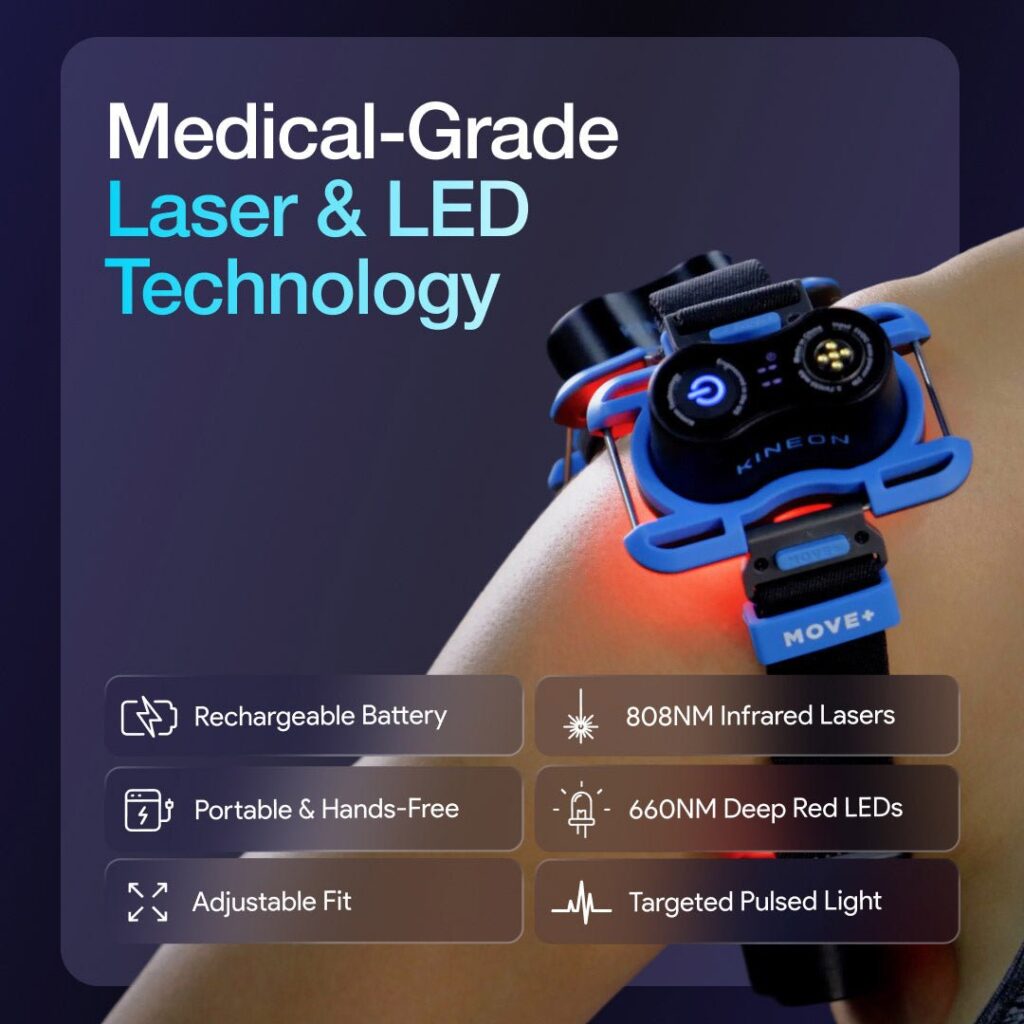
The MOVE+ is very different from the typical red light panel. Instead of placing dozens or hundreds of LEDs in front of you, Kineon divides the light between three small modules that sit directly against or very close to the treatment area. Each module combines 660nm red LEDs with 808nm laser diodes.
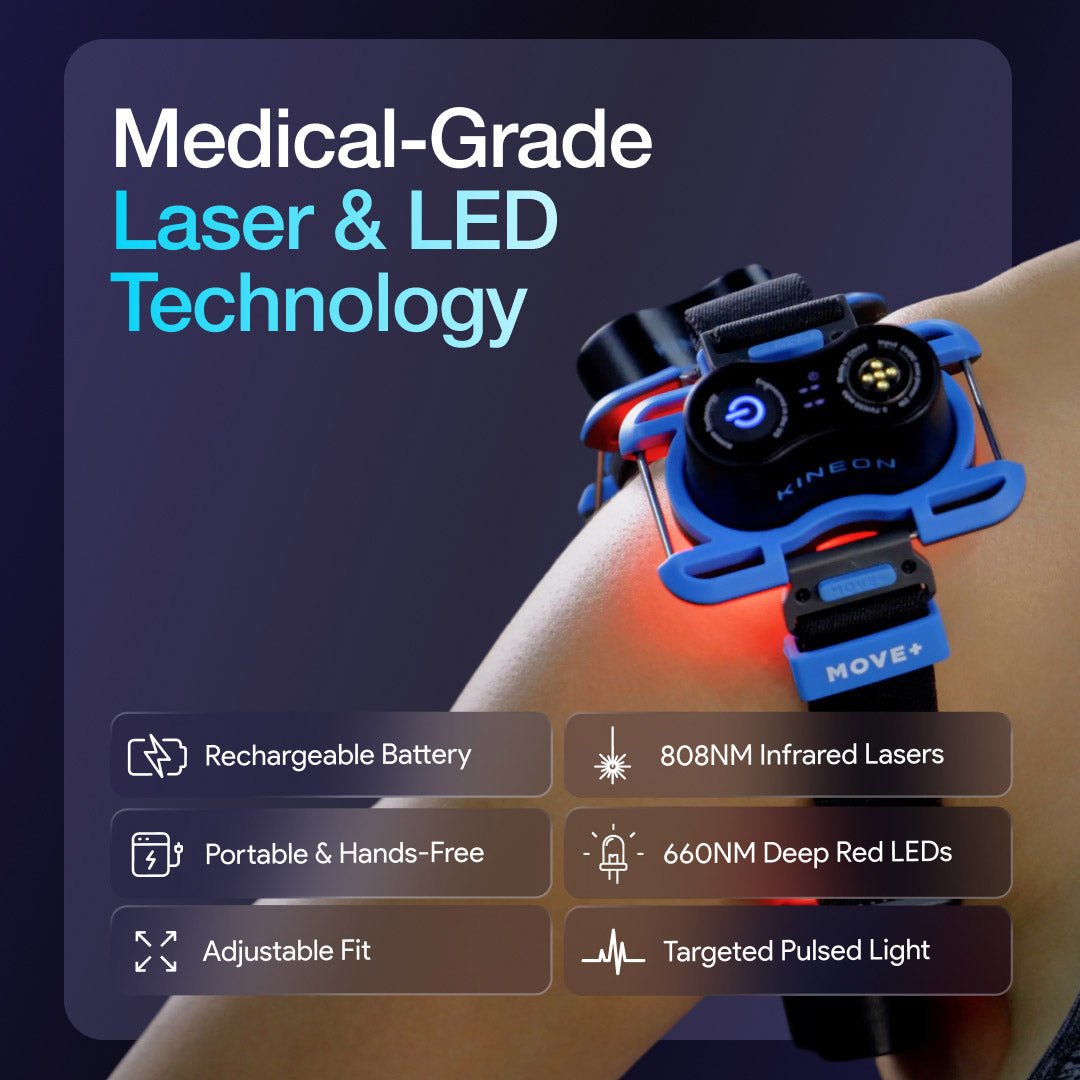
The 660nm and 808nm combination is also worth understanding without making it unnecessarily technical. The red LEDs provide the visible red portion of the treatment, while the 808nm light is near-infrared and isn’t going to look bright to your eyes in the same way. Kineon uses laser diodes for that 808nm component rather than relying entirely on conventional LEDs.
That laser component is one of the main reasons the MOVE+ gets attention, but we wouldn’t buy it simply because “laser” sounds more powerful than “LED.” What matters more in everyday ownership is that those modules can sit very close to the area you’re targeting and be arranged around it rather than illuminating it from one direction several inches away.
The three-module design is particularly useful around curved areas. A knee isn’t flat. Neither is a shoulder or elbow. With separate modules, you can distribute the treatment around the joint rather than having one flat light source pointing toward a single side. That’s a much more meaningful advantage to us than simply being able to say the device contains lasers.
It’s also important to understand what the MOVE+ isn’t. This isn’t a general-purpose red light therapy device we’d buy for skin treatments across the face, full-body sessions, or large areas like the entire back. Its treatment area is intentionally small. You’re buying precision and positioning rather than coverage.
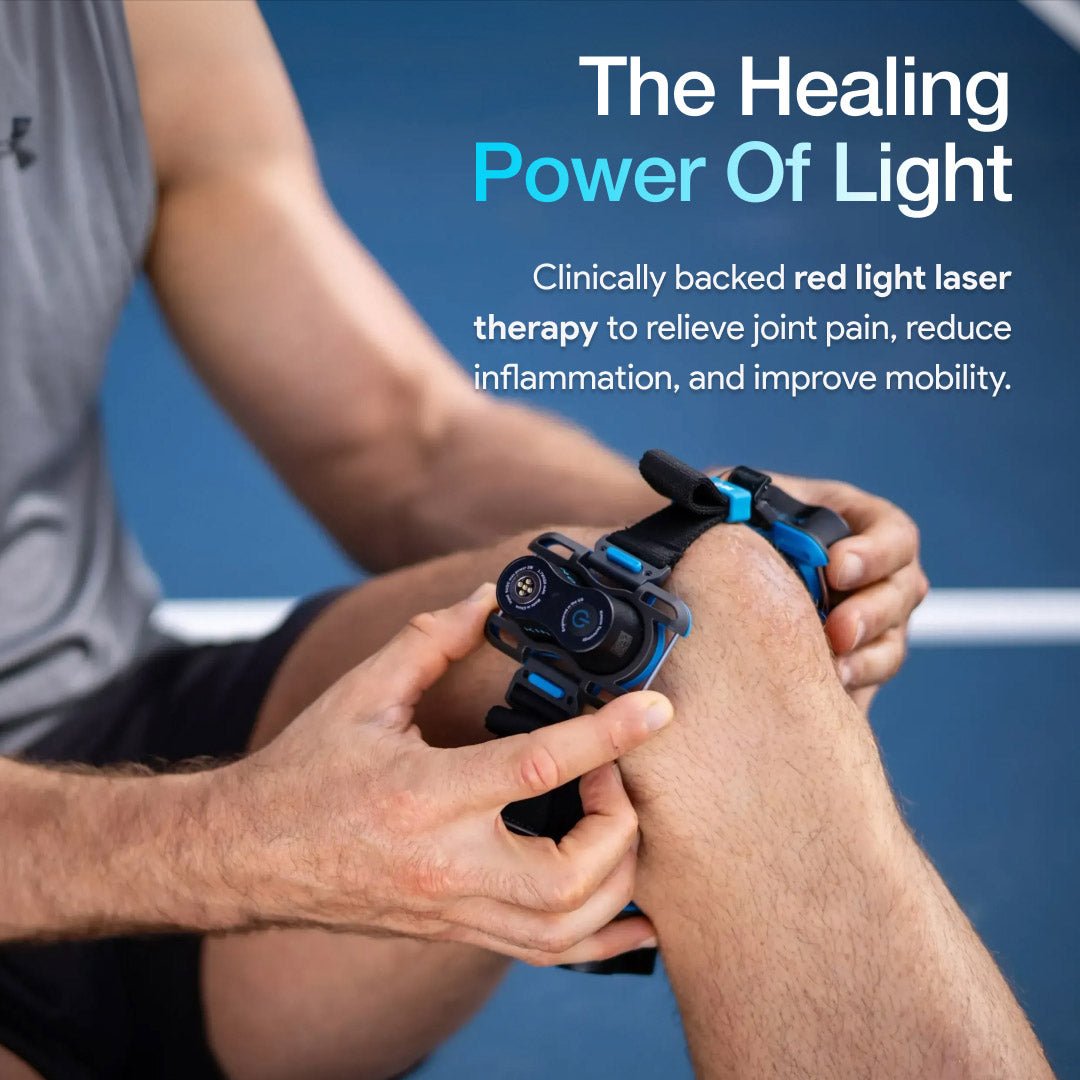
This is where the MOVE+ becomes much easier to justify. The strap system lets you arrange the three modules around the area you’re treating and then leaves your hands free. You aren’t sitting there holding a light against your knee for the entire session or trying to balance a panel at exactly the right angle.
The modules can also be repositioned instead of being permanently built into a knee brace or another single-purpose wearable. That gives the MOVE+ considerably more flexibility. Someone may use it around a knee one day and reposition it for an elbow, shoulder, ankle, wrist, or another targeted area later.
That versatility matters at $499. We’d have a harder time justifying the price for a device permanently designed around one joint unless that was the only area we ever intended to treat. Being able to move the modules around gives the MOVE+ a longer list of potential uses without requiring you to buy another wearable.
Sessions generally run from about 5 to 15 minutes, which is manageable enough for regular use. That’s particularly important with a device like this because consistency becomes much easier when treatment doesn’t require changing clothes, setting up a large panel, finding the correct distance, and then putting everything away afterward.
The limitation is just as straightforward: you’re treating a small area. If your routine involves both knees, a shoulder, your lower back, and several other areas, the convenience starts to disappear because you’re moving the modules and repeating sessions. At some point, a larger panel becomes the more efficient tool.
We’d therefore buy the MOVE+ because we have one or a few specific areas that matter most, not because we want one red light therapy device to do absolutely everything. It becomes particularly compelling when the areas you’re treating are joints where wrapping light around the target is more practical than standing in front of a flat panel.
At $499 at the current sale price, treatment area isn’t how the MOVE+ wins a value comparison. You can buy red light devices that illuminate considerably more of the body for similar money. If you’re comparing products by how many square inches of skin they can expose at once, the Kineon will look expensive.
What you’re paying for instead is the combination of 660nm LEDs, 808nm laser diodes, three independently positioned treatment modules, wearable straps, and a compact system designed specifically around targeted use. The value is convenience and precision rather than size.
That’s why we’d be fairly strict about who should spend the money. Someone who primarily wants general red light therapy for the face, skin, back, or whole body can get more useful coverage elsewhere. Someone whose main reason for shopping is a knee, shoulder, elbow, ankle, or another localized area has a much stronger reason to consider the MOVE+.
We’d also think beyond the first area you’re planning to use it on. If the movable modules mean you can realistically use the same $499 device on several joints over time, the price becomes easier to accept. If you’re certain it will only ever sit around one knee, the cost deserves more scrutiny.
The MOVE+ doesn’t demand the kind of home setup that comes with a conventional panel. There is no treatment distance to measure across a room, no large floor stand to accommodate, and no permanent wall space to surrender. Most of the setup is simply learning how to position and secure the modules comfortably around the area you’re treating.
There may be a little trial and error at first. Three movable modules give you flexibility, but that also means you need to decide where you actually want them. We’d expect positioning to become much quicker once you’ve used the system several times on the same area.
The charging and travel setup also suits the product well. A targeted wearable loses some of its appeal if you’re constantly dealing with loose modules, cables, and accessories. Having a charging case and travel case makes it easier to keep everything together and take the system with you rather than treating it like equipment that permanently lives in one room.
Portability is a legitimate advantage here too. The MOVE+ is much easier to bring to the office, gym, or on a trip than a conventional red light panel. If maintaining your routine away from home matters, that’s one of the areas where the higher price buys you something you’ll actually notice.
Kineon’s 30-day return period is useful because fit and positioning are difficult to judge from product photos alone. With a wearable device, we’d want to know whether the straps actually stay where we need them, whether the modules sit comfortably around the joint, and whether the whole routine feels practical enough that we’ll continue using it.
We’d still read the complete return terms before ordering rather than treating “30 days” as the entire policy. Check the conditions for returning an opened or used MOVE+, the condition it needs to be in, and whether any shipping costs remain your responsibility.
The hardware warranty is one year, alongside Kineon’s lifetime support. The lifetime support is useful, but we’d distinguish that from lifetime warranty coverage. They’re not the same thing. The device itself only receives the stated one-year hardware protection.
One year feels relatively short for a $499 electronic device that someone may use frequently. The MOVE+ contains rechargeable components and multiple treatment modules, so we’d prefer to see longer hardware coverage. That’s one of the more meaningful drawbacks we’d factor into the purchase rather than getting distracted by the lifetime-support language.
Battery longevity is worth thinking about for the same reason. Rechargeable wellness devices can be perfectly convenient when they’re new, but you’re buying something you may want to use for years. We’d want to know what support options exist if battery performance declines outside the warranty period rather than assuming “lifetime support” automatically means free replacement hardware.
One advantage Kineon has over some of the more niche devices we’ve reviewed is the amount of owner feedback available. The MOVE+ has accumulated a substantial number of reviews, giving prospective buyers considerably more real-world information to work with than a product supported by only a handful of testimonials.
We’d still be careful with the results people describe. Pain, stiffness, mobility, and recovery experiences are inherently individual, and customer testimonials can’t tell you what will happen in your case. We’d pay more attention to the ownership details reviewers can answer reliably: Do the straps stay in place? Are the modules easy to position? Is charging straightforward? Does the device remain convenient after the novelty wears off? How does Kineon respond when someone needs help?
The feedback around results also reinforces the importance of reasonable expectations. Owners frequently describe changes developing with repeated use rather than one session producing some dramatic overnight difference. That’s the expectation we’d bring to the MOVE+ as well. A convenient wearable format may make consistency easier, but it doesn’t turn light therapy into an instant treatment.
Longer-term owner discussions are particularly useful because some users have talked about battery or service needs after extended ownership. That doesn’t establish a widespread durability problem, but it does bring us back to the one-year warranty. For a device intended to become part of a regular routine, we’d like the hardware protection to better match the length of time many people will expect to own it.
The MOVE+ ultimately succeeds because it doesn’t try to behave like a miniature full-body panel. Its three movable modules, 660nm LEDs, 808nm Class 1 laser diodes, wearable positioning, short session format, and portable charging setup are built around treating specific areas conveniently.
For someone regularly focusing on a knee, shoulder, elbow, ankle, wrist, or another localized area, that design can make the $499 price much easier to understand. We’d hesitate if broad skin or full-body coverage is the real goal, and we’d like to see more than a one-year hardware warranty. But when targeted joints are the priority, the MOVE+ gives you something much more useful than simply shrinking a conventional panel: it gives you a light therapy system that can actually wrap around and move with the areas you’re trying to reach.
Key Features
Reposition pods around different joints/areas.
Hybrid red-light and laser delivery.
Keeps modules close to the target while you relax.
Short daily-use format.
No wall panel or treatment station required.
Current purchase can qualify through supported payment flow.
Full Specifications
Wavelengths:
Final Verdict
4.7

Join red light therapy users comparing devices, sharing protocols, and posting honest results. Free to join, no sales pitch.
Protocol sharing
Device comparisons
Safety-first advice
Tec Specs
Wave Lengths
660nm-808nm
IRRADIANCE:
5mW per laser diode; 50mW per module
Coverage Area:
Targeted joint
Overall Category Scores
Category
Score
Best Quality
Ease of Use
Features
Value
Support
Staying informed with the latest research and reviews.

10 Minute Read
10 Minute Read