OVERALL
4.6
BEST FOR
Travel, targeted treatment, cordless use
$629
WAVELENGTHS
630nm-830nm
IRRADIANCE
~120 mW/cm2 at surface
COVERAGE AREA
~20 x 15cm
WEIGHT
0.9 kg
Our Review
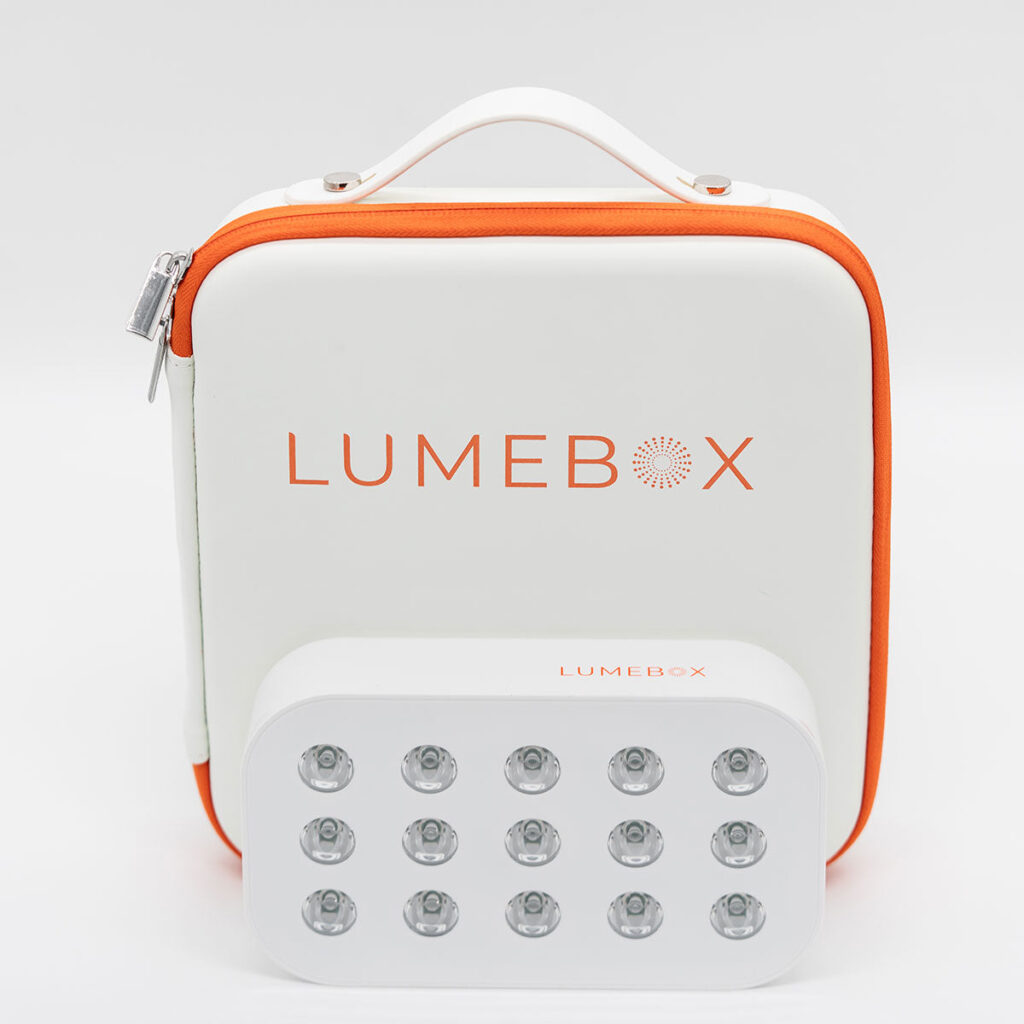
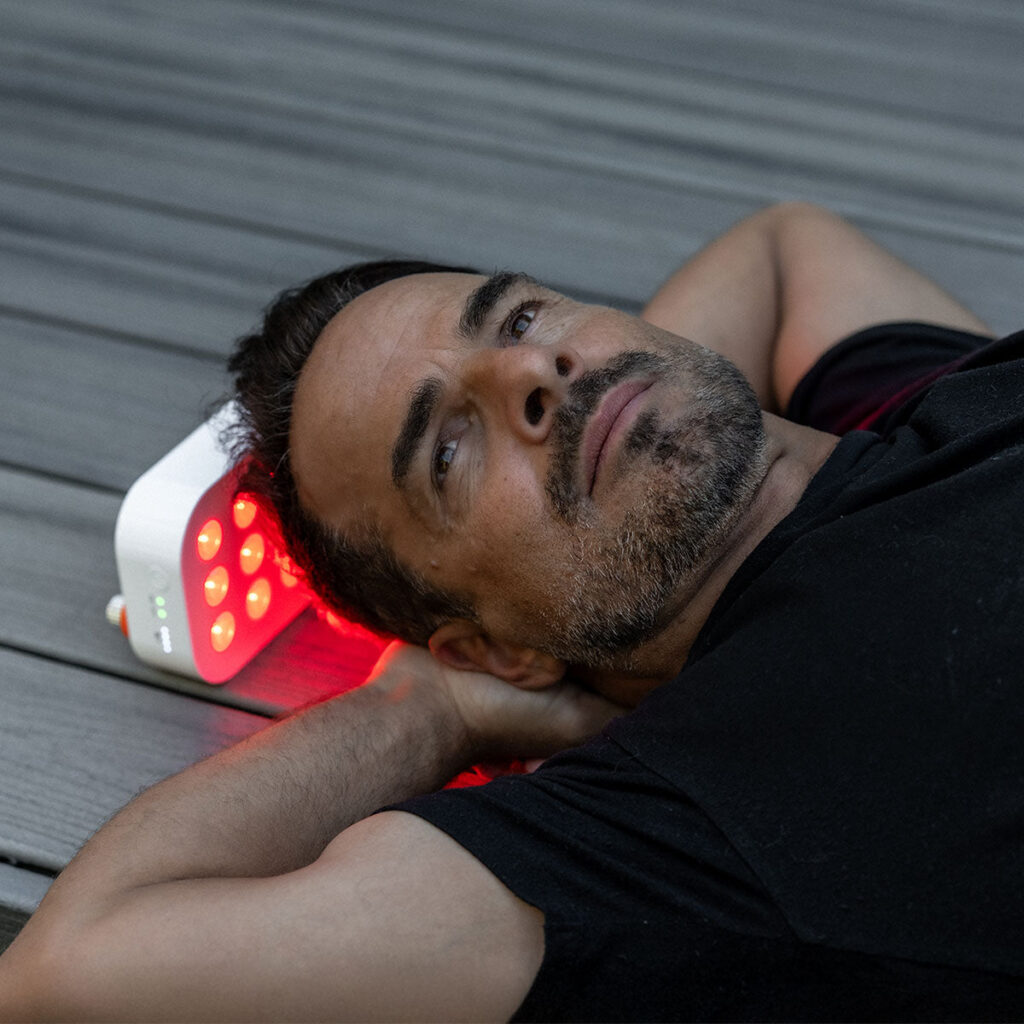
If you want a red light device you can genuinely take with you, LUMEBOX 2.0 is built around that need more convincingly than most products that call themselves portable. The rechargeable body, removable grip, and travel-friendly format make it practical for the office, gym, hotel, or anywhere you do not have a permanent panel waiting.
The price is what we’d wrestle with. Around $629 is a lot for a small treatment area, so we’d only pay it if portability will materially change how often you use red light therapy. If the LUMEBOX will spend most of its life on the same nightstand, a larger plug-in panel can give you more coverage for the money. If you know you’ll carry it, that freedom is the value.
The exact wavelengths on this model are 660nm red light and 850nm near-infrared light, which operate simultaneously. It’s a straightforward two-wavelength setup rather than a device built around multiple colors or extensive customization.
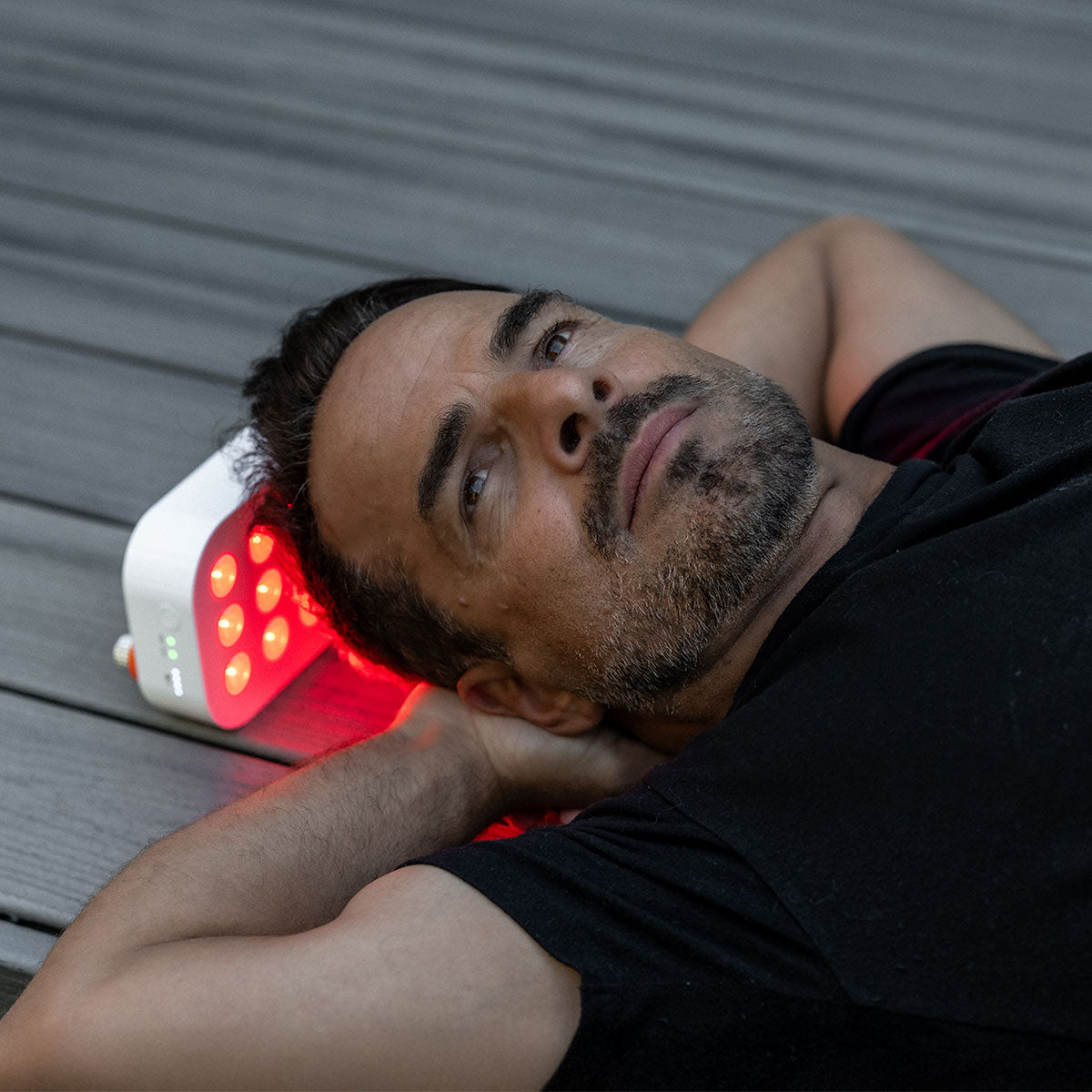
The optional 6- and 12-minute timer is a practical upgrade because handheld sessions can otherwise turn into constant clock-checking. The device can be held, set down with the grip, or paired with the optional stand, so it works better as a small routine tool than a flashlight you have to aim manually for every minute.
We would make the call based on routine, not ambition. The LUMEBOX 2.0 makes the strongest case for itself when you actually need your red light therapy device to move with you. You can bring it into a hotel room, keep it at the office, throw it in a gym bag, or move it around the house without finding an outlet and setting up a panel every time.
The tradeoff is treatment area. This is still a compact device, so it makes the most sense for targeted sessions rather than broad full-body exposure. If you’re regularly treating one shoulder, knee, section of your back, face, or another localized area, that format can be incredibly convenient. If you’re picturing large torso or full-leg sessions, the constant repositioning can quickly make a larger panel more appealing.
Independent testing is one of the stronger parts of the LUMEBOX story. Published third-party measurements have placed output around 125 mW/cm² in red and 140 mW/cm² in near-infrared at 1cm, with output falling as treatment distance increases. The device also has IEC 62471 Risk Group 1 reporting. We wouldn’t obsess over achieving the highest possible irradiance number, though. The reason to choose this device is that it combines credible performance with a format you’re much more likely to have available when you want to use it.
One limitation worth understanding is that the red and near-infrared wavelengths operate together rather than independently. For someone who simply wants a straightforward combined 660nm and 850nm treatment, that keeps things wonderfully simple. If you specifically want individual control over red and NIR light, the LUMEBOX 2.0 doesn’t provide the same flexibility as panels with separate wavelength controls.
At around $629, the LUMEBOX 2.0 is undeniably a premium portable. You can buy substantially larger plug-in panels around this price, so coverage per dollar isn’t where the LUMEBOX wins.
What you’re paying for is the ability to take a legitimate red and near-infrared light therapy device places a conventional panel simply isn’t going. The rechargeable design, compact body, removable grip, carrying format, timer, and optional stand all contribute to making the device easier to integrate into a routine that doesn’t always happen in the same room.
That’s how we’d decide whether the $629 makes sense. If you’re going to use it in hotel rooms, at the office, after the gym, or throughout different areas of the house, the portability becomes something you benefit from every week. If you’re going to place it permanently beside your bed and never move it, we’d have a much harder time justifying the premium over a larger panel.
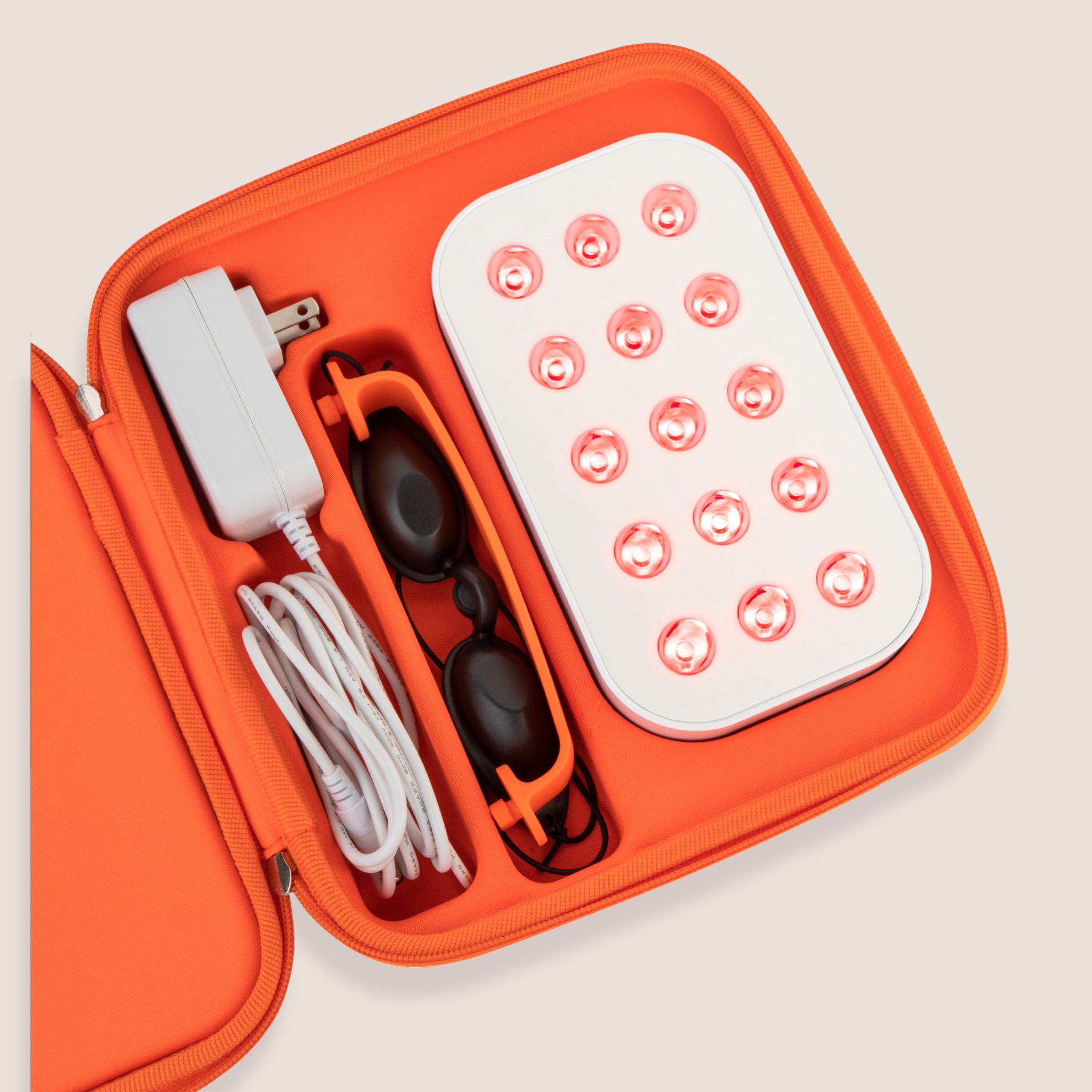
The second-generation model improves the ownership experience with a 6- or 12-minute timer, removable grip, revised case, and optional stand. Those sound like relatively small changes until you use a portable device regularly. Being able to position it, time the session, pack it neatly, and move on is what separates something designed for travel from something that’s merely small enough to fit in a suitcase.
There’s very little traditional setup involved. Charge the device, decide how you want to position it, and you’re ready for a targeted session. The removable grip gives you flexibility between handheld and stationary use, while the optional stand is worth considering if you expect to use the LUMEBOX hands-free frequently.
That simplicity is important because portability only has value when the device remains convenient once you reach your destination. The LUMEBOX 2.0 doesn’t require you to recreate a home-panel setup every time you travel with it, which is one of its strongest practical advantages.
The return policy is one area we’d look at carefully before ordering. LUMEBOX provides a 30-day return period, but returns are subject to a 15% restocking fee and the buyer is responsible for return shipping. On a $629 device, that means trying it and deciding against it isn’t necessarily cost-free.
The LUMEBOX 2.0 also carries a one-year limited warranty. We’d prefer longer protection at this price, particularly because you’re paying a premium for a rechargeable electronic device that’s specifically designed to travel and be handled regularly.
Neither policy makes the LUMEBOX 2.0 a poor purchase, but they do make it more important to know why you’re buying it beforehand. If portability is already a clear priority, the product has a very specific role to fill. If you’re still deciding between portable and stationary red light therapy, we’d settle that question before relying on the return period to make the decision for you.
The conversation around the LUMEBOX tends to come back to the same divide: convenience versus coverage. Owners who value portability tend to appreciate being able to use red light therapy without being tied to one room or a permanent panel setup. Buyers focused primarily on treatment area are more likely to question paying a premium price for such a compact device.
We think both perspectives are reasonable because they’re judging the LUMEBOX 2.0 by different standards. Compared purely on treatment area per dollar, larger panels have an obvious advantage. Compared on how easily you can put the device in a bag and continue the same routine somewhere else, a large panel isn’t really competing for the same job.
The independent performance testing is another positive. Third-party wavelength, irradiance, EMF, and optical-safety information gives buyers more to work with than marketing claims alone, which we particularly appreciate on a premium portable device.
The 660nm red and 850nm near-infrared wavelengths operating simultaneously keep the treatment experience deliberately simple. You don’t get the extensive wavelength selection, presets, or independent light controls available from more advanced panels, but that’s not necessarily what someone buying the LUMEBOX needs. This is meant to be something you can pick up, position, run for six or 12 minutes, and put away without turning the session into a project.
That’s ultimately how we’d judge the LUMEBOX 2.0. At around $629, it’s not the device we’d buy to maximize treatment area or collect the most features for the money. It’s the device we’d buy because we want legitimate red and near-infrared light therapy to fit around our schedule instead of forcing our schedule to fit around a panel. If you’re genuinely going to travel with it, move it between locations, or use the rechargeable format regularly, the premium has a clear purpose. If it never leaves the same room, much of what you’re paying for goes unused.
Key Features
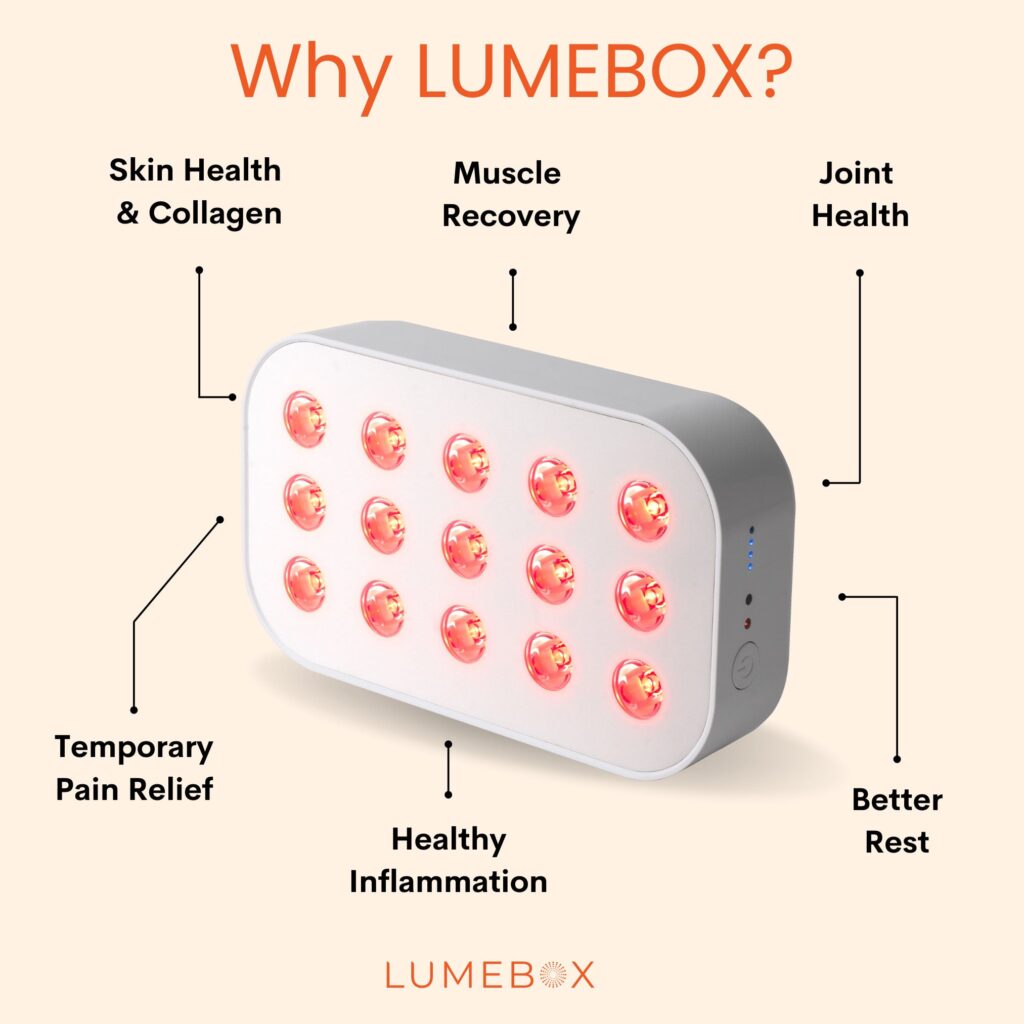
Emits 660nm red and 850nm near-infrared light at the same time for surface and deeper tissue coverage.
A built-in rechargeable battery and comfort-grip handle allow cord-free sessions at home or while traveling.
Output is third-party tested for wavelength, EMF and irradiance, and the device is FDA-registered.
Built-in session control.
Designed for transport.
Independent irradiance/EMF data available.
Full Specifications
Wavelengths:
Final Verdict
4.6

Join red light therapy users comparing devices, sharing protocols, and posting honest results. Free to join, no sales pitch.
Protocol sharing
Device comparisons
Safety-first advice
Tec Specs
Wave Lengths
630nm-830nm
IRRADIANCE:
~120 mW/cm2 at surface
Coverage Area:
~20 x 15cm
Overall Category Scores
Category
Score
Best Quality
Ease of Use
Features
Value
Support
Staying informed with the latest research and reviews.

10 Minute Read
10 Minute Read