OVERALL
4.8
BEST FOR
Full-body sessions, five-wavelength coverage
£1,150
WAVELENGTHS
630nm-850nm
IRRADIANCE
86.4 mW/cm2 at 15cm
COVERAGE AREA
Full body
WEIGHT
11 kg
Our Review
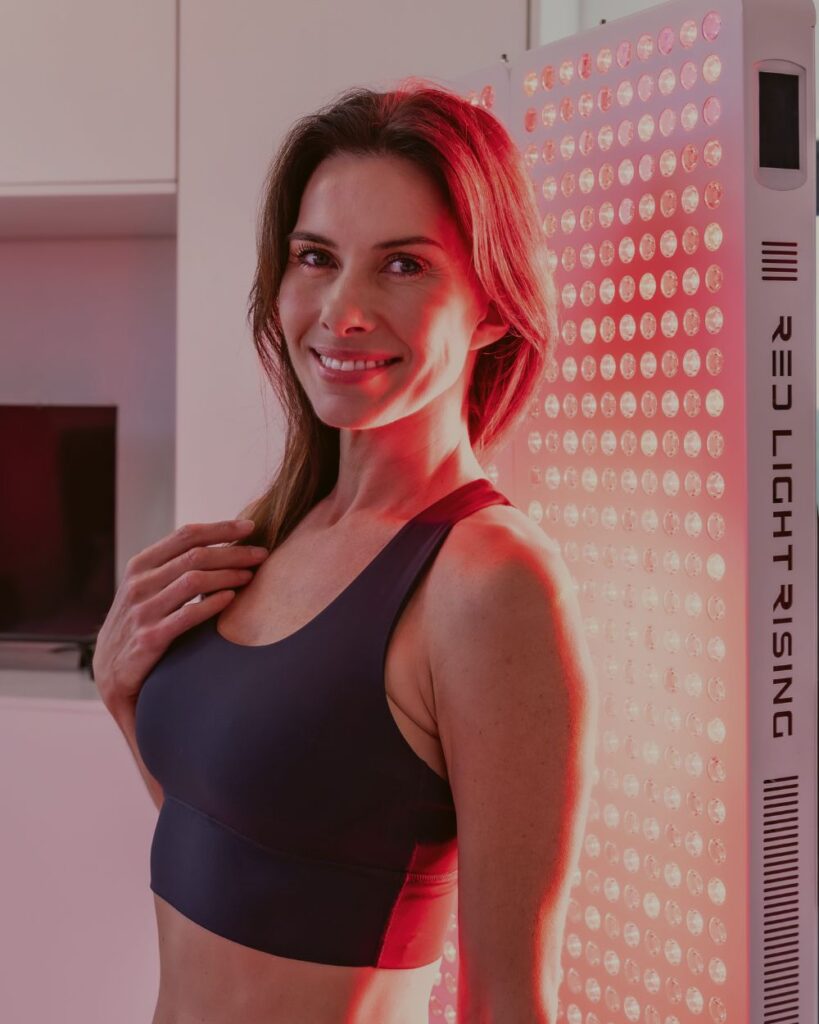
The Red Light Rising Advantage Panel is designed for someone who wants more control than a basic red light therapy panel provides. Along with five wavelengths, it gives users adjustable red and near-infrared intensity, six preset modes, touchscreen and remote controls, and the ability to connect additional panels later.
Those extras are the main reason to choose it. Someone who plans to use the same wavelengths at full intensity for every session probably does not need to pay for this much customization. The Advantage makes more sense when adjustable output, presets, or the ability to expand the system will actually make the panel easier to use over time.
The Advantage gives users two ways to approach a session. The six Smart Modes provide ready-made settings when simplicity is the priority, while manual controls allow red and near-infrared intensity to be adjusted independently from 0% to 100%.
That balance is useful for someone who wants customization without having to configure the panel from scratch every time. A beginner can start with the presets, while someone who becomes more familiar with the panel can make individual adjustments later.
The ability to lower intensity is particularly practical. Maximum output does not need to be the default for every person or every session. Having a usable range gives owners more flexibility to find settings that work comfortably with their preferred treatment distance and routine.
The included remote also becomes more useful once the panel is actually set up. Settings can be changed without walking back to the touchscreen, which is particularly convenient with a larger panel positioned several feet away.
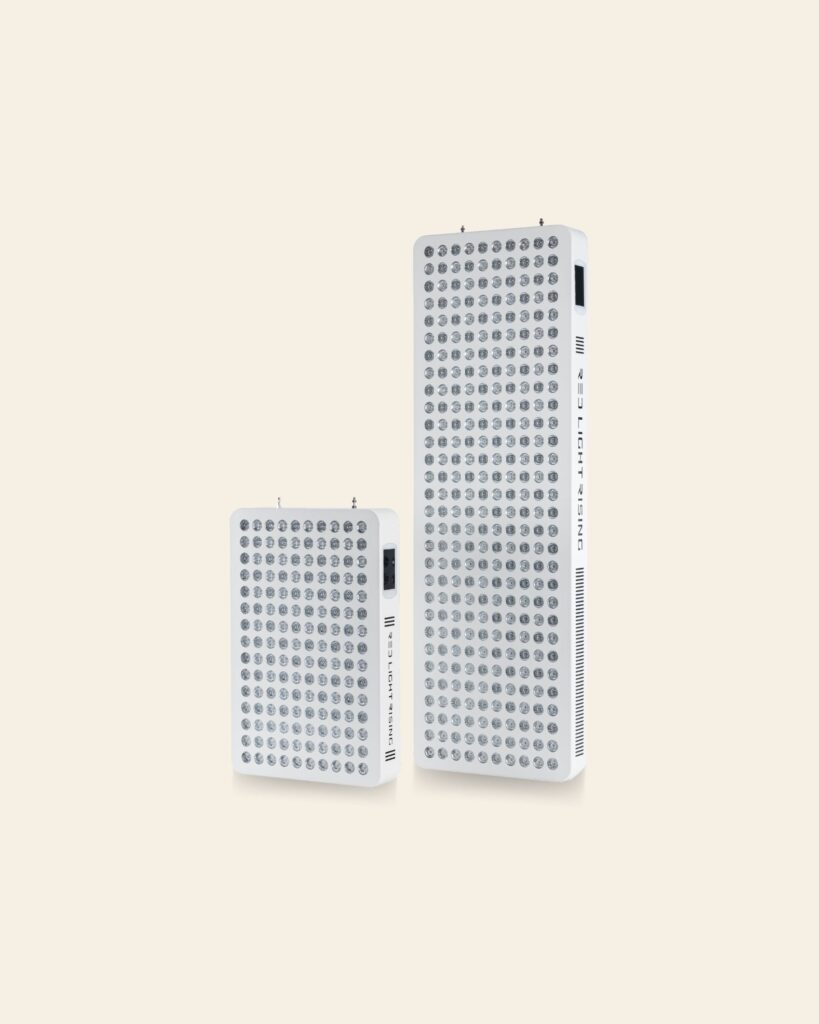
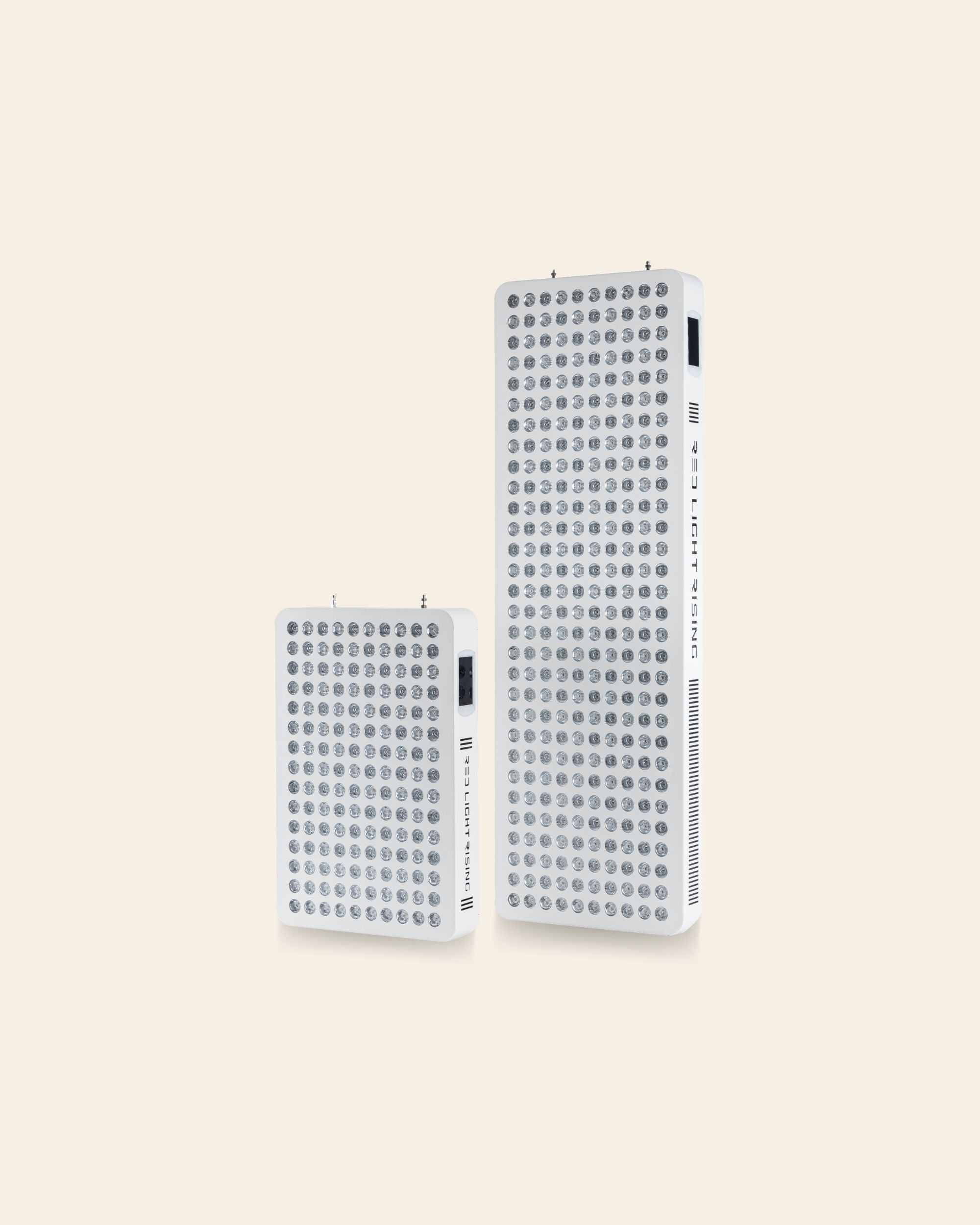
The Advantage comes in two sizes, and choosing between them should be based primarily on how much coverage is actually needed.
The Advantage 450 is the more manageable option for someone treating the face, upper body, one leg, or other specific regions. Its smaller size also makes it easier to accommodate when floor or wall space is limited.
The Advantage 900 provides considerably more vertical coverage and reduces the amount of repositioning needed for larger areas. It makes more sense when broader sessions are already part of the plan and moving between upper- and lower-body positions would become frustrating.
We would not automatically choose the 900 simply because it is larger. The better size is the one that covers the intended treatment areas without taking up unnecessary space or adding cost that does not improve the actual routine.
The Advantage uses five wavelengths: 630nm, 660nm, 810nm, 830nm, and 850nm. That provides two red wavelengths and three near-infrared wavelengths instead of relying on the basic 660nm and 850nm combination found in many simpler panels.
The wavelength count alone is not the strongest reason to choose the Advantage. What matters more is the control it provides over them. Red and near-infrared output can be adjusted independently, allowing users to change the balance rather than treating every session as an all-or-nothing setting.
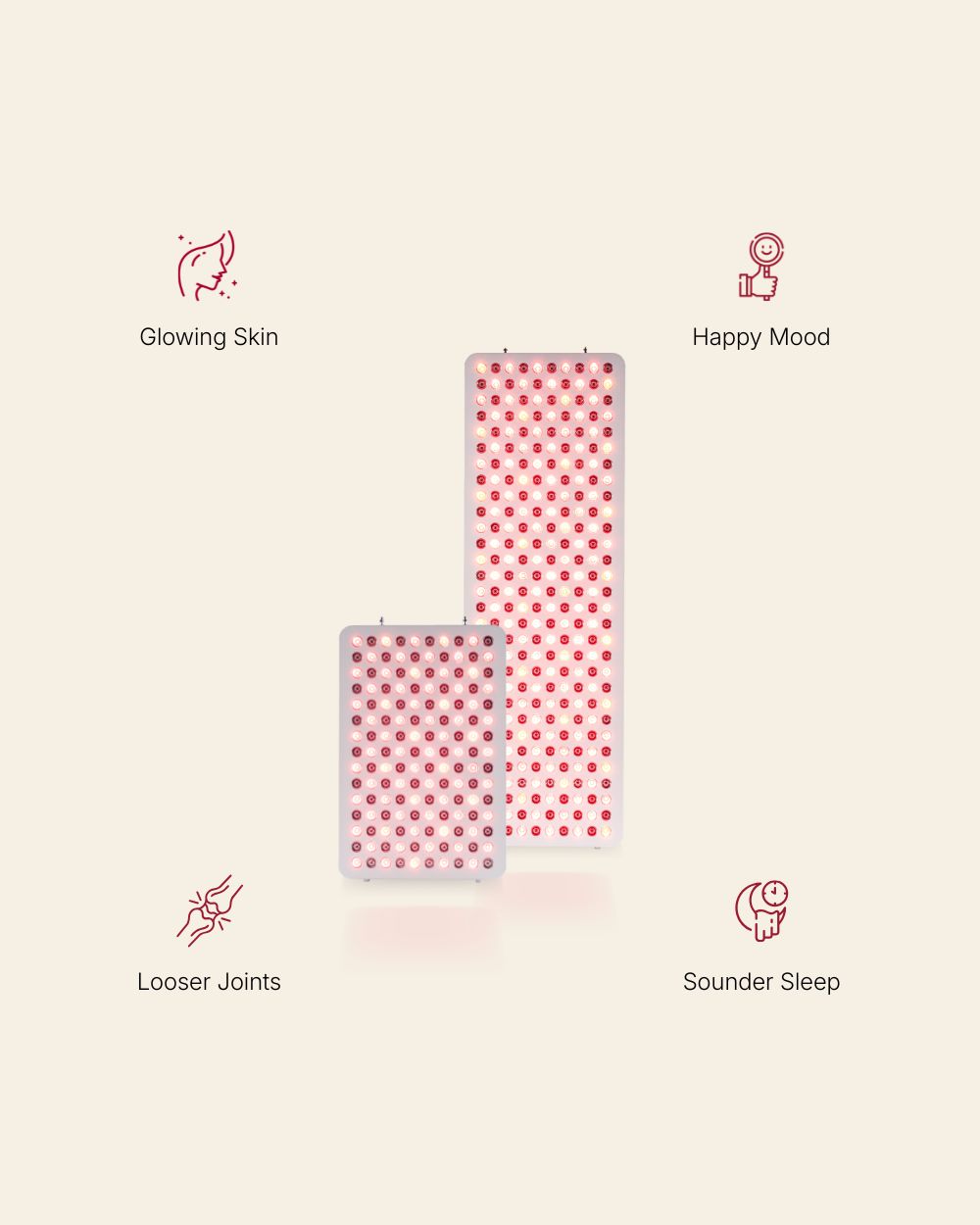
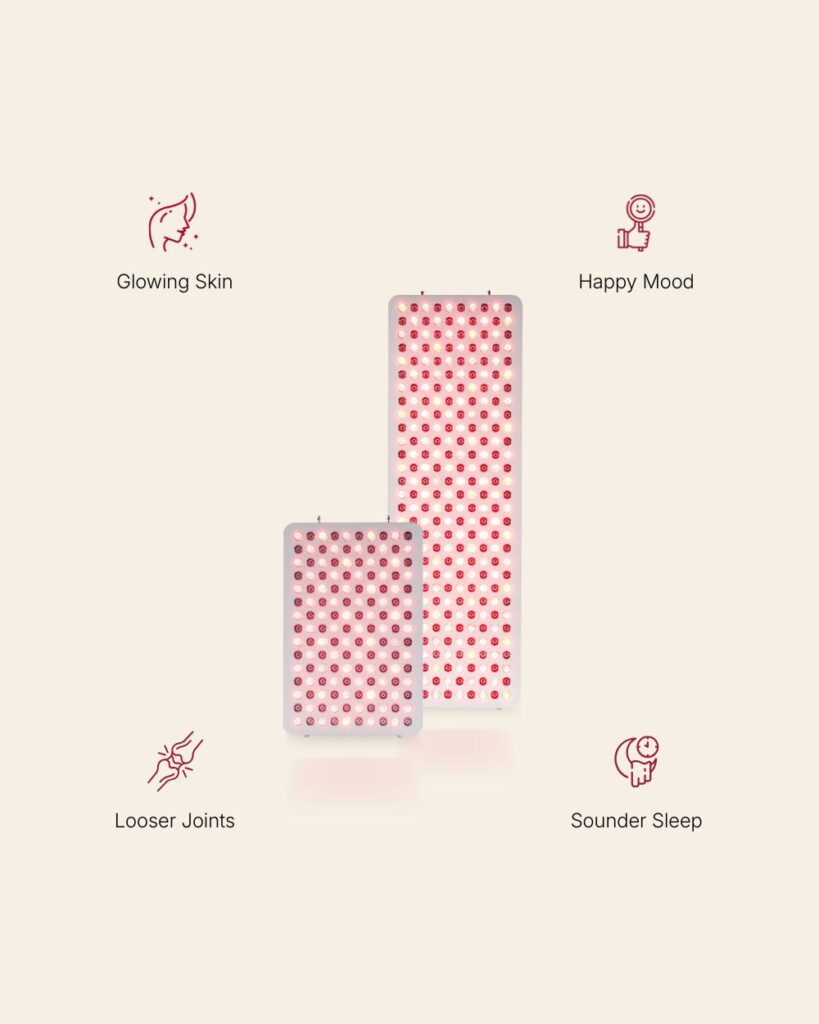
The panel also includes six Smart Modes: Joint Care, Face/Eyes, Skin, Sleep, Workout, and Mood/Wellness. We would view these as convenient starting points rather than guarantees of a particular result. Their practical benefit is removing some of the guesswork when someone does not want to manually configure a session.
The touchscreen keeps the Advantage’s additional controls relatively straightforward, while the remote means most adjustments can be made once the user is already positioned for a session.
How convenient the panel feels day to day will depend heavily on the chosen size and positioning setup. The Advantage 450 is easier to accommodate in smaller spaces, while the Advantage 900 is substantial enough that we would want to give it a regular treatment location.
The Advantage 900 weighs around 24 pounds, so it can be moved when necessary, but repeatedly setting it up and putting it away would take away from much of the convenience of owning a larger panel.
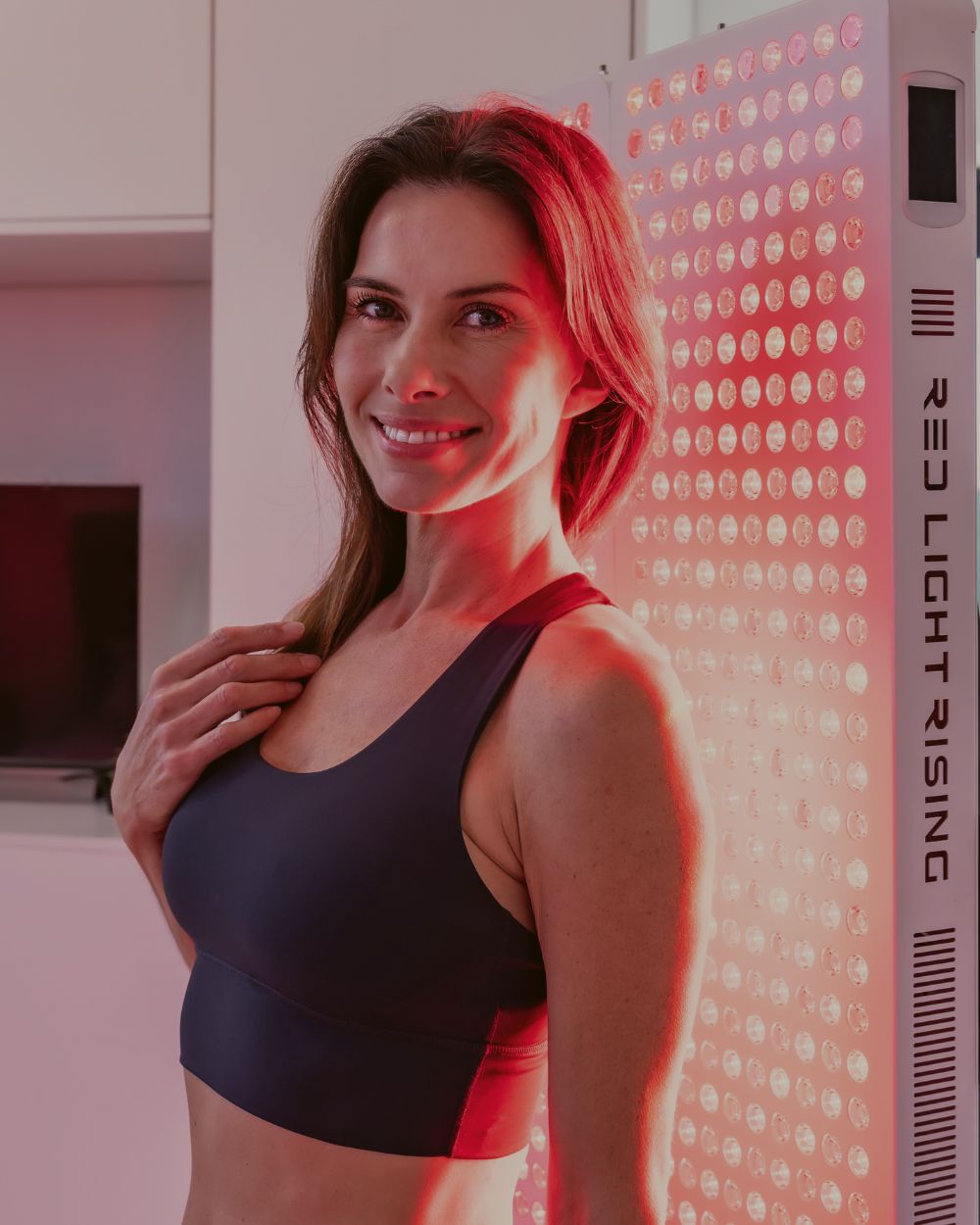
Door and wall hanging hardware is included, giving buyers a usable setup without immediately purchasing another accessory. Separate stand options are available for anyone who wants more freedom over panel placement, height, or angle.
One of the stronger reasons to choose the Advantage platform is that the original panel does not necessarily become obsolete if more coverage is wanted later.
Compatible Advantage panels can be connected into larger configurations, allowing someone to start with the coverage they need today and expand the system later rather than replacing the original panel.
That is useful with premium equipment. Red light therapy routines can change, and someone who starts with one treatment area may eventually decide that a broader setup would be more convenient.
Expansion can become expensive, though. Additional panels and positioning equipment add up quickly, so we would treat modularity as a useful option rather than a reason to purchase more equipment before it is actually needed.
The Advantage sits toward the premium end of Red Light Rising’s lineup, and much of the additional cost goes toward functionality rather than simply buying a larger collection of LEDs.
The five wavelengths, independent intensity controls, touchscreen, remote, Smart Modes, and modular connectivity all contribute to what separates it from the company’s simpler panels.
Whether that represents good value depends heavily on how the panel will be used. Someone who plans to turn everything on and repeat essentially the same session each day may be paying for controls that rarely get touched.
The Advantage becomes easier to justify when those controls solve an actual need. Presets can simplify sessions, adjustable intensity provides more flexibility, and modular support allows the system to grow later.
We would also include any desired stand in the budget from the beginning. The included hanging hardware may be sufficient, but a freestanding setup can add to the overall purchase price.
Both Advantage sizes include wall and door hanging hardware, so buying a separate stand is not required simply to start using the panel.
Still, we would decide how the panel is going to be used before ordering. Wall mounting works well for a dedicated location, while a floor or desktop stand provides more flexibility if treatment height or positioning needs to change regularly.
This becomes particularly important with the Advantage 900. Its additional coverage is useful, but the larger panel benefits from having a permanent or semi-permanent location where it can be used without repeatedly setting everything up.
Measure the available space and account for treatment distance before choosing between the two sizes. The larger model only improves the experience when there is enough room to use it comfortably.
Red Light Rising’s 365-day trial is one of the more reassuring parts of buying the Advantage. A full year provides substantially more time to determine whether the panel fits an actual routine than the 30- or 60-day periods commonly offered elsewhere.
That is particularly useful with an adjustable panel. Some features are difficult to evaluate from a product page alone. After regular use, someone may discover that the Smart Modes are used constantly, that manual controls are preferred, or that a different panel size would have made more sense.
We would still read the complete return conditions before ordering, including any requirements surrounding condition, packaging, and return shipping. Sending back a large red light therapy panel is considerably different from returning a small wearable device.
The Advantage also comes with a three-year warranty. That provides a more comfortable level of protection for premium equipment containing LEDs, drivers, touchscreen controls, and other electronic components intended for regular use.
When looking at owner feedback for the Advantage, the most useful comments are those concerning the hardware and ownership experience rather than individual health results. Build quality, controls, shipping, positioning, stand stability, and customer support provide a much clearer picture of what it is actually like to own the panel.
The touchscreen, remote, adjustable intensity, and Smart Modes are particularly worth watching in long-term feedback. These features help justify the higher price, so their value ultimately depends on whether owners continue using them once the panel becomes part of a normal routine.
Size and positioning are equally important. The Advantage 900 provides considerably more coverage, but it requires more space and a more deliberate setup. The Advantage 450 is easier to accommodate but naturally requires more repositioning for larger treatment areas.
Customer support becomes particularly important with a modular system because ownership may extend beyond the original panel. Questions involving stands, accessories, additional panels, warranty coverage, or future expansion can make access to knowledgeable support more valuable than it would be with a simple standalone device.
The 365-day trial and three-year warranty provide useful buyer protection, but we would still keep order information and packaging until the panel has been fully inspected and the intended setup is working properly.
The Advantage gives its additional features a practical purpose. Adjustable red and near-infrared intensity, presets, touchscreen controls, and a remote provide different ways to use the panel without making every session unnecessarily complicated.
We particularly like having both presets and manual controls. Someone can keep a session simple when they want to while still having access to more customization when it is useful.
The modular design is another advantage. Starting with one panel does not prevent the system from becoming larger later, which helps protect the original investment if treatment needs change.
The 365-day trial and three-year warranty also provide stronger ownership protection than the short evaluation periods offered with many red light therapy devices.
The Advantage can become expensive once larger panel sizes, additional modules, and optional stands are added. Someone attracted primarily to the five wavelengths may find that a simpler panel provides everything they realistically need for less money.
There is also a risk of paying for customization that rarely gets used. Presets, adjustable intensity, and independent red and near-infrared controls only add value when they become part of the routine.
The Advantage 900 requires enough space to justify its larger footprint. Anyone with limited room should consider whether the reduced repositioning is worth giving a larger panel a more permanent place in the home.
The Red Light Rising Advantage Panel is most compelling when its added controls will actually be used. Five wavelengths, adjustable red and near-infrared intensity, six Smart Modes, touchscreen and remote controls, and modular expansion give it considerably more flexibility than a basic red light therapy panel.
Someone who wants the same straightforward session every day can spend less and probably will not miss much. The Advantage earns its higher price when presets, intensity control, different wavelength combinations, or future expansion make the system more useful for the individual routine.
It’s ideal for someone who wants a customizable red light therapy panel they can start using simply but grow into over time. The Advantage 450 provides the more manageable setup, while the Advantage 900 makes more sense when broader coverage and less repositioning are priorities.
Key Features
Combines 630, 660, 810, 830 and 850nm across red and near-infrared for broad therapeutic coverage.
The 900 model gives standing full-body coverage while the 450 handles half-body or targeted areas.
Joint care, face/eyes, skin, sleep, workout, mood/wellness.
0-100% control
Flexible control from the panel or a distance.
One of the longest consumer evaluation periods in the category.
Full Specifications
Wavelengths:
Final Verdict
4.8

Join red light therapy users comparing devices, sharing protocols, and posting honest results. Free to join, no sales pitch.
Protocol sharing
Device comparisons
Safety-first advice
Tec Specs
Wave Lengths
630nm-850nm
IRRADIANCE:
86.4 mW/cm2 at 15cm
Coverage Area:
Full body
Overall Category Scores
Category
Score
Best Quality
Ease of Use
Features
Value
Support
Staying informed with the latest research and reviews.
10 Minute Read
10 Minute Read