OVERALL
4.6
BEST FOR
Full-body coverage seekers, Athletes, Couples, Home users
WAVELENGTHS
630nm-850nm
IRRADIANCE
57.0 mW/cm² at 15cm
COVERAGE AREA
Full torso
WEIGHT
11kg
Our Review
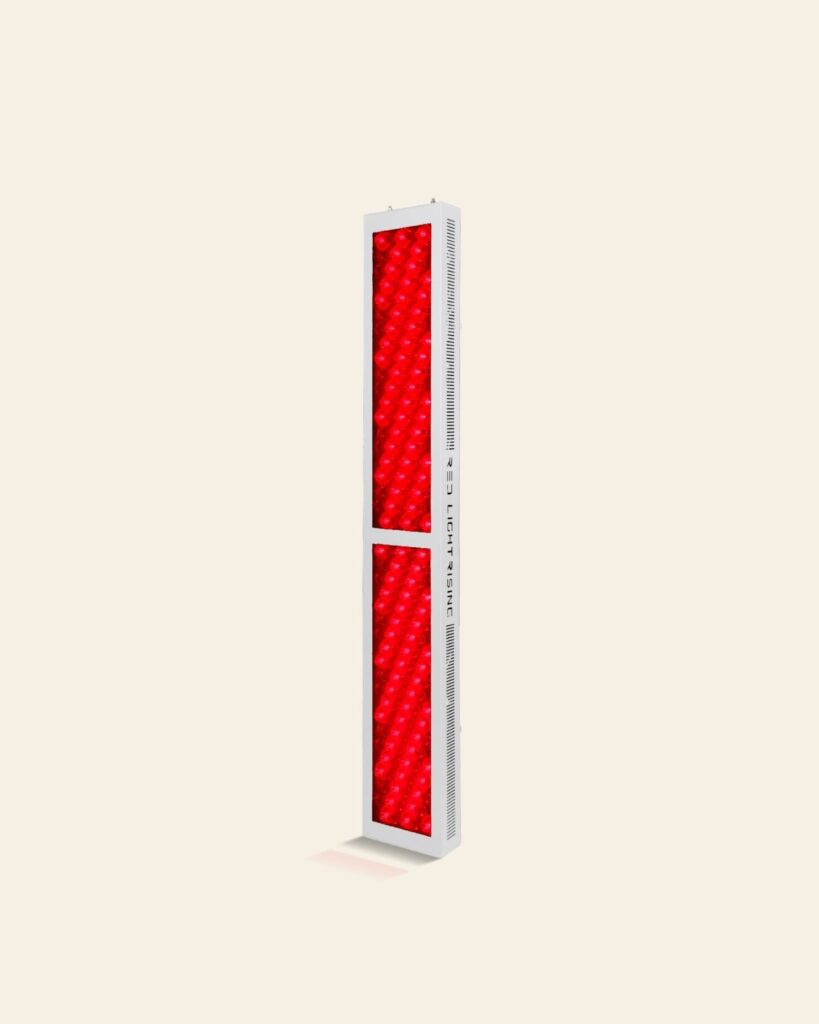
The Red Light Rising Full Stack is the kind of panel we’d choose when the priority is getting a lot of coverage without paying for controls we’re unlikely to touch. Its 120cm height makes upper- and lower-body sessions considerably easier than they are with a smaller panel, while separate red and near-infrared controls give you the one adjustment that matters most. There is no touchscreen, app, preset library, brightness control, or built-in timer. For some buyers, that will immediately make the Advantage line more appealing. For someone who wants to walk up, switch on the light, and start a session, the Full Stack’s simplicity is exactly what makes it appealing.
There are a few compromises we’d want you to understand before choosing it. The panel is tall but relatively narrow, so “Full Stack” shouldn’t be interpreted as effortless head-to-toe, side-to-side coverage for every body. You’ll also need your own timer, and treatment distance becomes important because you can’t simply turn down the brightness from the panel. None of those are dealbreakers if you specifically want a straightforward setup. In fact, we’d rather pay for the coverage we’ll use every session than a touchscreen full of settings we’ll stop touching after the first week.
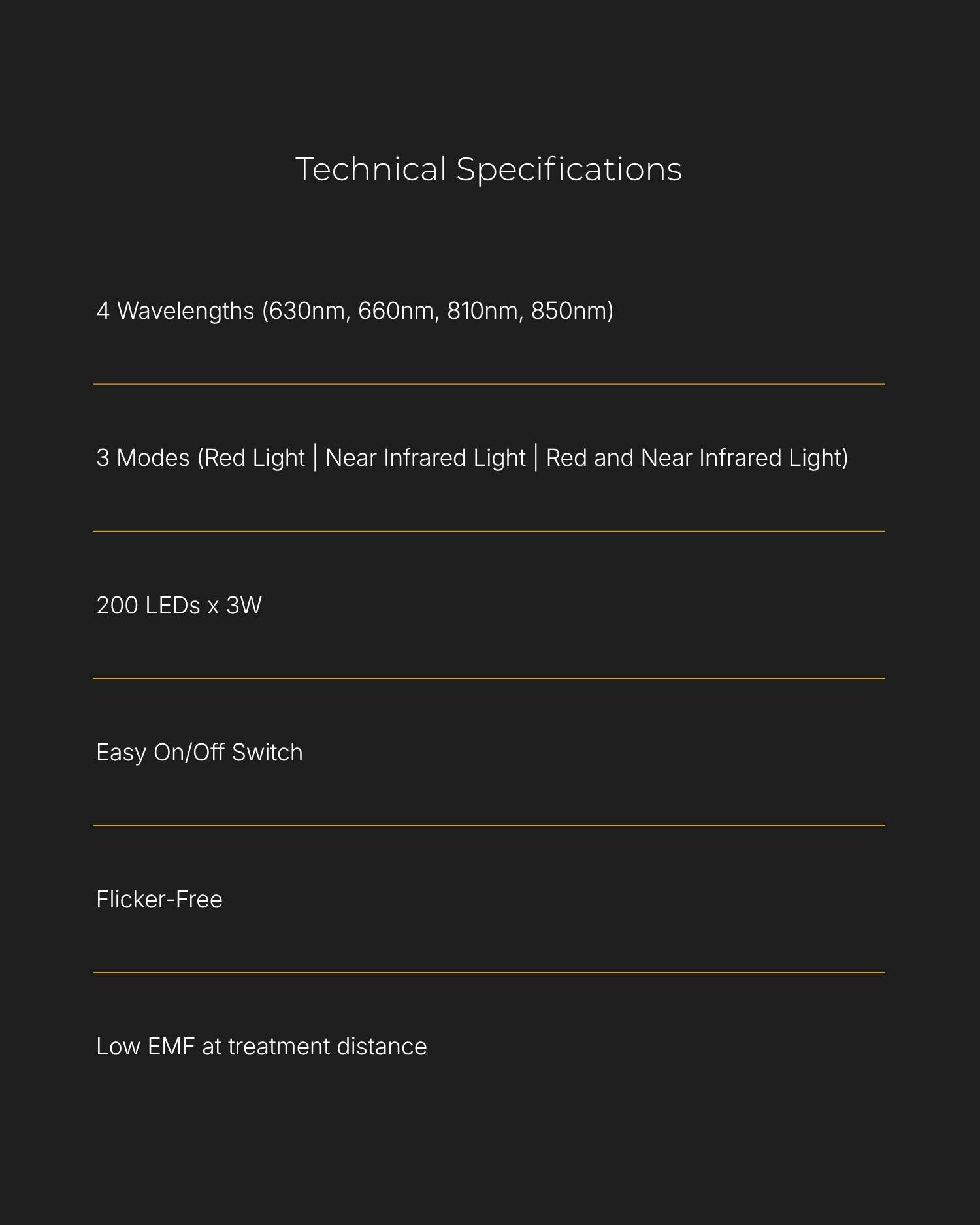
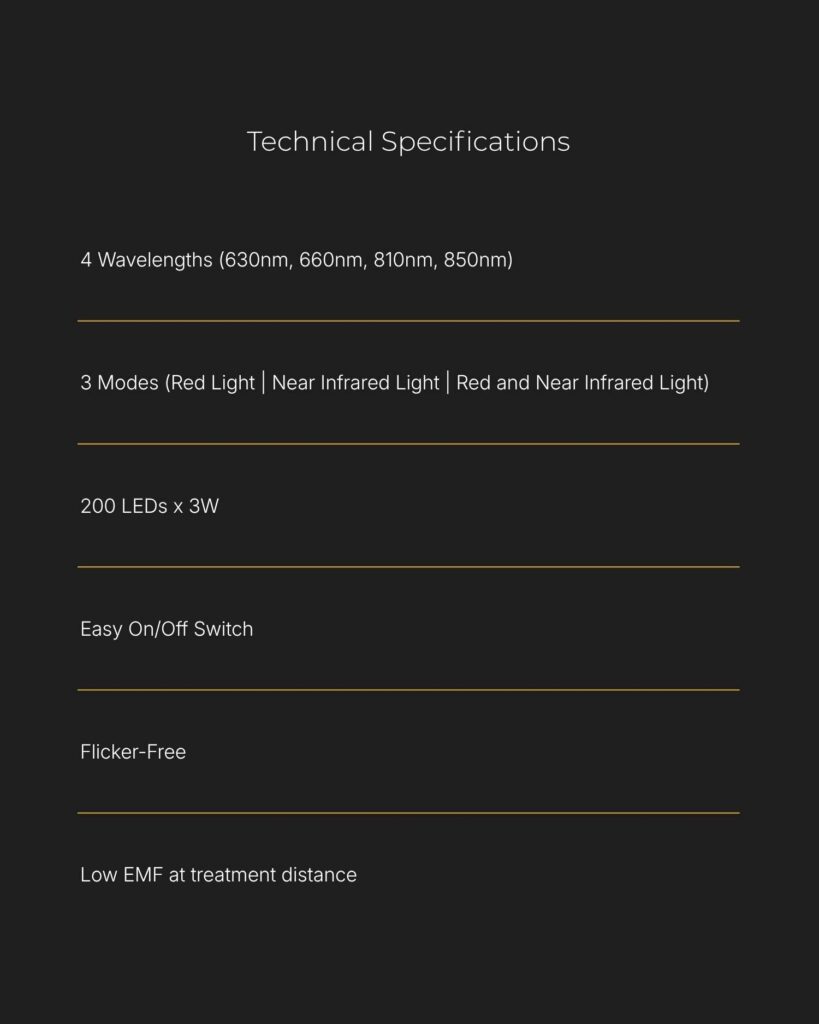
The Full Stack uses four wavelengths: 630nm, 660nm, 810nm, and 850nm. That gives you two red wavelengths and two near-infrared wavelengths in a relatively straightforward configuration. You aren’t getting the additional 830nm wavelength included with the Advantage line, but we wouldn’t consider one missing wavelength enough on its own to make the Full Stack the lesser purchase.
What matters more is how you intend to use the panel. Red Light Rising lets you control the red and near-infrared light separately, so you aren’t forced to run everything simultaneously. Beyond that, there isn’t much to learn. There are no treatment presets to navigate and no app to connect before you can start using the device.
That sounds almost unusually basic next to newer premium panels, but we’d argue there’s still a place for it. A touchscreen doesn’t improve your routine if you ultimately select the same settings every day. An app isn’t particularly valuable if you’d rather press a physical switch. The Full Stack puts more of the emphasis on treatment area and less on giving you another electronic interface to manage.
The biggest difference between this and the Advantage line therefore isn’t simply which one is “better.” They’re designed for different buyers. Advantage gives you adjustable intensity, presets, additional controls, another wavelength, and a more expandable platform. Full Stack strips much of that away. We’d choose between them based on how much control you genuinely want rather than assuming the more technologically advanced model is automatically the smarter purchase.
The 120cm height is what you’ll appreciate most once the Full Stack is actually in your home. With a compact panel, larger-area sessions can quickly become a routine of treating one section, moving the panel or yourself, treating another section, and repeating. Full Stack gives you enough vertical coverage to reduce a lot of that repositioning.
Its 22cm width is the other half of that story. This is a tall, relatively narrow panel rather than a huge wall of light. It can cover a substantial vertical section of your body, but broader areas may still require some side-to-side adjustment if you want more even exposure. We’d set that expectation before buying rather than discover it once the panel is hanging on the door.
There is no brightness adjustment either. Instead, distance becomes one of the main ways you manage how much light reaches you. Move farther away and the light spreads across a broader area while intensity falls. Move closer and you’re concentrating more of the panel’s output over a smaller field. We’d follow Red Light Rising’s usage guidance rather than assume standing as close as possible gives you a better session.
The missing built-in timer is probably the convenience feature we’d notice most. You’ll need to keep track of sessions yourself, whether that’s with your phone, watch, or another timer. That’s hardly difficult, but at this level we’d understand someone preferring to have session timing built directly into the panel.
Otherwise, everyday use is refreshingly uncomplicated. Position yourself, choose whether you want red, near-infrared, or both, keep track of the session time, and you’re done. If part of the reason you’ve struggled to maintain wellness routines is that you don’t want another device requiring setup and menus every time, there is something genuinely useful about that simplicity.
The Full Stack makes the most financial sense when coverage is higher on your priority list than customization. You’re putting more of the purchase price toward a tall treatment area rather than a touchscreen, remote, preset programs, adjustable brightness, or the more sophisticated control system found on the Advantage line.
We wouldn’t interpret that as paying for an outdated product. We’d look at whether those omitted features would change how you actually use it. If you already know you want red and near-infrared light and expect to run essentially the same routine each time, paying more for customization can become an expensive way of adding buttons you rarely press.
On the other hand, don’t choose the Full Stack simply because you think you can live without those features today. If adjustable intensity already appeals to you, you want guided presets, or you think you’ll eventually build a larger modular system, we’d seriously compare the Advantage before ordering. Saving money upfront isn’t much of a victory if you start wishing you’d bought the more flexible platform six months later.
The value proposition here is much simpler: broad vertical coverage without turning the panel itself into a complicated piece of technology. If that’s exactly what you’ve been shopping for, the Full Stack makes considerably more sense than its shorter feature list might initially suggest.
At approximately 120 x 22 x 6cm and around 11kg, the Full Stack is substantial enough that we’d decide where it’s going before it arrives. It’s not enormous by full-body panel standards, but roughly 24 pounds is enough that repeatedly taking it down, moving it around, and putting it away can get old quickly.
The included door and wall hanging kit gives you a way to establish a permanent or semi-permanent treatment area without immediately buying another accessory. For many home users, the door setup may be particularly practical because it gets a tall panel into a usable position without requiring dedicated floor space.
We’d still think carefully about whether hanging is actually how you want to use it. A fixed position is wonderfully simple when it lines up with your routine, but less convenient if you regularly want to change the panel’s height, angle, or location. If that’s how you expect to use the Full Stack, we’d look at compatible positioning options before checkout and include that expense in the real purchase price.
The narrow footprint helps here. A 22cm-wide panel is easier to accommodate than many large full-body systems, even though you’re still getting 120cm of vertical treatment area. For a bedroom, home gym, or wellness area where floor space is limited, that shape can be a useful compromise.
The 365-day trial is one of the Full Stack’s strongest ownership advantages. Panel dimensions are easy to understand on paper and much harder to judge in your actual home. A long evaluation period gives you time to find out whether the narrow profile covers enough of you, whether the hanging arrangement works, and, most importantly, whether you continue using the panel after the initial excitement wears off.
That’s considerably more reassuring than a short return window that forces you to make the decision while the product is still new. We’d still read the complete terms before ordering, particularly the condition the panel needs to be in for a return and who pays to ship a large 11kg device back.
Red Light Rising also provides a three-year warranty. We think that’s a reasonable level of protection for a premium panel, particularly because this model deliberately avoids some of the additional electronic controls found on more complicated systems.
The brand also publishes measurements covering areas such as light output, EMF, and flicker. We appreciate having that information available because it gives you something more concrete to evaluate than marketing language alone. We still wouldn’t let one impressive measurement make the purchase decision for you. With the Full Stack, physical coverage, positioning, and whether you like the deliberately simple controls will affect ownership far more often.
The most useful owner feedback for a panel like this isn’t whether someone says red light therapy “changed their life.” We’d pay attention to what people say about the actual hardware: whether the panel feels well built, whether the hanging setup remains secure, whether the fans or operation are distracting, how straightforward it is to use, and what happens when someone needs help from Red Light Rising.
We’d pay particular attention to comments about the dimensions because that’s the compromise buyers are most likely to underestimate. The Full Stack gives you generous vertical coverage, but its 22cm width is still relatively narrow. Someone who values height and doesn’t mind changing position slightly may love that shape. Someone expecting a wall of light from shoulder to shoulder may wish they’d chosen a wider or multi-panel configuration.
The lack of a built-in timer is another ownership detail we’d expect people to split on. Some won’t care at all because setting a phone timer takes seconds. Others may reasonably feel that a premium red light panel should handle something as basic as timing its own sessions. We’d put that in the category of a minor inconvenience that becomes important only if it’s already something you know will annoy you.
That’s ultimately what makes the Full Stack easy to understand. Red Light Rising hasn’t tried to make it the panel with the longest feature list. You get 630nm, 660nm, 810nm, and 850nm light, separate red and near-infrared controls, a tall treatment area, included hanging hardware, a three-year warranty, and an unusually long 365-day trial.
We’d choose the Full Stack when the goal is to make larger-area red light sessions simpler, not more customizable. The tall 120cm format cuts down on the constant repositioning that comes with smaller panels, while the straightforward controls keep everyday use easy. We’d look to the Advantage line instead if adjustable intensity, presets, or modular expansion already sound important to you. But if those features feel more like extras than necessities, the Full Stack gives you the coverage you’ll notice every session without making you pay for a control system you may never need.
Key Features
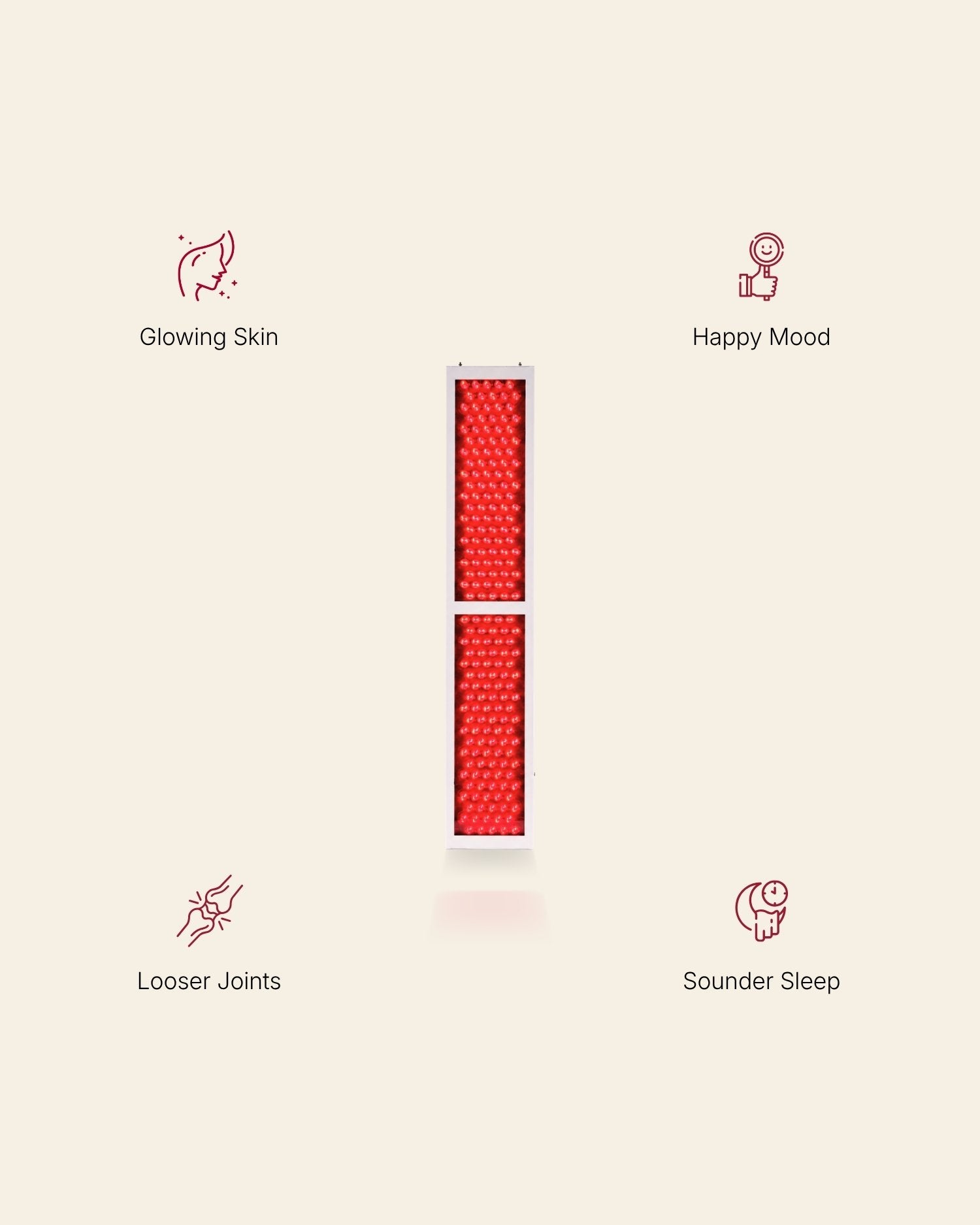
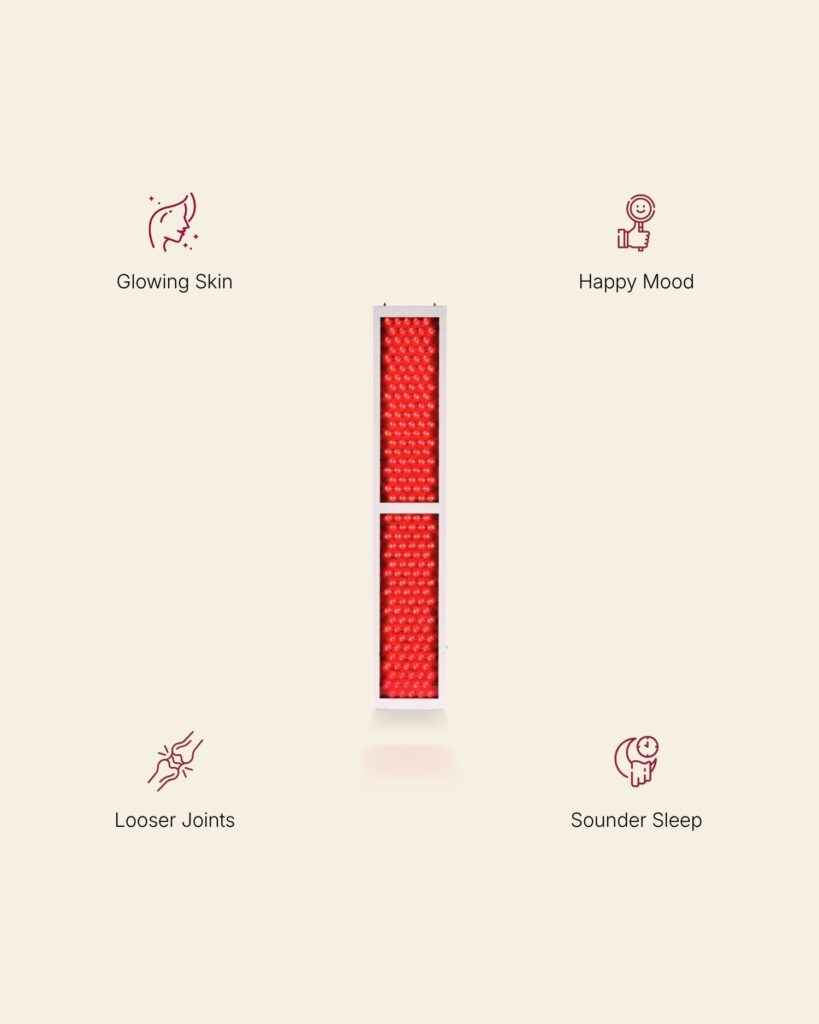
At 120cm tall it covers the full torso and most of the body from a single panel.
Runs 630, 660, 810 and 850nm using 200 three-watt LEDs.
Covered by a three-year warranty against manufacturing faults.
200 x 3W LEDs
Simple physical control
Easy wall/door setup
Long buyer evaluation period.
Full Specifications
Wavelengths:
Final Verdict
4.6

Join red light therapy users comparing devices, sharing protocols, and posting honest results. Free to join, no sales pitch.
Protocol sharing
Device comparisons
Safety-first advice
Tec Specs
Wave Lengths
630nm-850nm
IRRADIANCE:
57.0 mW/cm² at 15cm
Coverage Area:
Full torso
Overall Category Scores
Category
Score
Best Quality
Ease of Use
Features
Value
Support
Staying informed with the latest research and reviews.

10 Minute Read
10 Minute Read