OVERALL
4.5
BEST FOR
Half-body sessions, smaller spaces
WAVELENGTHS
630nm-850nm
IRRADIANCE
57.0 mW/cm² at 15cm
COVERAGE AREA
Half body
WEIGHT
5 kg
Our Review
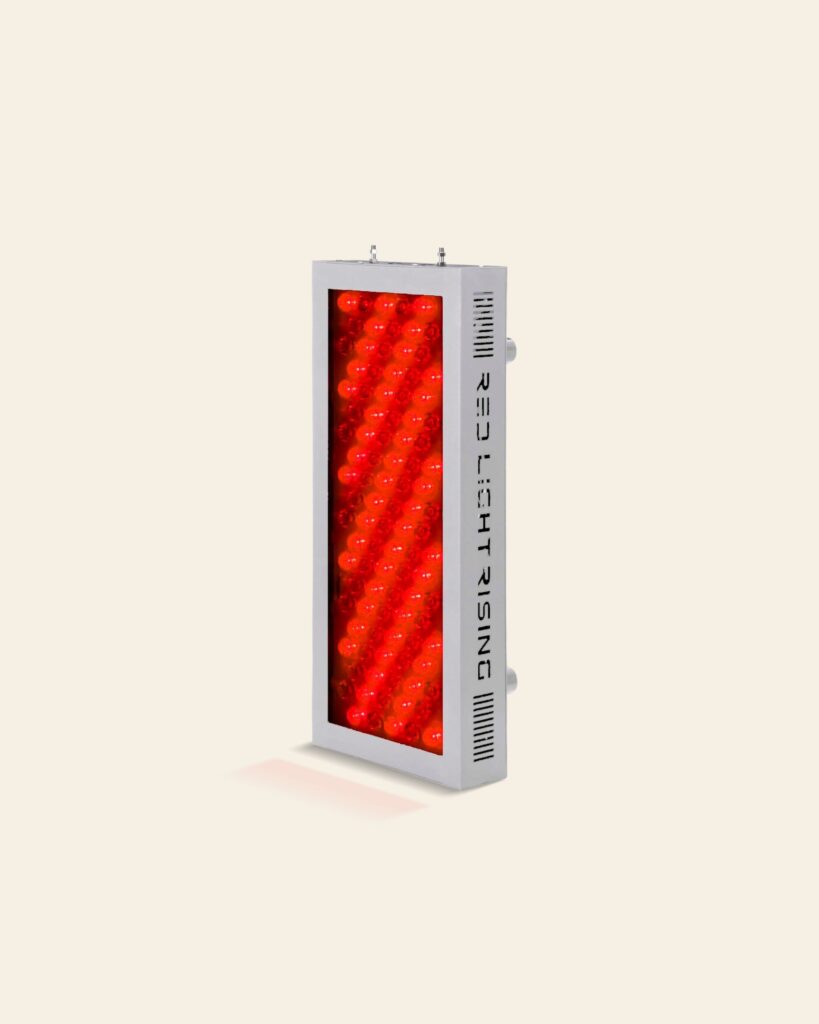
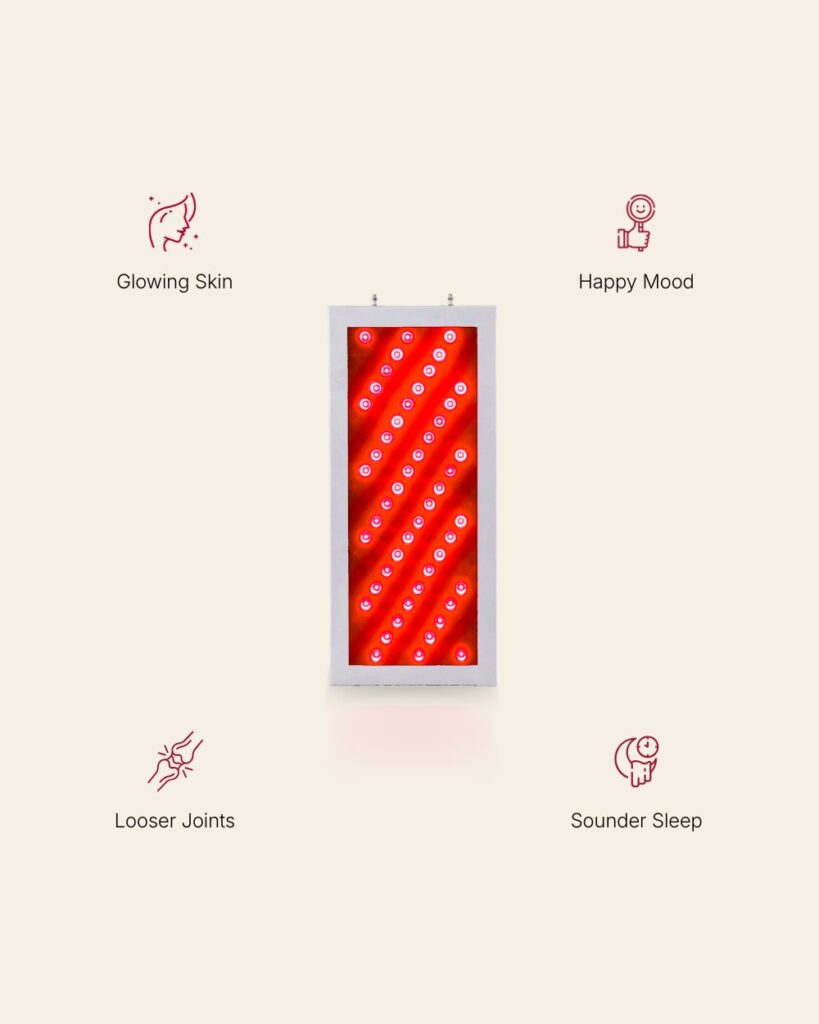
The Red Light Rising Half Stack 3.0 is a practical step up when smaller devices no longer give you enough coverage, but a tall full-body panel would be more equipment than you actually need. Its roughly 50cm treatment height is large enough to cover meaningful areas like the torso, lower back, thighs, or several smaller areas at once, while the 5kg weight and compact footprint keep it manageable in a normal home. We’d choose it for regular medium-area sessions where simplicity matters. If your real goal is head-to-toe treatment with minimal repositioning, we’d put the money toward the Full Stack instead.
What you’re not getting is much customization. There is no built-in timer, adjustable brightness, touchscreen, app, or library of presets. Red and near-infrared light can be controlled separately, and that’s essentially the experience. We don’t necessarily see that as a weakness. The Half Stack 3.0 makes more sense for someone who wants a panel that’s easy to understand and use consistently. Just make sure you’re comfortable managing your own session time and positioning because the stripped-back controls aren’t going to grow more sophisticated later.
The Half Stack 3.0 uses four wavelengths: 630nm, 660nm, 810nm, and 850nm. That gives you two wavelengths in the red range and two in the near-infrared range, with independent controls allowing you to run red, near-infrared, or both together.
You don’t need to spend much time thinking about each individual wavelength to understand what you’re buying. Red light is generally associated with more superficial exposure, while near-infrared reaches deeper into tissue. The Half Stack gives you both ranges without adding a long list of settings you need to configure before every session.
That simplicity runs through the entire design. One control handles red light and another handles near-infrared. There’s no brightness adjustment, so intensity is largely managed by how far you position yourself from the panel. There’s no built-in timer either, which means you’ll need to use your phone, watch, or another timer to keep track of sessions.
Some people are going to see that as too basic for a £599 panel. Others will appreciate not paying for another touchscreen or app. We’d decide which camp you’re in before buying because the Half Stack isn’t trying to compete with feature-heavy panels. Its appeal is giving you useful treatment coverage in a straightforward piece of hardware.
The dimensions are where this model starts to make sense. At approximately 50 x 22 x 6cm, it’s substantially larger than a handheld or small targeted panel but nowhere near the commitment of a tall full-body system. That makes it particularly useful when most of the areas you want to treat fall somewhere in the middle.
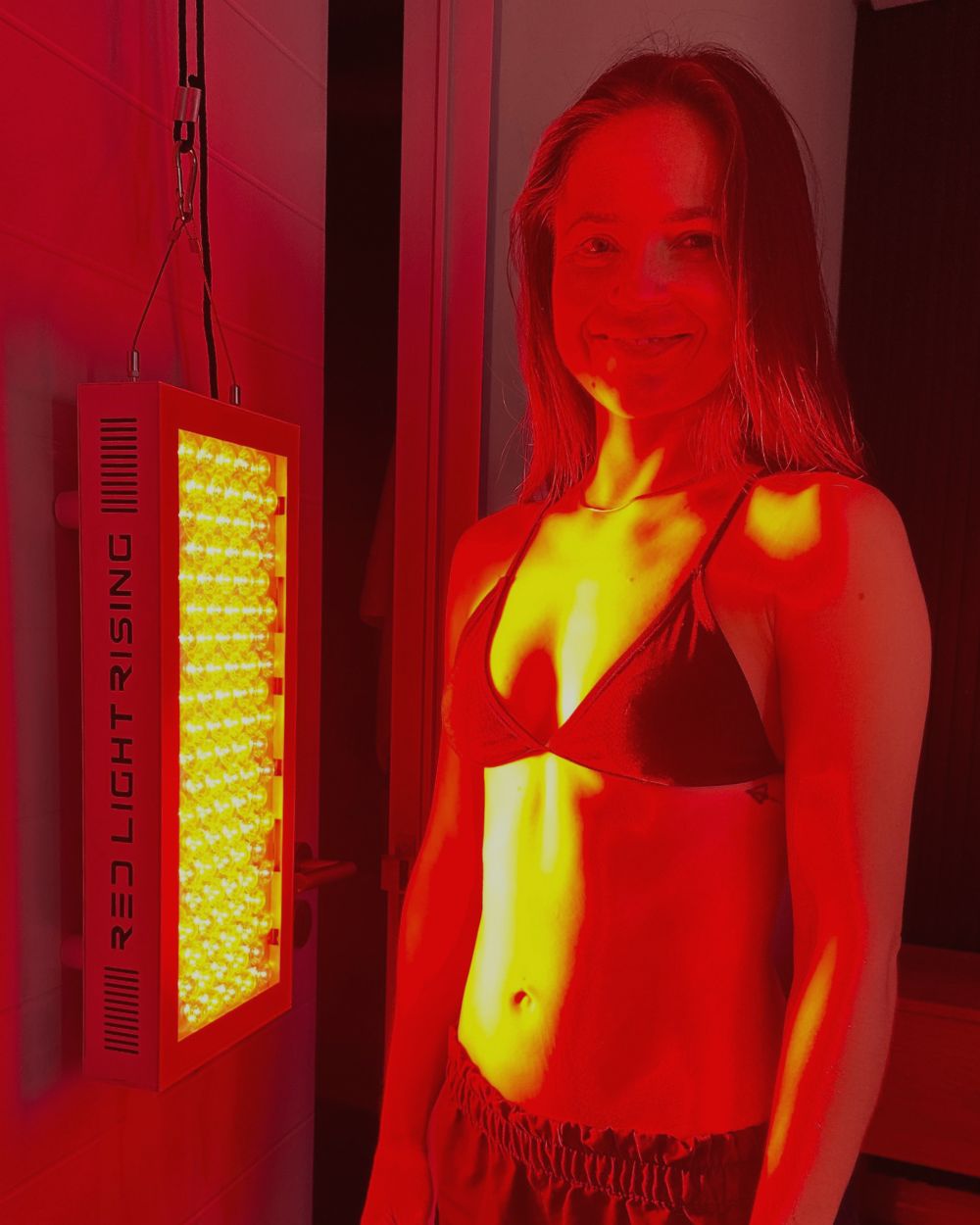
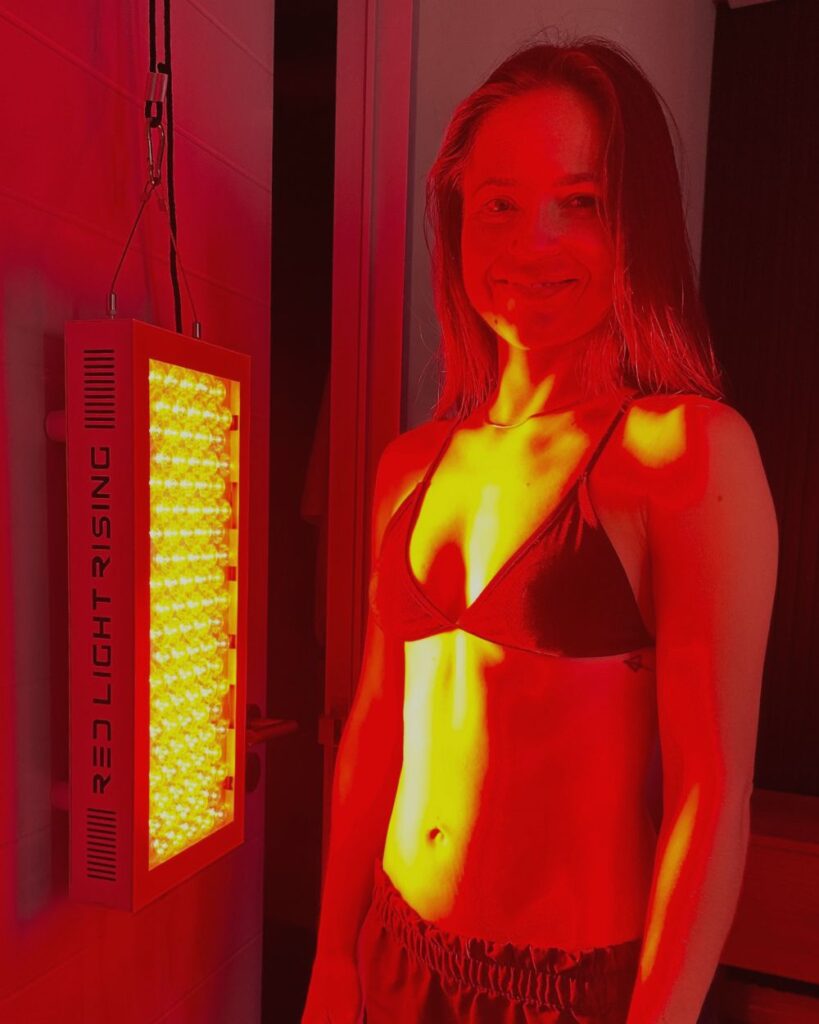
For example, you can position it in front of the abdomen or chest, use it behind the lower or upper back, or place it around the thighs and legs. Smaller areas like a shoulder or knee are easy to cover too, although buying a panel this size solely for one joint would probably be unnecessary.
The obvious limitation is full-body use. A 50cm-tall panel can’t cover your entire body at once. You’ll need to reposition either yourself or the device to move between upper- and lower-body areas. That’s perfectly manageable if full-body sessions are occasional. If that’s what you plan to do every day, we’d question whether saving space with the Half Stack is worth adding extra steps to every session.
Red Light Rising reports measured irradiance around 57 mW/cm² at 15cm. We wouldn’t dismiss the Half Stack because that number isn’t as dramatic as some of the very high figures advertised elsewhere. Output measurements can vary considerably depending on the equipment and methodology used, and more isn’t automatically better. We’d pay more attention to using the panel at the intended distance and following appropriate session guidance.
The lack of dimming is more relevant in everyday use. If you want less intensity, you’ll generally need to change your distance rather than tap a brightness control. That’s easy enough when you have room to move, but it’s another reason to think about where the panel will live before buying it.
At £599, the Half Stack 3.0 makes the most sense when you’re specifically looking for this middle-sized format. You’re paying for considerably more treatment area than a small targeted light without taking on the size and expense of a full-height panel.
We wouldn’t judge the value by the number of features because there simply aren’t many. Instead, we’d ask how much of the 50cm treatment area you’ll actually use. Someone regularly treating the back, torso, thighs, or several nearby areas gets much more from this format than someone who only wants light on one knee or their face.
The comparison with the Full Stack is also worth making before checkout. If you can comfortably accommodate a taller panel and already expect to run full-body routines, spending more upfront may save you from repeatedly repositioning the Half Stack. On the other hand, there’s little reason to make room for a large panel if most of your sessions only require a section of it.
We’d also account for positioning accessories when comparing prices. The included hanging hardware gives you a way to use the Half Stack immediately, but the setup you actually want may cost more than the panel’s headline price.
At approximately 5kg, or 11 pounds, the Half Stack is considerably easier to handle than a large full-body panel. That’s one of its understated advantages. You can find a permanent location for it, but you aren’t necessarily committing that location to a massive piece of equipment.
A door and wall hanging kit is included, giving you a straightforward way to get the light into a usable position without immediately buying another accessory. The rectangular casing also gives you some flexibility depending on your setup.
We’d still decide how you want to use it before delivery. Hanging a panel works well when most of the areas you’re treating line up naturally with that position. It becomes less convenient if you’re regularly trying to target areas at different heights or angles.
If you prefer a freestanding arrangement, check the appropriate stand options and include that cost in your budget. We’d rather solve positioning before ordering than spend £599 on a panel and discover that the place we intended to use it requires an accessory we hadn’t accounted for.
The compact dimensions do give you more freedom than the Full Stack. A roughly 50cm panel is easier to incorporate into a bedroom, office, home gym, or smaller wellness space, and that’s important if having a giant red light panel permanently visible isn’t particularly appealing.
The 365-day trial is one of the Half Stack 3.0’s strongest selling points. A year gives you enough ti me to find out whether the medium-sized format actually works for your routine rather than forcing you to decide during the first few weeks when you’re still getting used to the device.
That’s particularly valuable here because size is probably the biggest buying question. You may discover that 50cm is exactly enough coverage for what you do most often. You may also discover that repositioning it during larger sessions bothers you more than expected. A long trial gives you considerably more breathing room to make that distinction.
We’d still read the complete return conditions before ordering. A 365-day trial doesn’t mean every return-related cost or requirement disappears, and shipping a panel internationally or domestically can be very different from returning a small consumer product.
The Half Stack 3.0 also comes with a three-year warranty. That’s solid coverage for a relatively simple electronic panel and provides more reassurance than the one- or two-year warranties we’ve seen on some premium red light devices.
Red Light Rising also publishes performance information showing 0% flicker, very low EMF at 15cm, and spectral measurements. We appreciate having those details available, particularly when they’re presented alongside information about how the measurements were taken rather than simply giving buyers an impressive-looking number.
We’d use customer feedback primarily to understand what the Half Stack is like to own rather than to predict personal results. Comments about build quality, shipping, customer support, noise, positioning, and ease of use can tell you something meaningful. Individual experiences with skin, recovery, pain, sleep, or other wellness goals are much harder to generalize.
The most useful feedback for this particular model is whether its size feels sufficient after several months. A medium panel can look generous when you’re coming from a handheld and suddenly feel small once you decide you want regular full-body sessions. That’s why we’d pay close attention to owners whose routines resemble what you’re planning to do.
The simple controls are likely to be similarly personal. Some buyers will miss a timer and dimming almost immediately. Others may prefer having fewer electronics and no menus to navigate. Neither reaction makes the Half Stack inherently better or worse. It tells you which kind of user the product suits.
That’s where we think the Half Stack 3.0 gets its value right. It gives you 630nm, 660nm, 810nm, and 850nm light across a treatment area that’s substantially more useful than a small targeted device, while remaining compact enough for homes where a full-height panel would be excessive. The separate red and near-infrared controls keep operation straightforward, and the three-year warranty and 365-day trial make the purchase easier to approach.
We’d choose the Half Stack 3.0 when the areas we actually want to treat fit comfortably within its medium-sized format. You’ll need your own timer, there is no brightness adjustment, and full-body sessions require repositioning. But if those aren’t features or inconveniences you particularly care about, its simple controls, manageable size, and useful treatment area give you a lot of what matters in a red light panel without forcing you into a much larger setup.
Key Features
Delivers 630, 660, 810 and 850nm across red and near-infrared.
Medium treatment array
Stable light output
Included positioning option
More manageable than full-height panels
Long home evaluation period.
Full Specifications
Wavelengths:
Final Verdict
4.5

Join red light therapy users comparing devices, sharing protocols, and posting honest results. Free to join, no sales pitch.
Protocol sharing
Device comparisons
Safety-first advice
Tec Specs
Wave Lengths
630nm-850nm
IRRADIANCE:
57.0 mW/cm² at 15cm
Coverage Area:
Half body
Overall Category Scores
Category
Score
Best Quality
Ease of Use
Features
Value
Support
Staying informed with the latest research and reviews.
10 Minute Read
10 Minute Read