OVERALL
4.3
BEST FOR
Joint pain, Muscle recovery, Hands-free treatment, Travellers
WAVELENGTHS
660nm-850nm
IRRADIANCE
43.1 mW/cm² average (27-64 range)
COVERAGE AREA
Targeted joints and muscle groups
WEIGHT
328g
Our Review
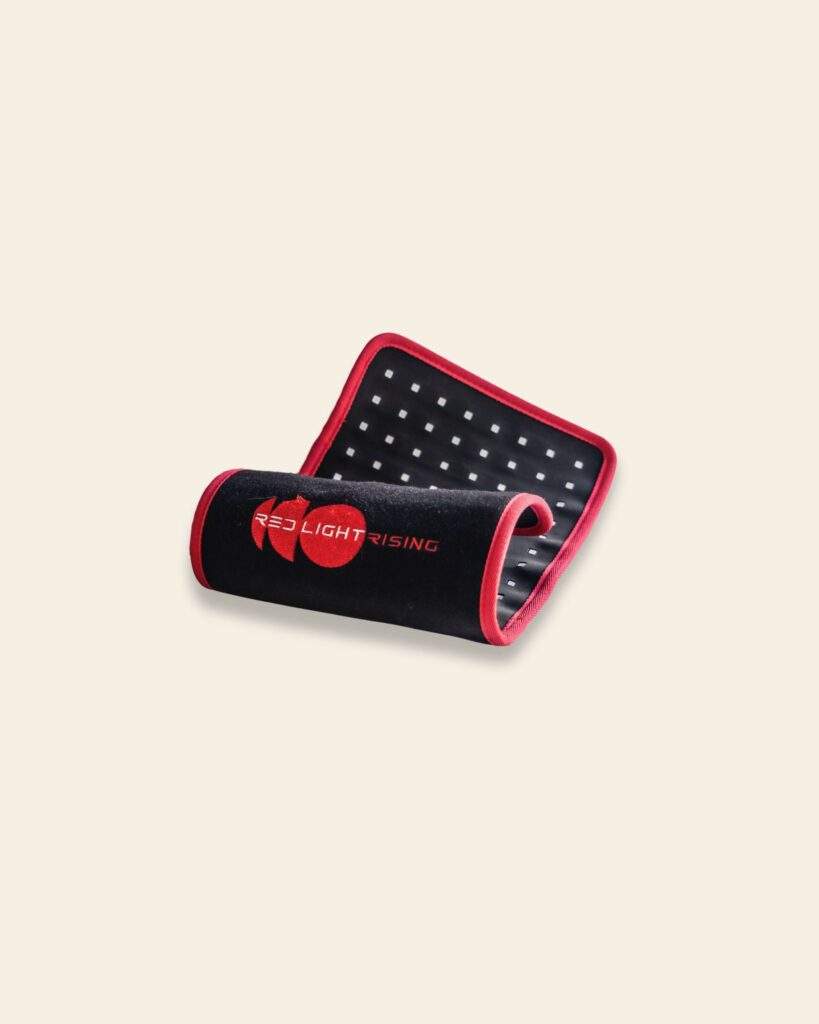
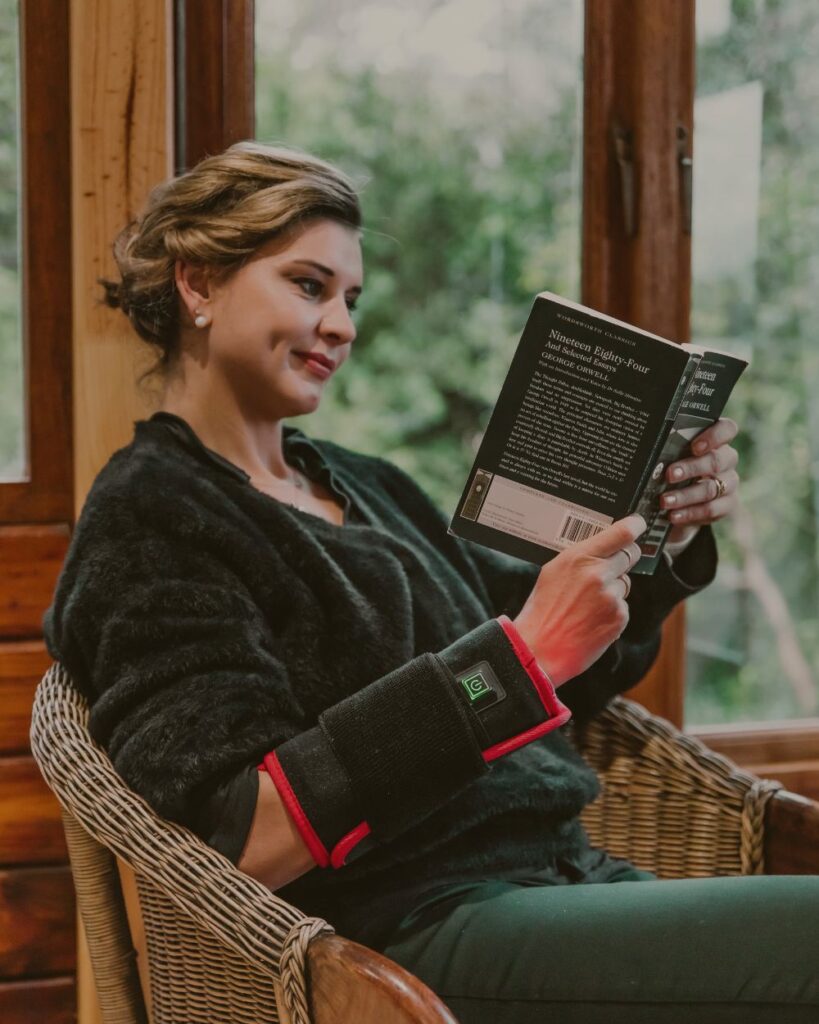
The Red Light Rising Advantage Wrap is a premium targeted option for someone who wants red light therapy to fit around the body instead of positioning the body around a light. The flexible pad, cordless battery, two adjustable straps, and automatic 10-minute timer make it especially practical for areas like the knee, lower back, abdomen, thigh, hip, or shoulder. At £445, though, we’d only spend the money if that hands-free, direct-contact format is something you’ll use regularly. A panel gives you far more coverage for the money, while the Advantage Wrap gives you something a panel can’t: the ability to secure the light directly where you want it and continue with your session without sitting in one position.
The biggest hesitation for us isn’t the treatment setup. It’s the ownership protection. Red Light Rising gives the Advantage Wrap a 30-day trial and one-year warranty, which are considerably shorter than the 365-day trial and three-year warranty offered on many of its panels. That’s worth knowing on a flexible electronic product that will regularly be wrapped, bent, strapped, charged, and handled. The hardware itself has several thoughtful details, but we’d want you to be comfortable with those shorter terms before spending £445.
The Advantage Wrap uses two wavelengths: 660nm red and 850nm near-infrared. It’s a much simpler wavelength combination than you’ll find on Red Light Rising’s multi-wavelength panels, but a wearable doesn’t necessarily need to replicate a full panel’s specification sheet to make sense.
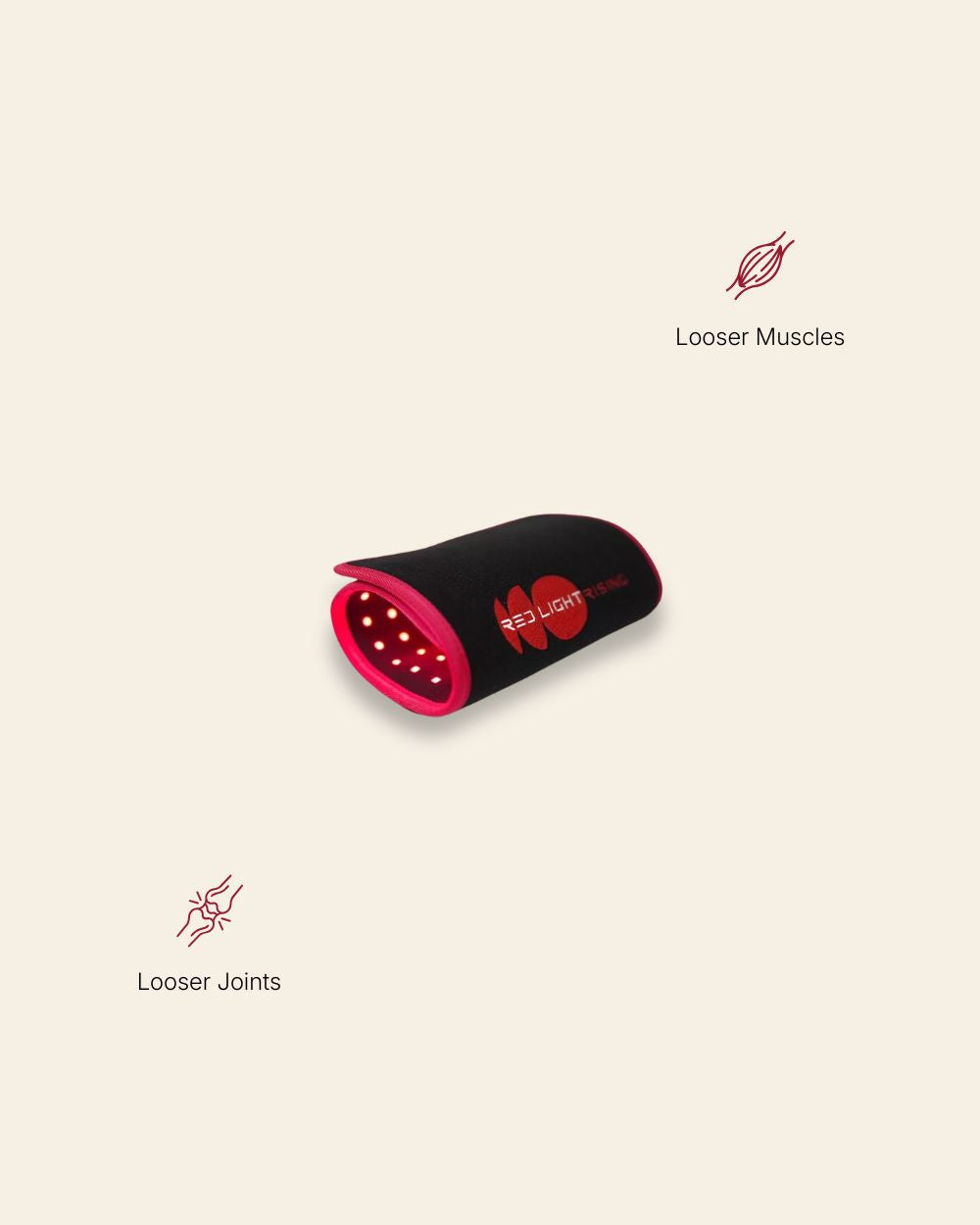
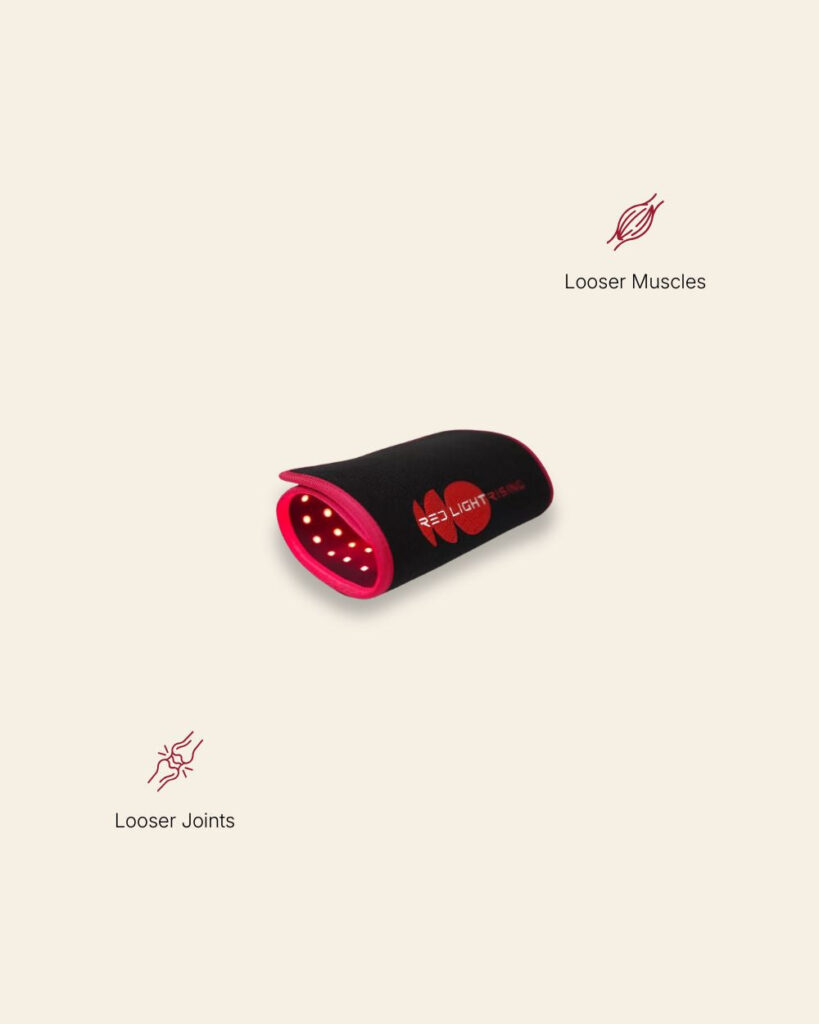
Inside the treatment area are 160 triple-chip LED housings. Each contains one 660nm red chip and two 850nm near-infrared chips, giving the Wrap 480 individual LED chips in total. “Triple-chip” simply means multiple light-emitting chips are housed together rather than each visible LED position representing one single chip. You don’t need to do anything differently because of it.
More importantly, this light is designed to work differently from a panel. Instead of standing several inches away and allowing the light to spread across a larger area, the Wrap sits directly against the area you’re treating. Red Light Rising reports irradiance around 43.1 mW/cm² at contact, which is the position that actually matters for a wearable like this.
You can select red light, near-infrared, or use both together. We like having that control because it keeps the Wrap simple without locking you into one operating mode every time you use it.
The physical format is ultimately more important than the numbers. This is a flexible treatment surface that can conform much more naturally to curved areas than a rigid panel. A knee, thigh, abdomen, or lower back doesn’t have to line up perfectly with a flat source several inches away. The Wrap comes to the area instead.
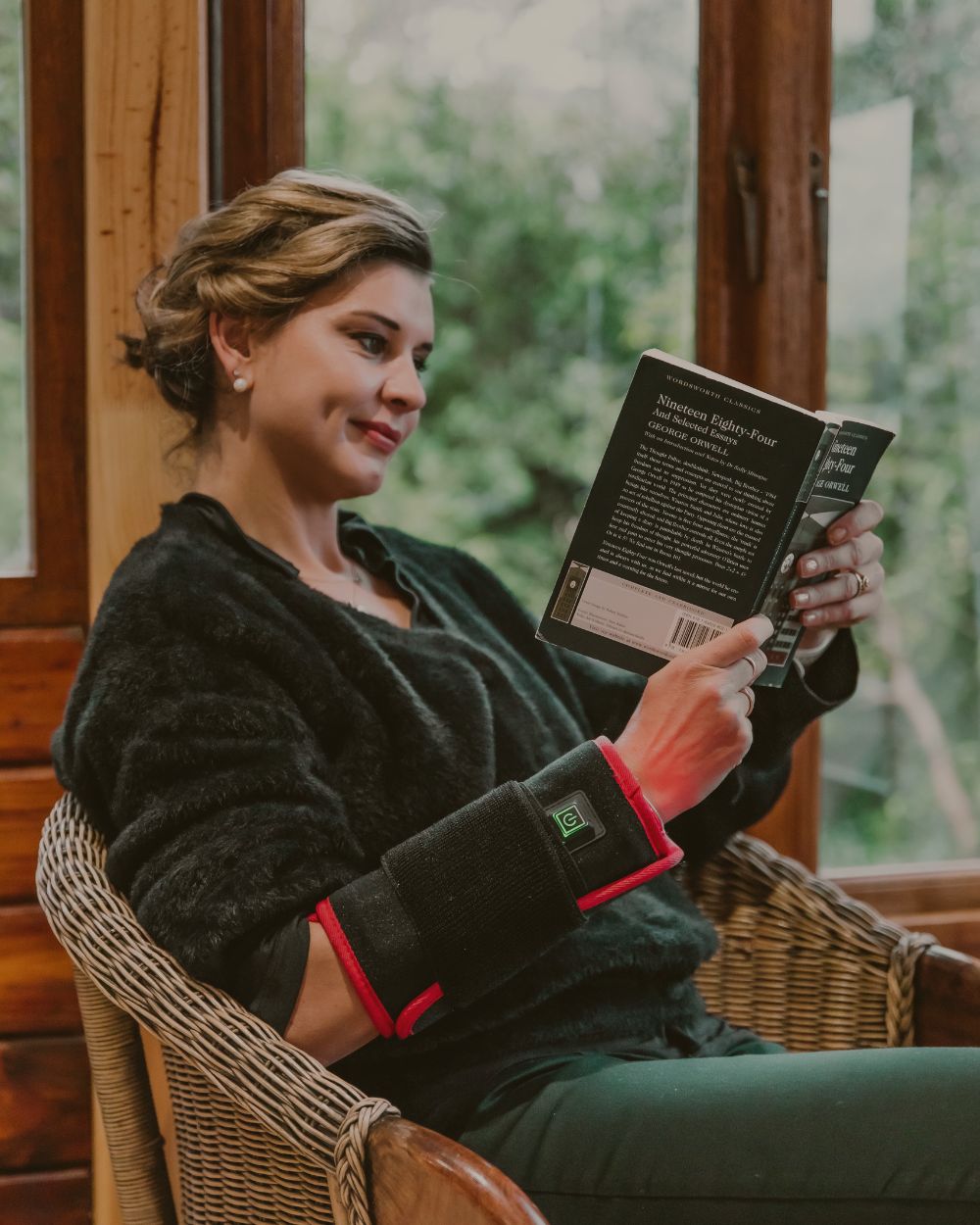
The two included straps are what turn the Advantage Wrap from a flexible light pad into a genuinely hands-free device. They allow you to secure it around different parts of the body rather than holding the pad in place throughout the session.
That’s particularly useful for areas that can be annoying to position in front of a panel. Wrap it around a knee or thigh, secure it across the lower back or abdomen, or adjust the straps for another localized area. The exact fit will naturally depend on the body part, but there’s considerably more freedom here than you’d get from a wearable permanently shaped for one specific joint.
The built-in 10-minute timer also makes sense for the format. Once everything is secured, you don’t need to keep checking the clock. Start the session and let the device handle the timing. It’s a basic feature, but on something designed around convenience, we’d consider it essential.
Power comes from a rechargeable 6,000mAh battery rated for approximately 150 minutes of use per charge. Based on 10-minute sessions, that gives you plenty of use before charging becomes a constant part of the routine. More importantly, you’re not tethered to an outlet while wearing it.
There is one detail we’d pay attention to with the battery. Red Light Rising’s published measurements show essentially zero EMF at the treatment pad while the higher reading comes from the battery pack. That doesn’t mean we’d consider the Wrap a high-EMF device overall, but when practical, we’d position the battery away from the body rather than resting it directly against ourselves throughout every session.
The biggest limitation is treatment area. The Advantage Wrap is excellent when you know exactly where you want the light. It’s much less efficient when your routine changes from your back to both legs to your upper body and then somewhere else. You’ll repeatedly move and resecure it, which starts removing the convenience you paid for.
That’s why we’d think about your routine before choosing a wrap over a panel. If you regularly return to one or two areas, having the light conform directly around them is genuinely useful. If you want to treat large or constantly changing areas, the flexibility of the material shouldn’t be confused with versatility of coverage.
At £445, the Advantage Wrap sits well above the inexpensive red light belts and pads you’ll find online. We wouldn’t try to justify that premium by pointing to the number of LED chips alone. You’re paying for a more complete wearable system: triple-chip 660nm and 850nm LEDs, selectable light modes, a rechargeable battery, built-in timing, adjustable straps, and published performance measurements.
The real value question is whether wearing the light changes how consistently you’ll use it. Someone who doesn’t have room for a panel, dislikes sitting in front of one, or wants to use red light while relaxing elsewhere in the house has a much stronger reason to pay for the Advantage Wrap.
Coverage per pound isn’t particularly impressive, and it isn’t supposed to be. A conventional panel can illuminate substantially more of your body for the money. We’d choose the Wrap because direct-contact positioning solves a specific inconvenience, not because we’re trying to maximize treatment area.
We’d also be more demanding at this price because there are plenty of cheaper wraps available. Red Light Rising’s published irradiance, EMF, and flicker information helps distinguish the product from generic wearables where technical information can be difficult to verify. Whether that’s enough to justify £445 comes down to how much you value the cordless format and transparency around the hardware.
There isn’t much traditional setup here, which is one of the strongest arguments for choosing a wearable. You don’t need a dedicated wall, floor stand, treatment distance, or permanent wellness corner. Charge the battery, attach the straps, secure the pad around the intended area, and you’re essentially ready.
We’d use the first few sessions to figure out strap placement rather than expecting the perfect fit immediately. The advantage of a flexible system is that you can use it across different body areas, but each one may require a slightly different arrangement to keep the treatment surface comfortably against the skin.
Storage is straightforward too. Unlike a large panel, the Wrap can be put away when you’re finished. That makes it particularly appealing for apartments, shared spaces, or anyone who simply doesn’t want a red light panel becoming a permanent piece of furniture.
The thing we’d stay on top of is charging. Cordless convenience only works when the battery is ready when you are. With approximately 150 minutes available per charge and 10-minute sessions, charging shouldn’t become an everyday task for most people, but we’d still keep the battery and Wrap somewhere convenient rather than buried in a drawer with a dead battery every time we want it.
This is where the Advantage Wrap falls noticeably behind Red Light Rising’s panels. The Wrap has a 30-day trial rather than the 365-day period offered on products like the Half Stack and Full Stack. That’s a substantial difference, and we’d want you to know about it before assuming the brand’s generous panel policy applies across the entire range.
Thirty days should still give you enough time to answer some important ownership questions. Does the Wrap stay securely positioned on the areas you bought it for? Are the straps comfortable? Do you actually appreciate being cordless? Is the treatment area large enough? Most importantly, do you find yourself reaching for it regularly?
We’d read the complete return conditions before opening and extensively using it, particularly any requirements around product condition and return shipping. With a wearable that comes into close contact with the body, we’d never assume the return conditions are identical to those for a rigid panel.
The one-year warranty is our bigger criticism. Flexible electronics naturally experience more physical handling than a panel hanging undisturbed on a wall. The Advantage Wrap will be bent, strapped around different areas, packed away, pulled back out, and connected to a rechargeable battery repeatedly.
Red Light Rising itself acknowledges that wearables experience greater physical stress, which helps explain the different policy. We understand the reasoning, but at £445 we’d still prefer longer protection. A one-year warranty isn’t necessarily poor, but it’s noticeably less reassuring than the three-year coverage available elsewhere in the company’s lineup.
With a wearable like the Advantage Wrap, we’d focus customer feedback on convenience rather than personal treatment results. Whether someone’s pain, recovery, skin, or another concern improved is highly individual. Whether the straps stay secure, the battery performs reliably, the pad is comfortable, and the controls remain easy to use are much more useful questions for deciding whether you’ll enjoy owning it.
We’d be particularly interested in longer-term feedback because that’s where the one-year warranty becomes relevant. Flexible devices endure considerably more movement than rigid panels, so durability after months of bending, fastening, charging, and storing tells us more than how impressive the Wrap feels during its first week.
Battery experience matters for the same reason. The advertised capacity sounds generous for 10-minute sessions, but what we’d want to hear from owners is whether battery life remains convenient over time and whether charging ever becomes an annoyance. The entire value proposition depends on the Wrap remaining easier to use than positioning yourself in front of a conventional light.
That’s ultimately where the Advantage Wrap makes its case. It takes 660nm red and 850nm near-infrared light and packages them in a flexible, cordless format that can be secured directly around the area you actually want to treat. The two straps, selectable light modes, 10-minute timer, and roughly 150-minute battery life make it genuinely convenient rather than merely portable.
We’d choose it when direct-contact, hands-free treatment is more valuable to us than broad coverage. At £445, it’s too expensive to buy simply because a wearable sounds convenient, and the 30-day trial and one-year warranty are noticeably less generous than Red Light Rising’s panel protection. But if a stationary panel is exactly the kind of setup you know you’ll avoid using, the Advantage Wrap removes much of that friction and gives you a targeted device that’s considerably easier to work into everyday life.
Key Features
A flexible neoprene wrap moulds around knees, back, shoulders, hips or wrists.
Runs for around 150 minutes per charge for hands-free treatment.
480 LEDs sit against the skin so 660 and 850nm light reaches the target directly.
Automatic session timing
Helps secure the pad around different body areas.
Full Specifications
Wavelengths:
Final Verdict
4.3

Join red light therapy users comparing devices, sharing protocols, and posting honest results. Free to join, no sales pitch.
Protocol sharing
Device comparisons
Safety-first advice
Tec Specs
Wave Lengths
660nm-850nm
IRRADIANCE:
43.1 mW/cm² average (27-64 range)
Coverage Area:
Targeted joints and muscle groups
Overall Category Scores
Category
Score
Best Quality
Ease of Use
Features
Value
Support
Staying informed with the latest research and reviews.

10 Minute Read
10 Minute Read