OVERALL
4.6
BEST FOR
Clinics, Practitioners, Power users, Deep targeted treatment
WAVELENGTHS
660nm-850nm
IRRADIANCE
382.5 mW/cm² at 15cm
COVERAGE AREA
Face, scalp, joints and muscles
WEIGHT
5.5kg
Our Review
The Red Light Rising Target Light 4.0 makes a strong case for itself when you want to treat specific areas and don’t want positioning the light to become part of the workout. Its integrated floor stand, adjustable arm, rotating light head, touchscreen, remote, and independent intensity controls solve many of the little frustrations that come with targeted devices. At roughly £840, you’re paying considerably more than you would for a basic spotlight, but you’re also getting a complete hands-free setup that can move from the face to a shoulder, knee, hip, scalp, or another localized area without balancing a light on furniture or holding it throughout the session.
That specialization is also its biggest limitation. The Target Light 4.0 produces a concentrated treatment field rather than the broad coverage of a panel. If you’re mainly interested in treating the torso, back, legs, or several areas during every session, we’d put the money toward a larger panel. This model makes more sense when precise positioning is the priority and you know you’ll appreciate being able to bring the light exactly where you need it.
The Target Light 4.0 uses two wavelengths: 660nm red and 850nm near-infrared. It’s a straightforward combination compared with the five-wavelength setup in Red Light Rising’s Advantage panels, but this device isn’t trying to provide a huge spectrum across the body. It’s designed to concentrate red and near-infrared light over a relatively small area.
Where the 4.0 becomes much more sophisticated is control. Red and near-infrared intensity can each be adjusted from 0 to 100%, so you aren’t limited to simply turning both channels on at maximum output. That flexibility is particularly useful on a device this concentrated because you can change the output rather than relying entirely on treatment distance.
Red Light Rising reports spectrometer-measured irradiance around 382.5 mW/cm² at 15cm. That’s a very high published measurement, and we wouldn’t interpret it as an invitation to put the light as close to the body as possible. This is exactly the kind of device where following the manufacturer’s recommended distance and session guidance matters more than chasing the highest number.
Think of it more like a spotlight than a floodlight. A large panel spreads light over the torso or much of the body. The Target Light concentrates its output over the area directly in front of the head. That distinction is important because it explains both why the device can be so useful and why it won’t replace a panel for everyone.
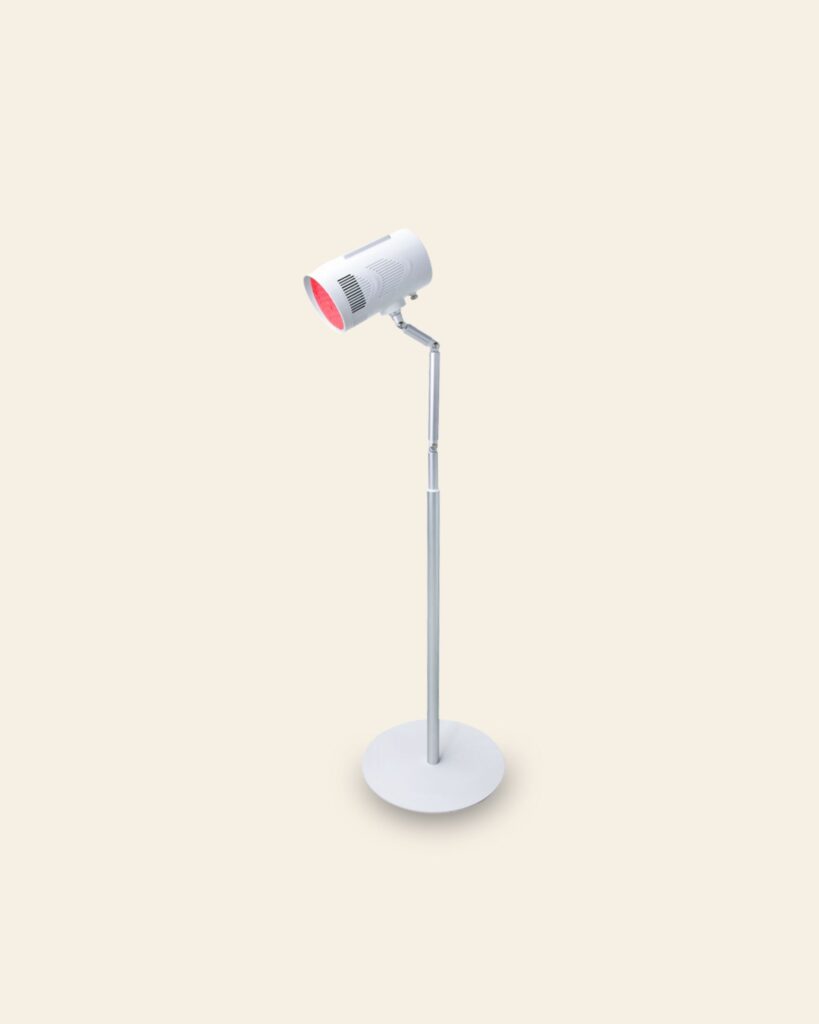
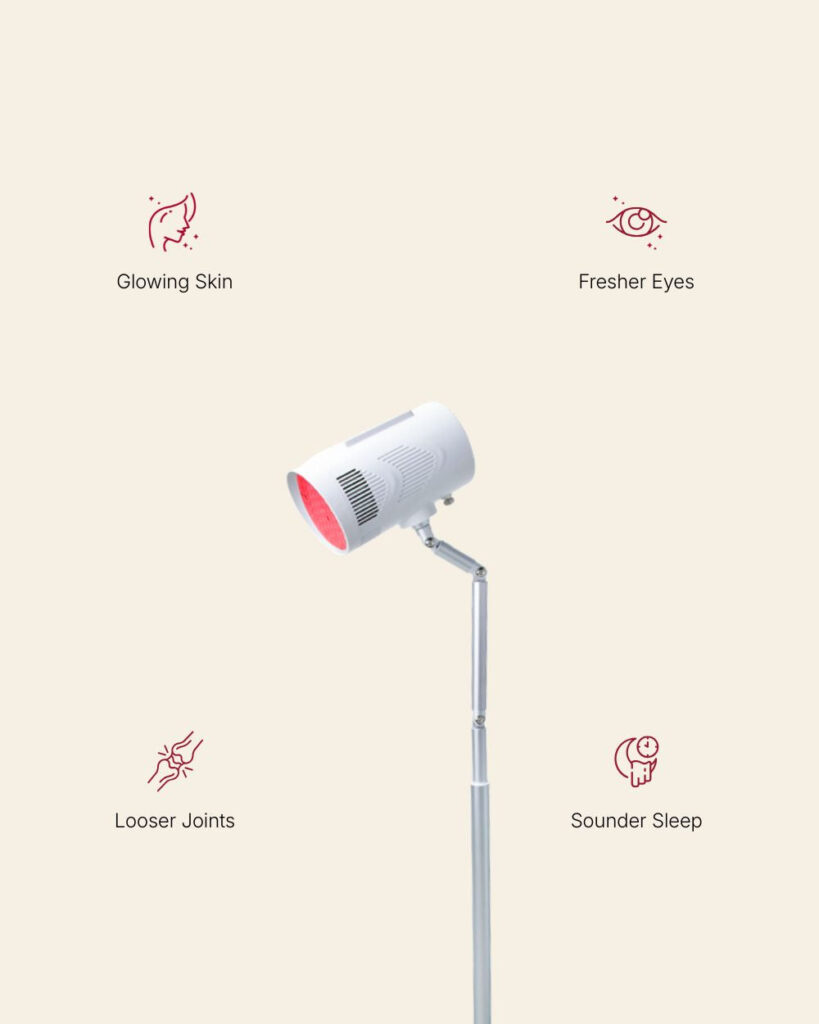
The stand is what transforms the Target Light 4.0 from another targeted lamp into a much more complete treatment station. You can adjust the height and extend the side arm, then rotate the light head until it’s positioned over the area you want to treat. That means you can sit or lie comfortably instead of adjusting your body around a fixed light source.
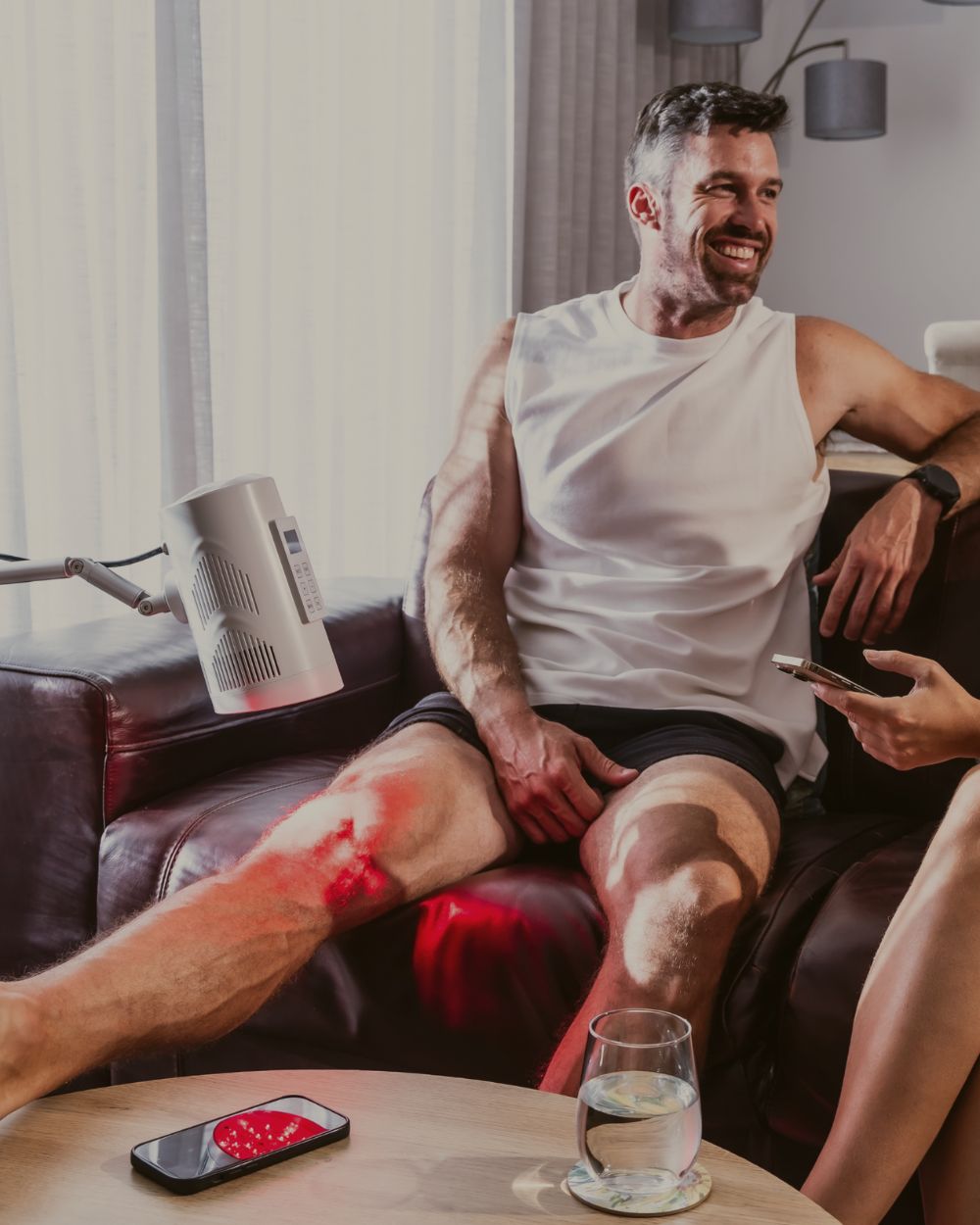
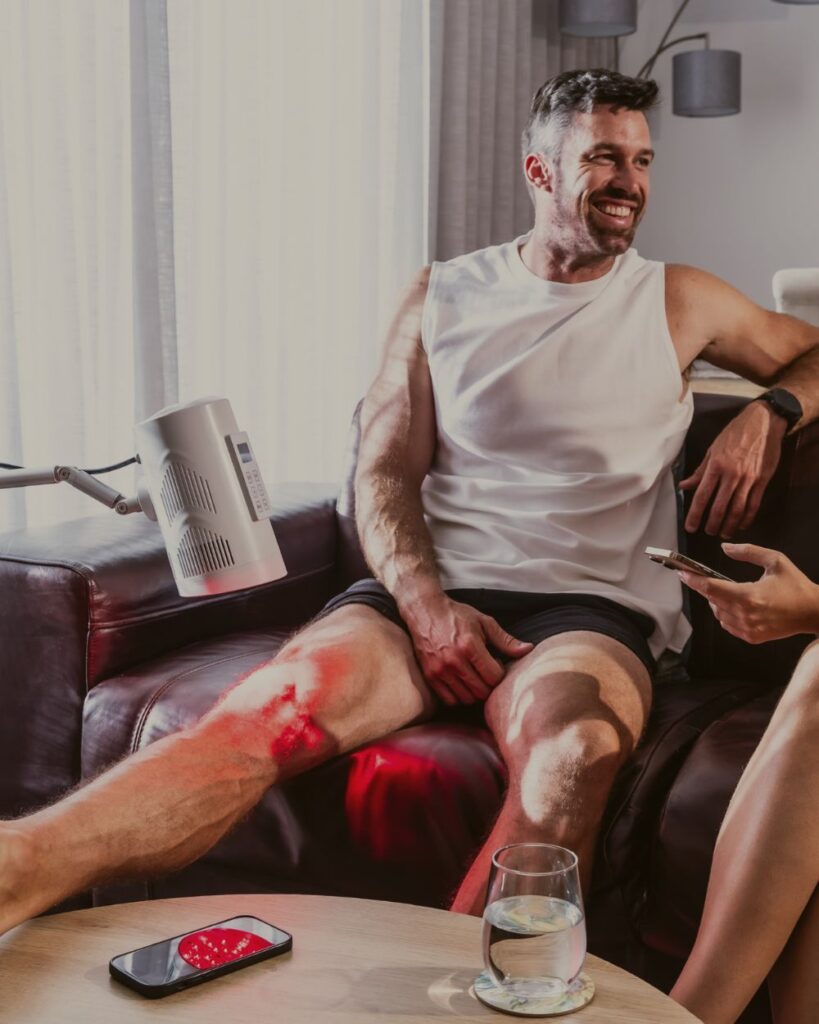
We think that’s particularly valuable for areas like the knee, shoulder, hip, scalp, face, or another location where getting the angle right with a rigid panel can be annoying. If the target changes tomorrow, you aren’t stuck with a wearable designed around one particular joint either. Reposition the head and use it somewhere else.
The touchscreen and wireless remote make those adjustments easier once you’re in position. Being able to change red or near-infrared intensity without getting up sounds minor until you’re lying down with the light carefully positioned over a knee or shoulder. On a device built around precision, we’d rather have those controls than reach for physical switches every time something needs changing.
The 0-to-100% intensity adjustment also gives the Target Light more flexibility than a simple on/off targeted device. You can reduce output when appropriate rather than moving the entire stand farther away every time. We would still use distance and intensity according to Red Light Rising’s instructions rather than creating our own protocol around the published irradiance figure.
What the stand doesn’t change is coverage. You are still treating one relatively concentrated area at a time. That’s excellent if your routine revolves around a knee, shoulder, hip, face, scalp, or another specific location. It becomes inefficient if you’re repeatedly moving the head from your upper body to your abdomen to one leg and then the other.
The Target Light 4.0 isn’t modular in the same sense as Red Light Rising’s Advantage panel system, where multiple panels can be combined to build a larger treatment area. Its flexibility comes from physical positioning instead.
The adjustable floor stand, side arm, and rotating head allow the same light to approach different areas from different heights and angles. That’s the real design advantage here. Instead of buying separate targeted devices for a knee, face, shoulder, or scalp, you can reposition one light around the body.
That distinction is worth understanding before buying. The Target Light 4.0 can adapt to many targeted applications, but it can’t be expanded into a full-body wall of light later. If you expect your routine to move toward broad full-body sessions, an expandable panel system gives you a better upgrade path.
At roughly £840, the Target Light 4.0 is undeniably expensive for the amount of body it illuminates at once. You can buy a conventional panel with considerably more treatment area around this part of the market, so we’d never choose the Target Light based on coverage per pound.
You’re paying for precision and positioning instead. The integrated stand is a major part of the product rather than an accessory you need to figure out afterward. Add the rotating head, adjustable arm, touchscreen, remote, separate red and near-infrared controls, and adjustable output, and the price starts to make more sense for someone who specifically wants a dedicated targeted station.
That’s also how we’d compare it with cheaper targeted lights. A less expensive lamp may produce the wavelengths you want, but if you’re constantly propping it against something, holding it, or moving furniture to get the correct angle, the savings come with an inconvenience you’ll experience every session.
On the other hand, don’t pay £840 simply because the positioning system looks impressive. If you normally treat broad areas, a panel is the better use of the budget. The Target Light 4.0 earns its premium when being able to precisely position a concentrated light is something you’ll benefit from repeatedly.
The Target Light 4.0 requires more planning than a handheld, but the included floor stand means you aren’t buying the device and then discovering you still need a way to position it. Once assembled, the idea is to have a dedicated light that can be rolled or adjusted into the position required for each session.
We’d decide where it’s going to live before ordering. The adjustable arm gives you flexibility during treatment, but a floor-mounted system still occupies more space than a compact panel sitting on a desk. If you’re already short on floor space, that matters more than how compact the actual light head looks online.
It’s also worth thinking about how you’ll use the arm. Someone treating a knee while seated needs a different arrangement than someone positioning the light over the face while lying down. The advantage of the system is that it can accommodate those differences, but you’ll get much more value from it if you have enough space to take advantage of its range of movement.
Once that space is sorted, everyday setup should be one of the Target Light’s stronger points. You aren’t attaching straps, finding a tabletop at the right height, or holding a light in your hand. Position the stand, adjust the head, select your settings, and start the session.
Red Light Rising gives the Target Light 4.0 a 365-day trial, which is particularly valuable on a product this specialized. A few sessions can tell you whether the light works mechanically, but it can take much longer to determine whether you genuinely prefer a targeted floor-mounted system over a conventional panel.
We’d use that trial to evaluate the practical things first. Does the stand reach the positions you regularly need? Is adjusting it easy? Do you use the remote? Is the treatment field appropriate for your usual targets? Most importantly, does having the light permanently ready make you more likely to use it?
The warranty runs for two years. That’s better than the one-year coverage on the Advantage Wrap, although it falls short of the three-year warranty Red Light Rising provides with several of its panels. At roughly £840, we’d prefer three years here as well, especially because the Target Light includes more moving and electronic components than the brand’s simpler panels.
We’d also check the complete return conditions before ordering rather than treating “365-day trial” as the entire policy. With a relatively large floor-mounted system, return shipping and condition requirements can matter considerably more than they do with a small handheld device.
One thing we do appreciate is Red Light Rising’s publication of measured output, EMF, and flicker information. That’s especially useful for the Target Light because its very high reported irradiance can look intimidating without context. Having measurement information available makes it easier to evaluate the device without reducing the conversation to a single headline power figure.
For the Target Light 4.0, we’d pay closest attention to customer feedback about the positioning system. The most useful reviews aren’t necessarily the ones describing personal wellness results. We’d want to know whether the stand remains stable, whether the arm is easy to adjust, how smoothly the head moves between positions, and whether owners still appreciate the floor-mounted format after the novelty wears off.
We’d also look for comments about how much area the light covers in real use. Product photos can make a targeted device appear more versatile than it feels once you’re treating several different locations. Someone primarily using it on one knee or shoulder may love the concentrated field, while someone constantly repositioning it around the entire body may quickly wish they’d bought a panel.
The adjustable intensity is another ownership feature we’d want long-term users to comment on. The Target Light 4.0’s published output is extremely high, so the ability to reduce red and near-infrared intensity isn’t something we’d dismiss as an unnecessary extra. It gives you more control over a device designed to deliver concentrated light.
Ultimately, the Target Light 4.0 is less about getting the most illuminated area for £840 and more about making targeted sessions considerably easier to position. The integrated stand, adjustable arm, rotating head, remote, touchscreen, and independent 0-to-100% red and near-infrared controls create a much more polished setup than balancing a small light on a chair and hoping it stays pointed in the right direction.
We’d choose it for someone who repeatedly treats specific areas and wants a dedicated setup that can move precisely around the body. Its 660nm and 850nm wavelength combination is straightforward, the published output is exceptionally concentrated, and the positioning system gives the product a clear reason to exist. If broad coverage is also high on your list, though, we’d spend the same budget on a panel. The Target Light 4.0 is at its best when precision is the priority, not when you’re trying to make a spotlight perform like a full-body system.
Key Features
Reaches 382 mW/cm2 at 15cm for fast, clinical-grade sessions.
An adjustable 88 to 145cm stand with 360 degree rotation frees your hands.
60 three-watt LEDs and a two-year warranty target professional use.
Independently intensity adjustment.
Convenient operation from treatment position.
Long consumer evaluation period.
Full Specifications
Wavelengths:
Final Verdict
4.6

Join red light therapy users comparing devices, sharing protocols, and posting honest results. Free to join, no sales pitch.
Protocol sharing
Device comparisons
Safety-first advice
Tec Specs
Wave Lengths
660nm-850nm
IRRADIANCE:
382.5 mW/cm² at 15cm
Coverage Area:
Face, scalp, joints and muscles
Overall Category Scores
Category
Score
Best Quality
Ease of Use
Features
Value
Support
Staying informed with the latest research and reviews.
10 Minute Read
10 Minute Read