OVERALL
3
BEST FOR
Half-Body Sessions, Flicker-Sensitive Buyers, Serious Recovery
$1,199.99
WAVELENGTHS
630nm-830nm
IRRADIANCE
138.9 mW/cm² (at 6 inches); 67.22 mW/cm² (at 12 inches)
COVERAGE AREA
Half body
WEIGHT
73.5 kg (about 16.5 Ibs)
Our Review
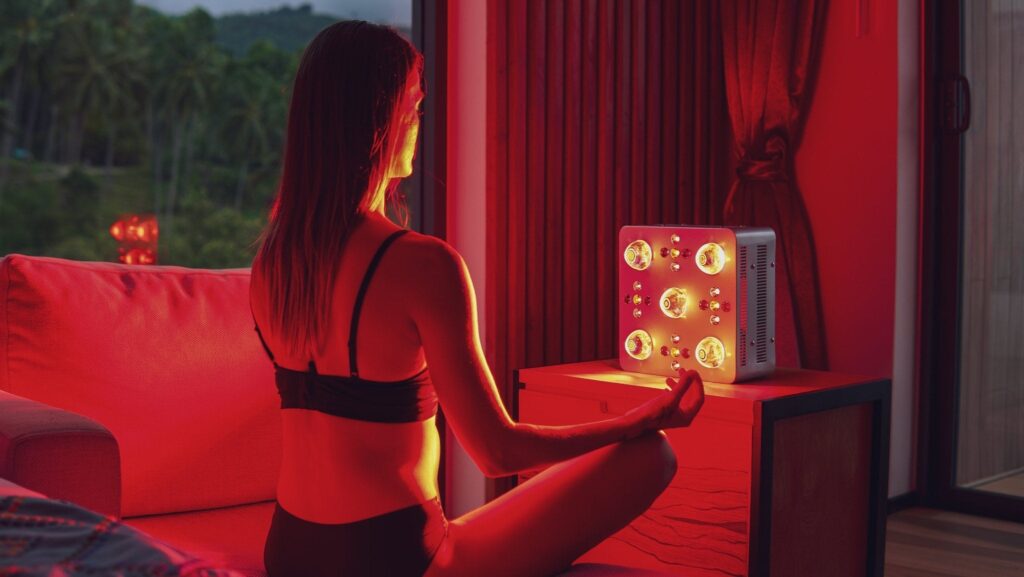
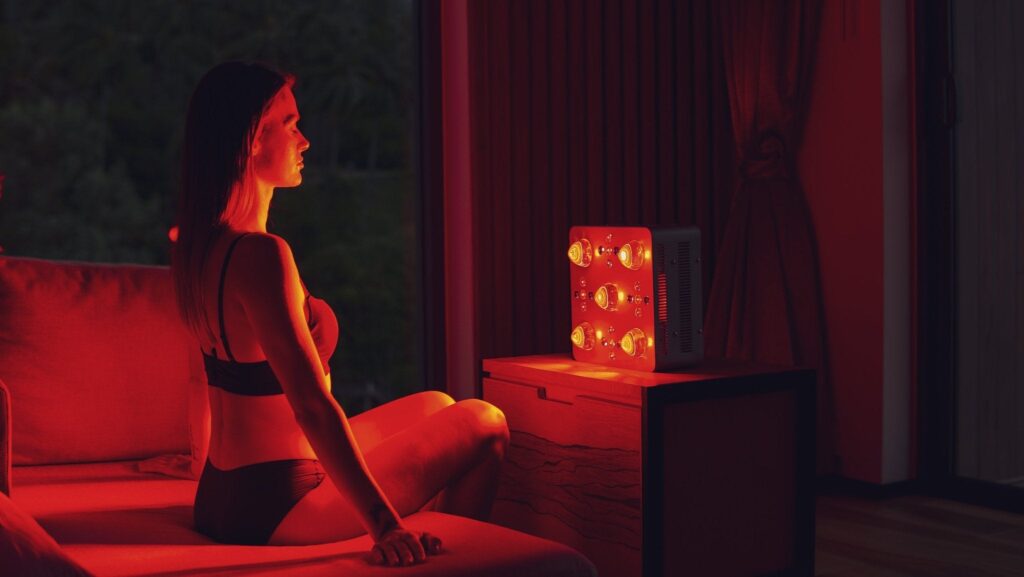
If you’re desiring a serious red light therapy setup for the back, chest, abdomen, hips, or thighs but don’t necessarily need a panel stretching from head to toe, the EMR-TEK Firestorm Pro makes a lot of sense. Its wider, more concentrated treatment area is designed to put a substantial amount of light across one large section of the body at a time, while the Pro version adds Mean Well drivers, zero-flicker operation, and very low magnetic fields. At around $1,199.99, we’d consider it a strong option for someone who specifically wants that combination. If your main goal is standing in one position and treating nearly your entire body at once, we’d put the same money toward a taller panel instead.
The part that’s easy to miss while comparing specifications is how the Firestorm Pro is actually meant to be used. This is a high-output device that EMR-TEK expects you to give some space rather than stand directly against. That makes your room size, treatment position, and how much of the body you want to cover more important than simply looking at irradiance or wattage. The Firestorm Pro can be an impressive setup when its wide format matches your routine, but we’d make sure you have the space to use it properly before spending more than $1,000.
The Firestorm Pro uses 630nm and 670nm red light along with 830nm near-infrared light. It’s a relatively focused three-wavelength combination compared with panels advertising five, six, or even nine wavelengths. We wouldn’t consider that a problem by itself. More wavelengths don’t automatically make a device more effective, and we’d rather know exactly what we’re getting than choose a panel because its wavelength list happens to be longer.
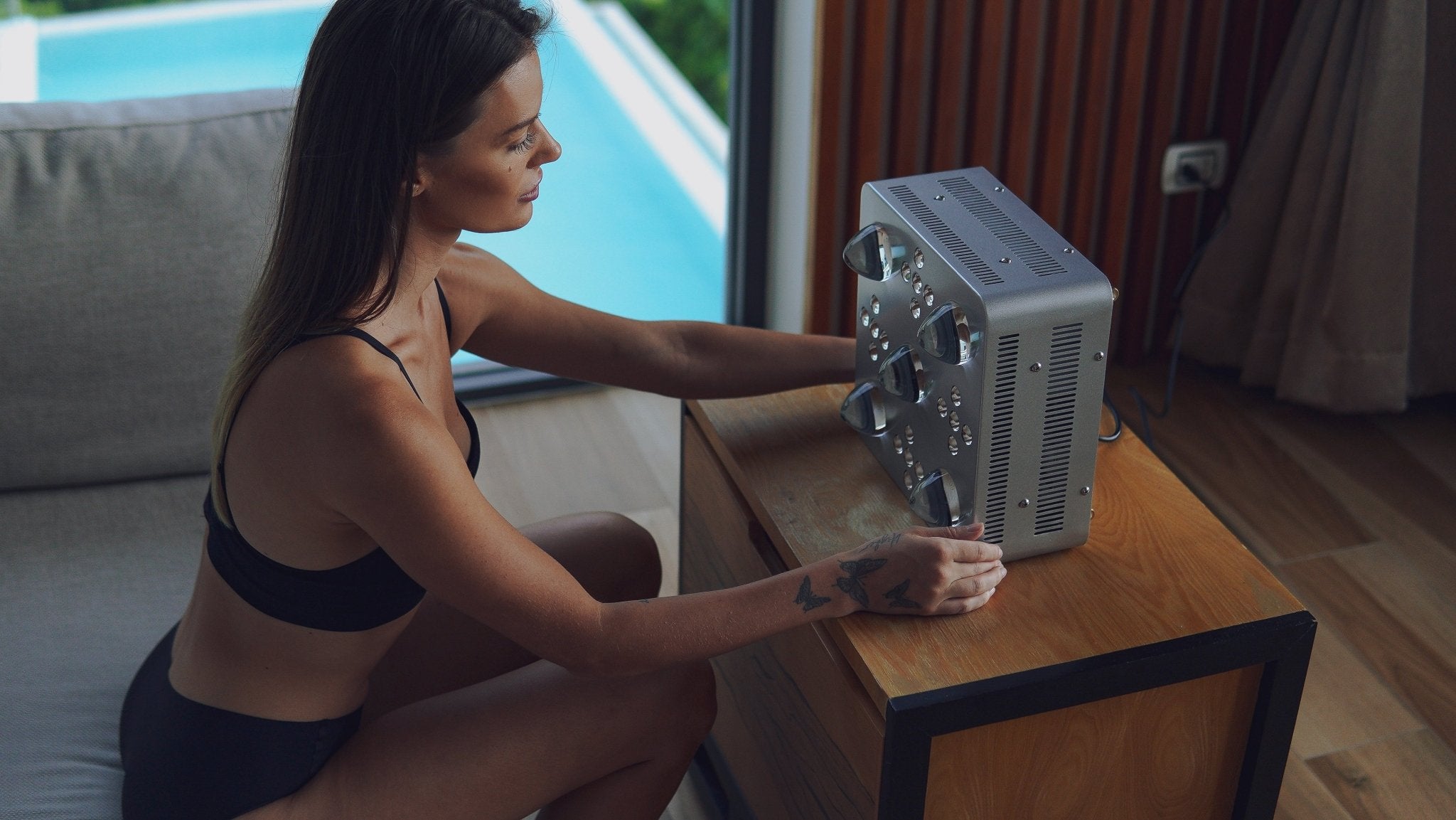
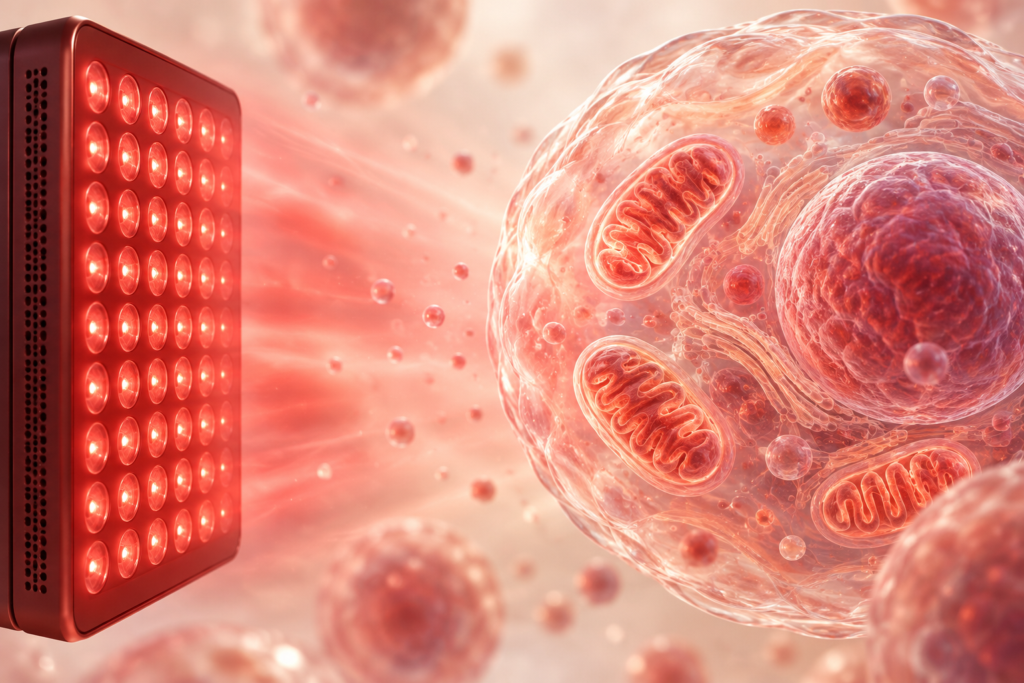
The more unusual part of the Firestorm Pro is the way it delivers that light. EMR-TEK combines traditional LEDs with COB technology. If you’ve never heard of a COB before, the practical explanation is simple: instead of relying entirely on individual LEDs spread across the panel, a COB places many small light-emitting components closely together to create a concentrated source of light. The Firestorm Pro combines that concentrated output with its surrounding LEDs.
We wouldn’t buy it just because COB sounds more sophisticated. What matters to you is what that design does to the experience. The Firestorm Pro can deliver a lot of light from a relatively compact panel, but that output also means treatment distance becomes important. This isn’t a product where we’d assume standing closer automatically gives you a better session.
The Pro upgrades are easier to appreciate once you strip away the technical terminology. Mean Well drivers are essentially higher-quality electrical components responsible for delivering power to the LEDs. EMR-TEK also lists the Firestorm Pro at zero flicker and with very low magnetic fields at the recommended treatment distance. You don’t have to understand the electronics behind those features to appreciate why someone spending premium-panel money may prefer them.
Those are also the reasons we’d consider paying for the Pro instead of automatically choosing the standard Firestorm. You’re not simply buying a more impressive name. You’re paying for upgrades to how the panel is powered and operates. If zero-flicker performance and the Pro electrical hardware don’t matter to you, we’d compare the standard model closely before spending the difference.
The Firestorm Pro makes the most sense once you stop thinking about it as a small full-body panel. It isn’t. Its strength is broad sectional coverage. If you’re treating your back, chest, abdomen, hips, thighs, or another substantial area, the wider format lets you illuminate much more at once than a small targeted device.
That’s particularly appealing if your routine revolves around the same larger areas. You can position yourself in front of the panel, complete the session, and move on rather than repeatedly shifting a small light around your body. If your routine involves several areas from shoulders to calves, though, you’ll still need to reposition yourself or the device. A taller panel will be easier for that type of use.
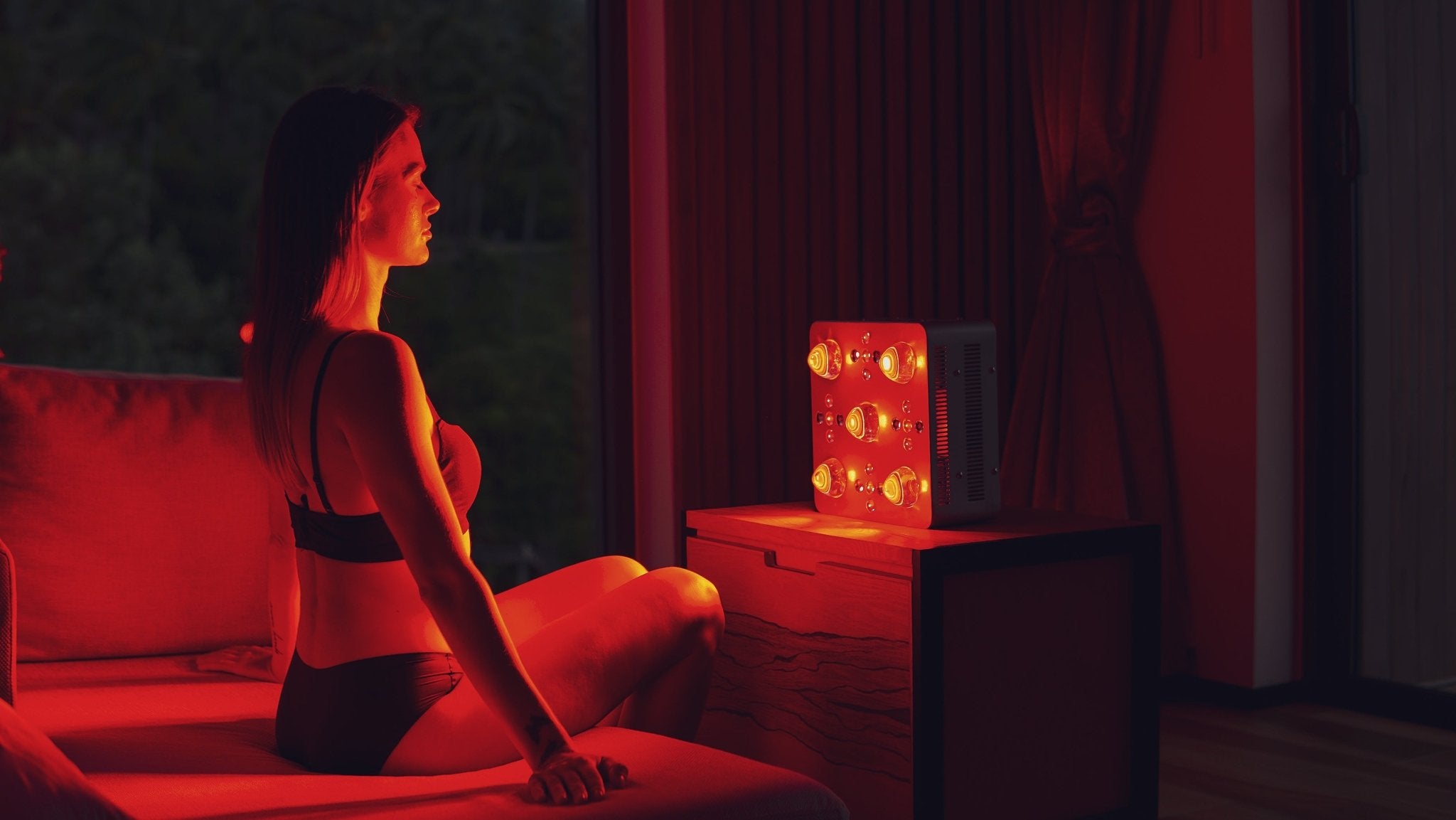
Treatment distance deserves more attention with this model than we’d normally give it. EMR-TEK’s guidance for the Firestorm Pro gives the panel considerably more breathing room than someone might expect from product photos, with recommendations reaching roughly two feet depending on the type of session. That doesn’t mean you’re losing the benefit of the larger output by moving farther away. As you create more distance, the light also spreads across a broader area.
That can actually be one of the Firestorm Pro’s strengths. From an appropriate distance, its relatively compact face can illuminate a larger portion of a seated or standing body than its dimensions initially suggest. You don’t necessarily need a six-foot-tall panel to get useful large-area coverage if you’re comfortable treating the body in sections.
But measure your room before buying. If the only place you have for the Firestorm Pro forces you to stand unusually close to it, we’d question whether this is the right design for your space. A powerful panel you can’t position comfortably can become more frustrating than a less aggressive device that fits your room properly.
We’d also decide whether you’re comfortable with a dedicated setup. The Firestorm Pro isn’t something we’d expect most people to pull out of a closet for every session. Once you’ve found the right height, distance, and angle, the experience becomes much better if you can leave the basic setup intact.
At around $1,199.99 at the current price, the Firestorm Pro needs to fit a fairly specific buyer. We wouldn’t spend that much because the output numbers look impressive or because COB technology sounds more advanced than a conventional LED panel.
We’d spend it because we regularly want substantial coverage across areas like the back, chest, abdomen, hips, or thighs and prefer a concentrated, wide-format system over a tall panel. If that’s your routine, the Firestorm Pro’s shape starts making much more sense.
The Pro electrical package also contributes to the price. Mean Well drivers, zero-flicker operation, and very low magnetic fields are legitimate upgrades if those characteristics matter to you. Someone specifically shopping for those features has a much stronger reason to pay for the Pro than someone who simply wants red and near-infrared light.
Where we’d hesitate is if you’re trying to stretch the Firestorm Pro into a role it wasn’t really designed to fill. If you primarily want facial treatments or one sore knee, it’s more equipment than you need. If you want convenient head-to-toe exposure, it’s not tall enough to eliminate repositioning. The $1,199.99 feels much more reasonable when broad sectional treatments are exactly what you came for.
We’d figure out positioning before the Firestorm Pro arrives. Decide where the panel will live, measure how much distance you can create in front of it, and think about whether you’ll normally be sitting or standing during sessions. Those basic questions will tell you more about whether you’ll enjoy owning the Firestorm Pro than another impressive output figure.
You’ll also want to consider the stand or mounting arrangement as part of the purchase. Getting the panel to the correct height and angle matters when you’re switching between the chest, back, abdomen, hips, or legs. A powerful panel isn’t particularly convenient if every session begins with improvising a way to point it at the right place.
The Firestorm Pro uses active cooling, which is another practical ownership detail we’d think about. Fans aren’t necessarily a problem, particularly in a gym or recovery room, but we’d have different expectations if the panel were going into a quiet bedroom or relaxation space. If silence is important to you, we’d investigate the operating noise rather than assume a premium panel will be silent.
Once you have the room and positioning sorted, though, the Firestorm Pro’s format becomes relatively straightforward. Give it a permanent or semi-permanent location, create enough treatment distance, and use the wide light field for the larger areas it’s designed to cover. We’d much rather set it up properly once than move a high-output panel around the house every time we want a session.
This is one of the sections we’d want you to read before ordering because EMR-TEK’s 30-day return language can sound more flexible than it actually is. It shouldn’t be treated like a 30-day trial where you can use the Firestorm Pro for several weeks and then casually decide whether you want to keep it.
EMR-TEK generally requires returned equipment to remain unused and in its original condition. Once you’ve powered the panel on beyond inspection and started using it for treatments, you shouldn’t assume it can still be returned simply because you don’t like the size, treatment distance, noise, or overall experience.
That makes the Firestorm Pro’s physical requirements especially important. We’d measure the available space, understand the recommended distance, settle the mounting or stand arrangement, and be comfortable with sectional rather than head-to-toe coverage before beginning regular use. Those are exactly the kinds of things people normally discover during a trial period, and EMR-TEK gives you less room to make that decision afterward.
The Firestorm Pro carries a two-year warranty. We’d prefer longer coverage at this price, particularly for a Pro-level panel marketed around upgraded electrical components. We’d also read the actual warranty terms rather than looking only at the number of years so you understand what is covered and what happens if the panel needs service.
It’s also important not to confuse the warranty with the return period. A warranty can protect you against covered defects. It doesn’t necessarily help if the Firestorm Pro works perfectly but turns out to be too large, too loud, or poorly suited to your room. That’s why we’d settle those ownership questions before powering it on.
The biggest limitation when evaluating the Firestorm Pro is the lack of substantial model-specific owner feedback. There simply aren’t enough direct reviews for us to confidently tell you that hundreds of Firestorm Pro owners consistently love or dislike a particular aspect of the device.
We’d rather call that what it is: an information gap. Limited reviews don’t indicate that something is wrong with the panel, but they also don’t give you the same reassurance you’d get from a product with years of detailed owner feedback covering noise, reliability, setup, durability, and long-term support.
That matters a little more here because of the return policy. When you can’t freely use the Firestorm Pro for several weeks before deciding whether to keep it, real-world feedback becomes especially useful. We’d like to see more long-term Firestorm Pro owners discussing how the panel holds up, how noticeable the fans are, and how well EMR-TEK handles service issues.
Broader feedback around EMR-TEK provides some context, with owners praising the intensity and performance of its lights while other customers have raised concerns involving shipping, communication, and after-sale support. We’d treat those as brand-level experiences rather than automatically applying every positive or negative comment to the Firestorm Pro.
What we can judge more confidently is the product itself. The Firestorm Pro has a clear purpose. Its 630nm, 670nm, and 830nm wavelengths, wide high-output format, COB-and-LED design, Mean Well drivers, zero-flicker operation, and very low magnetic fields make it a specialized option for someone who wants serious large-area treatment without moving to a tall full-body system.
If your routine regularly centers on the back, chest, abdomen, hips, thighs, or other broad areas, and you have enough room to use the panel at the intended distance, the Firestorm Pro makes a convincing case for itself. If you’re primarily interested in small targeted sessions or want to stand in one position for convenient head-to-toe exposure, we’d choose a different format. The Firestorm Pro is strongest when you buy it specifically for its wide, concentrated coverage rather than trying to make it behave like a full-body panel.
Key Features
Concentrated center output.
COB/LED hybrid architecture.
630/670/830nm
Pro-level components
Stable output
Designed to expand within the Pro system.
Full Specifications
Wavelengths:
Final Verdict
3

Join red light therapy users comparing devices, sharing protocols, and posting honest results. Free to join, no sales pitch.
Protocol sharing
Device comparisons
Safety-first advice
Tec Specs
Wave Lengths
630nm-830nm
IRRADIANCE:
138.9 mW/cm² (at 6 inches); 67.22 mW/cm² (at 12 inches)
Coverage Area:
Half body
Overall Category Scores
Category
Score
Best Quality
Ease of Use
Features
Value
Support
Staying informed with the latest research and reviews.
10 Minute Read
10 Minute Read