OVERALL
4.8
BEST FOR
Full Body Treatment, Home User, Premium Shopper
$1,599
WAVELENGTHS
660nm-850nm
IRRADIANCE
>162 mW/cm2 (no measurement distance published)
COVERAGE AREA
Full body
WEIGHT
31 lbs (14kg)
Our Review
The BON CHARGE Super Max is designed for someone who already knows they want red light therapy to be a regular part of their routine and doesn’t want to spend that time treating one small area after another. At $1,599, it’s a significant investment, but you’re getting BON CHARGE’s largest traditional panel with enough coverage to expose much more of your body during a single session.
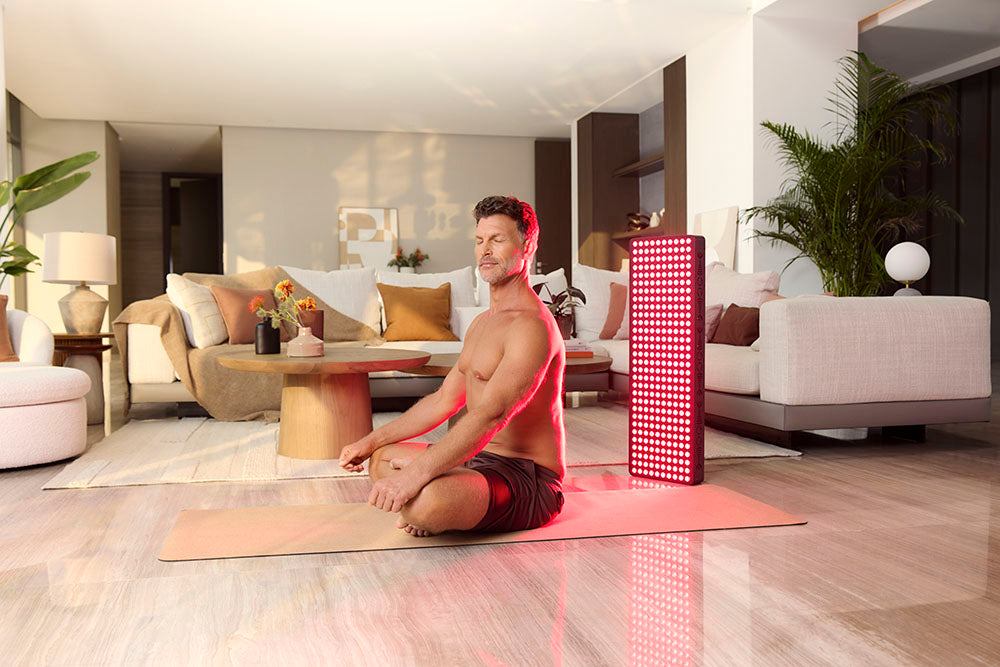
Coverage is really the reason to spend this much. If you’ve ever pictured yourself moving a smaller panel from your face to your torso and then down to your legs, the Super Max eliminates a lot of that inconvenience. BON CHARGE considers it a full-body panel, although we’d set one expectation before you buy: “full body” doesn’t mean your entire body is surrounded by light at once. You’ll still need to turn around to treat your front and back, and coverage will depend on your height, body size, and distance from the panel.
The Super Max combines 660nm red light and 850nm near-infrared light, which can be used individually or together. There are no subscriptions or apps required, and the included door-mount system gives you a practical way to keep such a large panel positioned at home. In this review, we’ll go through the Super Max itself, what it’s actually like to use, price, shipping, returns and warranty, and what customers are saying so you can decide whether going this large is actually worth it for you.
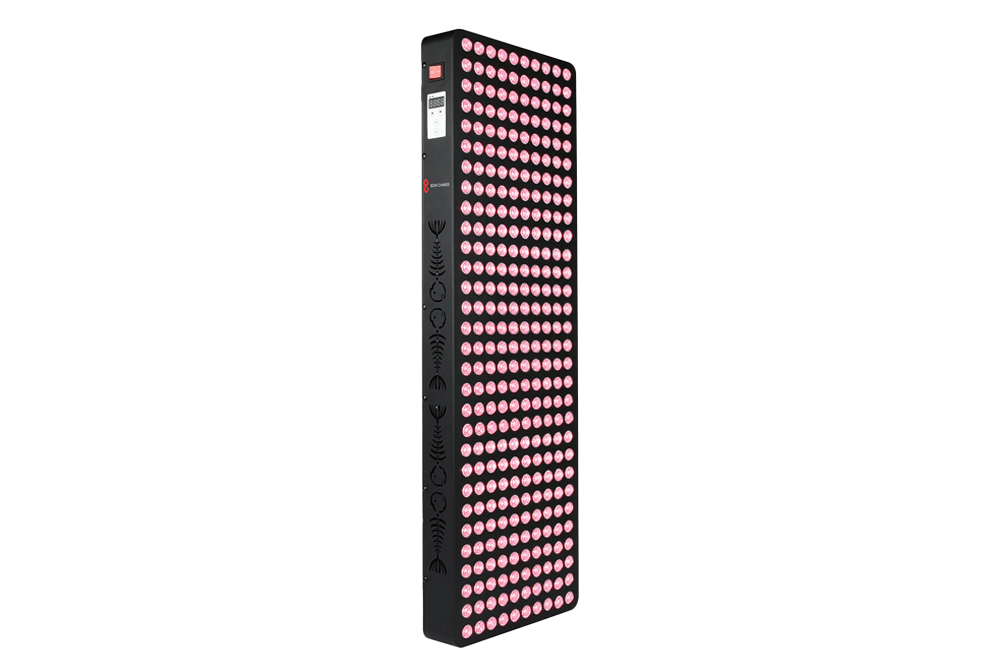
The Super Max measures approximately 35.5 inches tall by 11.8 inches wide and contains 300 5W dual-chip LEDs. It’s rated at greater than 162 mW/cm² of irradiance, making it both wider and more powerful than the BON CHARGE Max. You don’t necessarily need to memorize those numbers. What matters for you is that the Super Max is designed to deliver substantial light output across a larger treatment area, so you’re getting more coverage without moving into excessively long sessions.
You can choose 660nm red light, 850nm near-infrared light, or use both together. That makes one panel practical for different parts of your routine rather than having separate devices for your face, torso, back, legs, and larger muscle groups. If several people in your household want to use red light therapy for different reasons, that versatility becomes even more useful.
The Super Max weighs approximately 31 pounds, which is something we’d think about before ordering. This isn’t a panel you’re realistically going to carry from your bedroom to your living room every day. It’s much better treated as a permanent or semi-permanent piece of home wellness equipment, so we’d decide where it’s going before it arrives.
Despite its size, actually operating the Super Max is straightforward. Plug it in, select red light, near-infrared light, or both, choose a session time between 5 and 30 minutes, and position yourself approximately 3 to 12 inches away. There isn’t an app to pair or subscription to maintain, which we like on a $1,599 device you’re hopefully going to own and use for years.
The Super Max includes braided steel cables, threaded posts, a height-adjusting pulley, and a door mount, so BON CHARGE does give you a practical way to position the panel without immediately requiring another purchase. You can adjust the height depending on what you’re targeting, and the panel can also stand on a solid surface.
Where we’d think ahead is if you want a different setup. If your ideal routine involves lying underneath the panel, positioning it horizontally, or frequently changing its angle, you may want additional mounting equipment or a compatible stand. At this price, we’d figure out your preferred setup before ordering rather than discovering afterward that you need to spend more money to use it the way you pictured.
And while the Super Max drastically reduces the amount of repositioning required compared with a smaller panel, you’ll still need to turn around if you want to expose both your front and back. Think of it as broad full-body coverage from one direction, not 360-degree exposure.
The BON CHARGE Super Max currently costs $1,599 with free shipping and is HSA/FSA eligible. Your purchase includes the Super Max panel, power cord, protective goggles, braided steel cables, threaded posts, height-adjusting pulley, and door mount.
That’s $600 more than the $999 Max, so we’d want you to have a real reason for making the jump. The Max is almost the same height, but the Super Max increases the width from approximately 8.4 inches to 11.8 inches, increases the LED count from 200 to 300, and provides higher rated irradiance. You’re primarily paying for broader coverage and greater output, not simply a taller device.
If you’re only interested in treating your face, shoulder, knee, or another specific area, we wouldn’t spend $1,599 just because the Super Max is the biggest panel in the lineup. Most of what you’re paying for would go unused. Even if you want to regularly treat your torso or legs, the less expensive Max may give you enough coverage.
The calculation changes if you already know you’ll use red light therapy across several areas of your body multiple times per week. Over months and years, reducing how often you have to reposition a smaller panel can make the Super Max considerably more convenient. This is one of those purchases where we’d pay for the extra coverage because we know we’ll use it, not because bigger automatically sounds better.
There are no subscriptions or recurring fees. Once you own the Super Max, you don’t have to continue paying BON CHARGE to access settings or use the panel.
BON CHARGE currently includes free shipping with the Super Max. That’s worth noting on a 31-pound panel because this isn’t the type of product we’d want to pay a substantial additional delivery charge for after already spending $1,599.
We’d have your setup location figured out before it arrives. Make sure you have enough room to comfortably position yourself in front of the panel and determine whether you’re going to use the included door-mount system or another setup. The easier you make it to walk over and start a session, the more likely you are to actually use a device this expensive consistently.
Once it arrives, we’d also test everything relatively quickly. Try red and near-infrared independently and together, test the timer, set up the mounting system, and actually complete sessions in the positions you expect to use regularly. Don’t spend most of your return period admiring a $1,599 panel in the box.
BON CHARGE offers a 30-day return and exchange period on its red light therapy devices, while the Super Max comes with a one-year manufacturer’s warranty and lifetime technical support.
The one-year warranty is where we’d like more reassurance. This is BON CHARGE’s $1,599 full-body panel, and at that price we’d feel considerably better with longer manufacturer coverage. You’re buying a device with 300 LEDs and internal electronics that you’re presumably expecting to use for years, so one year feels relatively short for the size of the investment.
We’d also read the complete return conditions before ordering. Returning a compact device is one thing; dealing with a 31-pound panel is another. If there’s any chance the size, coverage, or setup won’t work in your home, understand exactly what you’d be responsible for before checkout rather than figuring it out after you’ve unpacked everything.
The Super Max currently has very strong feedback on BON CHARGE’s website, with an average rating around 4.95 out of 5 from approximately 19 reviews. That’s encouraging, but it’s still a relatively small pool of product-specific feedback, so we wouldn’t let the rating alone make a $1,599 decision for you.
What we care about more is whether people actually continue using something this large once the excitement of buying it wears off. Customer feedback around BON CHARGE’s panels generally praises their straightforward operation and ability to become part of a regular home routine. There are also Super Max owners who speak positively about the panel itself and the convenience of having such extensive coverage available at home.
Customers across BON CHARGE’s red light products report using their devices for things like exercise recovery, skin appearance, relaxation, sleep, and general wellbeing. We’d treat those as individual experiences rather than results you’re guaranteed to see. With something this expensive, we’d rather you decide based on whether the size and convenience will help you stay consistent than buy it expecting another person’s results.
We also didn’t uncover a recurring pattern of serious Super Max-specific hardware complaints in the available owner feedback. The limitation is simply that there aren’t hundreds of independent long-term Super Max reviews to evaluate yet. When you’re considering a $1,599 panel, we’d rather be transparent about that than make a relatively small number of very positive reviews sound more conclusive than they are.
The Super Max ultimately makes the most sense if coverage is what has been holding you back from buying a smaller panel. If you want to regularly use red light therapy across your back, torso, legs, face, and larger muscle groups, being able to expose substantially more of yourself at once can make your routine much easier to maintain.
But don’t buy the Super Max simply because it’s the biggest traditional panel BON CHARGE sells. If you’re mainly treating one or two areas, save your money and your space. And if you already know you want true 360-degree exposure without turning around, even the Super Max won’t completely give you that experience. It’s ideal for someone who’s committed enough to red light therapy to justify $1,599, has a dedicated place to keep a 31-pound panel, and values spending less time repositioning during regular broad-area sessions.

Key Features
Combines red and near-infrared light, with the ability to use each wavelength independently or together.
Uses 300 5W dual-chip LEDs to deliver red and near-infrared light across its larger treatment area.
Delivers greater than 162 mW/cm² of irradiance for powerful output across the full-size panel.
The larger treatment area is designed to exppose substantial sections of the body at once, reducing the need to repeatedly reposition the panel.
Choose red light, near-infrared light, or both depending on the type of session you want.
Set sessions directly on the Super Max from 5 to 30 minutes without needing an app or separate timer.
Includes a door mount and height-adjusting pulley system for positioning the 31-pound panel at different heights.
Designed with ultra-low EMF output and flicker-free operation for comfortable regular use.
Full Specifications
Wavelengths:
Final Verdict
4.8
The BON CHARGE Super Max is ideal for someone who already knows red light therapy is going to be a consistent part of their routine and wants enough coverage to make that routine as convenient as possible. At $1,599, we wouldn’t choose it simply because bigger sounds better. The value really comes from being able to treat large areas like your back, torso, and legs without repeatedly moving a smaller panel around. You’ll still need to turn around for front-and-back exposure, and we’d feel better about an investment this large if the warranty extended beyond one year. You’ll also want a dedicated place for it because at 31 pounds, this isn’t something you’ll enjoy setting up and putting away every day. But if you’ve already experienced the inconvenience of smaller panels, have the space for a more permanent setup, and know you’ll use it regularly, the Super Max gives you the coverage that can make red light therapy feel much less like a process. If you’re still experimenting with red light therapy or only have one or two areas you want to target, we’d save the money and go smaller. The Super Max makes the most sense when you’re confident you’ll actually take advantage of everything that extra size is giving you.

Join red light therapy users comparing devices, sharing protocols, and posting honest results. Free to join, no sales pitch.
Protocol sharing
Device comparisons
Safety-first advice
Tec Specs
Wave Lengths
660nm-850nm
IRRADIANCE:
>162 mW/cm2 (no measurement distance published)
Coverage Area:
Full body
Overall Category Scores
Category
Score
Best Quality
Ease of Use
Features
Value
Support
Staying informed with the latest research and reviews.

10 Minute Read
10 Minute Read