OVERALL
4.5
BEST FOR
Near Full-Body Sessions, Flicker-Sensitive Buyers, Serious Recovery
$1,379.99
WAVELENGTHS
630nm-830nm
IRRADIANCE
1,400 mW/cm² (no published measured distance)
COVERAGE AREA
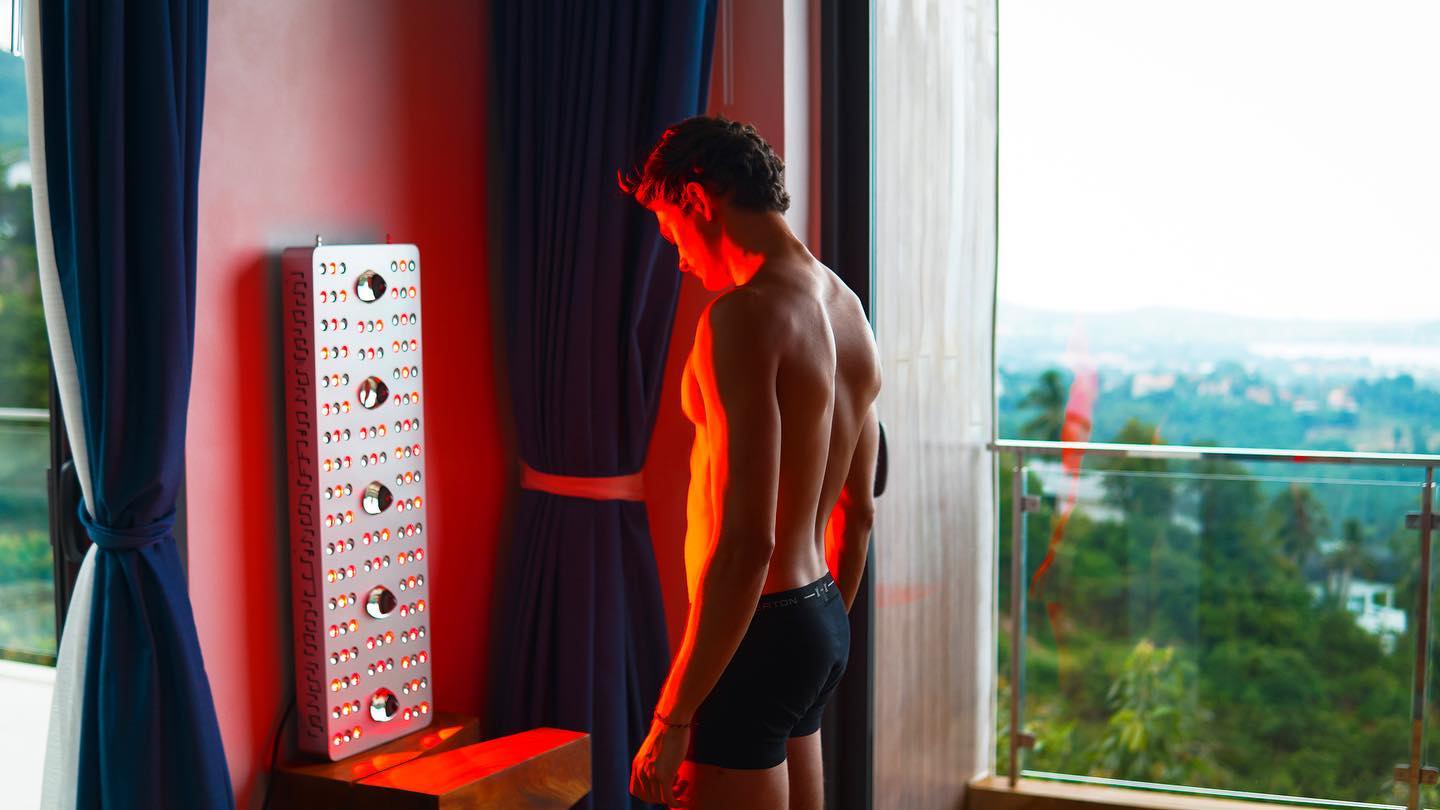
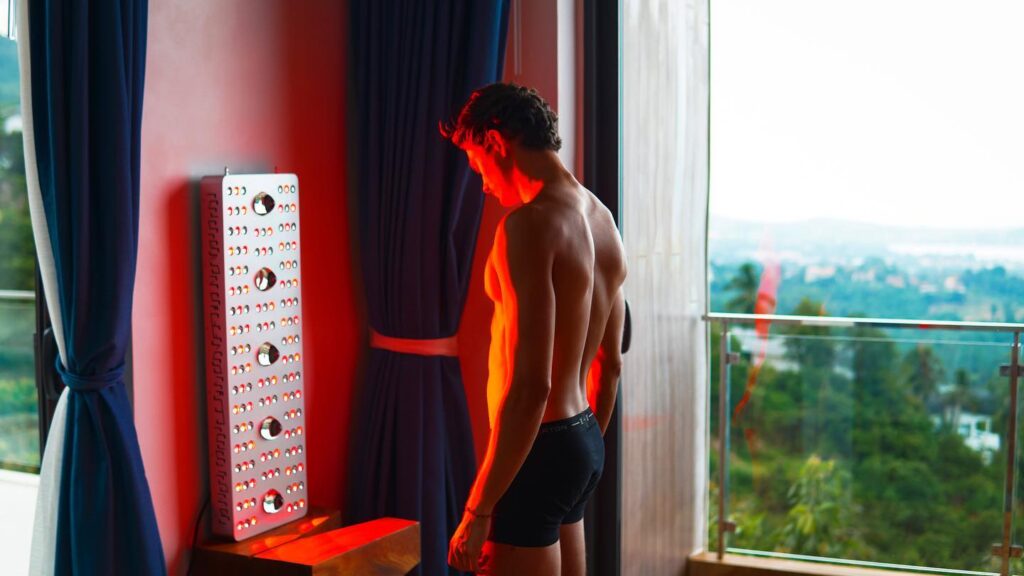
Near full body at standing distance
WEIGHT
44 Ibs
Our Review
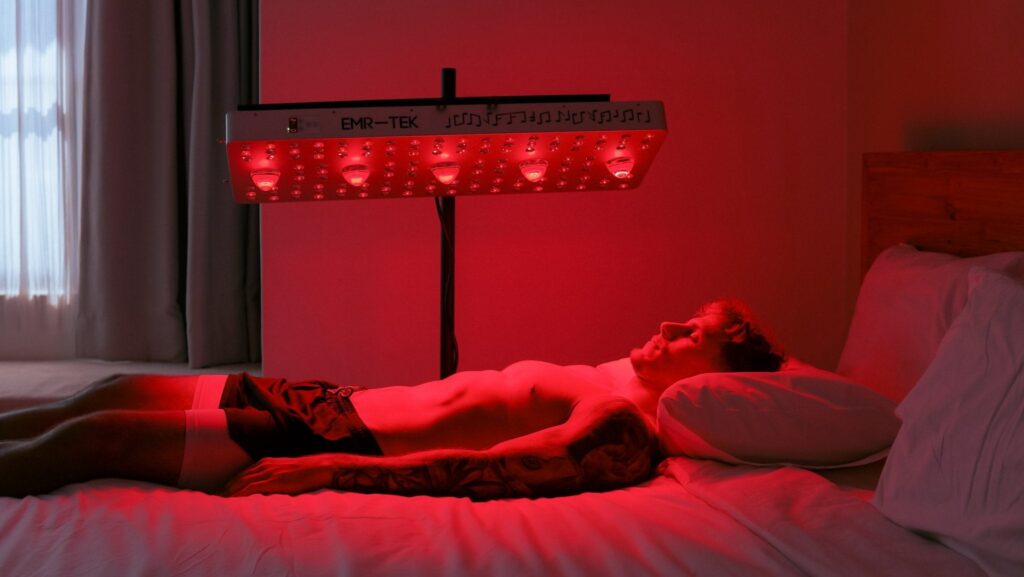
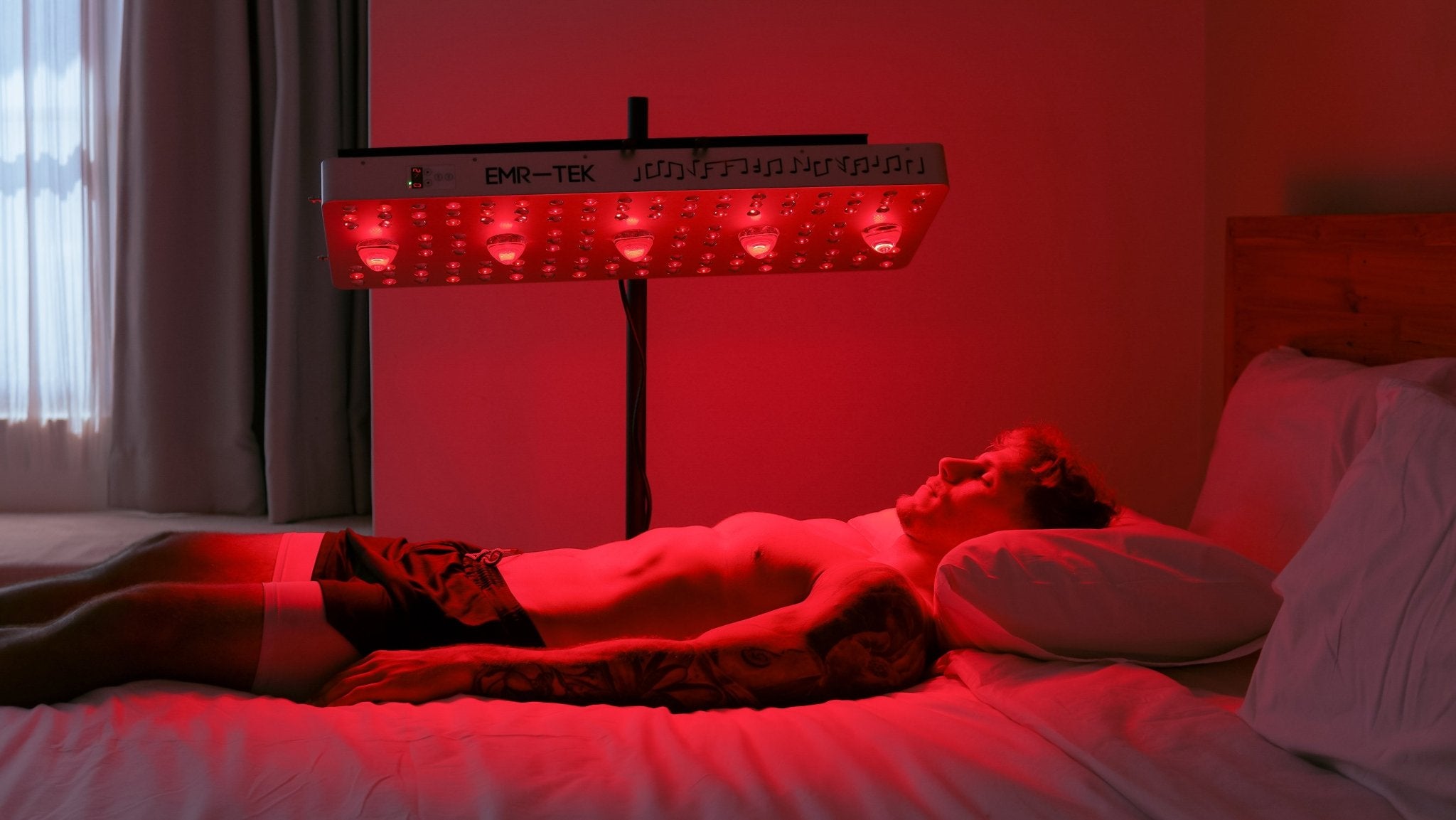
The EMR-TEK Inferno Pro is made for someone who wants to treat larger sections of the body without moving all the way up to an oversized full-body system. It provides enough coverage for areas like the back, torso, legs, hips, and larger muscle groups while adding several upgrades over the standard Inferno, including Mean Well drivers, zero-flicker operation, low EMF performance, and modular support.
The main reason to consider it is not simply high output. It is the combination of broader coverage, concentrated COB light, upgraded electrical components, and the ability to expand the system later. There are a few things worth knowing before buying, though. A stand is a separate expense, the return policy becomes considerably more restrictive once the panel has been used, and EMR-TEK has shown some inconsistent wavelength information across its materials. At this price, those are details worth checking before setting everything up.
The Inferno Pro is most useful for someone who regularly treats larger sections of the body. Think back, torso, abdomen, hips, legs, and large muscle groups rather than one knee or shoulder at a time. That extra coverage reduces the constant repositioning that comes with using a compact panel for broader sessions.
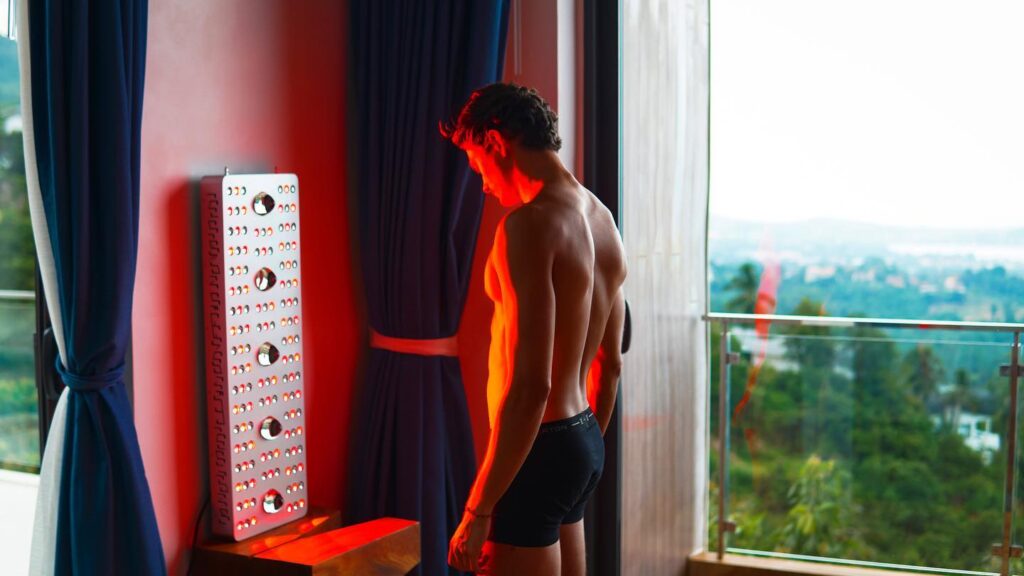
It is still not a one-position full-body system. Treating both sides of the body requires turning around, and actual coverage changes depending on treatment distance and body size. What it does provide is a practical middle ground between a targeted panel and one of EMR-TEK’s much larger setups.
EMR-TEK also recommends leaving some distance between the body and the panel. That is particularly important with a high-output COB system. Getting closer is not automatically better, and sensible treatment distance and session length matter more than trying to maximize exposure.
The Inferno Pro is not especially portable either. Once the panel, power setup, and positioning are sorted out, it makes more sense to leave it somewhere convenient rather than move it between rooms regularly.
The current Inferno Pro uses 630nm and 670nm red light alongside 830nm near-infrared light. It is a focused three-wavelength setup rather than trying to offer as many wavelengths as possible.
One detail we would confirm before purchasing is the exact wavelength configuration of the unit being shipped. EMR-TEK has displayed inconsistent wavelength information for the Inferno Pro across some product and bundle materials, including references to both 660nm and 670nm. That does not change the overall purpose of the panel, but buyers should not have to guess which wavelengths are in a four-figure device.
What makes the Inferno Pro more unusual is its combination of COB modules and individual LEDs. COB, or chip-on-board, concentrates multiple light-emitting components into a powerful light source. EMR-TEK combines those concentrated areas with conventional LEDs rather than building the entire panel around a uniform grid of individual bulbs.
The result is substantial light output from a relatively compact system. It also makes treatment distance more important, so this is not a panel we would use extremely close to the body simply because it is capable of producing high output.
The Pro upgrades are more practical than flashy. EMR-TEK uses Mean Well drivers and promotes zero-flicker operation and very low EMF levels. These features may not noticeably change the basic process of standing in front of the panel, but they are reasonable upgrades to expect when paying for the Pro version.
Active cooling is another part of owning a higher-output panel. Internal fans help manage the heat generated during operation, which means the Inferno Pro will not provide the completely silent experience of a passive wearable or small targeted device.
Where the panel is going to live is worth considering before it arrives. Users need enough room for the panel itself and enough space in front of it to maintain an appropriate treatment distance. A high-output panel becomes much less convenient when the room forces the user to stand closer than intended.
One of the better reasons to choose the Pro version is its modular design. If one Inferno Pro provides enough coverage today but a larger setup becomes desirable later, the panel can become part of an expanded system rather than needing to be replaced entirely.
That is useful with equipment at this price. Someone already committed to red light therapy may eventually want broader coverage, and having an upgrade path makes that considerably easier than starting over with a completely different system.
We would not buy the Inferno Pro solely because expansion might happen someday, but modularity provides some protection against quickly outgrowing the panel.
The additional cost should still be considered. Larger configurations require additional panels and compatible positioning equipment, so an expanded Inferno Pro setup can become significantly more expensive than the original purchase.
The Inferno Pro sits firmly in premium territory, so the important question is what the additional money actually provides. For this model, the value is primarily in broader treatment coverage, the hybrid COB-and-LED design, upgraded electrical components, and modular support.
Someone treating only the face, knee, shoulder, or another small area does not need to spend this much. There are considerably less expensive devices capable of handling targeted treatments.
The Inferno Pro makes more sense when large-area treatments are already part of the routine and a smaller panel would require too much repositioning. Buyers who specifically care about Mean Well drivers, zero-flicker operation, low EMF performance, and future expansion also have more reason to choose the Pro over the standard Inferno.
We would also calculate the cost of the intended setup before ordering. A stand is not included with the base panel, and different positioning options can increase the total investment considerably.
It is worth deciding where and how the Inferno Pro will be used before it arrives. Panel height, treatment distance, available floor space, and the desired stand or mounting arrangement all affect how convenient the system will be day to day.
Someone planning to stand in front of the panel has different positioning needs from someone hoping to use it alongside a bed or treatment table. Buyers interested in more complicated setups should confirm that the intended stand can actually provide the necessary height and angle.
We would also inspect everything carefully when the order arrives. Check the panel label, wavelength information, physical condition, included components, and any stand or mounting hardware before beginning regular treatments.
This is one section worth reading before placing the order. EMR-TEK offers a 30-day return period, but it should not be confused with the more generous home trials offered by some red light therapy companies.
The current policy generally requires products to remain unused and in their original packaging, with the ability to return the device becoming much more limited after it has been powered on beyond basic inspection. That leaves considerably less room to complete several treatments and then decide whether the Inferno Pro fits the routine.
For that reason, we would confirm the panel dimensions, wavelengths, treatment space, stand compatibility, and overall setup before regular use begins. Keeping the packaging is also important until there is no possibility that the device will need to go back.
The Inferno Pro is covered by EMR-TEK’s two-year warranty for its standard red light panels. That provides some protection against qualifying hardware problems, although longer warranty coverage would be preferable on equipment in this price range.
Feedback specifically for the Inferno Pro is still more limited than it is for some longer-established red light therapy panels. Available owner experiences include positive comments about construction, setup, and the strength of the light, along with complaints involving accessories, specifications, shipping, and support.
Some of the more useful feedback concerns just how substantial the light output feels during actual use. That reinforces the importance of following sensible treatment distances rather than assuming stronger exposure is always better.
There have also been owner complaints involving stand assembly, missing components, product-label discrepancies, and communication with customer service. Those experiences do not mean every order will have an issue, but they provide another reason to inspect the complete setup before regular use begins.
Customer experiences with EMR-TEK support are mixed. Some owners report responsive service and satisfactory resolutions, while others describe delays or difficulty communicating when an order or product issue arises.
That matters more with the Inferno Pro than it would with an inexpensive targeted light. A large premium panel is more difficult to return or replace, making reliable after-sales support an important part of the ownership experience.
The coverage is the strongest reason to choose the Inferno Pro. It can handle much larger areas than a compact panel without requiring the space or investment of EMR-TEK’s biggest systems.
We also like that the Pro upgrades have a practical purpose. Mean Well drivers, zero-flicker operation, low EMF performance, and modular support provide actual differences from the standard model rather than simply adding another name to the lineup.
The ability to expand is another advantage for committed users. One panel can remain useful even if the desired treatment area grows later.
EMR-TEK could make the buying experience easier by keeping wavelength information completely consistent across its product materials. A buyer spending this much should be able to verify the exact configuration without having to compare different listings.
The return policy is another weakness. Being unable to properly use a premium panel before deciding whether to keep it provides much less flexibility than the home trials available from some other brands.
We would also prefer a longer warranty at this price. Two years provides basic protection, but premium red light therapy equipment is something many buyers expect to own considerably longer.
Finally, the stand being a separate purchase means the advertised panel price may not represent the cost of the setup someone actually wants.
The EMR-TEK Inferno Pro fills the space between a small targeted panel and a much larger full-body setup. Its broad treatment area, hybrid COB-and-LED design, Pro electrical hardware, and modular support make it most useful for someone who already uses red light therapy consistently and wants to treat larger areas with less repositioning.
It is harder to justify for localized treatments. Someone primarily treating a knee, shoulder, face, or another small area can spend considerably less without needing the Inferno Pro’s additional coverage or hardware.
It’s ideal for a regular red light therapy user who wants broader coverage and values the Pro upgrades and ability to expand later. The restrictive return terms, separate stand cost, two-year warranty, and inconsistent wavelength information are worth understanding before ordering, but the Inferno Pro has a clear purpose for someone whose current panel has simply become too small.
Key Features
Hybrid light architecture.
630nm, 670nm, 830nm
Upgraded electrical components
Pro model distinction
Can be incorporated into larger EMR-TEK setups.
Pro electrical design focus.
Full Specifications
Wavelengths:
Final Verdict
4.5

Join red light therapy users comparing devices, sharing protocols, and posting honest results. Free to join, no sales pitch.
Protocol sharing
Device comparisons
Safety-first advice
Tec Specs
Wave Lengths
630nm-830nm
IRRADIANCE:
1,400 mW/cm² (no published measured distance)
Coverage Area:
Near full body at standing distance
Overall Category Scores
Category
Score
Best Quality
Ease of Use
Features
Value
Support
Staying informed with the latest research and reviews.
10 Minute Read
10 Minute Read