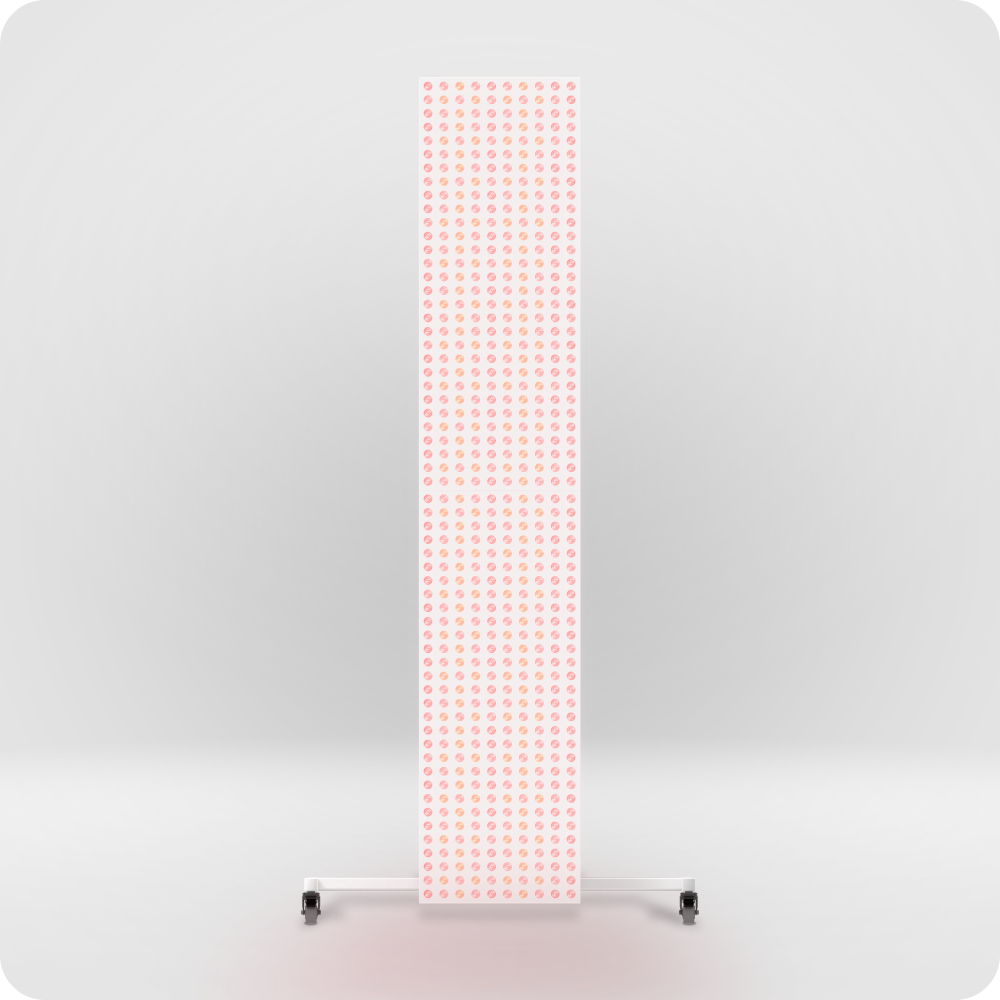
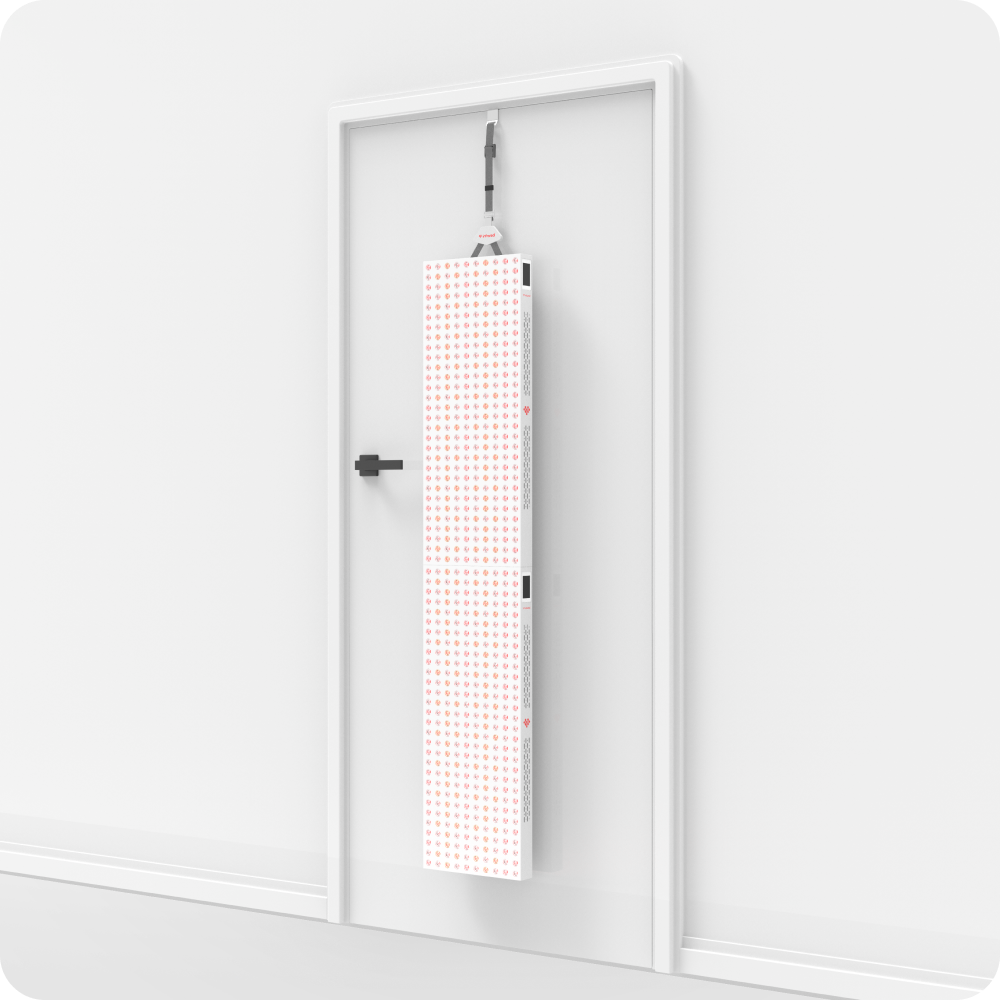
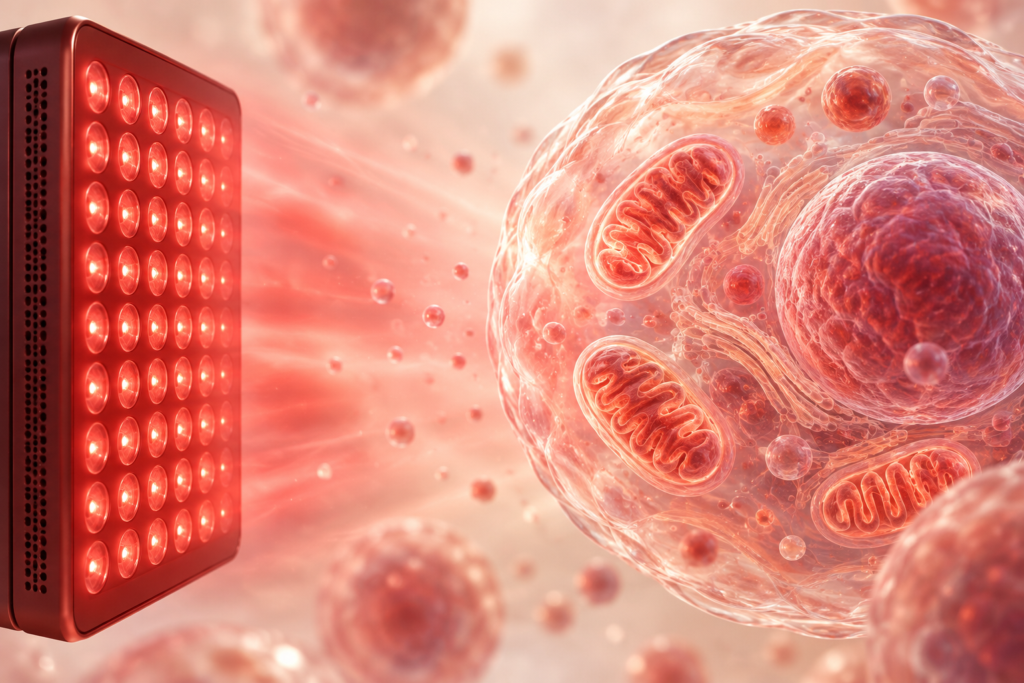
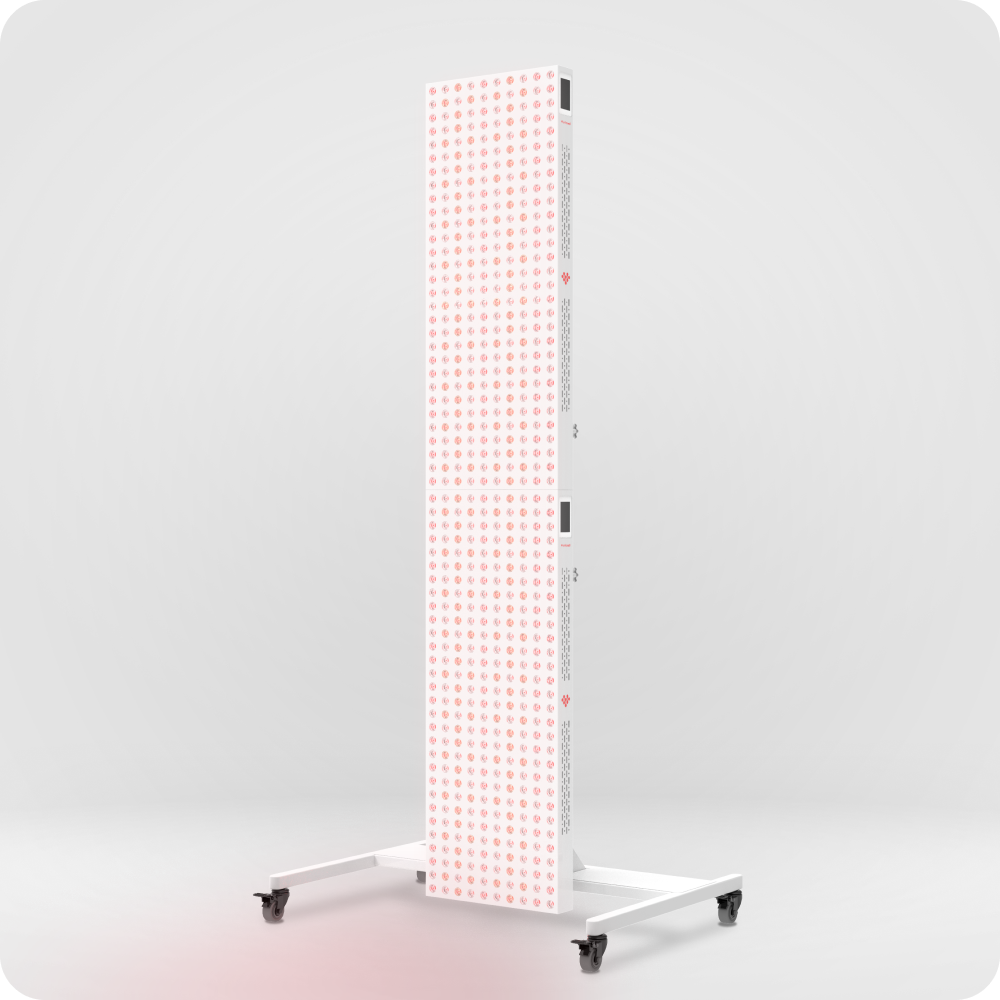
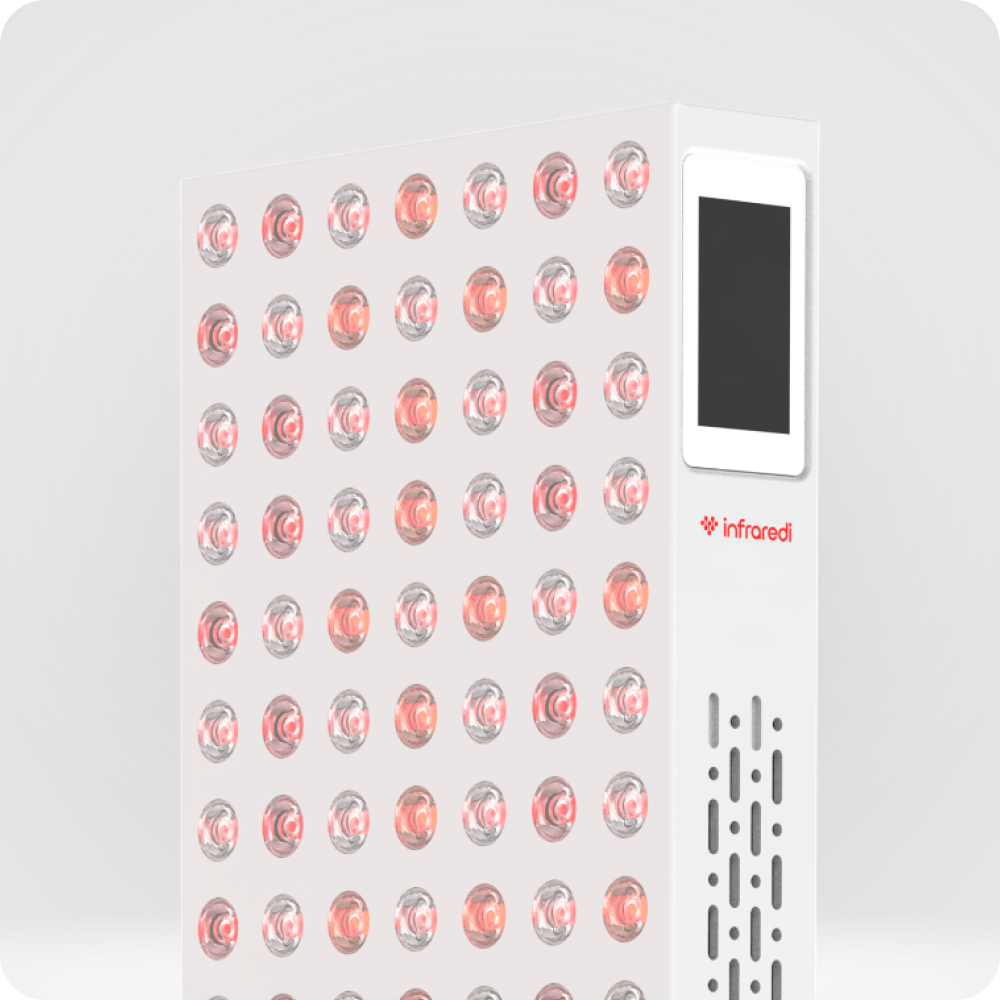
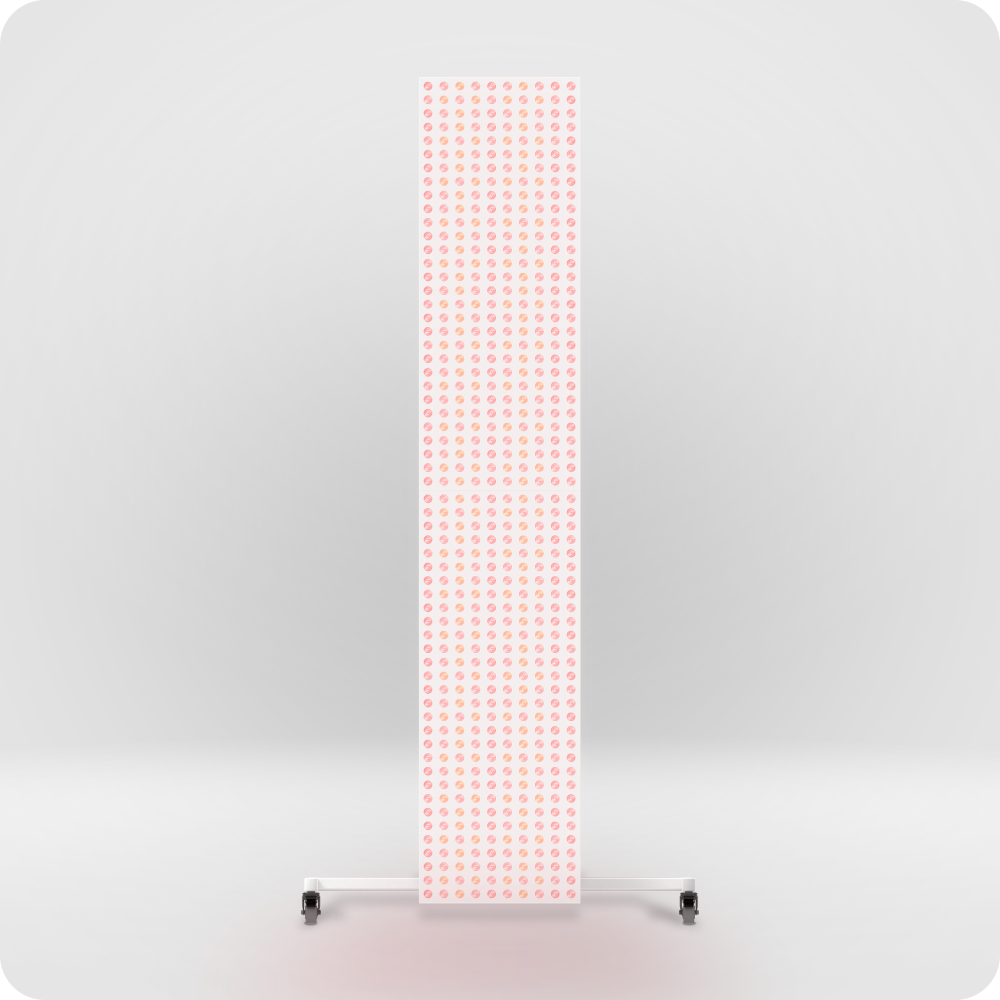
The system uses 600 dual-lens LEDs and five wavelengths at 630, 660, 810, 830, and 850nm. The 630nm and 660nm red wavelengths are intended primarily for more superficial tissue and skin applications, while the 810nm, 830nm, and 850nm near-infrared wavelengths are designed to penetrate more deeply. This five-wavelength combination gives users broader coverage across the red and near-infrared spectrum than simpler panels built around only 660nm and 850nm.
Infraredi markets the Pro Dual Plus 2.0 for applications including skin health, muscle recovery, aches and pains, wound healing, and inflammation. Its biggest advantage over a smaller device is not necessarily a different type of light therapy, but how much of the body it can expose at once. Someone using red light therapy regularly for multiple areas can complete a session without repeatedly repositioning a smaller panel.
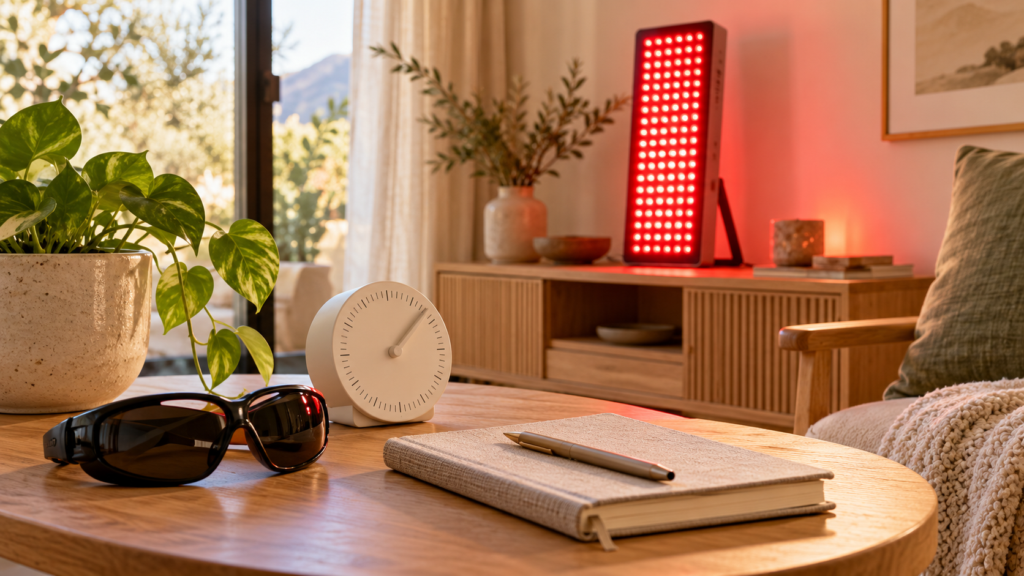
Infraredi recommends using the system from around 15 to 30cm away, with typical sessions lasting approximately 10 to 20 minutes. Users can stand, sit, or move in front of the panels depending on the areas they want to expose. The full-body coverage makes this setup particularly convenient for someone who wants red light therapy to become part of a regular daily routine.
Power is substantial at 940 watts, and Infraredi lists irradiance at more than 250mW/cm² using a solar meter. That sounds impressive, but irradiance figures should always be viewed with some caution when comparing red light therapy brands. Measurements can change depending on the testing equipment, distance, and methodology, and solar-meter readings are not necessarily directly comparable with measurements taken using other instruments.
The Pro Dual Plus 2.0 also provides adjustable brightness and pulsing modes, giving users more control over their sessions than a basic panel with a fixed output. Infraredi lists the system as zero flicker as well. These controls are useful on a high-output device, particularly for someone who prefers to start at a lower intensity or wants more flexibility in how the panel is used.
Size is both the biggest advantage and one of the biggest drawbacks. At 28kg, or roughly 62 pounds, this is not a panel that most owners will want to move around regularly. It makes more sense as a permanent or semi-permanent home setup with enough dedicated space around it for comfortable sessions. Buyers living in smaller homes or apartments should consider where it will go before ordering rather than treating it like a piece of equipment that can easily be stored after every use.
The relatively narrow 35cm width is another consideration. The system provides full-body coverage vertically, but it is not wide enough to surround the body. Users primarily receive light from the direction they are facing, so turning around or changing position may still be necessary when they want more even exposure across the front and back of the body. Infraredi offers larger and wider systems for buyers who want more extensive coverage.
Customer feedback across Infraredi’s Pro Series is very positive, with the company’s current review section showing an overall rating around 4.9 out of 5. Buyers frequently praise the build quality and performance of the Pro panels, although the reviews displayed on Infraredi’s site cover multiple Pro Series models rather than exclusively the Pro Dual Plus 2.0. That makes the overall rating useful for judging general owner satisfaction with the series, but less useful as a model-specific score.
Some of the customer feedback also highlights an important reality about red light therapy. Results are not necessarily immediate or consistent for every user. Infraredi says users may begin noticing changes after roughly two to four weeks of regular use, and individual results will depend on what the device is being used for. Claims involving pain, inflammation, recovery, skin appearance, or sleep should not be interpreted as guaranteed outcomes for every buyer.
Price is the largest barrier. The Pro Dual Plus 2.0 is currently listed at $3,299 on Infraredi’s US site before any temporary storewide promotions, putting it firmly into premium home red light therapy territory. At that price, it makes the most sense for someone already committed to red light therapy who expects to use the system consistently. A first-time user who only wants to treat one or two areas could spend considerably less on one of Infraredi’s smaller panels.
The Pro Dual Plus 2.0 is backed by a three-year warranty and a 60-day trial period. Those protections are particularly important for a purchase costing several thousand dollars. Infraredi also describes the Pro Series as modular, which gives buyers some flexibility within the company’s larger ecosystem rather than treating each panel as a completely standalone product.
The Infraredi Pro Dual Plus 2.0 is ideal for someone who wants the convenience of head-to-toe red light therapy but doesn’t necessarily need the wider footprint or much higher price of Infraredi’s Elite systems. What we’d want you to think about most is the 13.8-inch width. You’re getting excellent vertical coverage, but if you have a broader frame or know you’ll get annoyed shifting slightly to expose your shoulders, arms, and sides, we’d consider going wider now rather than wishing you had later. On the other hand, if your priority is eliminating all the up-and-down repositioning that comes with shorter panels, the Dual Plus accomplishes that while keeping you within Infraredi’s expandable Pro Series. At $3,299 regular price, this still isn’t something we’d choose for occasional or targeted treatments, and we’d prefer longer than a three-year warranty for an investment at this level. But if you already know you’ll use red light therapy consistently, have a dedicated place for the system, and want full-body height without spending thousands more for coverage you may not need, the Pro Dual Plus 2.0 feels like a practical place to stop rather than paying simply to go bigger.