OVERALL
4.6
BEST FOR
Half-Body Sessions, Wider Coverage, Home User
$1,749 USD
WAVELENGTHS
630nm-850nm
IRRADIANCE
250 mW/cm² (no published distance)
COVERAGE AREA
Half body treatment
WEIGHT
14kg
Our Review
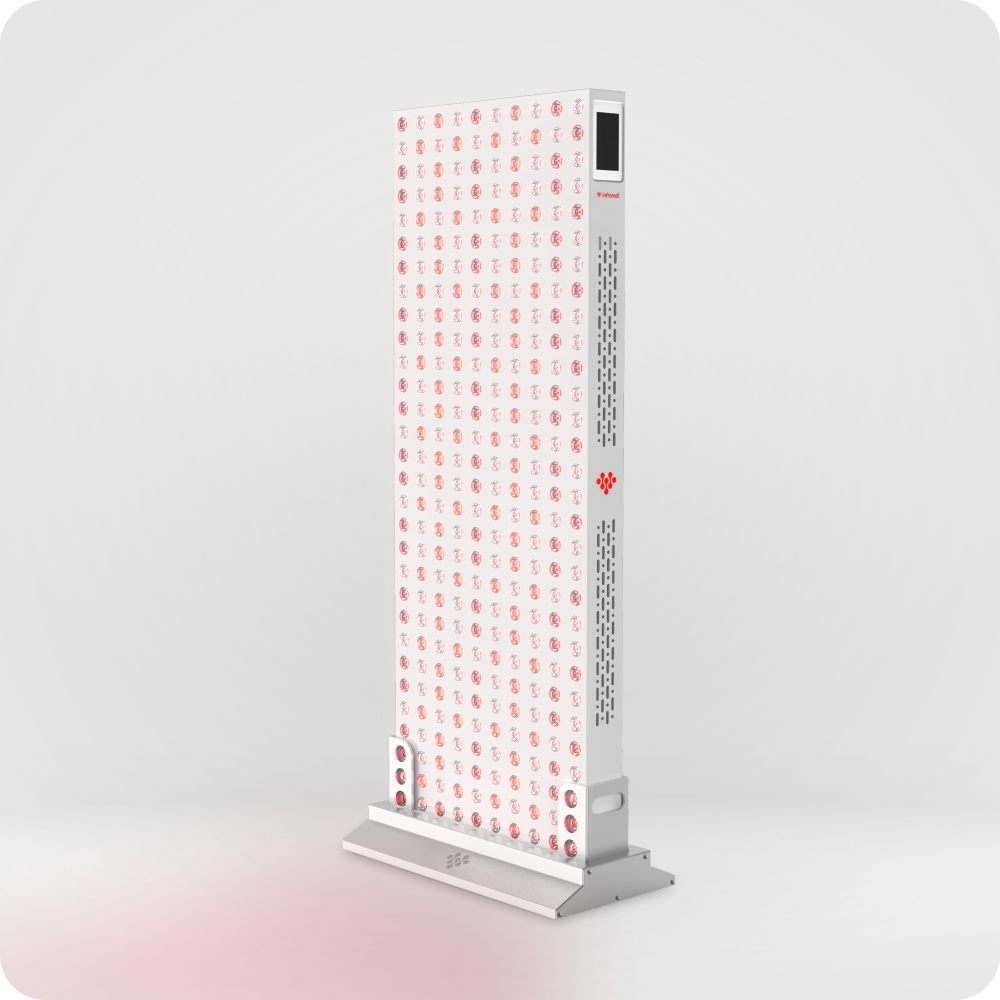
The Infraredi Pro Max Plus 2.0 is for someone who wants more coverage than a typical half-body panel but is not ready to dedicate the space or money to a tall full-body system. It is essentially the wider option in Infraredi’s mid-sized Pro lineup, giving the upper body considerably more room in front of the light without requiring a panel that is nearly six feet tall.
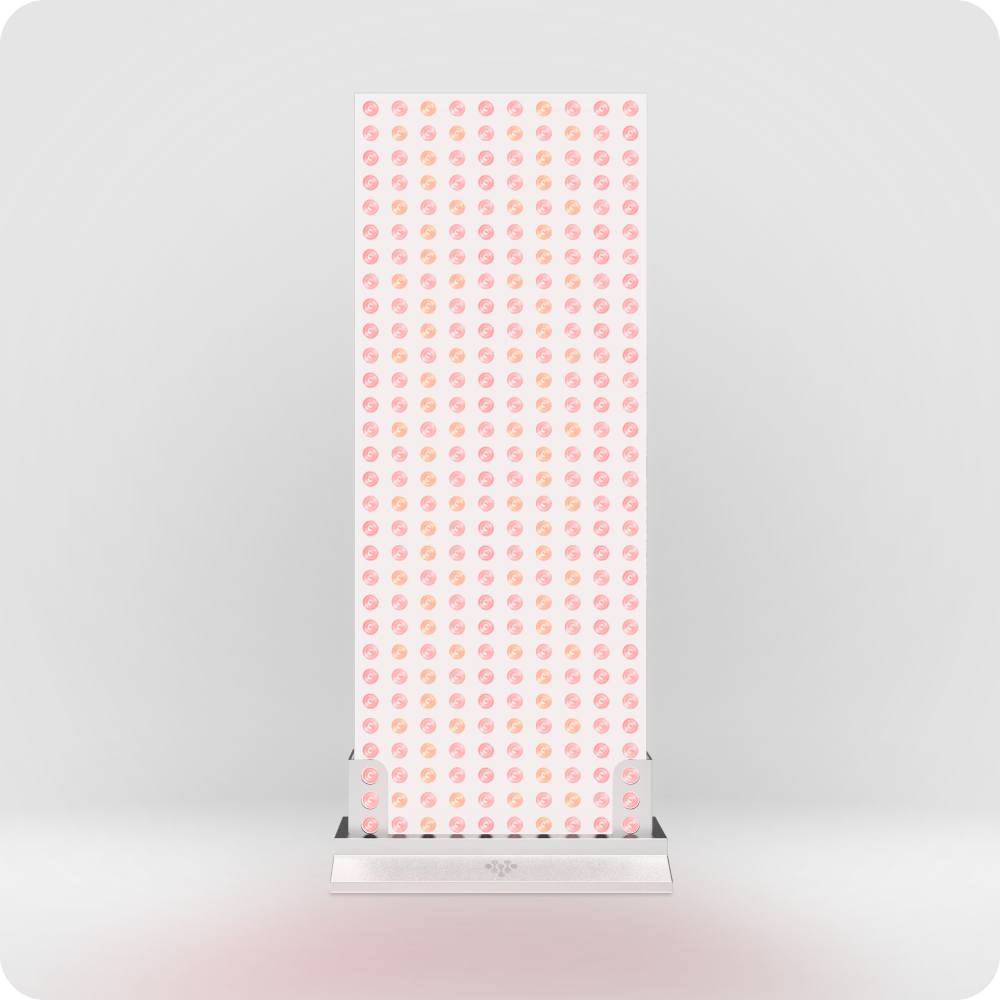
That extra width is really what makes this model worth considering. At 90.8cm tall and 35cm wide, it works well for treating larger areas such as the back, chest, shoulders, or legs without constantly shifting position. It still is not a true head-to-toe panel, though, so anyone specifically looking for full-body coverage in one position should move farther up the Infraredi lineup.
The Pro Max Plus 2.0 strikes a useful middle ground between a targeted panel and a full-body setup. It is large enough that sessions feel less pieced together than they do with a small panel, particularly when treating the back or torso, but it remains easier to accommodate at home than Infraredi’s taller systems.
Infraredi recommends sessions of around 10 to 20 minutes. Brightness can be adjusted, and pulsing is available for people who want more control over their sessions. Someone who prefers to keep things simple can still use the panel without constantly changing settings.
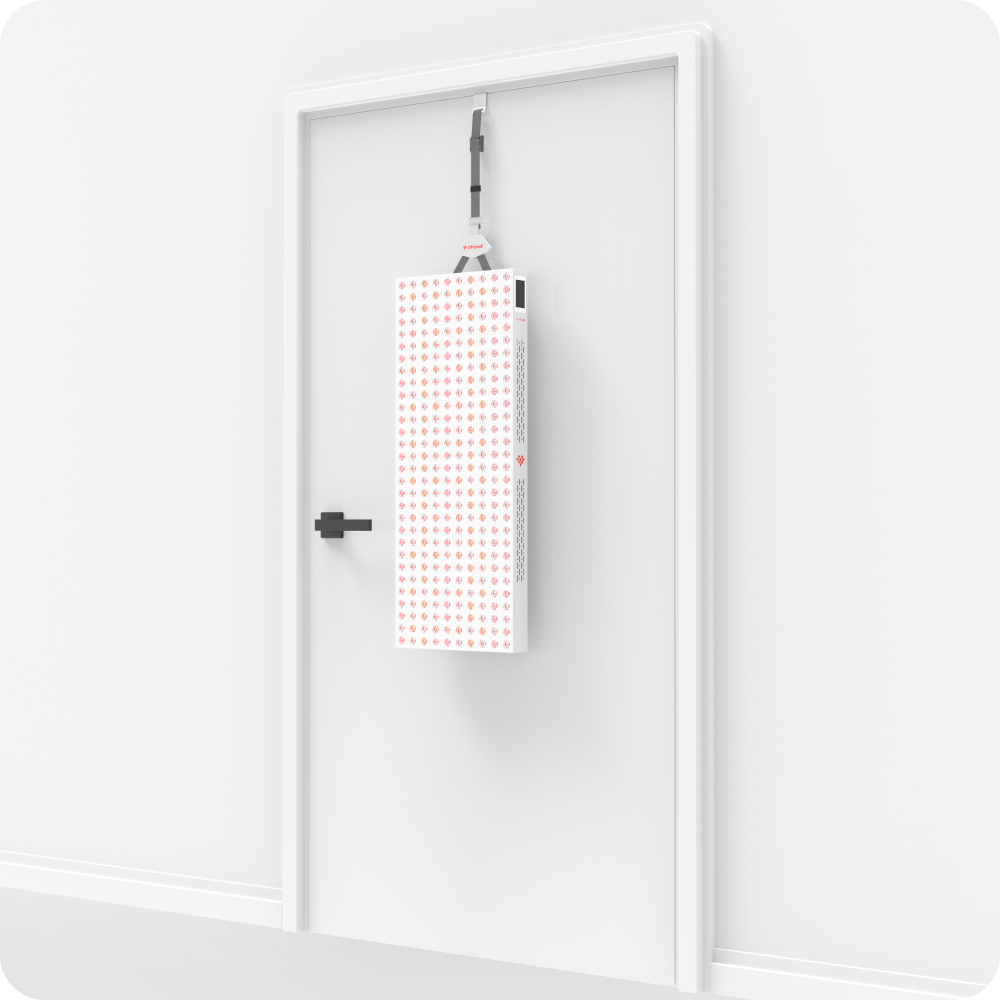
One thing worth knowing is that the panel weighs around 14kg, or roughly 31 pounds. This is not something most people will want to carry from room to room every day. It makes more sense to give it a regular treatment spot and leave it there.
Coverage is the main reason to buy the Pro Max Plus instead of the regular Pro Max 2.0. Both are the same height, but the Plus is noticeably wider. That difference matters more in everyday use than it may sound on paper.
A wider panel gives the shoulders, torso, back, and larger muscle groups more even exposure without requiring as much side-to-side repositioning. For someone mainly treating the upper or lower half of the body at a time, that can make sessions considerably more convenient.
It is important to keep expectations realistic about the “half-body” description. This is not a panel that will cover an average adult from head to toe in one position. Treating the entire body still means changing position between areas. Buyers who specifically want to stand in front of one panel for broad head-to-toe coverage would be better served by one of Infraredi’s taller models.
The Pro Max Plus 2.0 uses five wavelengths: 630nm, 660nm, 810nm, 830nm, and 850nm. That gives it two red wavelengths and three near-infrared wavelengths rather than relying only on the common 660nm and 850nm combination.
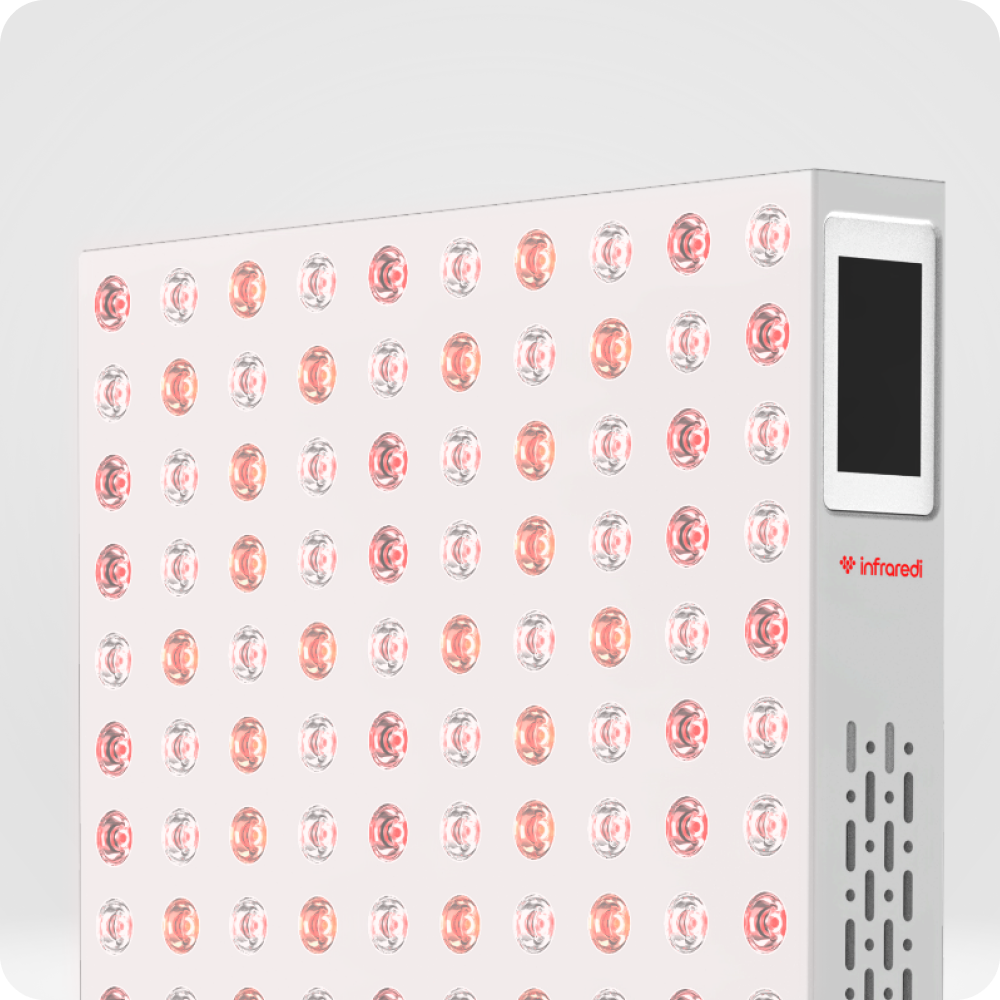
Infraredi uses dual-lens LEDs across the panel, with 300 LEDs in total. The company rates the panel at 250 mW/cm², although treatment distance is important when interpreting any irradiance number. For everyday use, the more meaningful point is that this is designed as a relatively powerful home panel rather than a low-output wearable or small targeted device.
Brightness adjustment is useful because maximum output is not automatically necessary for every session. Having control over intensity gives users more flexibility rather than forcing the panel to operate at one fixed level every time.
The Pro Max Plus 2.0 is substantial without crossing into the size of Infraredi’s largest systems. For home use, that can be a practical advantage. A taller full-body panel provides more coverage, but it also requires more permanent space.
The wider shape of the Pro Max Plus makes particular sense for the back and upper body. Someone buying primarily for smaller areas such as a knee, elbow, face, or shoulder probably does not need this much panel. There are smaller and less expensive options in Infraredi’s lineup for that.
The opposite is true for someone planning regular sessions across larger areas. In that situation, buying too small can become annoying quickly because every session requires more repositioning.
One of the better parts of the Pro Max Plus 2.0 is that buying it does not necessarily lock someone into this amount of coverage forever. The panel is modular and can later become part of larger Infraredi configurations, including the Pro Dual Plus 2.0 and Pro Elite Plus 2.0.
That makes the initial purchase easier to justify for someone who wants a good-sized home panel now but thinks full-body coverage may eventually be worthwhile. Instead of replacing the Pro Max Plus entirely, it can become part of the expanded setup.
Of course, expansion means spending considerably more later. We would treat the modularity as a useful option rather than a reason to buy more equipment than is actually needed.
The Pro Max Plus 2.0 regularly lists for $1,749, although Infraredi currently sells it for around $1,399. That places it above smaller half-body panels but below the brand’s larger full-body configurations.
The extra money over the regular Pro Max 2.0 is primarily buying more width. The Pro Max is already the same height, so the decision between the two comes down to whether broader coverage is worth paying for.
For someone regularly treating the back, torso, or other larger areas, we think the wider panel is the more practical of the two. Someone treating smaller areas can save money with the regular Pro Max without giving up the core five-wavelength setup.
Infraredi ships through local warehouses in the markets it serves and advertises free local shipping. Delivery estimates vary by region, with the company generally using express courier services.
The bigger consideration is where the panel will live once it arrives. At roughly 31 pounds, the Pro Max Plus is movable, but it is not particularly portable. Planning a regular treatment area before purchasing will make everyday use much easier.
Anyone considering a stand should also include that in the overall setup decision. Positioning makes a large difference with a panel this size, particularly if it will be used on both the upper and lower body.
Infraredi provides a 60-day home trial, which gives buyers a reasonable amount of time to determine whether the panel size and routine work for them. That is particularly useful with a larger device because dimensions on a product page do not always communicate how a panel will actually fit into a home.
Returns need to meet Infraredi’s conditions, and larger products can be more complicated to pack and send back than a small device. We would keep the original box and packaging throughout the entire trial period rather than getting rid of it once the panel is set up.
The Pro Max Plus 2.0 also comes with a three-year warranty. Three years is useful protection on a panel in this price range and covers the period when most buyers will be expecting the system to remain part of their regular routine.
Feedback across Infraredi’s current Pro Series is generally positive, with owners frequently mentioning that the panels feel well built, are easy to operate, and provide plenty of output. Recent feedback specifically mentioning the Pro Max Plus 2.0 is positive as well, although there is considerably more customer history across the broader Infraredi lineup than there is for this exact newer model.
Ease of use comes up regularly, which matters with a device that could easily become overcomplicated given the adjustable brightness and pulsing options. Owners generally seem able to get into a routine without spending much time dealing with the controls.
One criticism worth mentioning is guidance. Some Infraredi customers have wanted clearer instructions about treatment distance, session length, intensity, and how to use the available settings for different routines. That will matter more to a first-time red light therapy buyer than someone who already understands how they want to use a panel.
Longer-term feedback across Infraredi is more mixed. There are owners who have had positive experiences with their devices and support, while occasional complaints involve faulty components, accessories, or lights developing problems. That is where the three-year warranty becomes particularly relevant.
Infraredi’s customer service feedback is generally positive, but it is not completely consistent. Many customers describe quick communication, helpful representatives, and replacements when a product develops a qualifying problem.
There are also reports of slower communication and warranty replacements taking longer than expected. In some cases, customers ultimately received a satisfactory replacement but had to wait for the process to be completed.
That is worth knowing without making it a bigger issue than it appears to be. The encouraging part is that there are recent examples of Infraredi replacing faulty equipment under warranty. The less encouraging part is that the process is not always quick.
The wider treatment area is the strongest reason to choose this model. It provides noticeably more useful coverage than a narrow panel without requiring the height and space of a full-body system.
Five wavelengths also give users a broader red and near-infrared combination than a standard two-wavelength panel, while adjustable brightness means the panel does not have to be used at maximum output every time.
The modular design is another practical advantage. Someone can buy the Pro Max Plus as a standalone home panel and still have the option of incorporating it into a larger Infraredi setup later.
The 60-day trial and three-year warranty round out the package well. Neither changes how the panel performs, but both matter when spending more than $1,000 on equipment that is intended to be used regularly for years.
Clearer everyday treatment guidance would make the Pro Series easier for first-time users. The panel provides adjustable intensity and pulsing, but more direction around when and how to use those controls would help people get comfortable with the system faster.
The Pro Max Plus is also in an awkward middle ground for anyone whose real goal is full-body coverage. It is substantially larger than a targeted panel but still requires repositioning for head-to-toe sessions. Buyers should be realistic about whether half-body coverage is actually what they want before spending this much.
At around 31 pounds, it is also better treated as a mostly stationary piece of equipment. A more compact device will make more sense for someone who expects to move their light frequently.
The Infraredi Pro Max Plus 2.0 gets the most important thing right for its intended buyer: coverage. It is wide enough to make sessions across the back, chest, shoulders, legs, and other larger areas more convenient without requiring the space of a tall full-body panel.
It also gives users five wavelengths, adjustable brightness, pulsing, modular expansion, a 60-day trial, and a three-year warranty. Those features make it a well-rounded home panel, but the reason to spend the extra money on the Plus should still be its additional width rather than the specifications alone.
The main question is whether half-body coverage is enough. Someone treating larger areas but comfortable repositioning between the upper and lower body should find the Pro Max Plus 2.0 practical. Someone who already knows they want head-to-toe coverage with less repositioning would be better off putting the money toward one of Infraredi’s taller full-body configurations instead.
For the right person, the Pro Max Plus 2.0 is a sensible middle option in Infraredi’s lineup. It provides more usable treatment space than the smaller models without immediately turning a home red light therapy setup into a much larger installation.
Key Features
470W over a 90.8 x 35cm panel.
250 mW/cm2 rating matches the Pro Max; the gain is coverage per session.
Five wavelengths, three presets, pulsing and 1-100% dimming.
Full Specifications
Wavelengths:
Final Verdict
4.6
The Infraredi Pro Max Plus 2.0 is a good fit for someone who wants more coverage than a standard half-body panel without moving into a much larger full-body setup. Its 35cm width is the real advantage, giving the back, chest, shoulders, and legs more room in front of the light and reducing how much repositioning is needed.
It is still a half-body panel, so full-body sessions require moving between areas. At around 31 pounds, it also makes more sense as a panel that stays set up rather than one that gets moved around the house regularly. The five wavelengths, adjustable controls, modular design, 60-day trial, and three-year warranty round it out well, but coverage is ultimately the reason to choose this model.
It’s ideal for someone who finds smaller panels too limiting but does not need a full-height system. For targeted treatments, it is more panel than necessary, and for someone who wants head-to-toe coverage with minimal repositioning, it makes more sense to move up to one of Infraredi’s full-body models.

Join red light therapy users comparing devices, sharing protocols, and posting honest results. Free to join, no sales pitch.
Protocol sharing
Device comparisons
Safety-first advice
Tec Specs
Wave Lengths
630nm-850nm
IRRADIANCE:
250 mW/cm² (no published distance)
Coverage Area:
Half body treatment
Overall Category Scores
Category
Score
Best Quality
Ease of Use
Features
Value
Support
Staying informed with the latest research and reviews.
10 Minute Read
10 Minute Read