OVERALL
4.5
BEST FOR
Cordless convenience, Face and joints, Travel, Deeper tissue
WAVELENGTHS
660nm-850nm
IRRADIANCE
34.0 mW/cm² at 5cm; 15.3 at 15cm
COVERAGE AREA
Face, eyes or single joint
WEIGHT
435g
Our Review
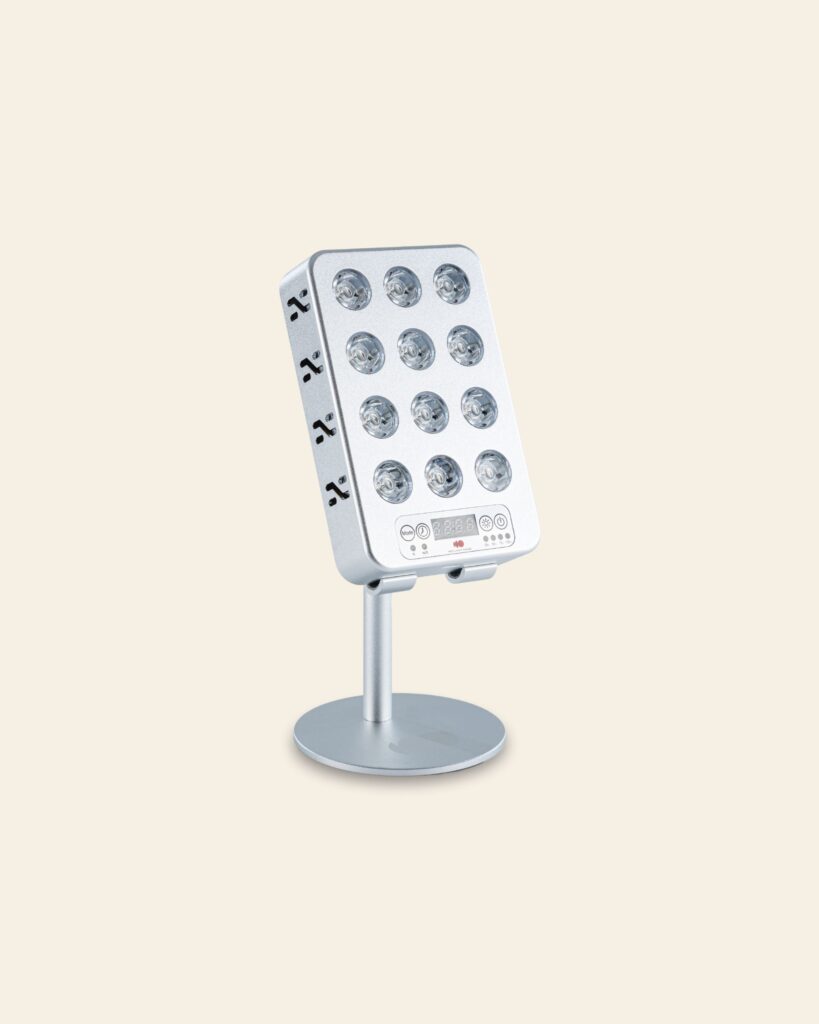
The Red Light Rising Target Light 3.0 is one we’d consider when portability isn’t just a nice extra, but one of the main reasons you’re shopping for a red light device. At 435g, with a rechargeable battery, adjustable stand, USB-C charging, and carry case, it’s compact enough to move between rooms or take to the office, gym, or hotel without much thought. The £359 price is harder to justify if it will permanently sit in one place, since a panel can give you considerably more coverage for the money. But if you want a proper targeted light that isn’t tied to an outlet, the Target Light 3.0 has a much clearer advantage.
There is an important tradeoff behind that portability. The Target Light 3.0 isn’t designed to compete with the much more powerful Target Light 4.0 or a larger panel on treatment area and output. It’s designed to make focused sessions around the face, knee, shoulder, elbow, or another localized area easier to fit into everyday life. If you already know you’ll want to treat your back, torso, or both legs regularly, we’d go larger. If most of your sessions involve one specific area at a time, the smaller format makes much more sense.
The Target Light 3.0 uses three wavelengths: 660nm, 810nm, and 850nm. That gives you one red wavelength and two near-infrared wavelengths in a device small enough to hold comfortably in one hand. The light comes from 12 dual-chip 5W LEDs, allowing Red Light Rising to keep the treatment head compact rather than building the device around a larger panel-style array.
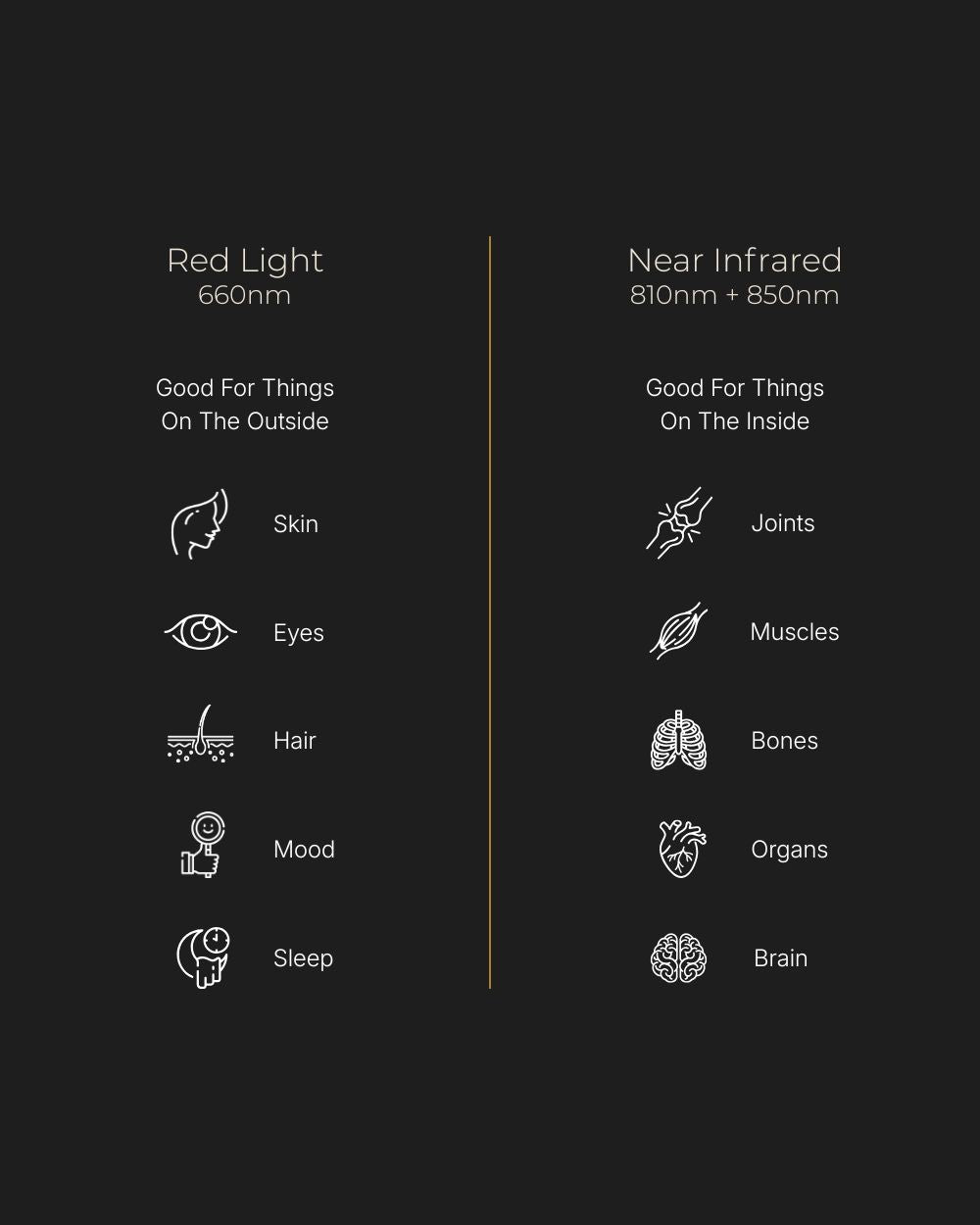
You don’t need to get buried in what each diode is doing to understand the practical difference. The 660nm wavelength sits in the red range, while 810nm and 850nm are near-infrared and aren’t visible to the eye in the same way. Together, they give the Target Light 3.0 a red and near-infrared setup intended for localized use.
Where we’d keep expectations in check is treatment area. This isn’t a miniature full-body panel. The light is concentrated over a relatively small target, which works well when you know exactly where you want to position it. Trying to work your way across several large body areas would quickly turn its portability advantage into a lot of repositioning.
Its measured irradiance at 15cm is also considerably lower than the more powerful Target Light 4.0. We wouldn’t treat that difference as evidence that the 3.0 is somehow an inferior product. These two devices solve different problems. The 4.0 is a powerful floor-mounted targeted station, while the 3.0 trades some of that output for a battery-powered design you can pick up and take somewhere else.
This is where the Target Light 3.0 makes the strongest case for itself. You aren’t deciding where to install a panel or finding an outlet every time you want to use it. At approximately 15 x 9.5 x 3cm and 435g, it’s small enough to grab when you need it and put away when you’re finished.
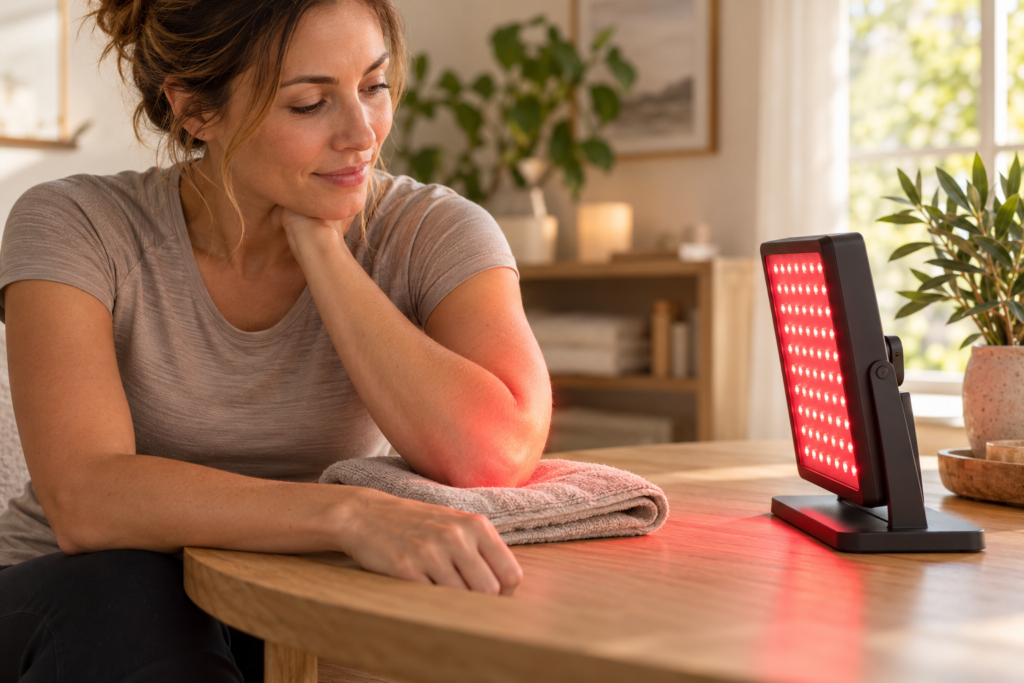
The adjustable stand also means “portable” doesn’t have to mean holding the device in your hand for an entire session. You can position it on a desk, table, nightstand, or another suitable surface and angle the light toward the area you’re treating. For face or other stationary targeted sessions, that’s considerably more comfortable than manually aiming a handheld light.
That setup also gives you more freedom to move it around the body. Use it for the face during one session, reposition it around a knee or shoulder another day, or take it somewhere else entirely. Unlike a wrap or joint-specific wearable, the device isn’t physically shaped around one part of the body.
The compromise is that positioning becomes more involved when you’re trying to reach awkward areas. A tabletop-style stand is convenient for areas you can easily line up with the light, but it doesn’t offer the reach and positioning freedom of the Target Light 4.0’s full floor stand and articulated setup.
We’d therefore choose between the two based less on which looks more advanced and more on where you’ll actually use it. The 4.0 makes positioning easier within a dedicated space. The 3.0 makes taking the light somewhere else easier. Those are very different kinds of convenience.
At £359, the Target Light 3.0 isn’t the product we’d buy to maximize treatment area for the money. A larger plug-in panel can cover considerably more of the body, and that becomes difficult to ignore if broad coverage is already part of your plan.
The price makes more sense when you look at the complete package. You’re getting a rechargeable targeted light with three wavelengths, an adjustable stand, USB-C charging, and a carry case. There isn’t an additional positioning system you immediately need to buy before the product becomes practical.
We’d ask one simple question before spending the £359: will being able to take the device with you change how often or where you use it? If the answer is no and the Target Light will sit on the same table every day, we’d compare it closely with larger stationary options. You’re giving up treatment area for portability you may not need.
If you travel regularly, move between home and an office, don’t have a permanent treatment space, or simply don’t want another large wellness device sitting out, the value calculation changes. The compact design isn’t a compromise you’re tolerating at that point. It’s the feature you’re paying for.
Setup is refreshingly minimal. There’s no wall mounting, floor stand assembly, or permanent treatment area to prepare. Charge the Target Light, position it using the included adjustable stand, and you’re ready to use it.
The rechargeable design is one of the standout ownership features. Red Light Rising rates battery life at around nine hours, which gives you substantial use between charges for a device intended for relatively short targeted sessions.
Charging is also unusually quick. A full USB-C charge takes roughly 45 minutes, so forgetting to plug it in shouldn’t leave the device unavailable for half a day. That’s the kind of specification we’d care about more on a portable product than another impressive-looking output figure. A rechargeable device only remains convenient when keeping it charged doesn’t become a chore.
The carry case completes the travel setup. Instead of throwing a loose light, charger, and stand into a bag, you have a way to keep the system together. That may seem like a small inclusion, but it’s exactly the kind of detail that determines whether a portable wellness device genuinely gets taken somewhere or stays home because packing it is annoying.
At roughly 435g, weight shouldn’t be much of an obstacle either. The Target Light 3.0 is substantially easier to move than even a medium-sized panel, which makes it particularly attractive if you don’t want your red light routine tied to one location.
The 365-day trial is a major positive, especially for a product whose value depends so heavily on lifestyle. You’ll know fairly quickly whether the light works and whether the size is manageable, but the longer trial gives you time to answer the more important question: does having a rechargeable, portable light actually make red light therapy easier to maintain?
We’d still read the complete return conditions before ordering, including any requirements around product condition and return shipping. A long trial is valuable, but the headline number shouldn’t be treated as the entire return policy.
The one-year warranty is where we’d like to see Red Light Rising do better. This isn’t a simple plug-in panel that stays mounted to a wall. It’s a rechargeable product designed to be carried around, charged repeatedly, packed into a case, and potentially taken on trips. Battery-powered portable electronics introduce components that can matter more as the product ages.
For £359, we’d be more comfortable with coverage beyond the first year. Red Light Rising gives several of its larger panels three-year warranties, so the shorter protection on the Target Light 3.0 is noticeable even if the product categories aren’t directly comparable.
The generous trial offsets some of our concern when deciding whether the format works for you, but it doesn’t replace longer warranty protection. The trial helps with the buying decision. The warranty matters once you’ve decided to keep it.
For a product like this, we’d pay closest attention to what owners say about portability after several months rather than relying heavily on individual wellness results. Battery longevity, charging reliability, stand stability, durability, and whether people genuinely take the device with them tell you far more about whether the Target Light 3.0 succeeds at what it’s designed to do.
We’d also look at how owners feel about the treatment area. Someone buying the Target Light specifically for a knee, face, elbow, shoulder, or another localized area may find the compact field perfectly appropriate. Someone who gradually starts wanting larger-area sessions may feel limited much sooner.
That distinction matters because the Target Light 3.0 doesn’t need to compete with a full-sized panel to be useful. Its job is to make targeted 660nm, 810nm, and 850nm light easy to use without a permanent setup. The rechargeable battery, approximately nine-hour runtime, fast USB-C charging, adjustable stand, carry case, and 435g body all support that purpose rather than feeling like extras added to a specification list.
We’d choose the Target Light 3.0 when we want a targeted device that can genuinely move with us. At £359, it’s too expensive to buy for portability you won’t use, and the one-year warranty is shorter than we’d like for rechargeable hardware. But for someone who regularly treats smaller areas and doesn’t want to be tied to a wall outlet or dedicated treatment station, the Target Light 3.0 offers a combination of portability and everyday practicality that a larger panel simply isn’t designed to provide.
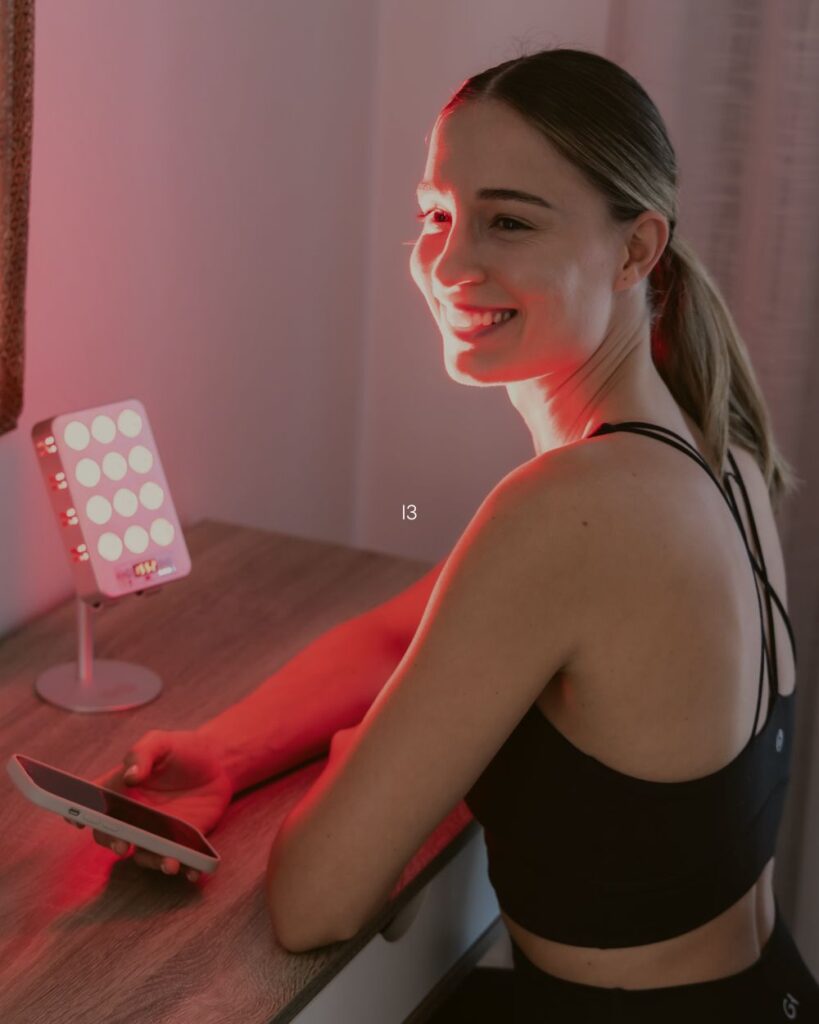
Key Features
Adds 810nm alongside 660 and 850nm for deeper near-infrared reach.
A rechargeable lithium battery gives roughly nine hours per charge.
Targeted red, deep near-infrared and full-spectrum modes cover different goals.
Adjustable stand and carry case are included rather than optional.
About 45-minutes to recharge makes the battery format easy to live with.
Compact LED architecture.
Hands-free positioning
Full Specifications
Wavelengths:
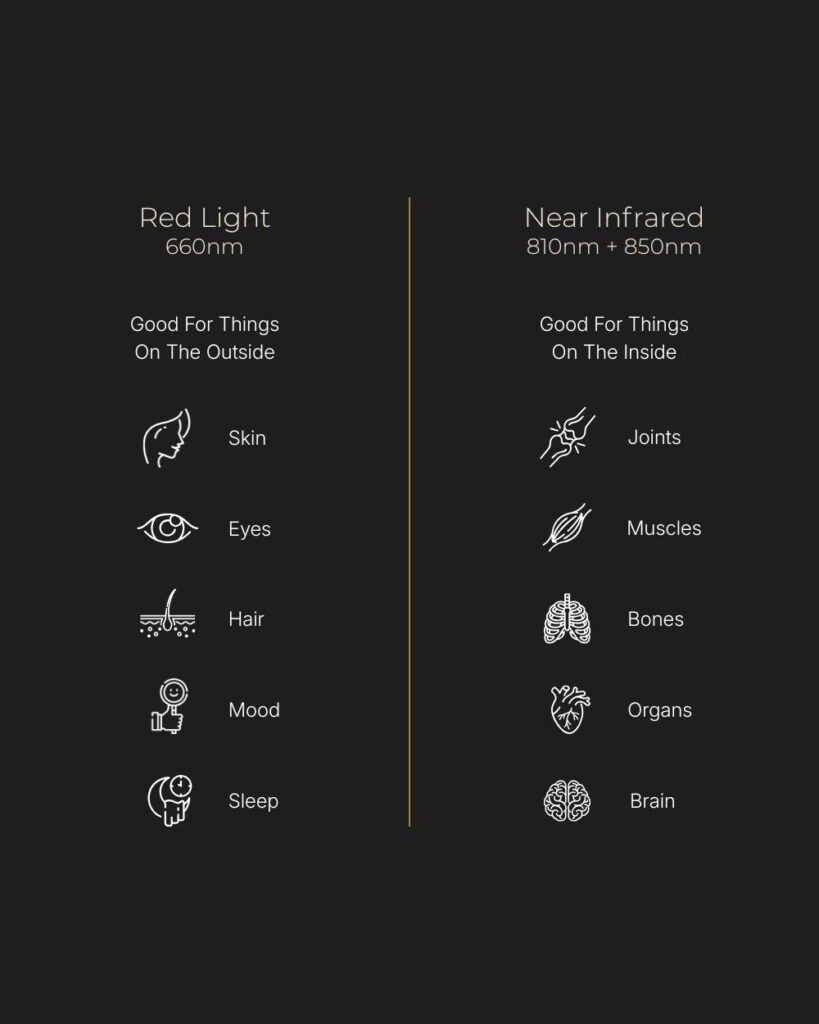
Final Verdict
4.5

Join red light therapy users comparing devices, sharing protocols, and posting honest results. Free to join, no sales pitch.
Protocol sharing
Device comparisons
Safety-first advice
Tec Specs
Wave Lengths
660nm-850nm
IRRADIANCE:
34.0 mW/cm² at 5cm; 15.3 at 15cm
Coverage Area:
Face, eyes or single joint
Overall Category Scores
Category
Score
Best Quality
Ease of Use
Features
Value
Support
Staying informed with the latest research and reviews.
10 Minute Read
10 Minute Read