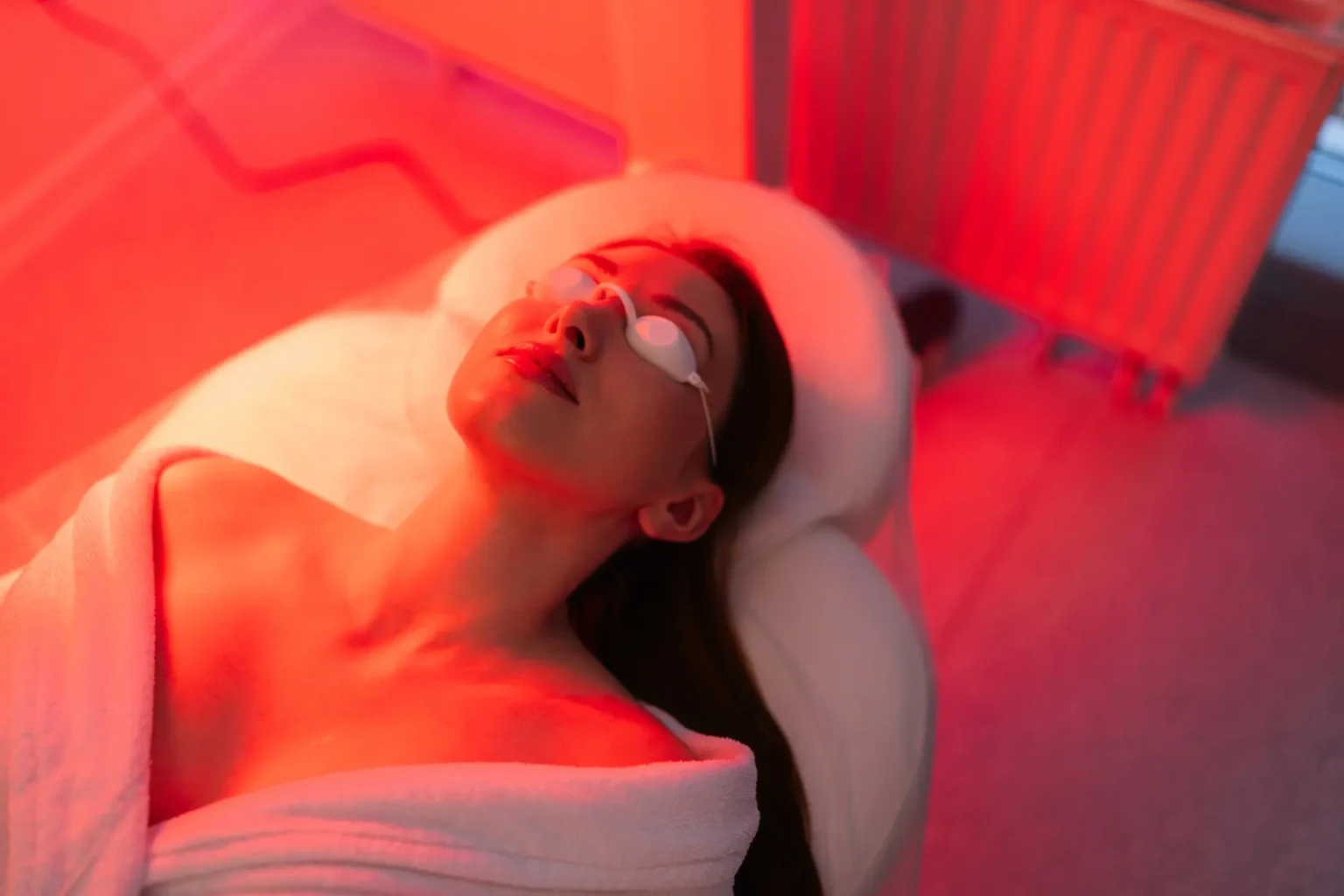
Many red light therapy devices advertise two numbers, such as 660 nm and 850 nm, and label them “red” and “near-infrared.” For a newcomer, that raises a reasonable question: what is the actual difference, and does it matter for your goals? This guide compares red light vs near-infrared so you can understand the differences, choose the right wavelength for your goals, and use your device with confidence.
Understanding red light vs near-infrared starts with knowing that both use similar cellular mechanisms, but they differ in visibility, penetration depth, and the goals they are commonly used to support.
Red Light vs Near-Infrared: The Same Family, Different Members
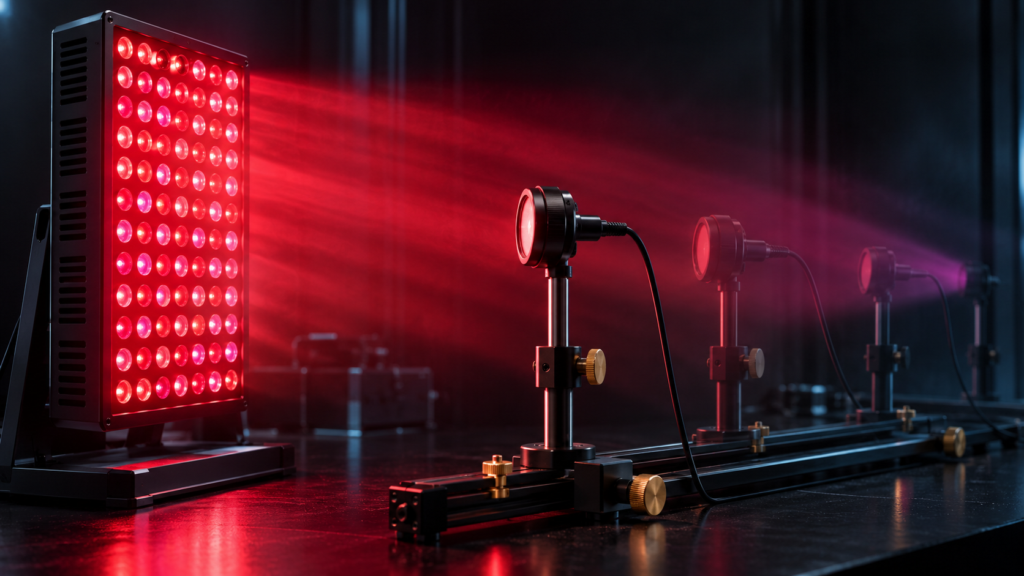
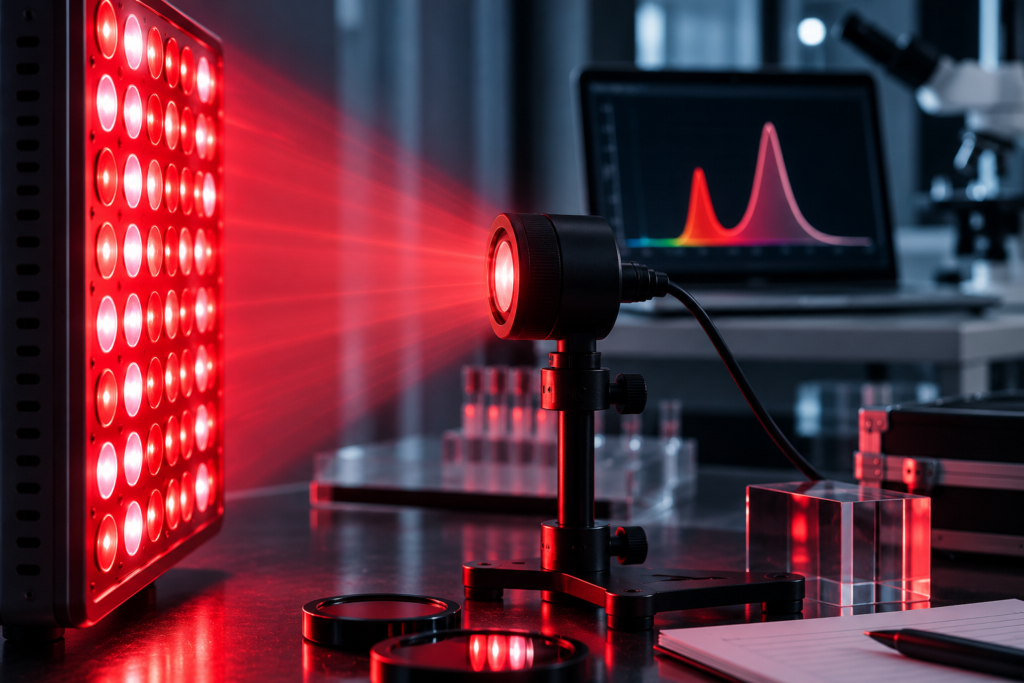
Light is measured in nanometers (nm), describing its wavelength. Visible red light sits at roughly 630 to 660 nm — this is the warm red glow you can see. Near-infrared (NIR) light sits at roughly 810 to 850 nm, just beyond what human eyes can detect, so a pure near-infrared device may look dim or appear “off” even while emitting light.
This invisibility is a common source of confusion. A near-infrared device is not broken simply because it does not glow brightly; the eye just cannot see most of that wavelength.
Red Light vs Near-Infrared: Depth Differences
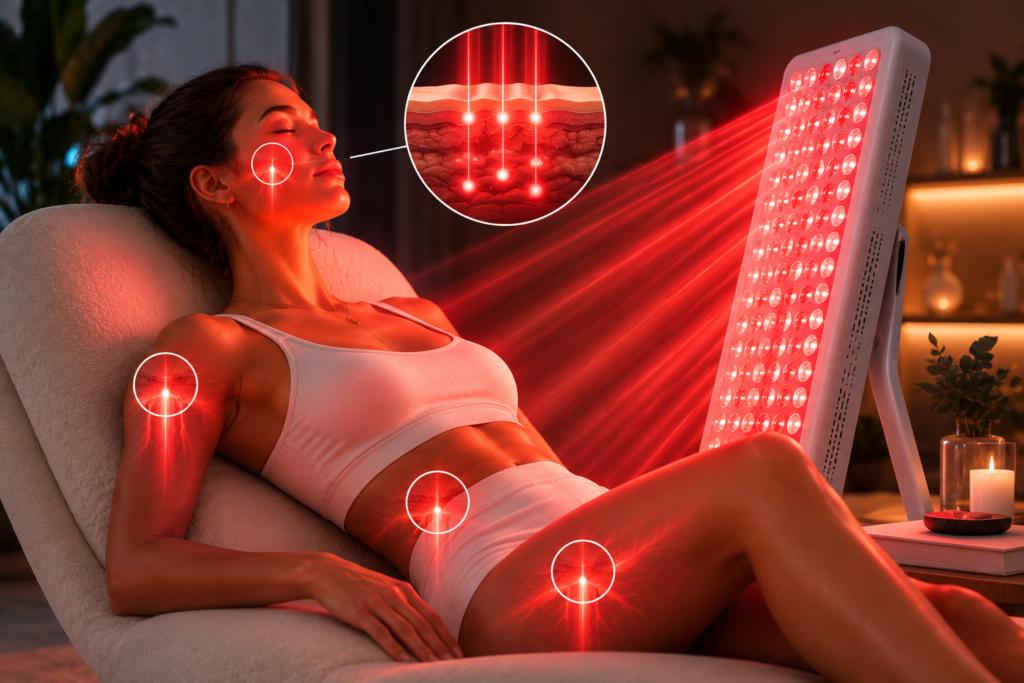
The most meaningful difference is how far each travels into tissue. Research measuring light penetration in human tissue shows that longer wavelengths generally reach deeper. Red light tends to act on the skin’s surface and the layers just below it, while near-infrared light can reach deeper structures such as muscle.
That single fact drives most buying and usage decisions. If your goal is the appearance of the skin, red light’s surface action is well matched. If your goal involves deeper tissue, near-infrared’s greater depth is often preferred.
Red Light vs Near-Infrared: Common Uses
Red Light (about 630–660 nm)
Red light is most associated with skin-related wellness goals: the look of fine lines, texture, tone, and general radiance. Because the skin is right at the surface, visible red light reaches it readily. Many face masks rely primarily on red wavelengths.
Near-Infrared Light (about 810–850 nm)
Near-infrared light is more associated with goals involving muscles, joints, and exercise recovery, where reaching beneath the skin is useful. Full-body panels and recovery wraps often emphasize near-infrared wavelengths for this reason.

Red Light vs Near-Infrared: Do They Work the Same Way?
At the cellular level, both red and near-infrared light are thought to act through the same general mechanism — absorption by mitochondrial targets such as cytochrome c oxidase, supporting cellular energy and signaling. The difference is largely about which tissues each wavelength can reach, not a fundamentally different biological effect.
It is worth remembering the biphasic dosing principle applies to both: a moderate, appropriate dose is the goal, and more is not automatically better.
Why Red Light vs Near-Infrared Devices Often Combine Both
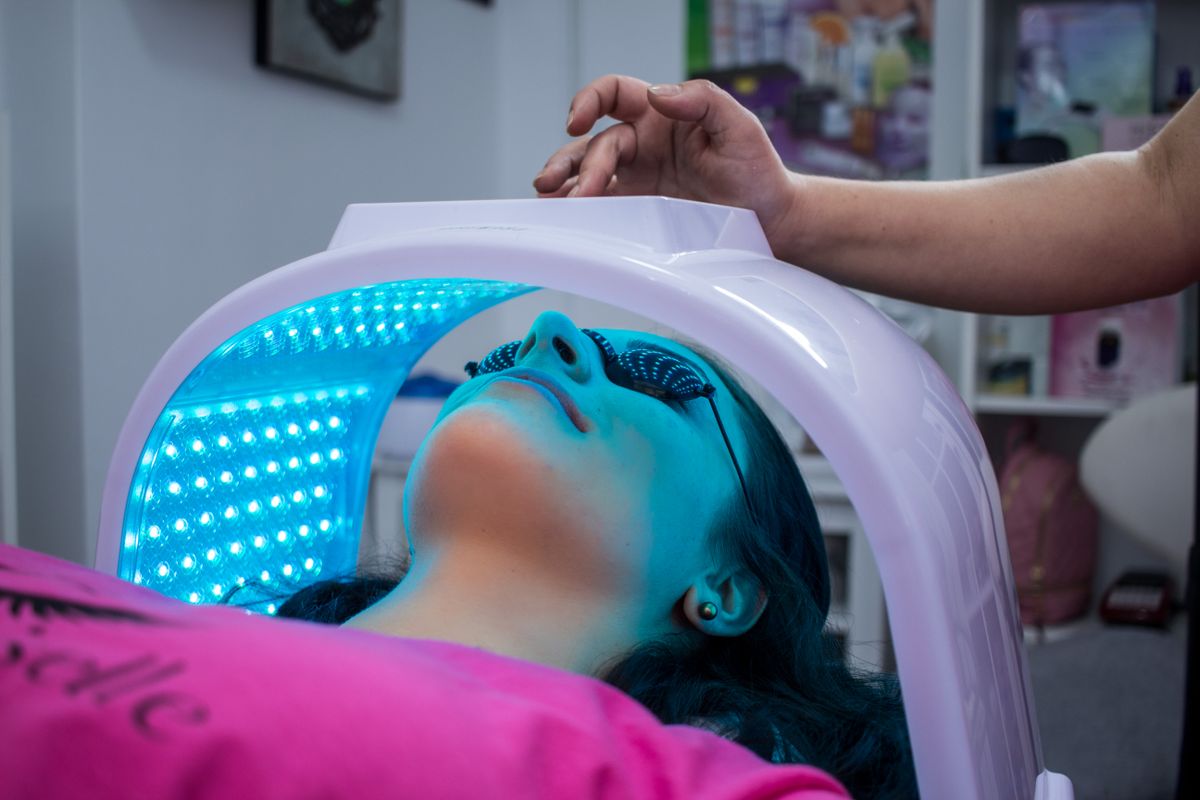
Because red and near-infrared light suit different depths and goals, many panels include both. A combined device lets you address surface-level goals (with red) and deeper goals (with near-infrared) without buying two separate units. For general wellness users who want flexibility, a dual-wavelength device is often a practical choice.
That said, combining wavelengths is not automatically “twice as good.” The right choice depends on your specific goals, and a focused single-wavelength device can be perfectly appropriate if it matches what you are trying to support.
Choosing Between Red Light vs Near-Infrared
Ask what you primarily want to support. For skin appearance, red light is a sensible emphasis. For muscle or joint recovery goals, near-infrared’s depth is often more relevant. If you want one device for varied goals, a quality red-plus-near-infrared panel offers versatility. In all cases, check the device’s stated wavelengths and follow its guidance on distance and time, since dose still matters.
Red Light vs Near-Infrared Safety Considerations
Neither red nor near-infrared light is a guaranteed solution, and evidence is stronger for some uses than others. Because near-infrared light is invisible and does not trigger the eye’s natural aversion response, eye protection is especially worth considering with near-infrared-heavy devices. As always, anyone with a light-sensitive condition or relevant medication should check with a healthcare professional first.
Red Light vs Near-Infrared: Common Misconceptions
A few persistent misunderstandings make red and near-infrared light harder to grasp than they need to be. The first is the idea that near-infrared light is just a “heat lamp.” While some infrared heat lamps do warm the skin, the near-infrared light used in photobiomodulation is low-intensity and works through light absorption, not heating.
The second is the belief that an invisible near-infrared device is not working. Because the eye cannot see most near-infrared light, a properly functioning device can look dim or even appear off while still emitting light. The third is assuming red light is simply a weaker version of near-infrared. They are not stronger or weaker versions of one another; they are different tools suited to different depths and goals.

Red Light vs Near-Infrared: Practical Tips
Whichever wavelength you use, a few habits help you get a fair trial. Expose bare skin to the light, since clothing blocks much of it. Follow the device’s recommended distance and time, because dose — not enthusiasm — drives results, and more is not better.
Be consistent over several weeks rather than expecting a single session to matter. If you own a combined red and near-infrared device, you do not necessarily need to separate the wavelengths; using them together is fine for general goals. Finally, if you are using a near-infrared-heavy device, take eye protection seriously, since the invisibility of near-infrared light means your eyes will not instinctively react to it.
When to Expect Differences
Because red light acts mainly at the surface, skin-related goals may produce changes that are easier to see, while deeper near-infrared goals such as recovery can be harder to judge by eye. Tracking your routine and being patient helps you evaluate either one fairly.
A Quick Reference
If you want a simple way to remember the difference, think in terms of depth and goal. Visible red light, around 630 to 660 nm, mainly reaches the skin’s surface and is commonly emphasized for appearance-related goals. Near-infrared light, around 810 to 850 nm, reaches deeper and is commonly emphasized for goals involving muscles and joints.
A combined device offers flexibility for people with more than one goal, though it is not automatically superior to a focused device. Whatever you choose, the wavelength only matters when it is paired with an appropriate dose, delivered at the recommended distance and time. Keep that pairing in mind and you will avoid most of the confusion that surrounds these two closely related forms of light.
The Bottom Line
Red and near-infrared light are close relatives that differ mainly in visibility and depth. Red light favors the skin’s surface; near-infrared reaches deeper tissue. Knowing which wavelength matches your goal — and respecting safe, appropriate dosing — is the key to using either one well.
Ready to get your red light therapy device? See our brand and product reviews, and try out our product comparison tool to inform your decision.
Frequently Asked Questions
Red light vs near-infrared: Which is better?
When comparing red light vs near-infrared, neither wavelength is universally better. Red light is commonly used for surface-level goals, while near-infrared is often chosen for deeper tissues. Red light suits surface and skin goals, while near-infrared reaches deeper tissue. The best choice depends on your specific goal.
Why does my near-infrared device look dim?
Most near-infrared light is invisible to the human eye, so a near-infrared device can appear faint or off even while emitting light normally.
Can I use both wavelengths at once?
Yes. Many red light vs near infrared devices combine both wavelengths so users can address surface and deeper wellness goals with a single panel.
Does near-infrared light penetrate deeper than red light?
Yes. Research measuring light in human tissue shows that longer near-infrared wavelengths generally penetrate more deeply than red light.
Do I need eye protection more with near-infrared?
It is especially worth considering, because near-infrared light is invisible and does not trigger the eye’s natural protective reflex to bright light.
This article is for general educational purposes only and is not medical advice. Red light therapy is not a substitute for professional care. Talk with a qualified healthcare professional about your individual situation.