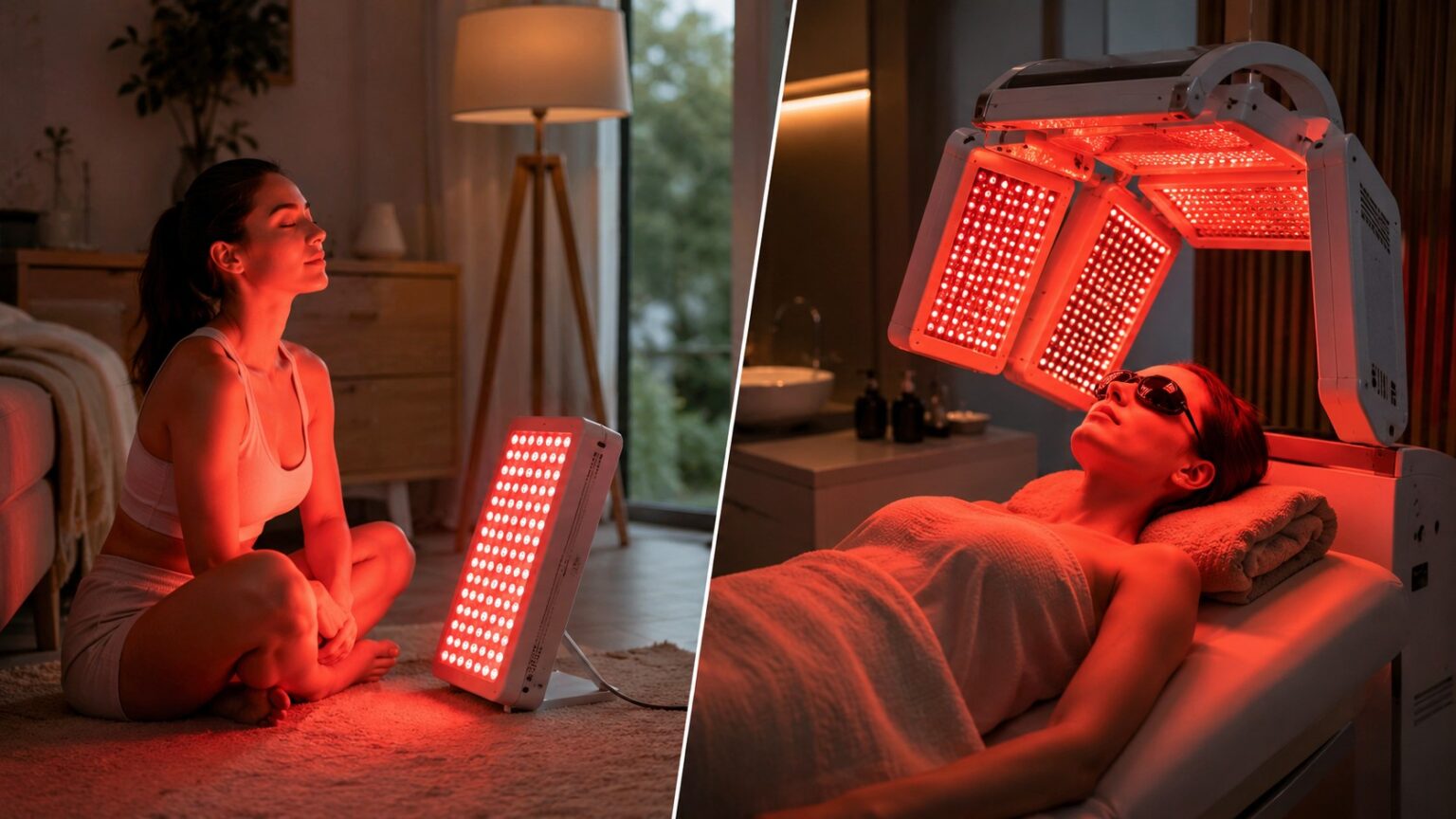
At home vs professional red light therapy is a practical question that follows quickly once someone decides to give this a try. Both routes deliver red and near-infrared light, but they differ in power, cost, convenience, supervision, and the kind of experience they offer. This comparison lays out the at home vs professional red light therapy trade-offs so you can decide which setting fits your goals, budget, and lifestyle.
There is no single right answer. The best choice depends on what you want to support, how much you value convenience versus guidance, and how realistic you are about using the option you pick consistently.
The Same Core Idea, Different Scale
At their core, at home vs professional red light therapy relies on the same concept: low levels of red and near-infrared light influencing cells without damaging the skin. According to Cleveland Clinic, red light therapy uses low levels of red and near-infrared light to influence cells without damaging the skin. Whether the light comes from a compact home panel or a large in-office system, the underlying mechanism researchers describe is the same. The differences are mostly about scale, output, and the environment in which you use it.
Power and Irradiance Differences
The most tangible difference in the at home vs professional red light therapy comparison is often power and irradiance. Professional and clinical devices tend to be larger and may deliver higher irradiance — the amount of light energy reaching a surface — or cover more of the body at once. Larger full-body systems in clinics can treat extensive areas in a single session, while many home devices are smaller and cover a more limited area.
It is tempting to assume more power is automatically better, but the dosing research complicates that. Studies describe a biphasic dose response, meaning a moderate dose tends to help while too much light can reduce or even reverse the benefit. A higher-output professional device is not inherently superior; what matters is that the dose, set by irradiance, distance, and time, lands in a useful range. A well-specified home device used correctly can land in a useful dose range — which is why the at home vs professional red light therapy power gap matters less than it might seem.
Cost and Convenience
The Case for Home Devices
On the at home vs professional red light therapy cost question, home devices involve an upfront purchase but no per-session fee. For a practice where consistency over weeks matters, that convenience is a genuine advantage — there is no appointment to book, no travel, and no waiting. Smaller home units in particular can be quite affordable.
The Case for Professional Sessions
Professional sessions usually carry a recurring cost, and they require scheduling and travel. In exchange, you gain access to larger or higher-output equipment without buying it yourself, along with a setting designed for the purpose. For people who want to try red light therapy before committing to a purchase, or who specifically want full-body coverage, paying per session can make sense.
Supervision and Guidance
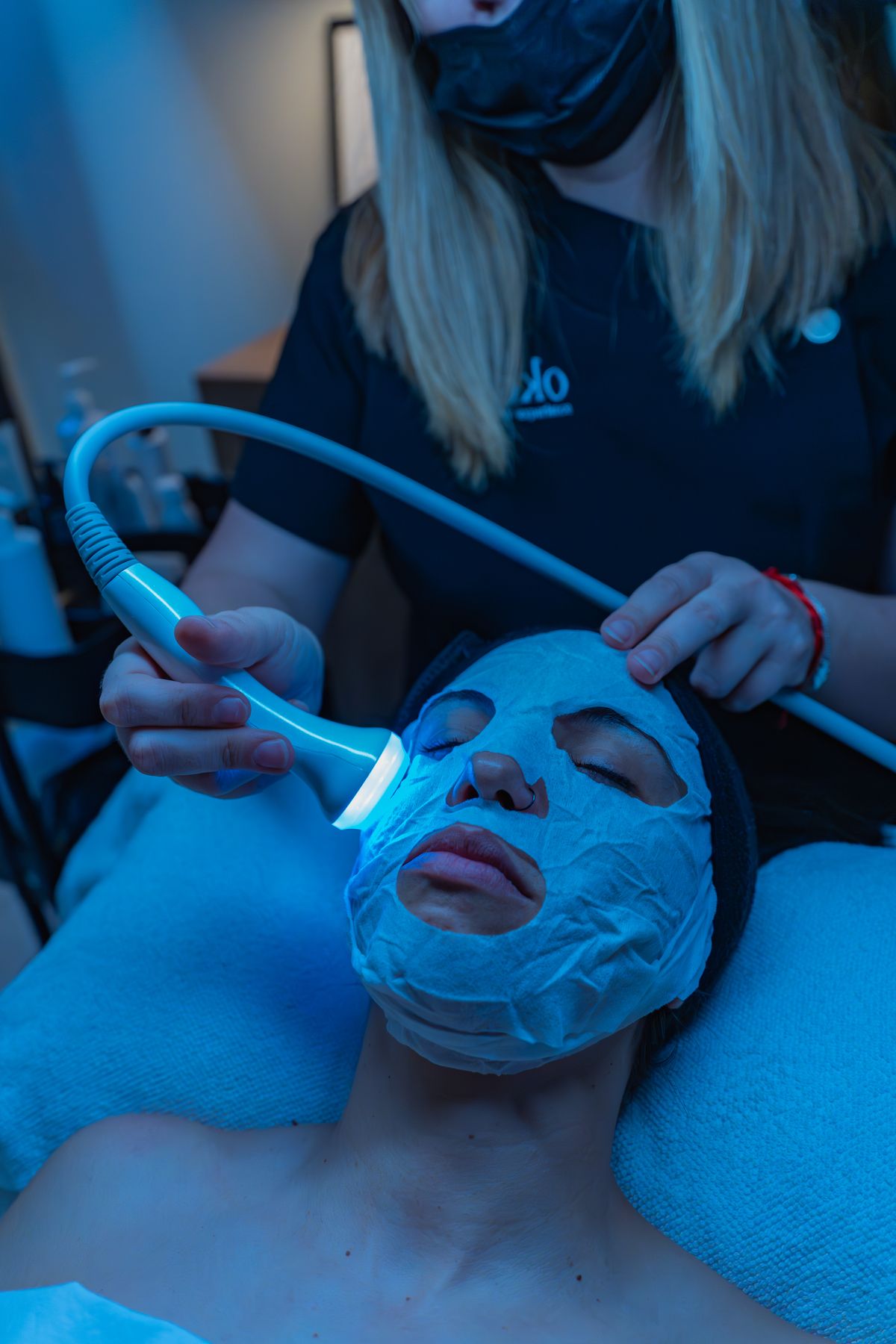
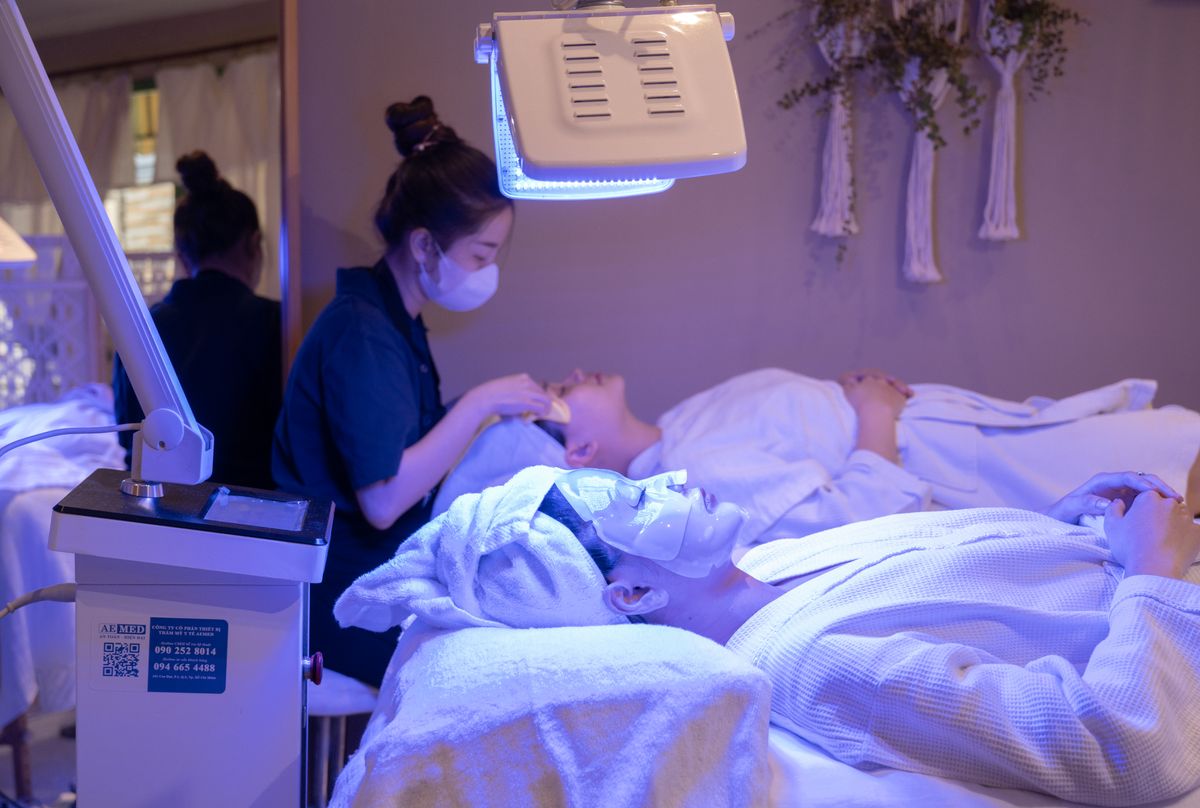
A meaningful difference in the at home vs professional red light therapy comparison is the presence of trained staff. In a clinic or studio, someone can help position you at the correct distance, set appropriate times, and answer questions, which can be reassuring for newcomers. At home, you are responsible for following the manufacturer’s instructions yourself.
This matters most for people with specific health considerations. Anyone who is pregnant, takes medications that increase light sensitivity, has a light-sensitive condition, has a history of skin cancer, or has an eye condition should consult a healthcare professional before starting in either setting. Professional supervision is not a substitute for medical advice, but it can add a layer of guidance that home use lacks.
Consistency: The Deciding Factor for Many
Because research that reports benefits generally involves repeated sessions over weeks, consistency is often the deciding factor in the at home vs professional red light therapy choice. A powerful clinic device used occasionally may, in practice, deliver less benefit than a modest home device used reliably several times a week. When weighing the two, be honest with yourself about which you are more likely to keep up with over the long term.
Regulation and What “Cleared” Means
Both home and professional devices may be regulated, and the language around this is easy to misread. In the United States, many light-based devices go through the FDA’s 510(k) clearance pathway, which is different from formal approval for a specific medical use. Reviewing the FDA’s information on 510(k) clearances makes the distinction clearer: a cleared device has been allowed to market based on similarity to existing devices, which is not the same as a guarantee of effectiveness for any particular goal. Treat claims of being “FDA approved” with care in both settings, and look for honest, specific descriptions of what a device does.
Penetration, Coverage, and Realistic Reach
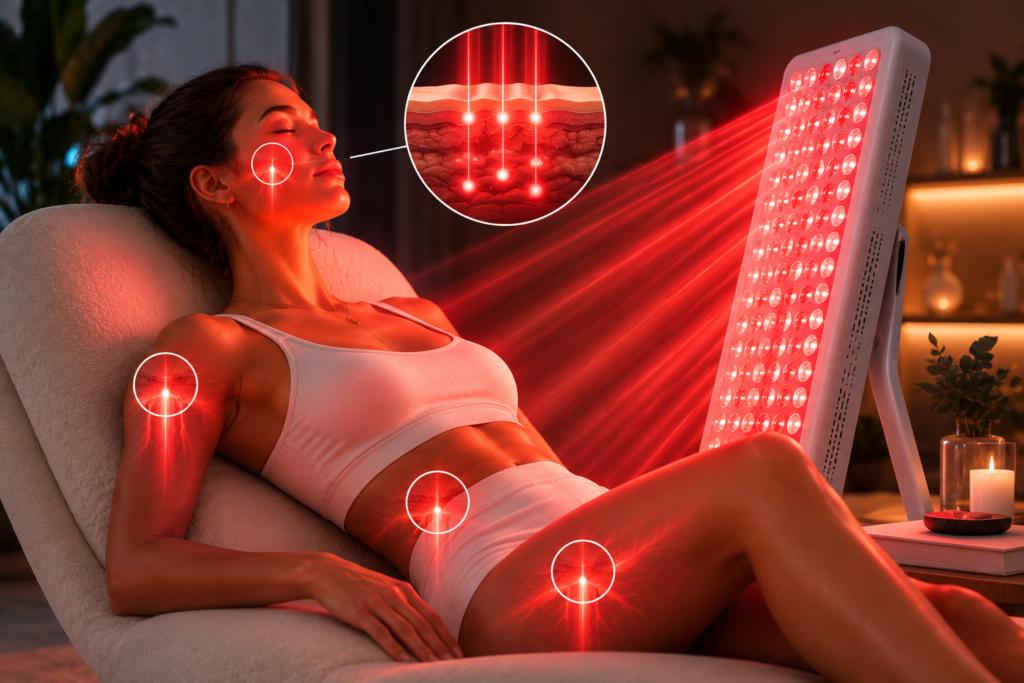
Whether at home or in a clinic, the physics of how light reaches tissue is the same. Research measuring penetration depths shows that longer near-infrared wavelengths generally reach deeper than red wavelengths, while red light acts more at the surface. Professional full-body equipment may make it easier to treat large areas at once, but it does not change these fundamentals. A home device aimed correctly at a target area, on bare skin, can deliver light to that area effectively for many purposes.
Who Each Option Suits
Home devices tend to suit people who value convenience, want to build a consistent long-term habit, are focused on a specific area or goal, and prefer a one-time purchase over recurring fees. Professional treatments tend to suit people who want full-body coverage, prefer guidance from trained staff, want to try the practice before buying, or simply enjoy the structured experience of a studio. Many people even combine the two — using a clinic occasionally and a home device for routine maintenance.
Safety in Both Settings
Red light therapy at appropriate doses is generally considered low-risk for healthy adults, with side effects that tend to be mild and temporary. In both settings, sensible precautions apply: protect the eyes from bright light, follow the recommended distance and time, and avoid overdoing sessions in pursuit of faster results. Neither setting makes red light therapy automatically safe for everyone, and neither replaces medical care. When in doubt, a healthcare professional is the right person to consult.
Setting Realistic Expectations
Regardless of where you use it, red light therapy is not a guaranteed solution. Evidence is encouraging for some uses, especially skin-related ones, but many studies are small and results are mixed, and reviewers consistently call for larger, standardized research. A higher-priced professional session does not buy certainty, and an inexpensive home device is not necessarily inferior. Keeping expectations modest and judging any routine over weeks rather than days serves you well in either case.
The Bottom Line
At-home and professional red light therapy share the same underlying science and differ mainly in power, cost, convenience, and supervision. Professional settings offer larger equipment and trained guidance at a recurring cost; home devices offer convenience, privacy, and easy consistency after an upfront purchase. Because consistency over weeks tends to matter most, the better choice is often the one you will genuinely keep up with — used safely, with realistic expectations, and with a professional’s input if your health situation calls for it.
Ready to get your red light therapy device? See our brand and product reviews, and try out our product comparison tool to inform your decision.
Frequently Asked Questions
Are professional red light therapy devices more effective than home ones?
Not automatically. Professional devices may be more powerful or cover more area, but research shows a moderate dose is ideal, so a well-specified home device used correctly can be appropriate for many goals.
Is at-home red light therapy safe without supervision?
It is generally low-risk for healthy adults when you follow the manufacturer’s instructions, but it is not safe for everyone. People with certain conditions or medications should consult a healthcare professional first.
Why choose a clinic over a home device?
Clinics offer larger or higher-output equipment, full-body coverage, and trained staff who can guide positioning and timing, which some newcomers find reassuring.
Does ‘FDA cleared’ mean a device is proven to work?
No. FDA 510(k) clearance allows a device to be marketed based on similarity to existing devices and is not the same as approval proving effectiveness for a specific goal.
Can I combine home and professional treatments?
Many people do, using a clinic occasionally and a home device for routine consistency. As with either alone, expectations should stay realistic and dosing sensible.
This article is for general educational purposes only and is not medical advice. Red light therapy is not a substitute for professional care. Talk with a qualified healthcare professional about your individual situation.