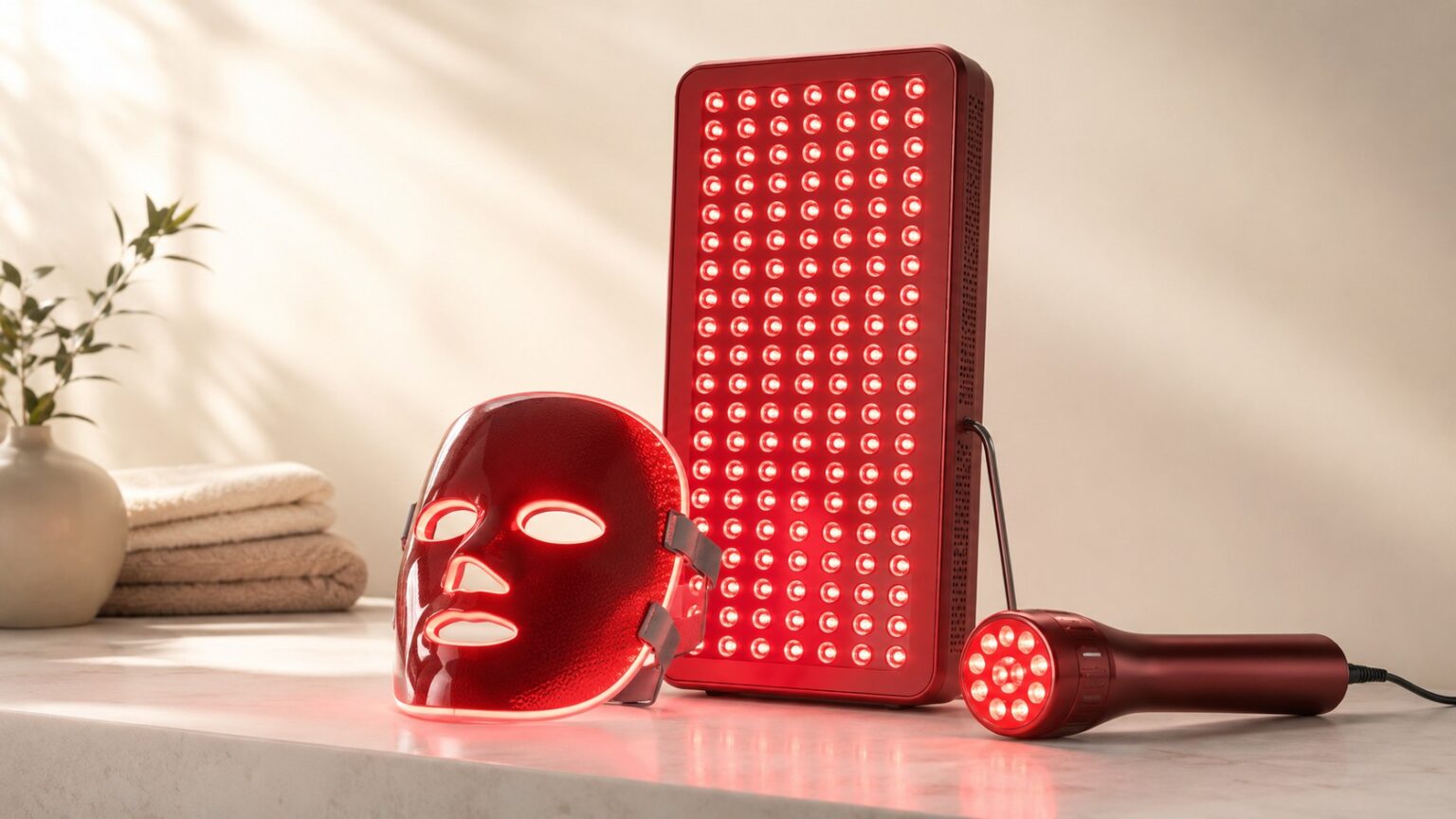
Types of red light therapy devices come in a surprising variety of shapes — flat panels, face masks, full-body beds, flexible wraps, belts, and small handheld units. For someone trying to choose, the sheer range can be overwhelming, and marketing rarely makes the trade-offs clear. This guide compares the main types of red light therapy devices by what they cover, the goals they suit, and their practical pros and cons.
None of these formats is inherently superior. They simply suit different goals, budgets, and lifestyles. The right starting question is not “which is best?” but “which fits what I am trying to support, and which will I actually use?”
First, a Shared Foundation
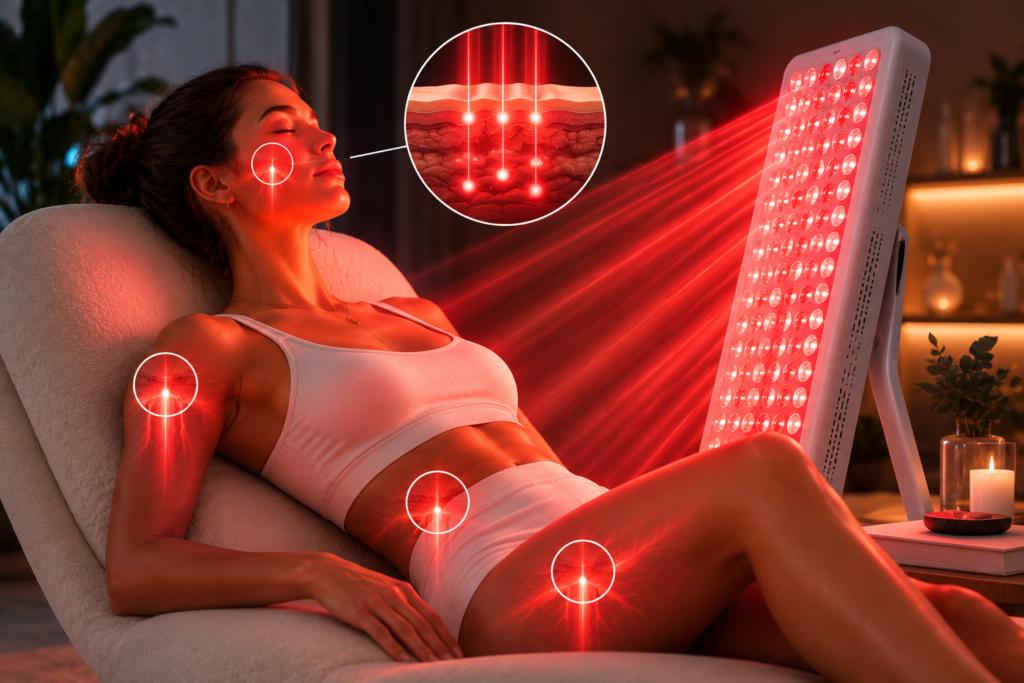
Every one of the types of red light therapy devices delivers the same basic thing: low levels of red and near-infrared light influencing cells without damaging the skin. According to Cleveland Clinic, red light therapy uses low levels of red and near-infrared light to influence cells without damaging the skin. Across all device types, two ideas carry over.
First, wavelength governs reach: research measuring penetration depths shows that longer near-infrared wavelengths generally reach deeper than red wavelengths, so red (around 630 to 660 nm) leans toward surface and skin goals while near-infrared (around 810 to 850 nm) leans toward deeper goals. Second, dose matters: studies describe a biphasic response, meaning a moderate dose tends to help while too much can reduce the benefit. These principles apply no matter which format you choose.
Panels
Among the types of red light therapy devices, panels are among the most versatile, covering a sizable area of the body at once and often offering both red and near-infrared wavelengths.
Best-Fit Goals
Panels suit people with broad or varied goals — skin appearance across larger areas, general recovery routines, or a mix of both. A dual-wavelength panel lets you address surface goals with red and deeper goals with near-infrared without buying separate devices.
Pros and Cons
The advantages are flexibility and coverage. The trade-offs are cost and footprint: larger panels take up space and require you to position yourself at the correct distance, since light intensity falls off quickly as you move farther away. Following the manufacturer’s stated distance and time is essential to landing a useful dose.
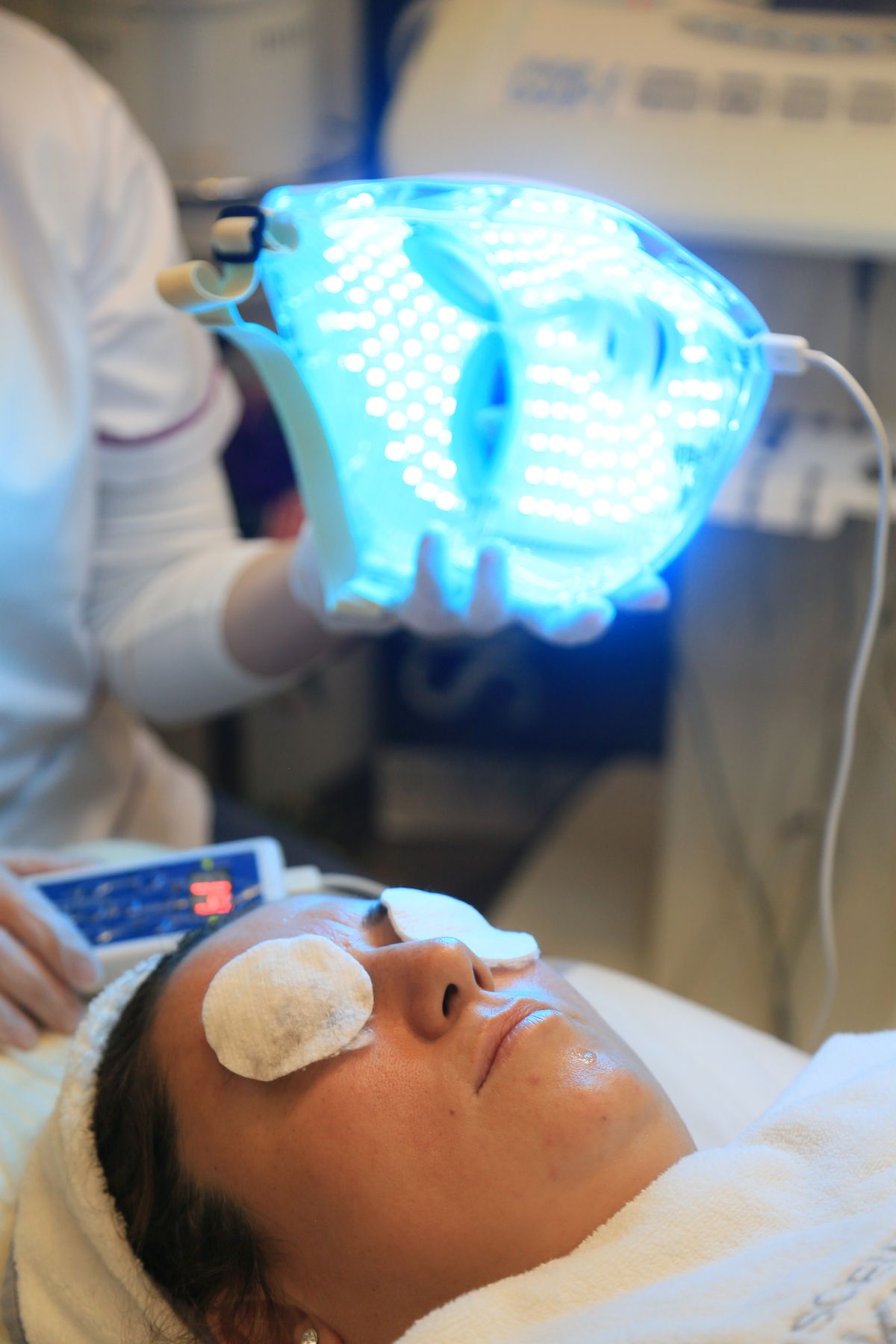
Face Masks
Among the types of red light therapy devices, masks are shaped to deliver light evenly to the face and often emphasize red wavelengths.
Best-Fit Goals
Masks are designed for skin-related goals on the face, such as the appearance of tone and texture. Because the skin is right at the surface, visible red light reaches it readily, which is why this format leans red.
Pros and Cons
The advantages are convenience, even facial coverage, and hands-free use. The trade-offs are that masks are specialized — they do little for the body — and quality varies, so checking stated wavelengths and following usage guidance still matters. Eye protection or simply keeping the eyes closed is worth considering given the proximity to the face.

Beds and Full-Body Systems
Among the larger types of red light therapy devices, beds and full-body systems surround much of the body with light at once and are usually found in clinics and studios.
Best-Fit Goals
These suit people who want extensive coverage in a single session and prefer a structured, professional setting. They are convenient for treating large areas without repositioning a smaller device repeatedly.
Pros and Cons
The advantage is broad, efficient coverage. The trade-offs are cost and access — they typically involve recurring per-session fees and travel rather than ownership. More coverage does not override dosing principles; an appropriate dose still matters, and bigger is not automatically better.
Wraps and Belts
Among the targeted types of red light therapy devices, wraps and belts are flexible formats that fasten around a limb, joint, or the torso.
Best-Fit Goals
These suit targeted goals involving muscles and joints, where near-infrared’s greater depth is often relevant. Their contact design keeps light close to the target and frees your hands.
Pros and Cons
The advantages are targeted, hands-free, contact-based delivery and portability. The trade-offs are limited coverage area and the need to ensure the device actually sits against bare skin, since clothing blocks much of the light. As always, follow the manufacturer’s time guidance rather than wearing one indefinitely.
Handheld Devices
Among the most portable types of red light therapy devices, handheld units are small and designed for spot-treating a specific area.
Best-Fit Goals
Handhelds suit people focused on a small, specific area and those who want an affordable, travel-friendly option. They are useful for precision but slow for larger goals.
Pros and Cons
The advantages are low cost, portability, and precise aiming. The main trade-off is coverage: treating a large area with a small handheld is tedious and time-consuming, and holding it at a consistent distance for the recommended time takes some attention.
Wavelength Considerations Across Formats
Because depth depends on wavelength, the types of red light therapy devices you choose interact directly with the wavelengths they emit. A face mask emphasizing red light makes sense for surface skin goals, while a recovery wrap emphasizing near-infrared makes sense for deeper goals. When comparing devices in any format, look for clearly stated wavelengths and an honest description of whether the device is red, near-infrared, or both. Many quality devices combine both, which adds versatility, though combining wavelengths is not automatically “twice as good.”
Dosing and Consistency Apply to Every Format
Whatever shape your device takes, the same two habits drive a fair trial. Follow the recommended distance (for panels) or ensure proper contact (for wraps, belts, and masks), and follow the recommended session time, because the biphasic dosing research shows that more is not better. Then use the device consistently over weeks, since studies that report benefits generally involve repeated sessions rather than a single dramatic one. A modest device used reliably often serves better than an elaborate one used sporadically.
Safety and Regulation Notes
Red light therapy at appropriate doses is generally considered low-risk for healthy adults, with mild, temporary side effects, but it is not automatically safe for everyone. Protect the eyes, particularly with face masks and near-infrared-heavy devices, since near-infrared light is invisible and does not trigger the eye’s natural reflex. Be aware, too, that many devices are cleared rather than formally approved: reviewing the FDA’s information on 510(k) clearances helps explain that clearance reflects similarity to existing devices, not proof of effectiveness for a specific goal. Anyone who is pregnant, takes photosensitizing medication, or has a relevant skin or eye condition should consult a healthcare professional before choosing any format.
How to Choose Your Format
Start from your goal and your life, not the device. For facial skin goals, a mask or a red-emphasis panel is a natural fit. For targeted muscle or joint goals, a wrap, belt, or near-infrared panel suits well. For broad coverage and flexibility, a panel is versatile, while a clinic bed offers full-body sessions without ownership. For a small, specific area on a budget, a handheld works. Then sanity-check the wavelengths, the stated distance or contact requirements, and whether you will realistically use it consistently. That combination — right format, honest specifications, and a routine you can keep — matters more than any single feature.
The Bottom Line
Panels, masks, beds, wraps, belts, and handhelds all deliver red and near-infrared light, but they differ in coverage, best-fit goals, and practicality. Match the format and its wavelengths to what you want to support — red and masks or panels for surface skin goals, near-infrared and wraps or panels for deeper goals — then respect sensible dosing, protect your eyes, and choose the option you will use consistently. The best device is the one that fits your goal, your budget, and your routine, not the one with the boldest marketing.
Ready to get your red light therapy device? See our brand and product reviews, and try out our product comparison tool to inform your decision.
Frequently Asked Questions
Is a panel or a mask better for skin?
Both can suit skin goals. Masks deliver even facial coverage and often emphasize red light, while a red-emphasis panel covers larger areas. The right choice depends on whether you want facial-only or broader coverage.
Which device type is best for muscle and joint goals?
Wraps, belts, and near-infrared-capable panels are common choices, since near-infrared light penetrates deeper than red light, which research shows reaches further into tissue.
Are full-body beds worth it over home devices?
Beds offer broad coverage in one session but usually involve recurring fees and travel. More coverage does not override dosing principles, so a well-used home device can be appropriate for many goals.
Do handheld devices actually work?
Handhelds can deliver light to a small target area effectively, but they are slow for large areas. Holding them at a consistent distance for the recommended time is important.
Does the device format change safety?
Core safety is similar across formats: low-risk for healthy adults at appropriate doses. Eye protection matters especially for masks and near-infrared devices, and anyone with relevant conditions should consult a professional.
This article is for general educational purposes only and is not medical advice. Red light therapy is not a substitute for professional care. Talk with a qualified healthcare professional about your individual situation.