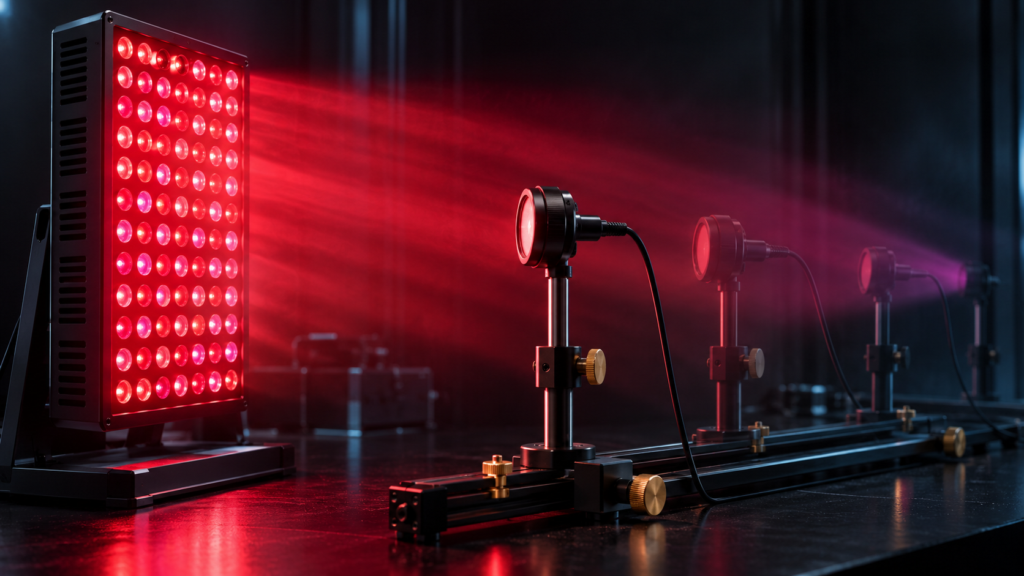
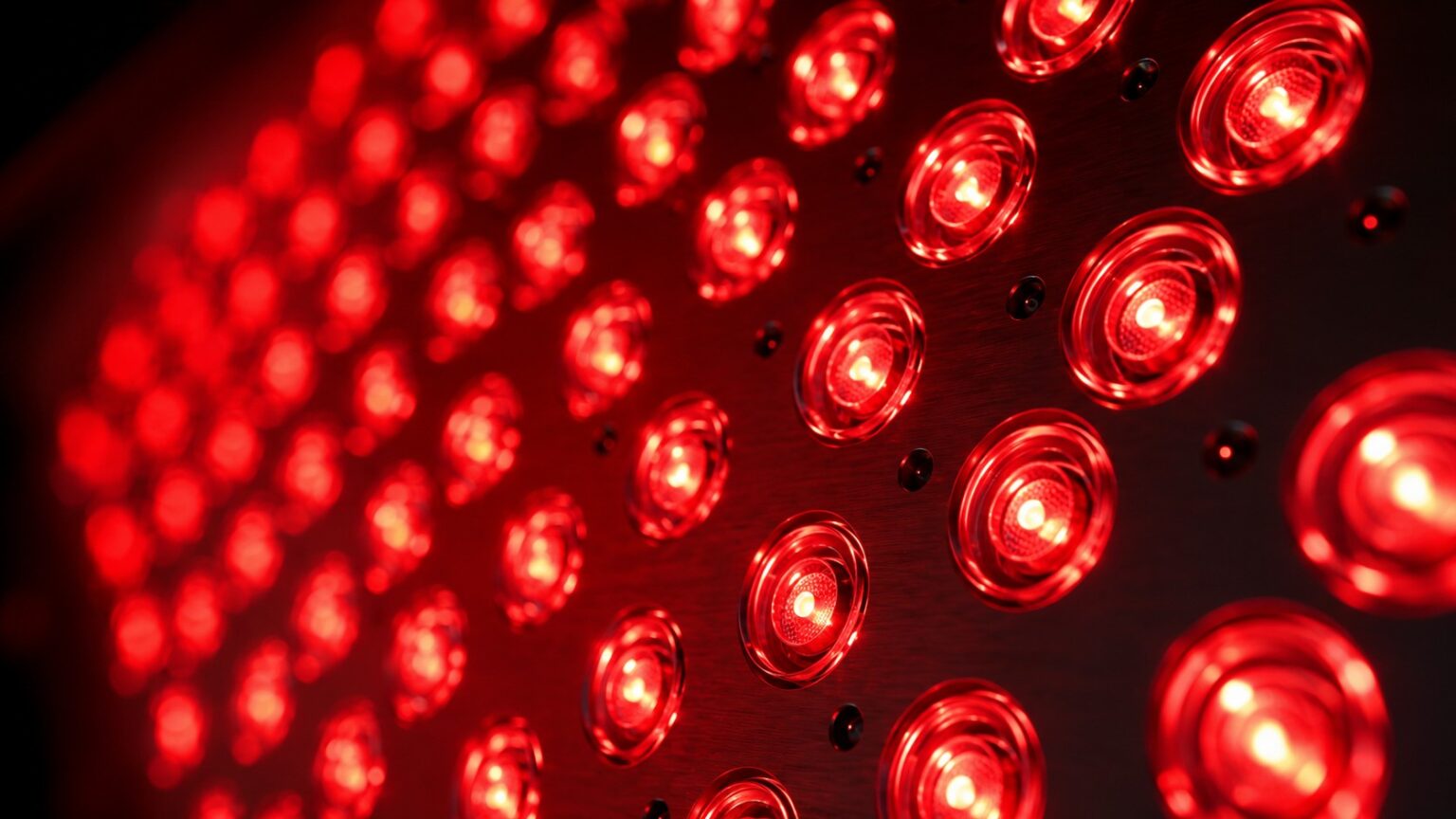
Most red light therapy panels are, at heart, arrays of light-emitting diodes (LEDs). It is tempting to assume that any panel covered in glowing red dots will perform like any other, but the quality of those diodes — and how consistently they emit light — can vary widely. This guide explains red light therapy LED quality, why it affects device performance, and how to evaluate panels without falling for marketing claims.
Understanding red light therapy LED quality starts with knowing that better LEDs improve consistency and reliability—not the underlying science of red light therapy itself. The goal is a device that does what it says, used sensibly, with realistic expectations.
What Red Light Therapy LED Quality Really Means
When people talk about LED quality, they are usually pointing at several related properties: whether the diodes emit the wavelength they are supposed to, whether they output a consistent amount of light across the panel, whether that output holds up over time, and how much heat the diodes generate as a byproduct. A high-quality LED array tends to be accurate, consistent, durable, and reasonably efficient. A lower-quality array may drift in wavelength, vary in brightness from diode to diode, fade faster, or run hotter.
None of these properties is exotic, but together they determine whether the light reaching your skin matches the specifications on the box. A panel can look impressive while still falling short on any one of them, which is why it helps to understand each property in turn rather than judging a device by its glow alone.
Red Light Therapy LED Quality and Wavelength Accuracy
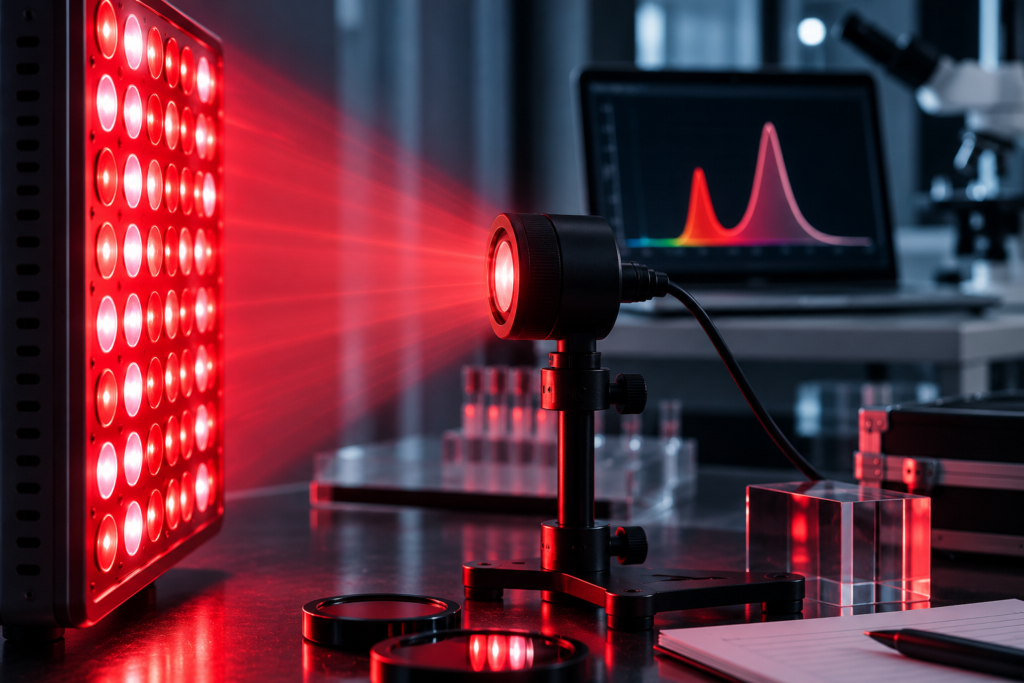
Wavelength is the single most defining specification of a red light device, and LED quality directly affects whether the stated wavelength is the wavelength you actually receive. The mitochondrial enzyme cytochrome c oxidase, a leading candidate for light absorption in photobiomodulation, responds to particular bands of red and near-infrared light. If diodes are inconsistent or poorly specified, the emitted wavelength can drift away from the target range, which undermines the rationale for choosing that wavelength in the first place.
This is why transparency about wavelength — ideally with a stated tolerance — is a reasonable signal of a serious product. A device that simply prints a number without any indication of accuracy is asking you to take it on faith.
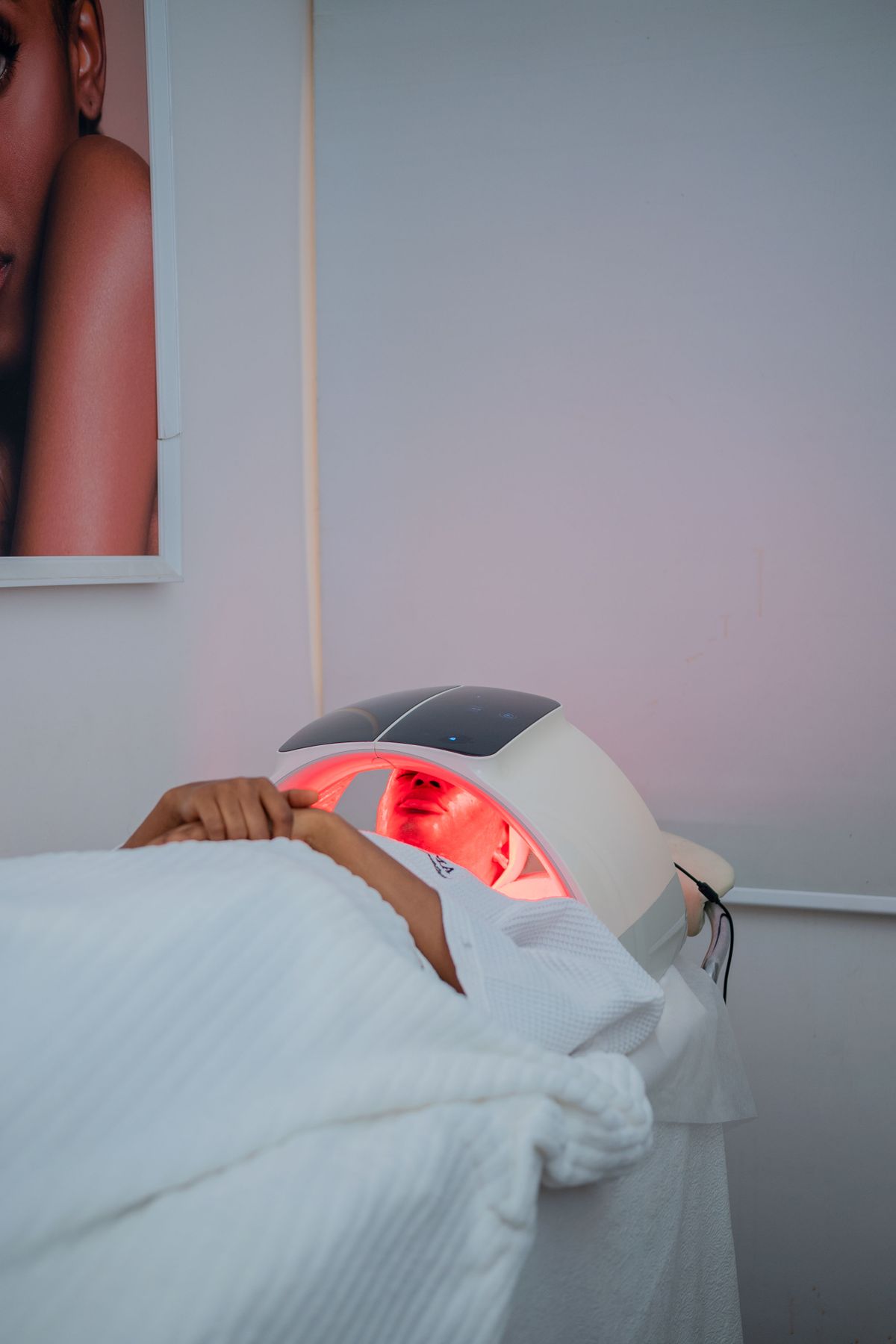
Red Light Therapy LED Quality and Output Consistency
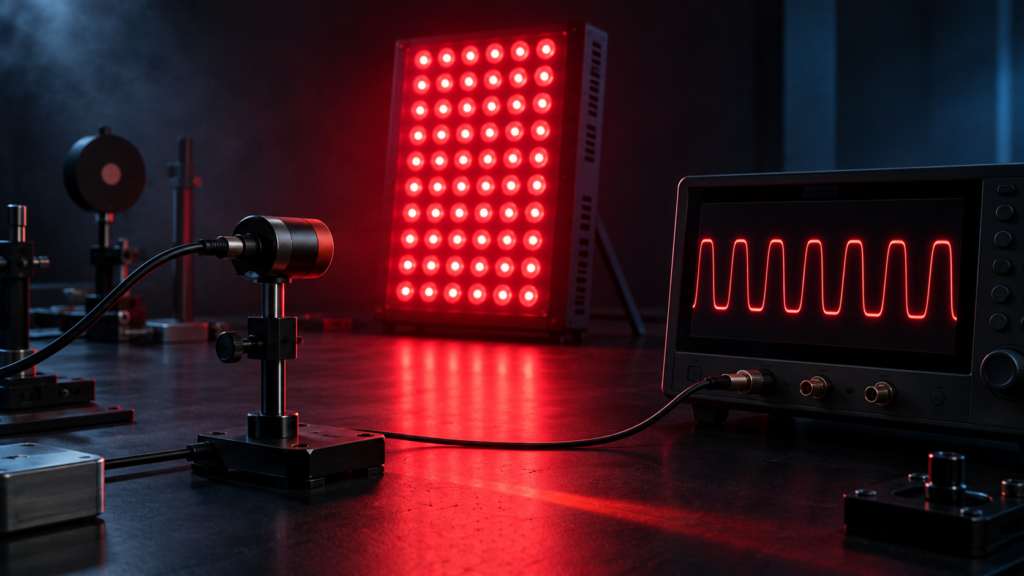
A panel is only as good as its least consistent region. If some diodes emit strongly and others weakly, the dose reaching your skin will vary depending on where you stand. Because research describes a biphasic dose response — where a moderate dose may help while too much or too little is less useful — uneven output makes it harder to deliver a sensible, predictable dose across the treatment area.
Consistency also affects how you should interpret a single headline irradiance figure. A high peak irradiance at the panel’s center means little if the edges are far weaker. Better manufacturers describe output more completely, rather than quoting a single best-case number.
Red Light Therapy LED Quality and Irradiance
Irradiance — the amount of light energy reaching a surface, often expressed in milliwatts per square centimeter (mW/cm²) — is a function of the diodes, their arrangement, and the distance from the panel. Multiplied by exposure time, irradiance determines the total dose. Quality diodes that emit consistently and hold their output over time make irradiance figures more trustworthy.
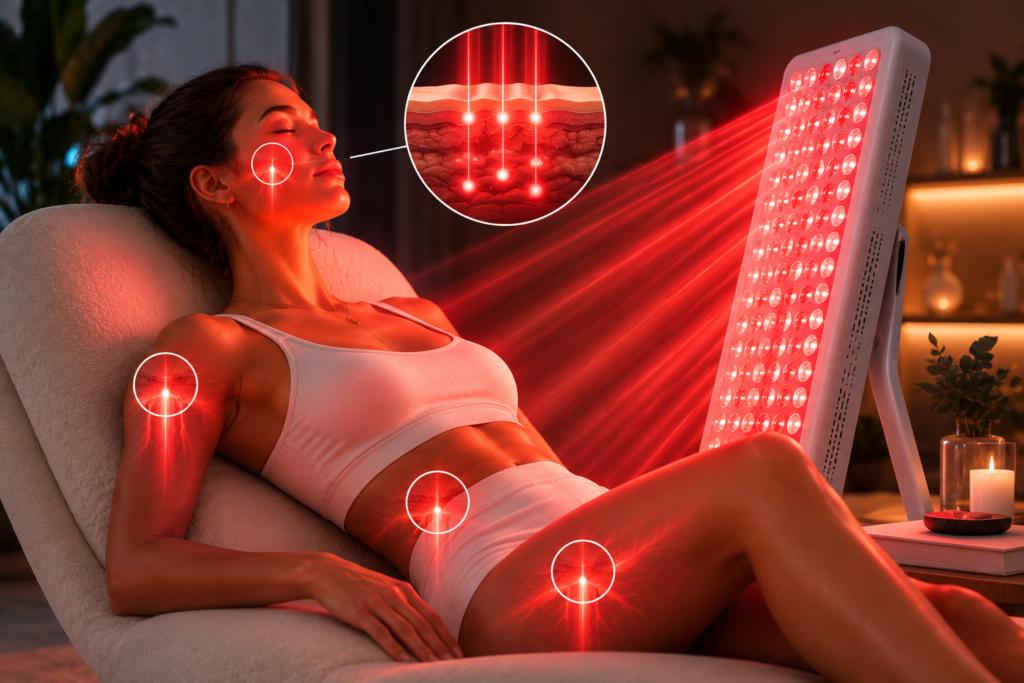
It is worth treating dramatic irradiance claims with caution. Irradiance falls off quickly with distance, and research on light–tissue interaction shows that how light is delivered influences how much reaches deeper layers. A meaningful irradiance specification always comes with a stated measurement distance; a number quoted without distance tells you little.

Red Light Therapy LED Quality and Longevity
LEDs convert most of their energy into light, but they also produce heat, and heat is an enemy of both comfort and longevity. Diodes that run hot can degrade faster, which means output may decline over the life of the device. Adequate cooling — through heat sinks, fans, or thoughtful design — helps maintain consistent output and extends the useful life of the panel.
For a buyer, this translates into a practical question: does the manufacturer describe how the device manages heat, and does it offer a warranty that reflects confidence in longevity? A device built to stay cool is more likely to keep delivering the dose it promised months and years later.
Why Transparency Defines Red Light Therapy LED Quality
Perhaps the most useful signal of LED quality is not any single number but the manufacturer’s willingness to disclose specifics. Serious products tend to state wavelengths with tolerances, describe irradiance with a measurement distance, and explain cooling and warranty terms. Vague marketing — “medical-grade diodes,” “premium chips,” “advanced light technology” — sounds reassuring but conveys no verifiable information.
Transparency is not a guarantee of performance, but opacity is a reasonable warning sign. When a company is forthcoming about how its diodes perform, you can compare devices on substance. When it is not, you are buying a glow and a promise. It is also worth noting that independent verification of LED claims is difficult for an ordinary buyer, since most people cannot measure wavelength or irradiance at home, which makes a manufacturer’s openness all the more important as a stand-in for testing you cannot do yourself.

The Limits of Consumer Claims
It is important to keep LED quality in proportion. Even an excellent diode array does not change the underlying state of the evidence: red light therapy may support certain skin and recovery goals for some people, many studies are small and report mixed results, and more standardized research is needed. High-quality LEDs help ensure you actually receive the wavelength and dose a device claims; they do not transform red light therapy into a cure for anything.
Be especially skeptical of marketing that uses impressive-sounding LED terminology to imply medical outcomes. The quality of a diode and the strength of clinical evidence are two different things, and conflating them is a common marketing tactic.
How to Evaluate LED Quality in Practice
When comparing devices, a few questions cut through the noise. Does the listing state exact wavelengths, ideally with a tolerance? Does it report irradiance at a specified distance rather than a single dramatic peak? Does it describe output consistency across the panel, not just the center? Does it explain how the device manages heat, and what the warranty covers? And does the overall description rely on measurable detail or on vague superlatives? A device that answers these clearly is demonstrating exactly the kind of transparency that signals quality.
A Note on Eye Comfort and Safety
Quality and safety overlap in one practical area: bright, consistent output can be intense to look at, and near-infrared light is largely invisible, so it does not trigger the eye’s natural aversion reflex. Whatever the diode quality, using eye protection where appropriate and following the manufacturer’s distance and time guidance remain sensible habits. Anyone who is pregnant, takes photosensitizing medication, or has a relevant eye or skin condition should consult a healthcare professional before use.
The Bottom Line
LED quality determines whether a red light therapy device reliably delivers the wavelength and dose it advertises. Look for accurate wavelengths, consistent output, sensible irradiance figures with stated distances, good heat management, and — above all — transparency. Just remember that even the finest diodes do not change the cautious, still-developing evidence behind red light therapy itself.
Ready to get your red light therapy device? See our brand and product reviews, and try out our product comparison tool to inform your decision.
Frequently Asked Questions
Does LED quality affect how well a device works?
It affects whether you actually receive the wavelength and dose a device claims. Consistent, accurate, durable diodes make a device’s specifications trustworthy, but no diode quality turns red light therapy into a guaranteed treatment.
What does ‘medical-grade LED’ mean?
Often very little. Phrases like ‘medical-grade’ or ‘premium chips’ are marketing terms without a fixed definition. Look instead for stated wavelengths, irradiance at a measured distance, and warranty details.
Why does output consistency matter?
If some diodes are stronger than others, the dose reaching your skin varies across the panel. Because a moderate, even dose is the goal, uneven output makes results harder to predict.
Do LEDs wear out?
They can lose output over time, especially if they run hot. Good cooling and quality components help maintain consistent output, which is why heat management and warranty terms are worth checking.
Is a higher irradiance number always better?
No. Irradiance must be balanced against the biphasic dose principle, and a single peak figure quoted without a measurement distance is not meaningful. More light is not automatically more helpful.
This article is for general educational purposes only and is not medical advice. Red light therapy is not a substitute for professional care. Talk with a qualified healthcare professional about your individual situation.