One of the first decisions a red light therapy shopper faces is scale: a large full-body panel that treats much of you at once, or a smaller targeted device aimed at a specific area. Both have a legitimate place, and neither is universally better. This guide compares full body vs targeted red light therapy, helping you choose the format that best matches your goals, budget, and lifestyle.
As with most red light therapy decisions, the right answer starts with your goal. A device that is ideal for one person’s aims can be impractical for another’s, so the comparison below is meant to be read through the lens of what you are actually trying to support.
Full Body vs Targeted Red Light Therapy: Coverage
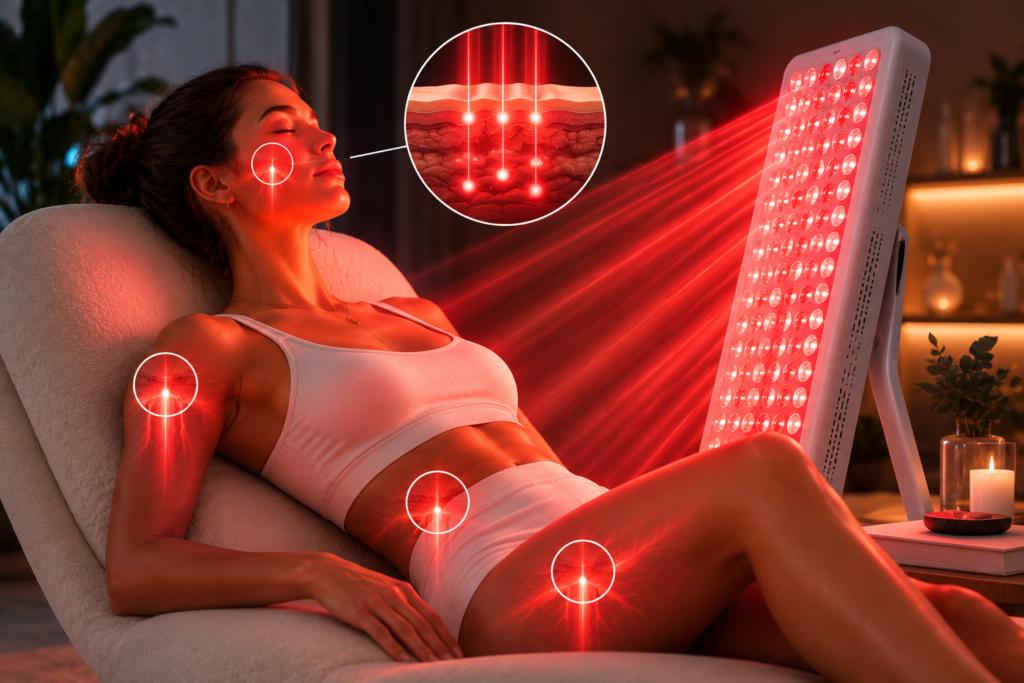
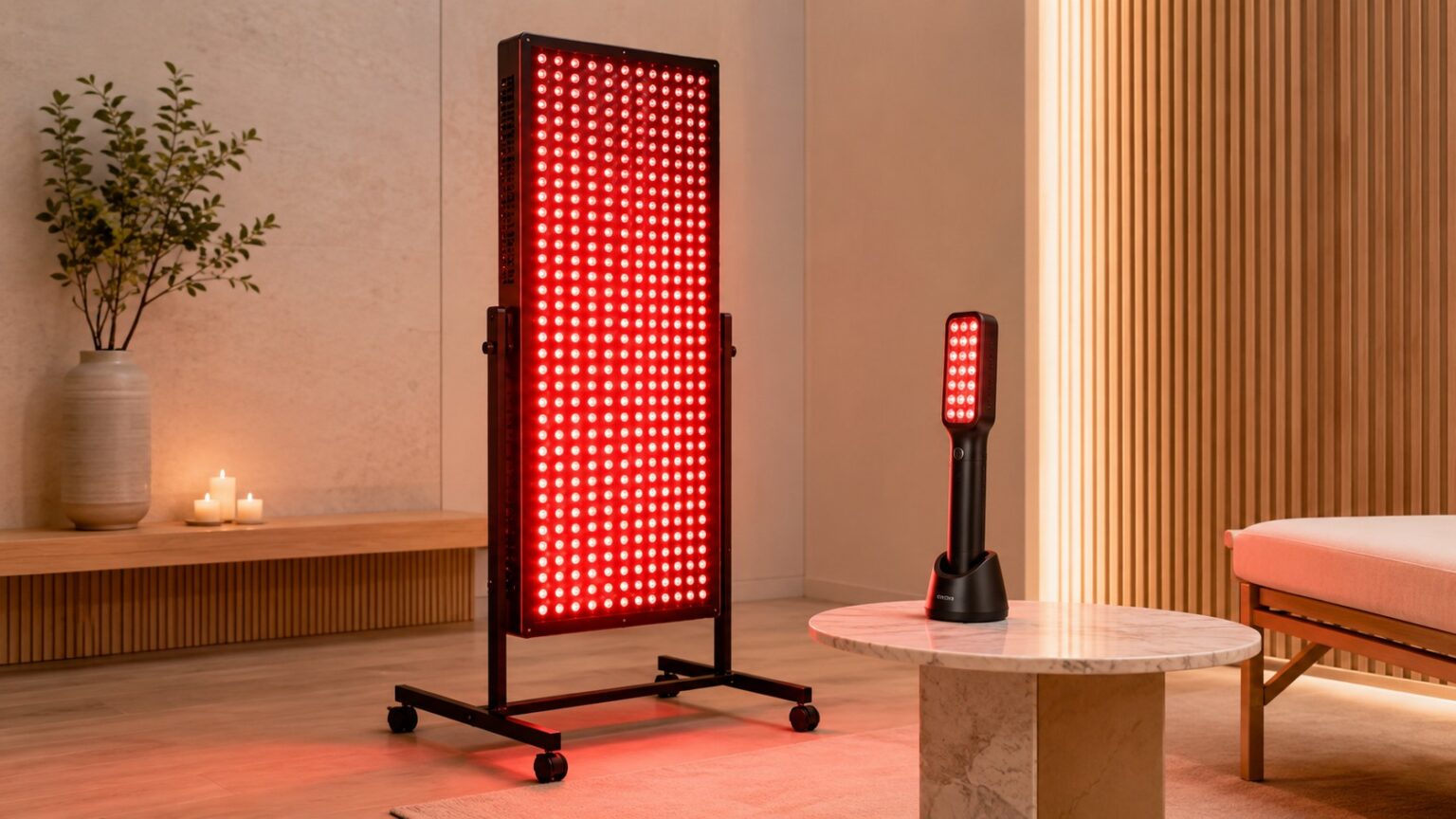
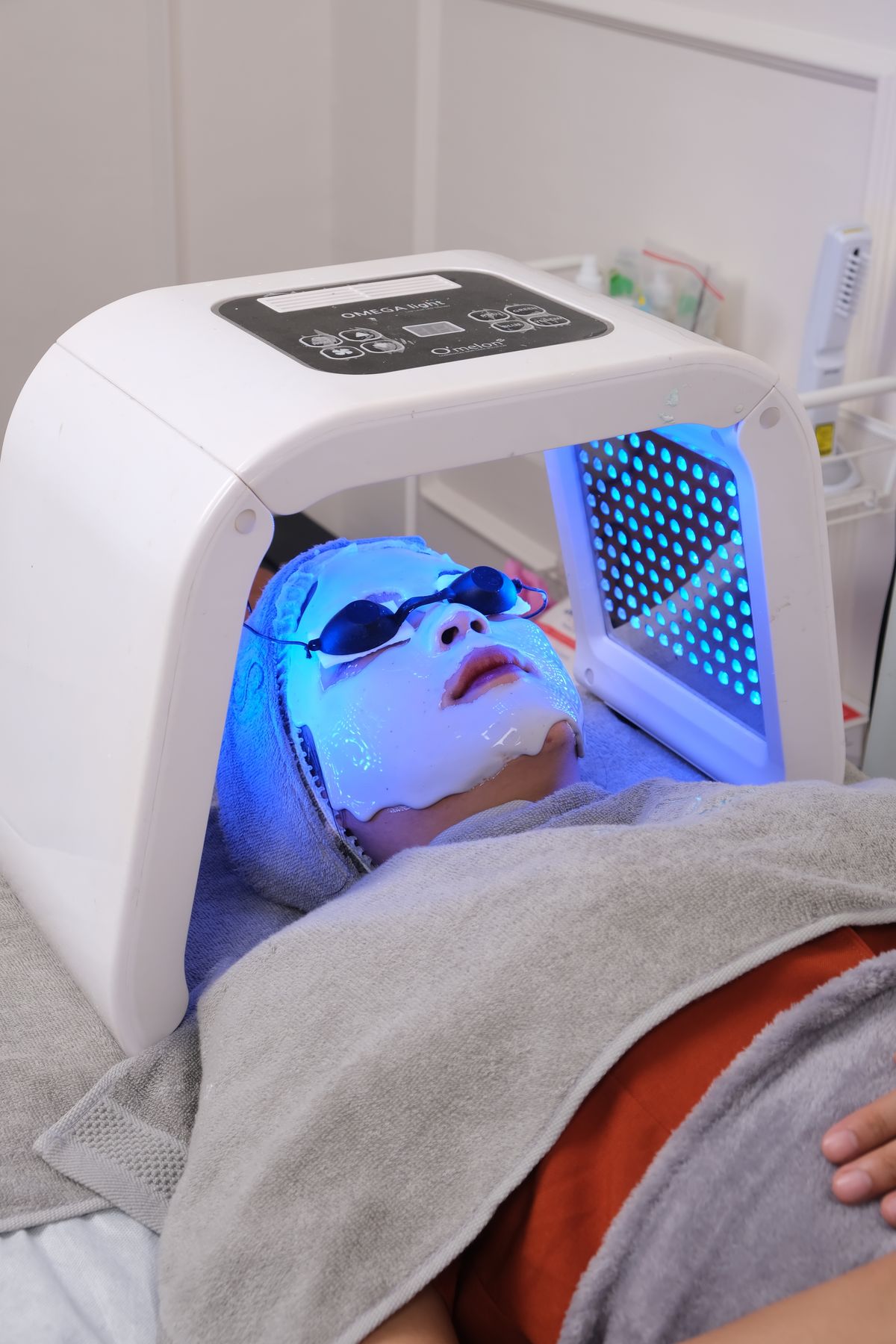
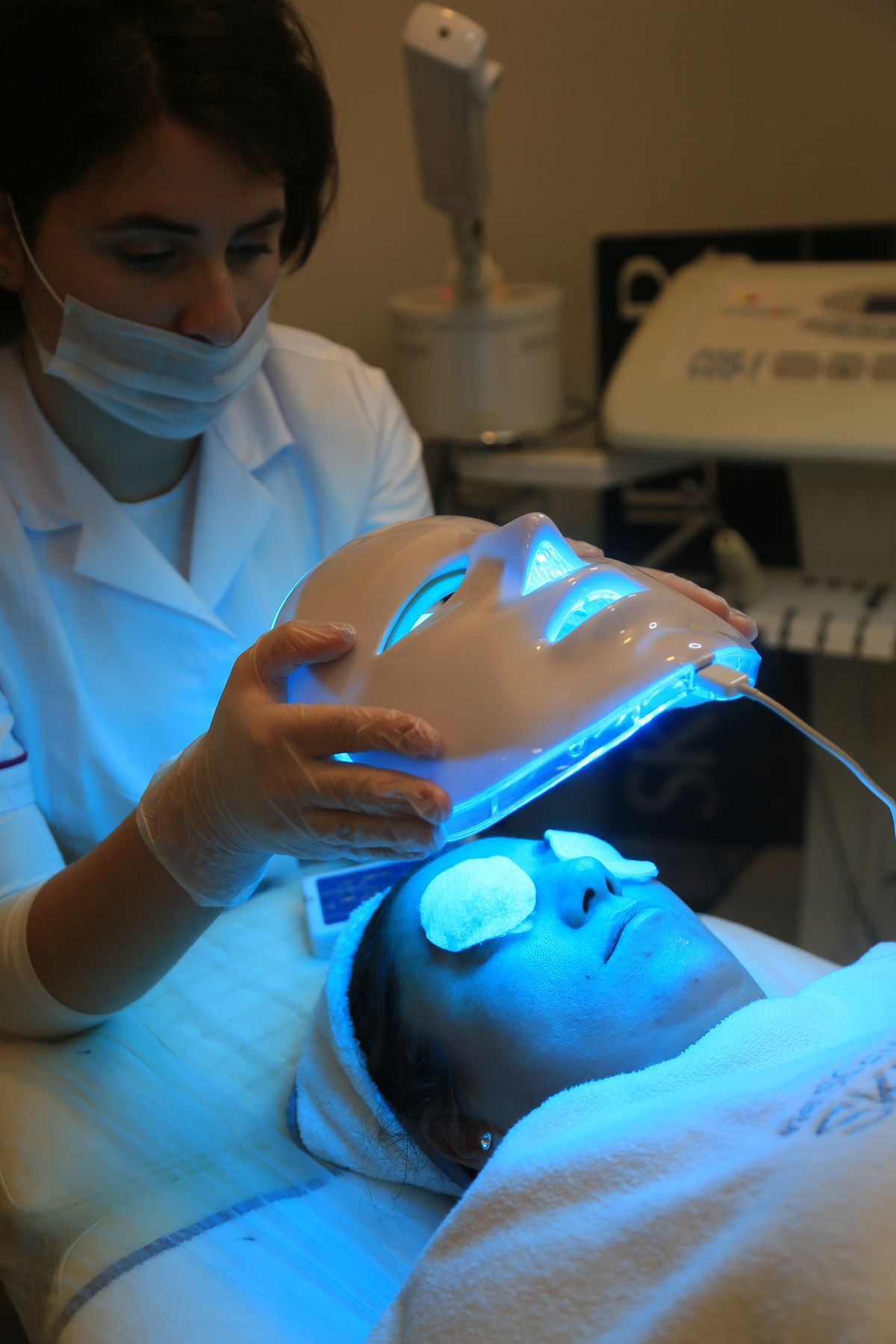
The defining difference is how much of the body each format addresses at once. Full-body panels — typically tall, freestanding arrays — can illuminate large portions of the body in a single session. Targeted devices, including handheld wands, small pads, face masks, and wraps, concentrate light on a limited area such as the face, a shoulder, or a knee.
This single difference cascades into nearly every other consideration: how long sessions take, how much the device costs, how it fits your routine, and which goals it serves well. Understanding it first makes the rest of the comparison straightforward.
Full Body vs Targeted Red Light Therapy: Time
For broad goals, coverage translates directly into time. A full-body panel can deliver light to many areas at once, so a single session covers a lot of ground. Trying to achieve the same coverage with a small targeted device means treating one area, repositioning, treating the next, and so on — which can turn a quick routine into a lengthy one.
Conversely, if your goal is a single small area, a targeted device is the more efficient choice. There is little point standing before a full-body panel for a goal confined to one knee. Time efficiency, then, depends entirely on whether your goal is broad or focused.
Full Body vs Targeted Red Light Therapy: Cost
Full-body panels generally cost more than targeted devices, and the reason is largely mechanical: a larger panel contains far more diodes and components and covers more area. Targeted devices, being smaller, are usually more affordable and often more portable. Higher cost does not mean the light itself is superior — it reflects scale and coverage. The most sensible way to weigh cost is to decide how much coverage your goal genuinely requires, then choose the smallest, most transparent device that meets that need and that you will actually use consistently.
Choosing Full Body vs Targeted Red Light Therapy
Whole-Body Wellness Goals
If your interest spans multiple areas — supporting general skin appearance across the body, or a recovery routine that involves several muscle groups — a full-body panel is often the more practical match. It lets you address broad goals without the tedium of repositioning a small device dozens of times.
Specific, Localized Goals
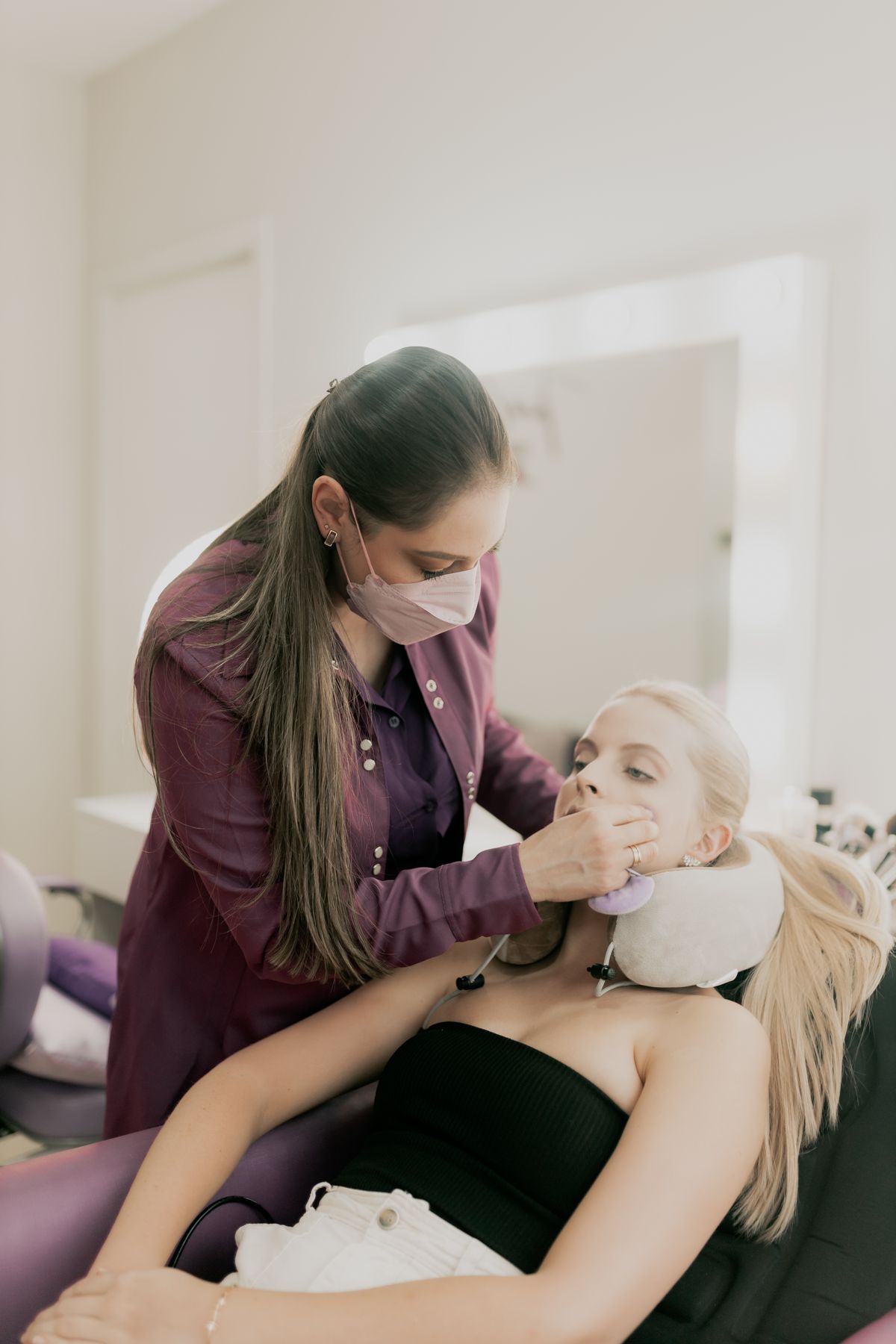
If your interest is confined to one region — the face, a single joint, a particular muscle group — a targeted device is usually the better fit. A face mask is shaped for facial skin goals; a wrap can fasten around a limb; a handheld unit can be aimed precisely at one spot. For these goals, the focused approach is both cheaper and more convenient.
Full Body vs Targeted Red Light Therapy: Dose
Whichever format you choose, dose remains central. Research describes a biphasic dose response: a moderate dose may be helpful, while too little does nothing and too much can reduce or even reverse the benefit. Two practical implications follow. First, a larger panel does not mean you should use it longer “to be safe”; the recommended distance and time still govern a sensible dose. Second, with a targeted device, the temptation to overuse a single area in pursuit of faster results runs against the dosing evidence.
Wavelength also interacts with goal and dose. Research measuring light in human tissue shows that near-infrared light penetrates more deeply than red light, so a panel or device emphasizing near-infrared is often more relevant for deeper-tissue goals, while red light suits surface skin goals. Format and wavelength should both be matched to what you are trying to support.
Full Body vs Targeted Red Light Therapy Pros and Cons
Full-body panels offer broad coverage and time efficiency for multi-area goals, but they cost more, require space, and can be overkill for a single localized concern. Targeted devices are affordable, portable, and efficient for a specific area, but they make whole-body routines slow and impractical. Neither is inherently better; each is simply suited to a different kind of goal. Some people even own both — a panel for broad routines and a small device for spot use — though that is a matter of preference and budget, not necessity.
Full Body vs Targeted Red Light Therapy Expectations
It is worth restating that the format does not change the underlying evidence. Red light therapy may support certain skin and recovery goals for some people, many studies are small and report mixed results, and more standardized research is needed. A full-body panel does not deliver a categorically different kind of benefit than a targeted device; it simply covers more area. Effects, when they occur, tend to be gradual and to depend on consistent use over weeks. Viewing either format as one supportive habit within a broader routine — rather than a transformative device — leads to a more satisfying experience.
Practical and Space Considerations
Beyond performance, everyday practicalities influence which format you will actually use. Full-body panels need floor or wall space and a spot where you can stand or sit at the recommended distance; if that is hard to arrange, the panel may go unused. Targeted devices store easily and travel well, which can make consistency easier for some people. Since consistency matters more than any single session, the format you will realistically use often beats the one that looks more impressive on paper.
Safety Notes
For most healthy adults, red light therapy at consumer doses is generally considered low-risk, with side effects that tend to be mild and temporary. A few precautions apply to both formats. Use eye protection where appropriate, particularly with larger panels and near-infrared-heavy devices, since near-infrared light is largely invisible and does not trigger the eye’s natural aversion reflex. Follow the manufacturer’s distance and time guidance. And because red light therapy is not automatically right for everyone, people who are pregnant, take medications that increase light sensitivity, or have a relevant eye or skin condition should consult a healthcare professional before starting, regardless of format.
The Bottom Line
Full-body panels and targeted devices are tools for different jobs. Panels suit broad, multi-area goals and save time at the cost of price and space; targeted devices suit specific, localized goals and win on affordability and convenience. Match the format — and the wavelength — to your goal, respect sensible dosing, and choose the device you will realistically use. Done that way, either format can be a reasonable part of a broader wellness routine, with expectations kept firmly grounded.
Ready to get your red light therapy device? See our brand and product reviews, and try out our product comparison tool to inform your decision.
Frequently Asked Questions
Is a full-body panel better than a targeted device?
Neither is universally better. Full-body panels suit broad, multi-area goals and save time, while targeted devices suit a specific area and cost less. The right choice depends on your goal, budget, and space.
Will a bigger panel give better results?
Not inherently. A larger panel covers more area, but it does not deliver a categorically different benefit. The recommended distance and time still govern a sensible dose, and more exposure is not automatically better.
Which format is more cost-effective?
It depends on the goal. For a single small area, a targeted device is usually cheaper and more efficient. For multiple areas, a full-body panel can be more practical despite the higher upfront cost.
Can I use a targeted device for whole-body goals?
You can, but it is slow and impractical, since you must treat one area at a time and reposition repeatedly. For broad goals, a full-body panel is generally the more convenient match.
Do dose rules differ between panels and targeted devices?
The biphasic dose principle applies to both: a moderate dose may help, while too much can reduce the benefit. Follow each device’s recommended distance and time rather than overusing it in either format.
This article is for general educational purposes only and is not medical advice. Red light therapy is not a substitute for professional care. Talk with a qualified healthcare professional about your individual situation.