
Photobiomodulation — the field behind what most people call red light therapy — has grown from a niche laboratory curiosity into one of the more actively studied areas of light-based wellness. That growth has produced a steady stream of headlines, and with them a fair amount of confusion about what photobiomodulation research actually establishes. This article takes a measured look at where the science stands: how the evidence base has expanded, which uses have stronger or weaker support, and why so many reviewers keep returning to the same refrain that more rigorous study is needed.
The honest summary is that photobiomodulation sits in an interesting middle ground. It has a plausible, well-described biological mechanism and a large and growing literature, yet the strength and consistency of clinical evidence vary considerably from one use to the next. Understanding that nuance is the key to reading research-related news without being swept up in either hype or dismissal. Understanding photobiomodulation research is the best way to separate promising findings from exaggerated claims.
How Photobiomodulation Research Has Grown
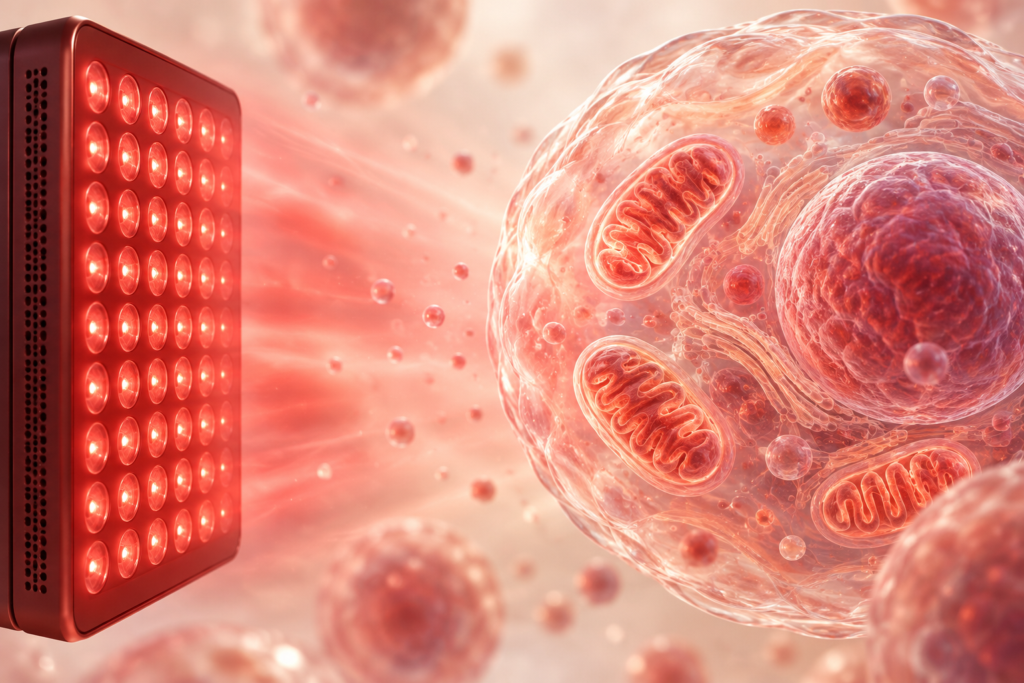
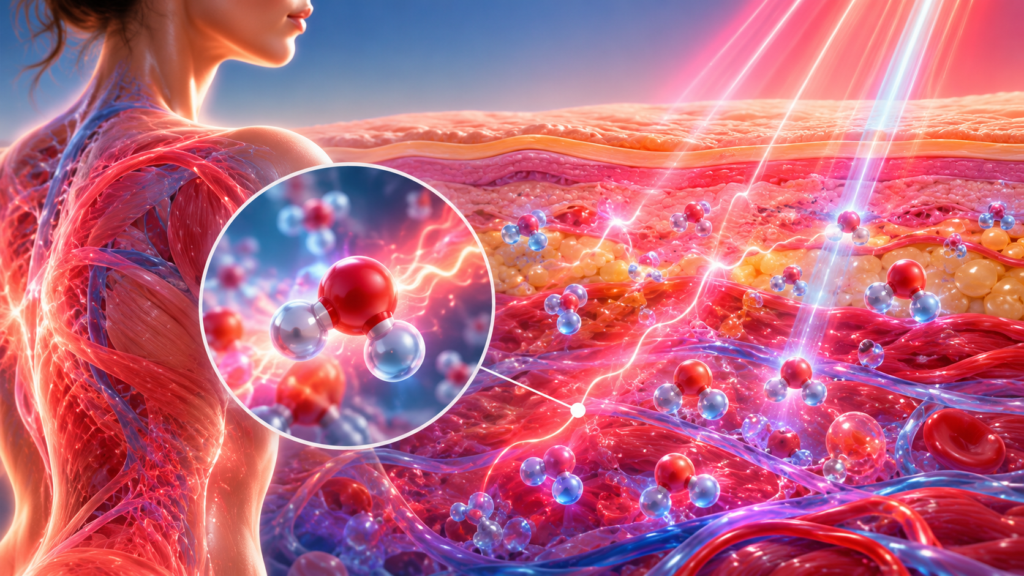
Decades ago, research on therapeutic light was scattered and largely confined to specialized journals. Modern photobiomodulation research has expanded rapidly thanks to a better understanding of how red and near-infrared light interact with cells. Today, the picture is different. The mechanistic foundation has been studied in considerable depth, and reviews such as the work of Michael Hamblin and colleagues describe how red and near-infrared light may be absorbed by mitochondrial targets like cytochrome c oxidase, potentially influencing cellular energy production and redox signaling. This mechanistic clarity gave researchers a credible reason to test light across many different goals.
As interest expanded, so did the number of human studies, and with them the number of systematic reviews and meta-analyses that pool results across trials. That maturation matters, because individual small studies can be noisy and even contradictory. Higher-level evidence syntheses attempt to step back and ask what the overall body of work suggests, rather than resting conclusions on any single experiment.
Photobiomodulation Research: Stronger Support Versus Weaker Support
One of the most important things a careful reader can do is resist the urge to treat photobiomodulation as a single thing that either “works” or “does not.” It is more accurate to say that the evidence is stronger for some applications and thinner for others.
An umbrella review of photobiomodulation across multiple health outcomes — a study that synthesizes many systematic reviews of randomized clinical trials — illustrates this point well. Such reviews tend to find that effects vary by outcome, that the quality of underlying evidence ranges widely, and that promising signals in some areas coexist with uncertain or inconsistent findings in others. In other words, the field is uneven, and that unevenness is itself one of the most reliable findings.
For the general public, the practical takeaway is to ask which specific use a claim refers to, and how that particular use is supported, rather than accepting a blanket statement that red light therapy is “scientifically proven.”
Why Results Vary So Much Across Studies
A recurring theme in photobiomodulation research is variability, and it has understandable causes. Studies differ in the wavelengths they use, the power and dose of light delivered, the distance between device and skin, the number and frequency of sessions, and the characteristics of the people enrolled. Because the relationship between dose and effect is biphasic — meaning a moderate dose may help while too little does nothing and too much can reduce or reverse the benefit — even small differences in protocol can lead to different outcomes.
This is not a flaw unique to red light therapy; many areas of medicine face it. But it does mean that comparing two studies is rarely an apples-to-apples exercise. A trial that used one device and dose may not predict what a different device and dose will do, which complicates efforts to draw firm, general conclusions.
Reading the Levels of Evidence
Understanding how to interpret photobiomodulation research starts with knowing that not every study carries the same weight. To interpret research news responsibly, it helps to understand that not all studies carry equal weight. The concept of a hierarchy, or levels, of evidence is widely used in medical research to rank study designs by how well they guard against bias. Toward the lower end sit case reports and uncontrolled observations; in the middle, controlled studies; and near the top, well-designed randomized controlled trials and systematic reviews or meta-analyses that combine them.
Anecdotes and testimonials, however vivid, rank low precisely because they are prone to bias and to the placebo effect. A single small trial is more informative but still limited. A systematic review of many randomized trials is more authoritative, though only as strong as the studies it includes. Keeping this hierarchy in mind makes it far easier to judge whether a new “study shows” headline deserves cautious interest or genuine confidence.

Why Standardization Matters
If there is one structural improvement researchers consistently call for, it is standardization. When studies report doses inconsistently, use different units, or omit key parameters such as irradiance and distance, it becomes difficult to replicate findings or to pool them meaningfully. Standardized reporting of wavelength, power, dose, and treatment schedules would allow the field to build cumulative knowledge rather than a patchwork of hard-to-compare results. Improving photobiomodulation research depends on more consistent reporting and standardized study methods.
This is also why transparency from device makers matters to consumers, not just scientists. Clear specifications make it possible to connect a real-world device to the conditions tested in research, instead of guessing whether a product resembles anything that has actually been studied.
The Honest “More Research Is Needed” Framing
It can feel anticlimactic when reviewers conclude that “more research is needed,” but in photobiomodulation that phrase is doing real work. It reflects a field with a credible mechanism and encouraging signals that has not yet produced the large, rigorous, standardized trials required to make strong, specific claims with confidence. Reputable health sources, including Cleveland Clinic, describe red light therapy in measured terms for this reason, noting that while it shows promise for certain uses, much of the evidence remains preliminary. This is why photobiomodulation research continues to call for larger, better-designed clinical trials before stronger conclusions can be made.
This framing is not a way of dodging a conclusion; it is the conclusion. The most accurate statement about much of photobiomodulation today is that it may support certain goals, that evidence is mixed and uneven, and that it should be viewed as a complement to — not a replacement for — established medical care.
What This Means for Following Research News
For anyone who wants to stay informed, following photobiomodulation research becomes much easier when you understand how studies are designed and evaluated. Notice whether a story describes a laboratory or animal study versus a human trial, since the mechanism is not the same as proven benefit. Check whether results come from a single small study or a synthesis of many. Watch for specifics about the use in question rather than sweeping claims about red light therapy as a whole. And treat dramatic, certainty-laden language as a caution sign, because the genuine science almost always speaks in probabilities and qualifications.
Approached this way, the evolving science of photobiomodulation becomes far less bewildering. It is a real and active field, neither magic nor fraud, advancing through the same slow, self-correcting process that characterizes credible research everywhere.
The Bottom Line
Photobiomodulation research has grown substantially, supported by a plausible mechanism and an expanding body of trials and reviews. Yet the evidence remains uneven, variable across studies, and limited by inconsistent methods, which is why reviewers keep urging larger, standardized trials. Read research news with attention to study type, evidence level, and the specific use at hand, and you will have a far clearer sense of what the science can and cannot yet say.
Get your red light therapy device today by heading to the product and brand reviews to help you decide on which device meets your needs. You can also use our product comparison shopping tool.
Frequently Asked Questions
Is photobiomodulation scientifically proven?
Current photobiomodulation research shows encouraging results for some applications, but evidence remains uneven and larger standardized studies are still needed.
What is an umbrella review?
It is a study that synthesizes many existing systematic reviews, offering a high-level view of the evidence across multiple outcomes rather than relying on a single trial.
Why do red light therapy studies disagree with each other?
Photobiomodulation research includes studies using different wavelengths, doses, distances, and treatment protocols, making direct comparisons difficult.
Are testimonials good evidence?
No. Anecdotes and testimonials rank low in the hierarchy of evidence because they are prone to bias and the placebo effect. Controlled trials and systematic reviews are far more reliable.
Does ‘more research is needed’ mean it doesn’t work?
Not necessarily. It usually means the mechanism is plausible and early signals are promising, but the large, rigorous, standardized trials needed for strong, specific claims do not yet exist.
This article is for general educational purposes only and is not medical advice. Red light therapy is not a substitute for professional care. Talk with a qualified healthcare professional about your individual situation.