EDITOR & SEO NOTES — remove before publishing
Target keyword: red light therapy sustainability
Secondary keywords: energy efficient light therapy, LED lifespan, electronic waste devices
Search intent: Informational — industry/consumer awareness
Meta title: Red Light Therapy and Sustainability: Energy, Longevity & E-Waste
Meta description: A look at the sustainability of red light therapy devices: LED energy efficiency, lifespan and the L70 concept, durability, and responsible recycling.
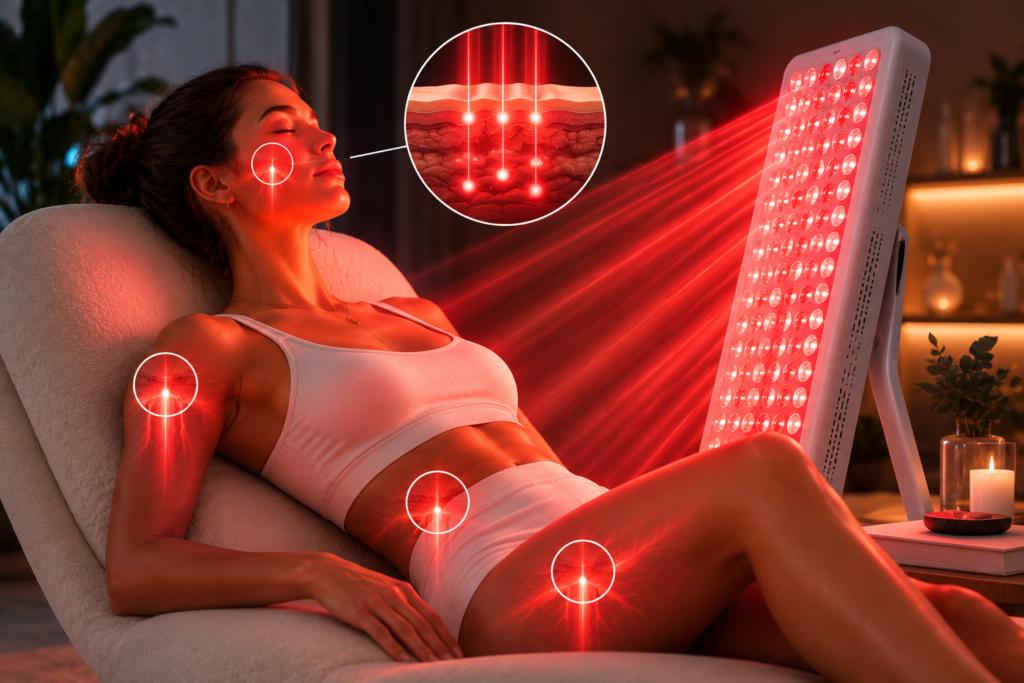
Featured image: A clean, modern motif combining an LED efficiency symbol with a recycling icon over a soft light background.
Suggested supporting images: A simple graphic illustrating the L70 lumen-maintenance concept; an icon set for repair, donate, and recycle.
Alt text: An LED efficiency and recycling motif for red light devices
Internal linking suggestions: The Growth of At-Home Red Light Therapy; How Red Light Therapy Devices Have Evolved Over Time; Red Light Therapy Standards and Quality; Red Light Therapy in Professional Settings
Most conversations about red light therapy focus on what it might do for the body. But as these devices spread into more homes, a different and increasingly relevant question deserves attention: how sustainable are they? Energy use, device lifespan, and what happens at the end of a device’s life all shape its environmental footprint — and they are areas where consumers have real influence.
This article explores red light therapy sustainability by looking at why LED-based devices are relatively energy-efficient, how long they tend to last, what to consider about durability and repairability, and how to dispose of electronics responsibly. Understanding red light therapy sustainability can help you make more environmentally responsible purchasing and ownership decisions.
Red Light Therapy Sustainability and LED Efficiency
Nearly all modern red light therapy devices use light-emitting diodes (LEDs). This matters for sustainability because LEDs are a notably efficient lighting technology. According to the U.S. Department of Energy, LED lighting uses significantly less energy than traditional incandescent lighting and converts a much larger share of energy into light rather than wasted heat.
For a red light therapy device, that efficiency translates into modest electricity use during a typical session of several minutes. While a large full-body panel naturally draws more power than a small handheld unit, LEDs keep the overall energy demand comparatively low. Energy efficiency is one of the quieter sustainability advantages of the technology underpinning these devices.
Red Light Therapy Sustainability and LED Lifespan
LEDs are also valued for longevity. Rather than failing abruptly like a burned-out bulb, quality LEDs typically dim gradually over a very long operating life. The Department of Energy notes that LEDs are long-lived and degrade slowly, which is why lifespan is often described in terms of how light output declines over time rather than a single “burnout” moment.
Understanding the L70 Concept
This gradual decline is captured by a metric often referred to as L70. In simple terms, L70 describes the point at which an LED’s light output has fallen to 70 percent of its original brightness — a common benchmark for “useful life.” The device does not stop working at L70; it simply produces less light than when new. Understanding this helps set realistic expectations: a well-made LED device can remain functional for many years, though its output slowly diminishes, which over a long enough period could subtly affect the dose it delivers.
Red Light Therapy Sustainability Through Durability
Lifespan is not only about the LEDs themselves. A device’s overall durability depends on its housing, power supply, wiring, controls, and build quality. A product whose LEDs could last for years may still be retired early if a cheaper component fails or if the unit is not built to withstand normal use.
Repairability is the often-overlooked companion to durability. Devices designed so that a failed power adapter or control board can be replaced — rather than requiring the whole unit to be discarded — tend to last longer in practice and generate less waste. As a thoughtful owner, favoring well-constructed devices, handling them carefully, and choosing products from companies that offer support, warranties, or replacement parts can meaningfully extend a device’s useful life.
Red Light Therapy Sustainability and E-Waste
Every electronic device eventually reaches the end of its life, and red light therapy units are no exception. Because they contain electronic components — circuit boards, LEDs, power supplies, and sometimes batteries — they should not simply be thrown in the household trash when they fail. Electronic waste, or e-waste, can contain materials that are better recovered or handled responsibly than sent to a landfill.
Managing electronic waste responsibly is an important part of red light therapy sustainability.
The U.S. Environmental Protection Agency provides guidance on electronics donation and recycling, encouraging consumers to reuse, donate, or recycle electronics through appropriate channels rather than discarding them. Many communities offer electronics recycling programs, drop-off events, or retailer take-back options. Checking local resources before disposing of a device is a small step that keeps usable materials in circulation and hazardous components out of general waste.
Red Light Therapy Sustainability Through Reuse
Recycling is valuable, but reuse is often even better. A device that still works but no longer suits your needs may be useful to someone else. The EPA’s guidance highlights donation and reuse as preferred options where possible, extending a product’s life before it is broken down for materials. Before recycling a functioning device, it is worth considering whether it could be passed along responsibly.

Supporting Red Light Therapy Sustainability as an Owner
Sustainability with red light therapy is largely about ownership habits, and these are within your control. A few practices help: choose a quality device built to last rather than the cheapest option likely to fail early; favor products with available support, warranties, or replaceable parts; use and store the device carefully to avoid premature damage; turn it off when not in use; and, when it finally reaches the end of its life, donate, reuse, or recycle it through proper channels rather than the trash. None of these steps is dramatic, but together they reduce the footprint of owning a device.
Buying Less Supports Red Light Therapy Sustainability
Perhaps the most sustainable principle is the simplest: thoughtful purchasing. Buying one well-made device that genuinely fits your goals — rather than accumulating several gadgets that go unused — reduces both waste and expense. The most environmentally friendly device is often the one you actually use, maintain, and keep for years rather than replace frequently.
Packaging and Red Light Therapy Sustainability
A device’s environmental footprint extends beyond the energy it uses and the materials it contains. Manufacturing, packaging, and shipping all contribute, particularly for larger panels that are heavier and bulkier to transport. While an individual consumer has limited control over how a product is made and shipped, purchasing decisions still send signals. Choosing durable products that will not need frequent replacement, and avoiding impulse purchases of devices that may go unused, reduces the cumulative impact of manufacturing and transport over time.
It is easy to focus narrowly on electricity use during a session, but the larger sustainability picture includes the entire life cycle: raw materials, production, distribution, years of use, and eventual disposal. Seen this way, the most impactful choices a consumer makes are often at the bookends — buying thoughtfully at the start and disposing responsibly at the end — rather than in the relatively efficient middle stage of everyday use.
Batteries and Special Components
Some portable and wearable red light devices include rechargeable batteries, which deserve particular attention at disposal. Batteries can require separate handling from other electronics and should never be placed in general household trash. The EPA’s guidance on electronics recycling points consumers toward appropriate channels, and many communities and retailers offer dedicated battery collection. If a device contains a battery, checking how to recycle that component specifically is a small but meaningful part of responsible ownership.
Keeping Health Claims in Perspective
This article deliberately focuses on sustainability rather than health outcomes, but the two intersect at one point worth noting. Because LED output declines gradually over a very long life, a device’s dose may slowly change over many years of heavy use. For most owners this is a minor consideration, but it is one more reason to choose quality and to follow the manufacturer’s guidance. As always, red light therapy is a wellness practice rather than a guaranteed treatment, and sustainability concerns do not change that framing — they simply add a responsible-ownership dimension to it.
The Bottom Line
Red light therapy sustainability depends on energy-efficient LEDs, durable construction, responsible ownership, and proper recycling at the end of a device’s life. Understanding LED efficiency and the L70 lifespan concept, favoring durable and repairable products, and recycling or donating devices responsibly through programs like those the EPA describes all make a difference. Thoughtful ownership, buying less but better, and disposing of devices properly, is the most meaningful contribution a consumer can make.
Ready to get your red light therapy device? See our brand and product reviews, and try out our product comparison tool to inform your decision.
Frequently Asked Questions
Are red light therapy devices energy-intensive to run?
Generally no. They use LEDs, which the Department of Energy notes are far more efficient than incandescent lighting, so a typical short session draws comparatively little electricity, though larger panels use more than small units.
What does L70 mean for an LED device?
L70 refers to the point at which an LED’s light output has dropped to 70 percent of its original brightness. The device still works; it simply produces less light, which is why LED lifespan is described as gradual dimming.
How long do LED red light devices last?
Quality LEDs are long-lived and dim slowly rather than burning out abruptly, so a well-made device can function for many years. Overall lifespan also depends on the housing, power supply, and other components.
Can I throw an old red light device in the trash?
It is better not to. These devices contain electronic components, and the EPA recommends donating, reusing, or recycling electronics through appropriate channels rather than discarding them in household waste.
Does a dimming LED affect the therapy?
Over a very long period of heavy use, declining output could subtly change the dose delivered. For most owners this is minor, but it is a reason to choose quality and follow the manufacturer’s guidance.
What’s the most sustainable way to own a device?
The best approach to red light therapy sustainability is buying one well-made device, maintaining it carefully, and donating or recycling it responsibly when it reaches the end of its useful life.
This article is for general educational purposes only and is not medical advice. Red light therapy is not a substitute for professional care. Talk with a qualified healthcare professional about your individual situation.