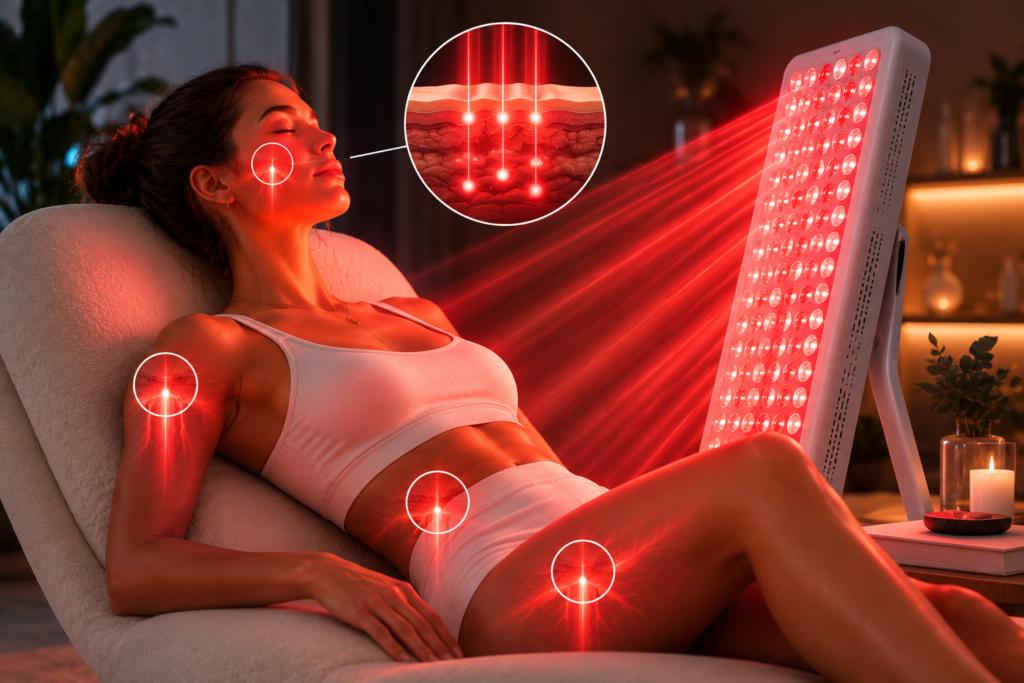
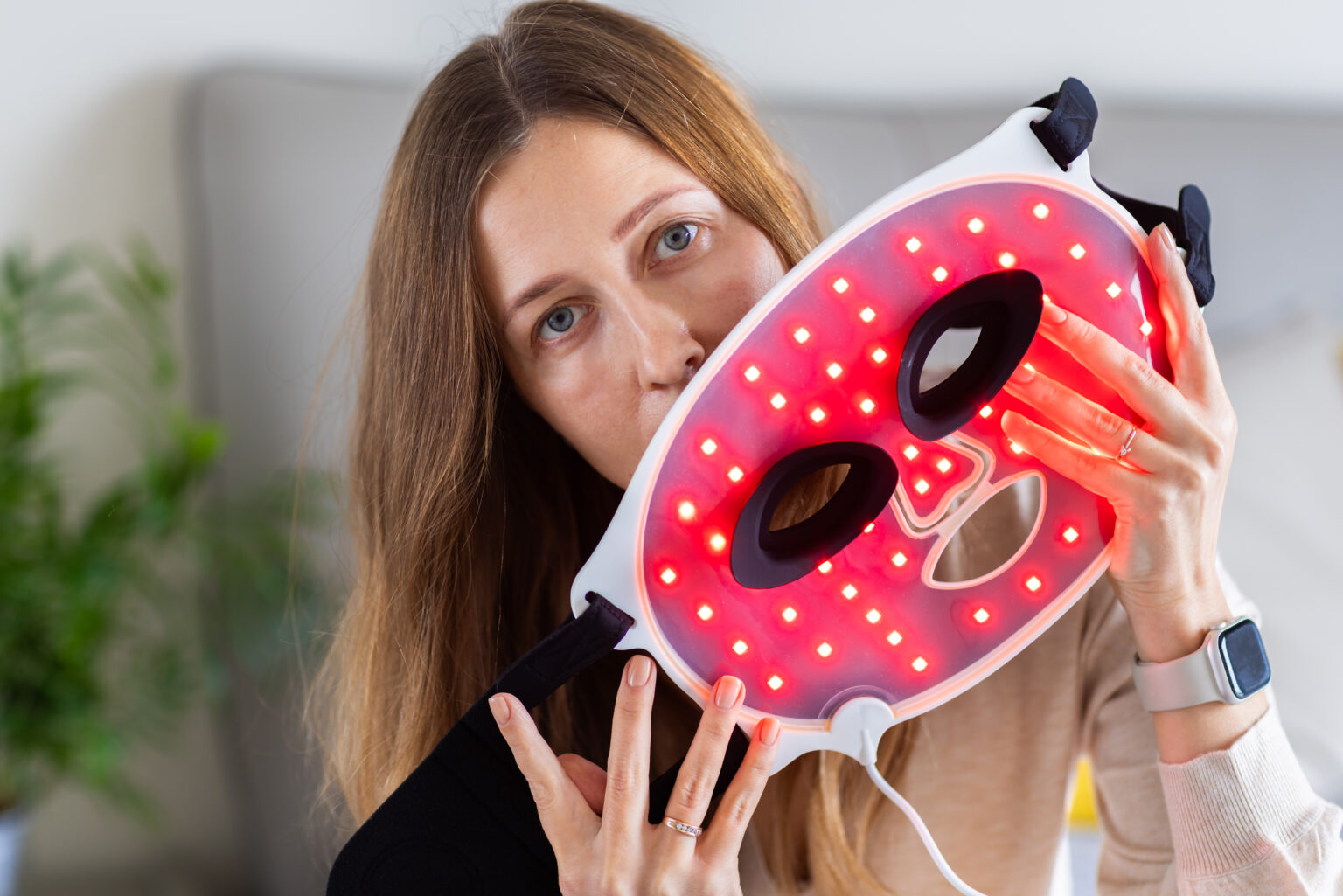
Acne is one of the most common skin concerns, so it is no surprise that light-based devices marketed for breakouts have become popular. Red and blue light are often featured together, and the claims can be confident. This guide explores red light therapy for acne, the different roles of red and blue light, what current research suggests, and when a dermatologist should guide your care.
The honest summary up front: light therapy may play a supporting role for some people with mild acne-related concerns, but it is not a cure, results vary, and moderate-to-severe or persistent acne deserves professional evaluation and treatment.
Understanding Red Light Therapy for Acne
Acne develops from a combination of factors: excess oil, clogged pores, bacteria (notably Cutibacterium acnes, formerly called Propionibacterium acnes), and inflammation. Because several mechanisms are involved, no single approach works for everyone, and acne ranges from occasional mild breakouts to more severe, scarring forms that require medical care. This complexity is exactly why expectations for any one tool, including light therapy, should be measured.
Red Light Therapy for Acne: Red vs. Blue Light
In the context of acne, red and blue light are usually discussed as doing different things. Blue light is primarily associated with targeting acne-causing bacteria on the skin, while red light is more associated with its potential effects on inflammation and the skin’s appearance. Many consumer devices combine the two for this reason.
A systematic review on the effect of blue light on acne vulgaris discusses blue light’s antibacterial rationale and its study as a treatment option, while noting variability in the evidence. A randomized controlled trial comparing red and blue light therapies for mild-to-moderate acne examined how each performed, reflecting active research interest in both wavelengths. The takeaway is that red and blue light are studied as complementary tools, each with a different proposed role, rather than interchangeable.
What Red Light Therapy for Acne Research Shows
The American Academy of Dermatology (AAD), in its consumer guidance on lasers and lights for acne, offers a measured view: light- and laser-based treatments are studied for acne, but they are generally not first-line therapy, results can be inconsistent, and they often work best as part of a broader plan rather than on their own. The AAD emphasizes that these treatments are not a guaranteed solution and that outcomes vary.
Reviews and trials on blue and red light reinforce this nuance. Some studies report improvements in acne measures with light therapy, but the evidence is mixed, study designs differ, and reviewers call for more rigorous research. A review of phototherapy with light-emitting diodes likewise describes LED light being explored across dermatologic uses, including acne, while making clear that the strength of evidence varies. In short, early research indicates light therapy may help some people with milder acne concerns, but it does not establish it as a reliable cure.
Why Red Light Therapy for Acne Isn’t a Cure
It is important to be direct: red and blue light therapy is not a cure for acne. Acne is a medical condition driven by multiple factors, and even effective treatments typically manage it rather than eliminate it permanently. Light therapy may support clearer-looking skin for some individuals as part of a routine, but breakouts can persist or return, and over-relying on a device can delay more appropriate care. Marketing that promises to “clear acne” or guarantees results overstates what the evidence supports.
When to See a Dermatologist for Acne
A board-certified dermatologist should guide care for acne that is moderate, severe, persistent, painful, or scarring, or that has not responded to gentle over-the-counter measures. Dermatologists can diagnose the type of acne, rule out conditions that mimic it, and recommend evidence-based treatments — which may include topical or oral options — tailored to your skin. They can also advise whether light therapy has a sensible supporting role for you. Seeking professional help early can reduce the risk of scarring and the frustration of trial-and-error with devices alone.
Red Light Therapy for Acne Safety
For most healthy adults, light therapy at consumer doses is generally considered low-risk, with side effects that tend to be mild and temporary, such as brief redness, warmth, or dryness. Even so, it is sensible to protect the eyes from bright light, follow device instructions, and introduce any new device gradually to see how your skin responds. People who are pregnant, who take medications that increase light sensitivity (some acne medications can do this), or who have a relevant medical or eye condition should consult a healthcare professional first. If a device seems to worsen your skin or cause irritation, stop and seek advice.
How Red Light Therapy for Acne Fits Into a Routine
The AAD’s framing — that light treatments often work best as part of a broader plan — is a useful guide to how light therapy realistically fits into acne care. For someone with occasional, mild breakouts, a light device might be one element alongside gentle cleansing, non-comedogenic moisturizing, and an established over-the-counter ingredient. It is less reasonable to expect it to carry the entire load on its own, and it is not a substitute for the consistent daily skincare habits that underpin most acne management. Thinking of light therapy as a possible supporting player, rather than the lead, keeps expectations aligned with what the evidence actually supports and reduces the temptation to abandon approaches that may be doing more of the work.
Using Red Light Therapy for Acne Consistently
Acne fluctuates naturally, which makes it easy to misjudge whether any single intervention is helping. Studies of light therapy that report benefits generally involve consistent use over a period of weeks, not a few scattered sessions, and even then the changes can be modest. This has two practical implications.
First, give any approach a fair, consistent trial before drawing conclusions, ideally while keeping the rest of your routine stable so you can tell what is changing. Second, resist the urge to overuse a device in hopes of faster clearing; photobiomodulation research points to a moderate dose being preferable, and more is not automatically better. If breakouts worsen or new irritation appears, that is a signal to pause and seek advice rather than to intensify use.

Common Red Light Therapy for Acne Myths
Several misconceptions cloud this topic. One is that red and blue light do the same thing; in fact they are usually discussed as complementary, with blue light associated mainly with targeting bacteria and red light with inflammation and appearance. Another is that any light device will “clear” acne quickly, when the evidence points to modest, variable, gradual effects at best.
A third is that because a device is sold for acne, it must be a proven cure — but acne is a multifactorial medical condition, and light therapy is generally not first-line care. A fourth is that a device can safely replace seeing a dermatologist for serious acne, which risks delaying effective treatment and increasing the chance of scarring. Recognizing these points helps you approach light therapy realistically and safely.
Setting Expectations for Acne-Prone Skin
If you have acne-prone skin and are considering light therapy, the most realistic expectation is modest, variable support for the appearance of your skin as one part of a broader routine — not a standalone cure. Studies that report benefits generally involve consistent use over time, and responses differ from person to person. Pairing any device with gentle, consistent skincare and professional guidance when needed tends to produce a more sensible experience than relying on light alone.
The Bottom Line
Red and blue light are studied as complementary tools for acne, with blue light associated mainly with targeting bacteria and red light with inflammation and appearance. The evidence suggests light therapy may help some people with milder acne concerns, but it is not first-line care, results vary, and it is not a cure. For moderate, severe, persistent, or scarring acne, a board-certified dermatologist should guide treatment, and light therapy — if used — is best viewed as a supportive habit rather than a replacement for medical care.
Ready to get your red light therapy device? See our brand and product reviews, and try out our product comparison tool to inform your decision.
Frequently Asked Questions
Does red light therapy clear acne?
It may support the appearance of acne-prone skin for some people as part of a routine, but it is not a cure and results vary. Acne is a medical condition, and persistent or severe acne should be evaluated by a dermatologist.
What is the difference between red and blue light for acne?
Blue light is mainly associated with targeting acne-causing bacteria on the skin, while red light is more associated with effects on inflammation and appearance. Many devices combine the two, and each is studied as a complementary tool.
Is light therapy a first-line treatment for acne?
Generally no. The American Academy of Dermatology describes light and laser treatments as studied for acne but typically not first-line, with variable results, often used as part of a broader plan rather than on their own.
When should I see a dermatologist for acne?
See a board-certified dermatologist for acne that is moderate, severe, persistent, painful, or scarring, or that has not improved with gentle over-the-counter care. Early professional help can reduce the risk of scarring.
Is red and blue light therapy safe for acne-prone skin?
For most healthy adults at consumer doses it is generally considered low-risk, with mild, temporary side effects. Protect the eyes, follow device guidance, and consult a professional if you are pregnant, photosensitive, or on photosensitizing medication.
This article is for general educational purposes only and is not medical advice. Red light therapy is not a substitute for professional care. Talk with a qualified healthcare professional about your individual situation.