Few wellness topics attract bolder promises than red light therapy and aging. Marketing language routinely claims that a device will “reverse aging,” “erase wrinkles,” or “turn back the clock.” These phrases are memorable, but they are not accurate. This guide examines red light therapy anti-aging claims, separating marketing hype from what current research actually supports about aging skin.
The honest summary up front: some research suggests red and near-infrared light may support certain aspects of skin appearance, such as the look of fine lines, texture, and tone, but it does not reverse aging, and results vary from person to person. Aging is a complex biological process, and no light device stops or undoes it.
Red Light Therapy Anti-Aging: Why “Reverse Aging” Is Misleading
Aging skin reflects a mix of factors: the natural passage of time, cumulative sun exposure, genetics, and lifestyle. These processes are ongoing and deeply biological. The phrase “reverses aging” implies that a device can undo this, which overstates what any topical or light-based approach can do. Even research that reports favorable effects frames them in terms of the appearance of the skin, not a reversal of biological age.
A study examining whether red light photobiomodulation can improve visible signs of skin aging describes effects on appearance-related measures rather than a halting or reversal of aging itself. Read carefully, the science supports a modest, cosmetic-appearance framing — a meaningful distinction that marketing tends to blur.
What Red Light Therapy Anti-Aging Can’t Change
To judge any anti-aging claim fairly, it helps to understand what is happening as skin ages. Over time, the skin produces less of the structural proteins that keep it firm and smooth, cell turnover slows, and the cumulative effects of sun exposure — often called photoaging — accumulate in the form of uneven tone, rougher texture, and fine lines. Much of what people perceive as “aged” skin is shaped heavily by sun damage layered on top of the natural passage of time.
This is why sun protection is repeatedly described as one of the most influential factors in how skin looks as the years pass, and why no light device can “undo” the process. A red light device cannot rewind these biological changes; at best, research suggests it may support certain appearance-related measures while the underlying processes continue. Keeping that picture in mind makes the gap between “reverses aging” and what the evidence actually shows easy to see.
What Red Light Therapy Anti-Aging Research Supports
Set against the hype, the actual evidence is genuinely interesting. A controlled trial by Wunsch and Matuschka examined red and near-infrared light treatment and reported improvements in measures related to skin appearance, including skin feeling and the look of certain signs associated with aging, with the treatment described as well tolerated. Separately, research on reversing visible skin-aging signs by red light photobiomodulation explores the biological rationale for why light might support appearance-related outcomes.
What these studies share is a measured tone. They point to possible improvements in how skin looks and feels, not to dramatic transformation. They also tend to involve repeated sessions over weeks, reinforcing that any effect is gradual rather than immediate.
How Red Light Therapy Anti-Aging May Work
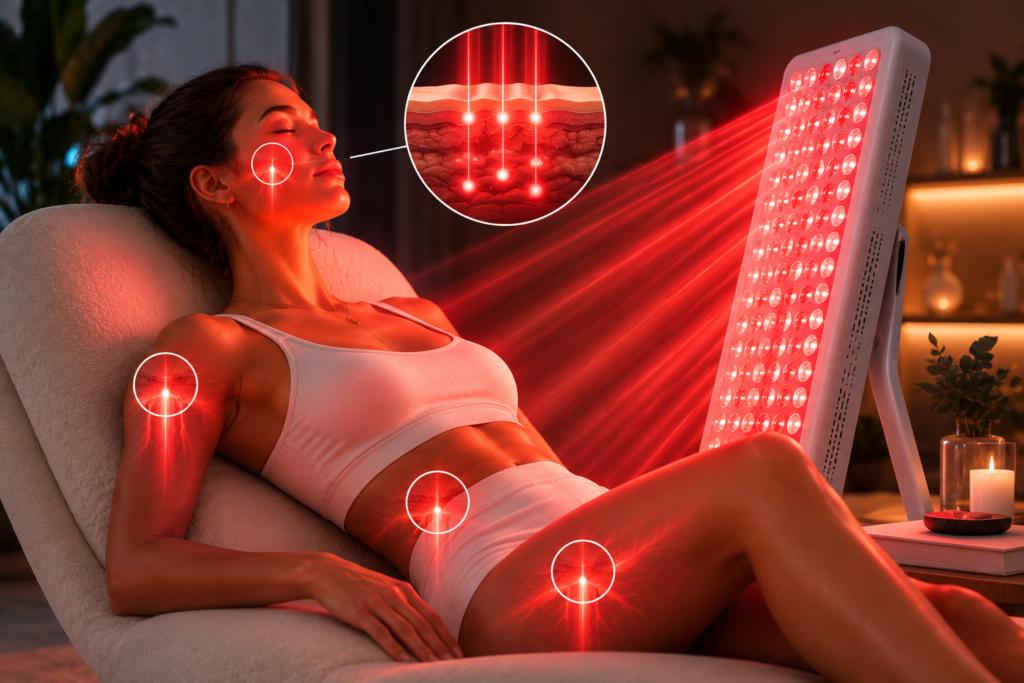
The proposed reason light might influence skin appearance is cellular. Red and near-infrared light is thought to be absorbed by targets inside cells, potentially supporting energy production and signaling involved in skin maintenance and repair. This is a plausible mechanism, but a plausible mechanism is not the same as a guaranteed visible result. Both can be true at once: the biology is credible, and the real-world effect is modest and variable.
What Red Light Therapy Anti-Aging Doesn’t Support
Several common claims go well beyond the science. Red light therapy does not erase wrinkles, eliminate deep lines, replace medical or procedural treatments, or stop the aging process. It is not a substitute for sun protection, which remains one of the most important factors in how skin ages over time. And it does not produce identical results for everyone; responses vary, and some people notice little change.
Claims of guaranteed or permanent results are particularly worth distrusting. Where research reports benefits, they are described in cautious, appearance-focused terms, and they depend on continued, consistent use rather than a one-time fix.
Red Light Therapy Anti-Aging Safety
One reason red light therapy has drawn research interest for aesthetic use is its favorable safety profile at appropriate doses. A review of the oncologic safety of low-level light therapy for aesthetic skin rejuvenation examines this question and is reassuring at the doses studied, though the authors note that research continues. According to Cleveland Clinic, red light therapy uses low levels of light to influence cells without damaging the skin, and side effects at consumer doses tend to be mild and temporary.
Still, “generally low-risk” is not the same as “right for everyone.” People who are pregnant, who take photosensitizing medications, or who have a relevant skin or eye condition should consult a healthcare professional first, and protecting the eyes from bright light is sensible.
Realistic Red Light Therapy Anti-Aging Expectations
The most useful mindset for anyone considering red light therapy for aging skin is patience paired with skepticism toward bold claims. Studies that report benefits typically involve weeks of consistent sessions, and the effects, when they occur, are gradual and subtle improvements in appearance rather than a visible reversal of age. Viewing the practice as one supportive habit — alongside daily sun protection, good skincare, sleep, and overall health — tends to lead to a more satisfying and honest experience than expecting a dramatic outcome.
It also helps to track changes realistically. Because effects are subtle, casual day-to-day observation can be misleading. Consistent routines, reasonable timeframes, and a willingness to conclude that a device may simply not do much for you are all part of evaluating it fairly.
When to See a Dermatologist
Red light therapy is a cosmetic-appearance practice, not medical care. Concerns such as a new or changing spot, a mole that looks different, persistent irritation, or any skin issue that worries you should be evaluated by a board-certified dermatologist rather than addressed with a light device. A dermatologist can also offer perspective on evidence-based options for skin aging and advise whether light-based approaches are reasonable for your skin and circumstances.
How to Read Anti-Aging Marketing
A few habits make it easier to navigate the claims. Treat words like “reverse,” “erase,” and “guaranteed” as red flags rather than reassurances. Look for language that matches the science, which speaks of supporting the appearance of fine lines, texture, and tone rather than undoing aging. Be wary of dramatic before-and-after promises and of any product that downplays the importance of sun protection and overall skin care. The most trustworthy descriptions are the most measured ones.
The Bottom Line
Red light therapy and skin aging is a topic where hype outpaces evidence. The science is encouraging but modest: some research suggests red and near-infrared light may support the appearance of aging skin, with a favorable safety profile at appropriate doses. It does not reverse aging, erase wrinkles, or guarantee results, and it is no substitute for sun protection or medical care. Approached with realistic expectations and healthy skepticism toward bold claims, it can be a reasonable supportive habit — but for anything beyond appearance, a board-certified dermatologist is the right resource.
Ready to get your red light therapy device? See our brand and product reviews, and try out our product comparison tool to inform your decision.
Frequently Asked Questions
Does red light therapy reverse aging?
No. Aging is an ongoing biological process that no light device undoes. Some research suggests red and near-infrared light may support the appearance of aging skin, such as the look of fine lines and texture, but that is a cosmetic-appearance effect, not a reversal of aging.
Will red light therapy erase my wrinkles?
No. Research describes possible modest improvements in the appearance of certain signs of aging, not the erasure of wrinkles. Effects are gradual, subtle, and vary from person to person.
How long until I might see a difference?
Studies reporting benefits typically involve weeks of consistent sessions, and any change tends to be gradual and subtle. Because effects are modest, give a routine a reasonable timeframe and track changes carefully.
Is red light therapy safe for anti-aging use?
At appropriate doses it is generally considered low-risk for healthy adults, and a review of its oncologic safety for aesthetic use is reassuring at the doses studied. It is not right for everyone, however, so consult a professional if you are pregnant, take photosensitizing medication, or have a relevant condition.
Can it replace sun protection or a dermatologist?
No. Sun protection remains one of the most important factors in how skin ages, and red light therapy does not replace it. For any medical skin concern, see a board-certified dermatologist.
This article is for general educational purposes only and is not medical advice. Red light therapy is not a substitute for professional care. Talk with a qualified healthcare professional about your individual situation.