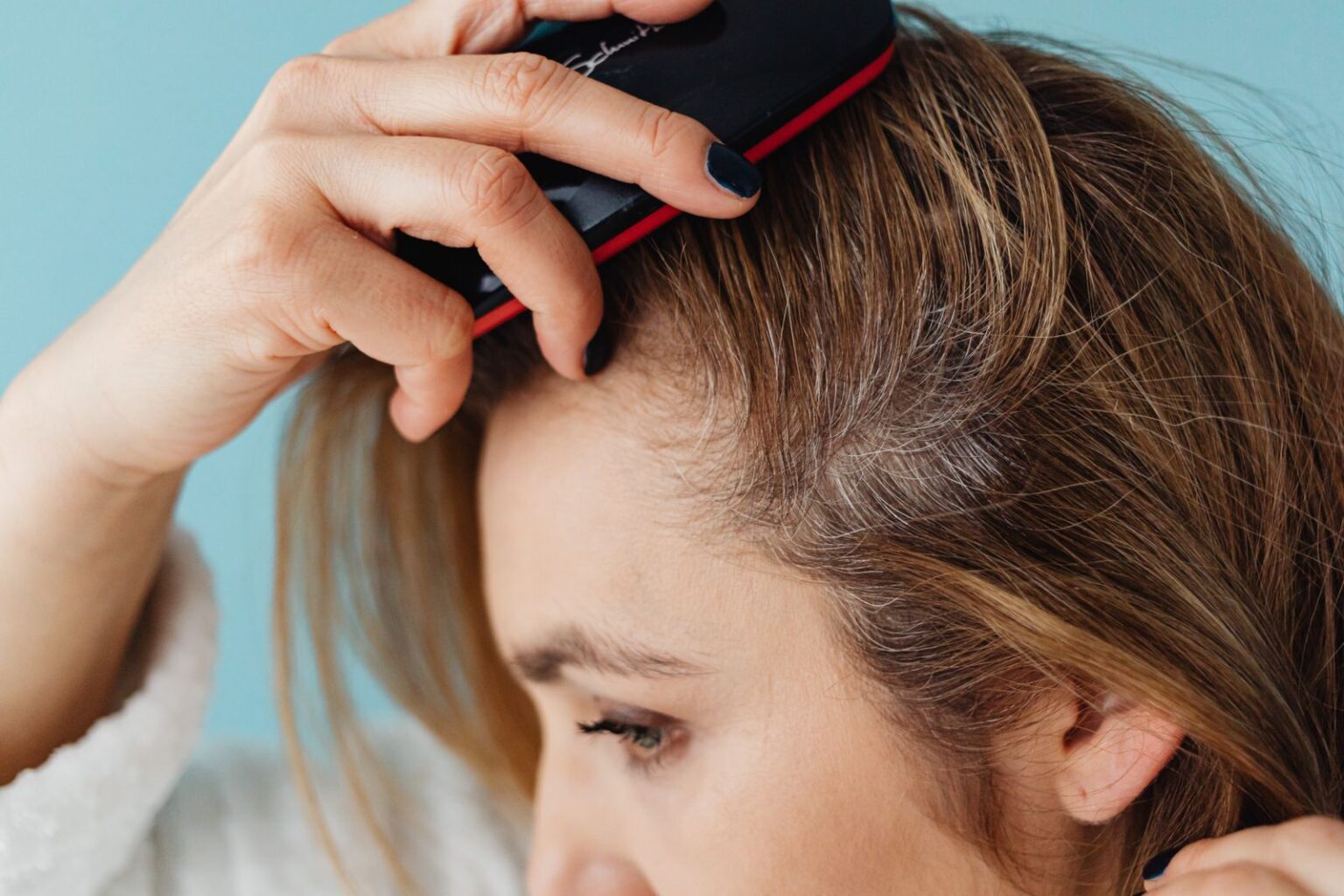
Hair thinning is a common and often distressing concern, and it is no surprise that people search for low-effort options they can use at home. Red light therapy — in this context usually called low-level light therapy (LLLT) — is one of the approaches that comes up. This article summarizes what the research actually shows about LLLT and hair thinning, while being clear about its limits: results vary, regrowth is never guaranteed, and a board-certified dermatologist should guide any hair-loss treatment. Studies on red light therapy hair thinning have drawn increasing attention from researchers.
The goal here is an honest middle ground. The evidence is more encouraging than dismissive marketing critics suggest, but far more modest than enthusiastic promotions claim. Understanding that nuance is the most useful thing a reader can take away. When examining red light therapy hair thinning, it helps to look carefully at the underlying research.
What the Research Suggests
The most relevant evidence concerns androgenetic alopecia, the common pattern hair thinning that affects many men and women. Reviews of low-level light therapy in androgenetic alopecia describe it as a promising option, and a systematic review and meta-analysis of randomized controlled trials has examined its comparative effectiveness for this specific condition. [source] The evidence around red light therapy hair thinning remains an active area of investigation.
The general takeaway from this body of work is that LLLT shows promise for androgenetic alopecia in reviews and pooled analyses. That is a meaningful statement — it reflects controlled studies, not just anecdotes. But “shows promise” is deliberately measured language. It does not mean guaranteed regrowth, and it does not mean the same result for every person. For those exploring red light therapy hair thinning, setting realistic expectations matters.
Why Results Vary So Much
Even where studies report benefits, individual responses differ considerably. Several factors contribute. Studies use different devices, wavelengths, doses, and treatment schedules, which makes results harder to compare and generalize. People also start from different baselines — the degree and duration of thinning, age, and individual biology all play a role. [source] Understanding red light therapy hair thinning requires separating marketing claims from published data.
This variability is exactly why honest sources avoid blanket promises. Some people in studies respond noticeably; others respond little or not at all. Reviewers consistently note the need for larger, more standardized trials to clarify who benefits most and under what protocols. Anyone researching red light therapy hair thinning will find the science is still developing.
How LLLT Is Thought to Work on Hair
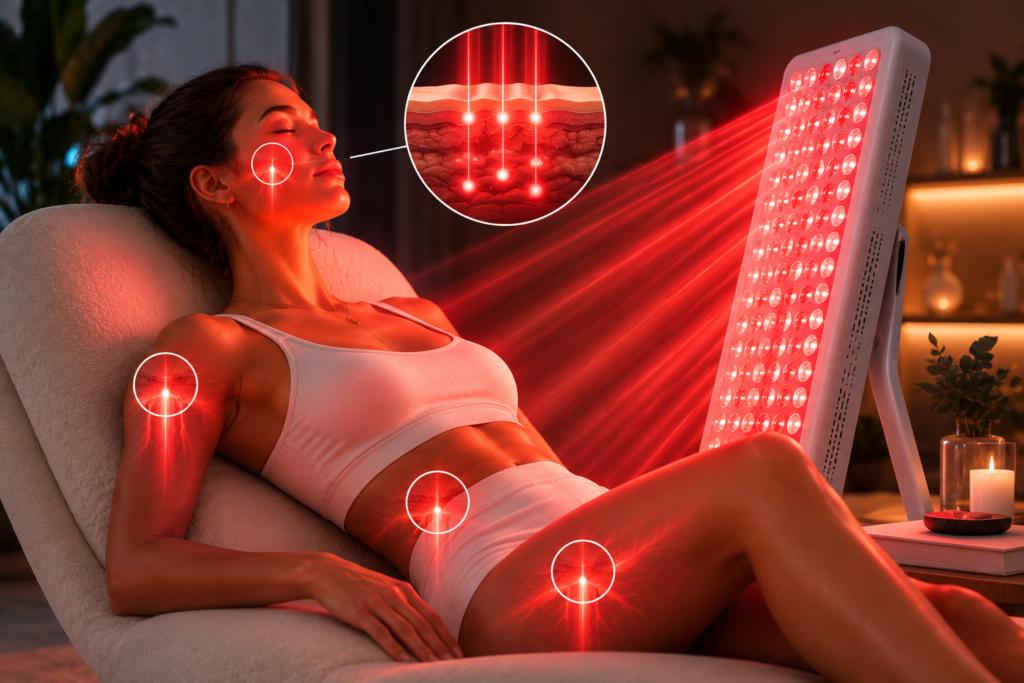
The proposed mechanism is consistent with red light therapy generally: red and near-infrared light is absorbed by cellular targets and may support the activity of cells involved in the hair growth cycle. The idea is that light may help nudge follicles toward a more active growth phase. This is a plausible, research-supported mechanism, but a mechanism is not the same as a guaranteed clinical outcome — both can be true at once. [source] The current state of red light therapy hair thinning research points to early, modest findings.
It is best to understand LLLT as something that may support hair-related goals in androgenetic alopecia for some people, rather than a reliable cure. Some research suggests benefit; more research is needed to define it precisely. Interest in red light therapy hair thinning has grown alongside broader photobiomodulation research.
How LLLT Differs From Medical Therapies
An important distinction is that LLLT is not the same as established medical treatments for hair loss. Dermatologists have a toolkit that may include topical and oral medications and other interventions, each with its own evidence base, benefits, and risks. LLLT is sometimes discussed as one option within or alongside that broader picture, not as a replacement for it. Most published reviews on red light therapy hair thinning call for larger, better-controlled trials.
This is why self-directing your own hair-loss strategy around a light device alone can be a mistake. Hair thinning has multiple possible causes — not all of which are androgenetic — and the right approach depends on an accurate diagnosis. A device cannot tell you why your hair is thinning. A clear-eyed look at red light therapy hair thinning means separating anecdote from controlled evidence.
Why a Dermatologist Should Guide Treatment
Because hair loss can stem from many causes, including hormonal factors, nutritional issues, medical conditions, and medications, a board-certified dermatologist is the appropriate professional to evaluate it. They can determine the type of hair loss, rule out underlying issues, and advise whether LLLT is a reasonable part of a plan for your specific situation. Consulting a healthcare provider about red light therapy hair thinning is always a sensible step.
Relying on a device without a diagnosis risks treating the wrong problem and delaying care that might actually help. Even where LLLT is appropriate, a professional can set realistic expectations and integrate it sensibly with evidence-based options. Devices marketed for red light therapy hair thinning vary widely in power output and wavelength.

Setting Honest Expectations
If you and a dermatologist decide LLLT is worth trying, expectations should be grounded. Any benefit tends to be gradual and is measured over months of consistent use, not a single session. Some people respond and others do not, and the practice does not regrow hair on demand or reverse advanced thinning. Consistency and patience are part of any fair trial, but they do not guarantee an outcome. Practitioners field frequent questions about red light therapy hair thinning from clients.
Reading Marketing Claims Critically
Hair-loss products are a crowded, emotional market, which invites overstatement. Be skeptical of dramatic before-and-after promises, guaranteed-regrowth language, and claims that a device works for everyone. The research supports cautious optimism for androgenetic alopecia, not certainty. Phrases like “may support,” “results vary,” and “more research is needed” are signs of honesty, not weakness. Studies on red light therapy hair thinning have drawn increasing attention from researchers.
What “Shows Promise” Does and Doesn’t Mean
It is worth unpacking the phrase “shows promise,” because it is easy to read either too much or too little into it. On the encouraging side, it reflects that controlled studies — not just testimonials — have reported benefits for androgenetic alopecia, which is more than can be said for many over-the-counter hair products. On the cautious side, it explicitly stops short of certainty: the studies vary in design and quality, the size of any benefit differs between people, and pooled analyses still call for larger, more standardized trials. Holding both halves together is the honest reading. LLLT is neither a proven cure nor empty hype; it is a research-supported option with genuine but limited and variable evidence. When examining red light therapy hair thinning, it helps to look carefully at the underlying research.
Why Patience and Realistic Tracking Help: Red light therapy hair thinning Notes
If a dermatologist supports a trial, it helps to evaluate it the way the research does — over months, not weeks, and against modest expectations. Hair grows slowly, so any change is gradual, and day-to-day observation tends to mislead. Some people find it useful to note a start date and reassess calmly after a defined period rather than scrutinizing the scalp constantly. This measured approach both reduces frustration and makes it easier to judge, with professional input, whether the routine is worth continuing.
Safety Note
At consumer doses, low-level light therapy is generally considered low-risk for most healthy adults, with side effects that tend to be mild and temporary. Even so, hair thinning is a concern that deserves professional input. Consult a board-certified dermatologist before starting, especially if your thinning is sudden, patchy, or accompanied by other symptoms, and if you are pregnant, take photosensitizing medications, or have a relevant medical condition. Protect your eyes from bright light during use. LLLT is not a replacement for medical evaluation and care; it is, at most, one option a professional may consider with you.
The Bottom Line
Research, including reviews and a meta-analysis of randomized trials, suggests low-level light therapy shows promise for androgenetic alopecia — but results vary, regrowth is never guaranteed, and it is distinct from established medical therapies. The responsible path is to treat LLLT as something that may support hair-related goals for some people, to keep expectations modest, and to let a board-certified dermatologist diagnose the cause of thinning and guide any treatment plan.
Frequently Asked Questions
Does red light therapy regrow hair?
Reviews and a meta-analysis suggest low-level light therapy shows promise for androgenetic alopecia, but results vary and regrowth is not guaranteed. It may support hair-related goals for some people, not all.
Is LLLT the same as hair-loss medication?
No. LLLT is distinct from established medical therapies such as topical or oral medications. It is sometimes discussed as one option alongside them, not a replacement, and a dermatologist should advise what fits your case.
How long before I might see anything?
Any benefit tends to be gradual and measured over months of consistent use. There is no guaranteed timeline, and some people respond while others do not.
Why should I see a dermatologist first?
Hair thinning has many possible causes, and a device cannot diagnose them. A board-certified dermatologist can identify the type of hair loss, rule out underlying issues, and advise whether LLLT is reasonable for you.
Is red light therapy for hair safe?
At consumer doses it is generally considered low-risk for healthy adults, with mild, temporary side effects. Still, consult a dermatologist before starting, protect your eyes, and seek care for sudden or patchy thinning.
Ready to get your red light therapy device? See our brand reviews and product reviews, and try out our product comparison tool to inform your decision.