
Transcranial photobiomodulation is one of the most intriguing—and most misunderstood—areas of light research. The idea of shining red or near-infrared light toward the head to influence the brain naturally captures the imagination, and it has generated genuine scientific interest. But it has also generated a great deal of hype that runs far ahead of the evidence. This article explains what t-PBM is, why researchers are studying it, and why it is essential to understand how early, experimental, and limited this area truly is.
Before exploring transcranial photobiomodulation, the most important message comes first: it is an emerging, preliminary research field rather than a proven treatment for mood or cognition. It is typically studied in clinical settings with specialized equipment, the studies are small and highly variable, and it is not a proven treatment. It is also not the same thing as using a consumer red light panel at home. Nothing here should be taken as a reason to expect mental health or cognitive benefits from any device.
What Transcranial Photobiomodulation Is
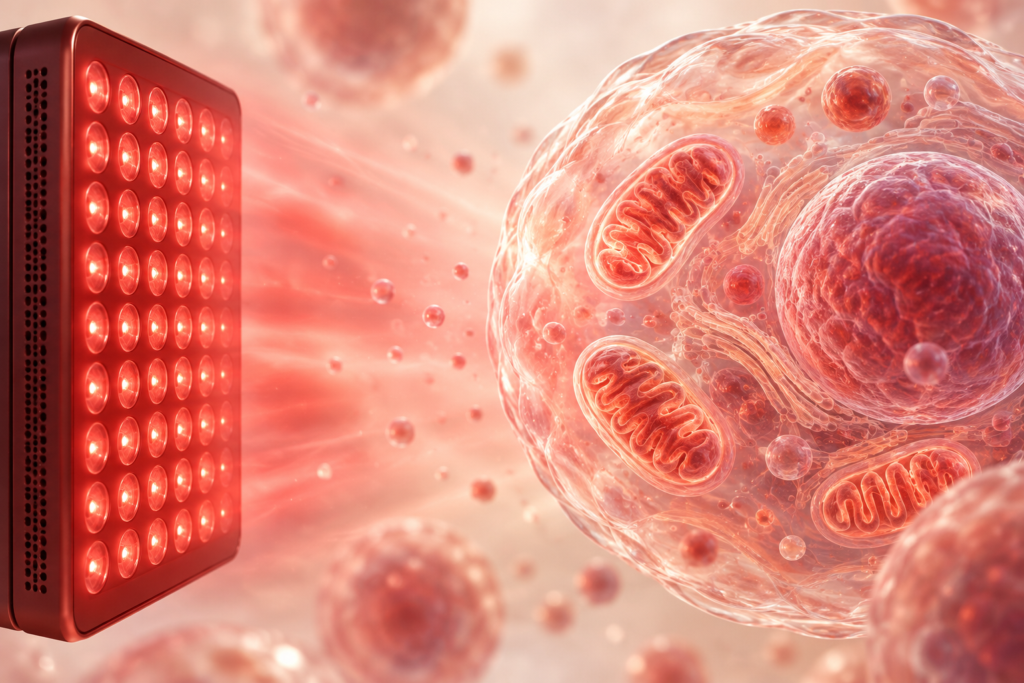
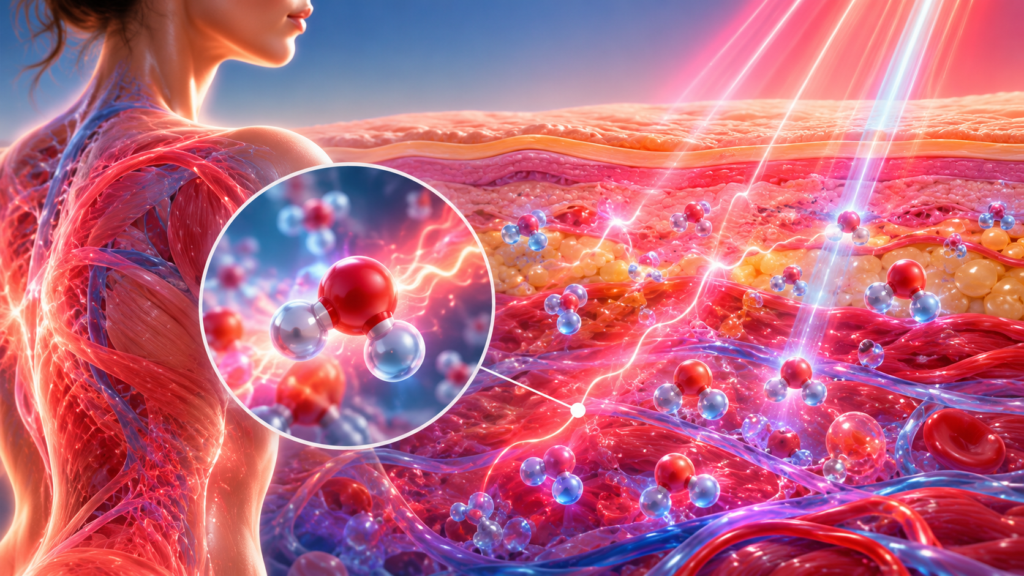
Photobiomodulation is the broad term for using low levels of red and near-infrared light to influence cells. Cleveland Clinic describes red light therapy as using low levels of red or near-infrared light, studied mainly for skin and tissue-related goals. Transcranial photobiomodulation applies the same general concept but directs light toward the head, with the aim of reaching brain tissue. The proposed biological rationale is the same as for photobiomodulation generally: research by Michael Hamblin and colleagues describes how red and near-infrared light may be absorbed by mitochondria in cells, potentially influencing cellular energy and signaling.
That shared mechanism is exactly why the brain became a subject of interest. If light can influence cellular energy in tissue, researchers asked, might it have measurable effects on brain cells too? That is a reasonable scientific question — but a question is not an answer, and the leap from a plausible mechanism to a reliable benefit is long and far from complete.
Why Researchers Are Studying Transcranial Photobiomodulation
Interest in t-PBM has grown alongside the search for new, non-invasive approaches that might one day support brain health. A review of transcranial photobiomodulation for the management of depression surveys this early work and the theoretical reasons it is being explored, including the mitochondrial mechanism and effects on blood flow and inflammation that have been proposed in laboratory and preliminary human studies. The existence of such reviews reflects scientific curiosity, not established practice.
It is crucial to read these reviews the way the researchers intend. They describe a field in its infancy, identify what might be worth investigating, and repeatedly call for larger and better-designed studies. They do not conclude that t-PBM is a validated treatment.

Why Transcranial Photobiomodulation Research Requires Caution
Several features of this research area demand real caution, and understanding them protects you from overinterpreting headlines.
The Studies Are Small and Preliminary
Much of the human research on t-PBM for mood or cognition involves small numbers of participants and early-stage designs. The review of transcranial photobiomodulation for depression makes clear that the evidence base is limited and that findings should be regarded as preliminary rather than definitive.
The Research Is Highly Heterogeneous
Studies in this area differ widely in their devices, wavelengths, doses, placement, session length, and the people studied. A systematic review and meta-analysis of transcranial photobiomodulation and cognitive performance in young healthy adults notes considerable heterogeneity across studies. When studies vary this much, it becomes very difficult to draw firm or generalizable conclusions.
It Is Usually Clinic-Based and Experimental
The t-PBM studied in research typically uses specialized equipment and protocols administered in controlled settings, often as part of formal investigations. This is a research procedure under study, not a home wellness routine, and it should be understood as experimental.
How Transcranial Photobiomodulation Differs From Home Panels
This distinction is the heart of the matter. The transcranial photobiomodulation examined in studies is not equivalent to standing in front of a red light panel marketed for skin or recovery. The research protocols use particular devices, doses, and placements chosen for investigation, and they are evaluated in controlled conditions. A consumer panel is a general wellness product; it is not a validated brain device, and the early research on t-PBM does not transfer to it.
In other words, you cannot read a preliminary study on t-PBM and conclude that a home red light device will support your mood, memory, or focus. Making that leap is one of the most common and misleading errors in this space, and the honest science does not support it. Understanding transcranial photobiomodulation means recognizing that clinic-based research cannot be directly applied to consumer red light devices.
A Necessary Caution
Red light therapy and transcranial photobiomodulation are not proven treatments or cures for depression, anxiety, or any other mental health condition, and neither is a substitute or replacement for professional mental health care. If you are struggling, please reach out to a qualified professional. In the United States, you can call or text the 988 Suicide and Crisis Lifeline at any time. The strongest, best-established support for mental health comes from evidence-based care, not from light devices.

What Transcranial Photobiomodulation Means for Consumers
It is entirely fair to find transcranial photobiomodulation scientifically interesting. Curiosity about emerging research is healthy. What is not fair — to yourself or to the science — is to treat an early-stage research area as if it were a settled solution. The responsible stance is to watch the field develop, expect that many promising early findings will not hold up, and rely on established, professional care for any mental health concern.
If you are considering anything related to brain health, the most reliable starting point is a healthcare professional who can give you guidance grounded in your situation. Emerging research is a reason for measured interest, not for self-experimentation with devices that have not been validated for these purposes.

How to Read Transcranial Photobiomodulation Headlines
Because this is an exciting-sounding topic, it tends to attract dramatic coverage and confident marketing. A few habits help you stay grounded when you encounter such claims. First, notice whether a claim is based on a small, early study or on settled science; in this field, it is almost always the former. Second, ask whether the source acknowledges the heterogeneity and preliminary nature of the research, as the reviews themselves do. Third, be wary whenever findings from a controlled research procedure are stretched to imply that a consumer device will deliver the same effects. And finally, treat any promise of guaranteed mood or cognitive benefits as a red flag, because the honest science makes no such promise.
A Responsible View of Transcranial Photobiomodulation
None of this means the field is worthless or that curiosity is misplaced. Many areas of medicine began with small, uncertain studies, and careful long-term research is exactly how a promising idea is either confirmed or set aside. The responsible posture is to let that process unfold, to favor sources that describe the science accurately, and to keep your own decisions grounded in what is established today. For your mental wellbeing, that means leaning on proven approaches and professional guidance while treating transcranial photobiomodulation as an interesting research story to watch rather than a tool to adopt. That balance — genuine interest paired with genuine caution — is the most honest way to engage with an emerging field.
The Bottom Line
Transcranial photobiomodulation is a genuinely emerging research area exploring whether red and near-infrared light directed at the head might influence the brain. It rests on a plausible cellular mechanism, but the human evidence for mood and cognition is early, small, highly heterogeneous, typically clinic-based, and not proven. It is also fundamentally different from a consumer red light panel. Approach this field with curiosity and a great deal of caution, do not expect mental health benefits from any device, and rely on professional care — including the 988 Suicide and Crisis Lifeline when needed — for genuine support.
Ready to get your red light therapy device? See our brand and product reviews, and try out our product comparison tool to inform your decision.
Frequently Asked Questions
What is transcranial photobiomodulation (t-PBM)?
Transcranial photobiomodulation is an experimental research approach that directs low levels of red or near-infrared light toward the head to investigate possible effects on the brain.It is based on the same proposed cellular mechanism as photobiomodulation generally, but its effects on mood and cognition are early and unproven.
Is t-PBM proven to treat depression or improve the brain?
No. The human research is preliminary, involves small studies, and is highly heterogeneous. Reviews describe it as an emerging area that needs much larger, better-designed trials. It is not a validated treatment and is not a substitute for professional mental health care.
Is using a home red light panel the same as t-PBM?
No. The t-PBM studied in research uses specific devices, doses, and placements in controlled settings. A consumer red light panel is a general wellness product and is not a validated brain device. Early t-PBM research does not transfer to home panels.
Why are researchers studying transcranial photobiomodulation?
Researchers are studying transcranial photobiomodulation because laboratory findings suggest light may influence cellular energy production, raising questions about possible effects on brain tissue that still require much more research. This reflects scientific interest and a search for non-invasive approaches, not established or proven practice.
What should I do if I am struggling with my mental health?
Reach out to a qualified mental health professional, who can offer evidence-based care suited to your situation. In the US, you can call or text the 988 Suicide and Crisis Lifeline at any time. Do not rely on light devices or experimental research in place of professional support.
This article is for general educational purposes only and is not medical advice. Red light therapy is not a substitute for professional care. Talk with a qualified healthcare professional about your individual situation.