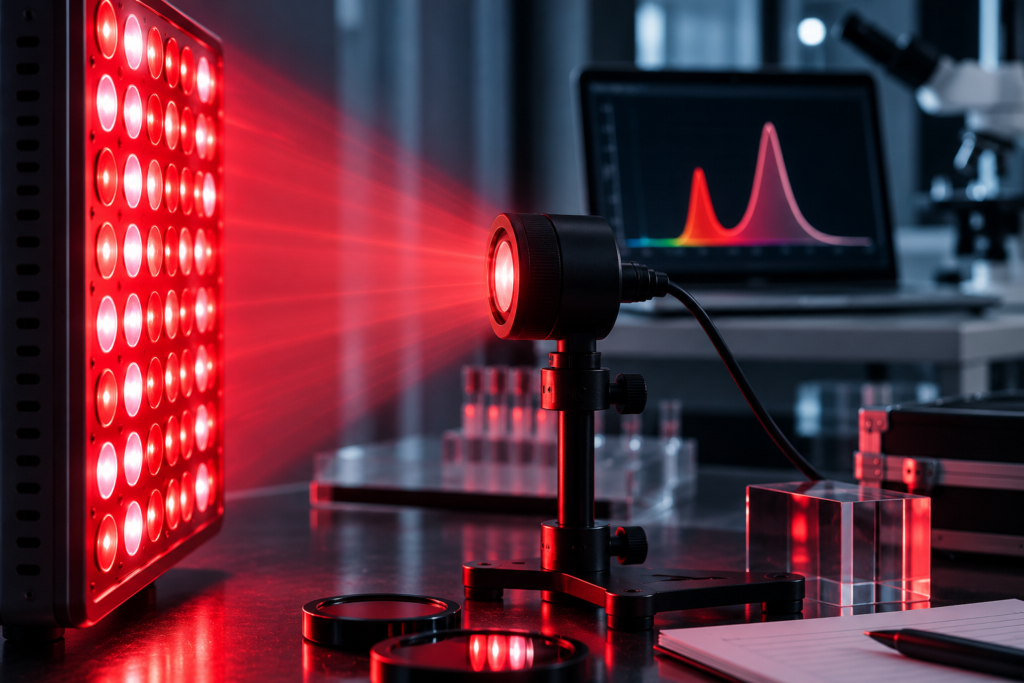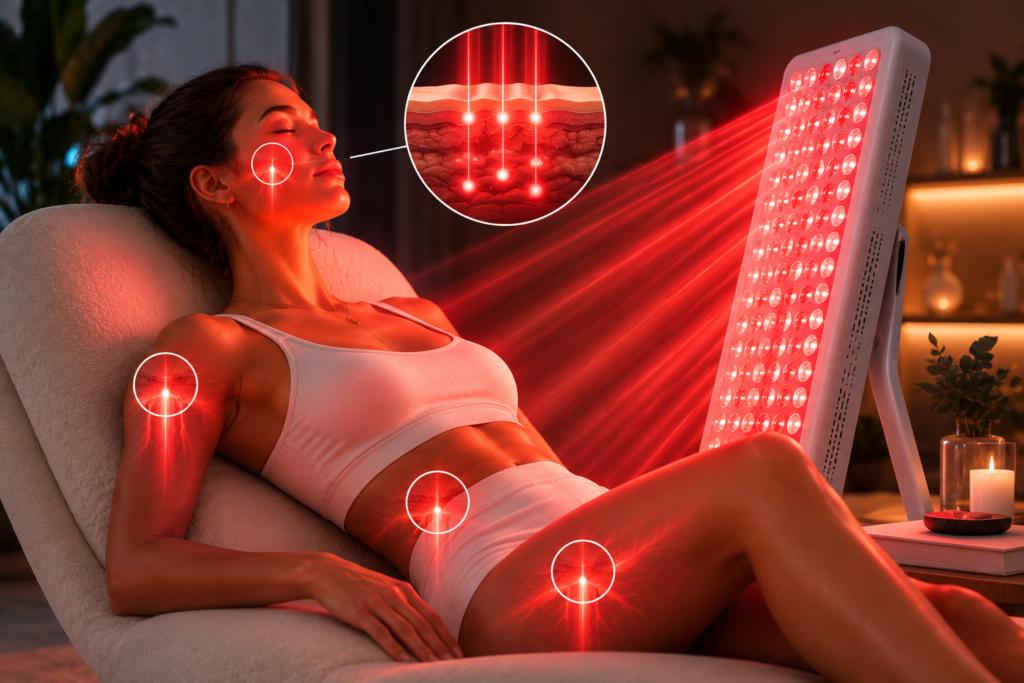

Red light therapy self care has become a growing topic as more people look for simple ways to support their overall wellbeing. As red light therapy has grown popular, some people have begun folding a few minutes of it into their self-care routines. This article looks honestly at where red light might fit — and, crucially, why it belongs near the edges of self-care rather than at its center.
The most balanced approach to red light therapy self care is to treat it as one optional habit alongside evidence-based fundamentals like sleep, movement, connection, and stress management. Red light therapy is not a treatment for any mental health condition and is not a substitute for professional care.
What Red Light Therapy Self Care Really Means
Self-care is often marketed as products and indulgences, but the substance of it is more grounded. The National Institute of Mental Health, in its guidance on caring for your mental health, describes self-care as taking time to do things that help you live well and improve both physical and mental health — including regular exercise, balanced eating, prioritizing sleep, practicing relaxation or gratitude, and staying connected to others. These are the building blocks, and they are supported by evidence.
Seen this way, self-care is less about any single product and more about a sustainable set of habits that support your overall wellbeing. That perspective is exactly what helps put a practice like red light therapy in its proper, modest place. Thinking about red light therapy self care this way helps keep expectations realistic and priorities in the right place.
The Foundations of Red Light Therapy Self Care
If you want a self-care routine that genuinely supports your wellbeing, the strongest place to invest your energy is in the fundamentals. The American Psychological Association outlines healthy ways to handle life’s stressors, including maintaining supportive relationships, getting regular physical activity, ensuring adequate sleep, setting limits on stressors where you can, and using relaxation techniques. The National Center for Complementary and Integrative Health similarly highlights relaxation and mind-body approaches among options for managing stress.
These practices are not glamorous, but they are the workhorses of wellbeing, and they deserve the central role in any self-care routine. A glowing device, by contrast, is at most a small accent.

Where Red Light Therapy Self Care Fits
So where does red light therapy belong? For people who enjoy it, it can be one pleasant, optional habit folded into a broader routine. Cleveland Clinic describes red light therapy as using low levels of red and near-infrared light, studied mainly for skin and tissue-related goals such as skin appearance or recovery. Some people simply find a few minutes with a soft red glow to be a calming, enjoyable ritual, perhaps alongside a skincare step or after a workout.
Used this way, red light becomes a low-stakes part of self-care — not because it treats stress or mental health, but because building small, enjoyable, consistent rituals can make a self-care routine feel more sustainable. The key is to keep its role honest. It is an optional extra, not a pillar, and certainly not a remedy for emotional difficulties.
An Important Caution
Red light therapy is not a treatment or cure for depression, anxiety, or any other mental health condition, and it is not a replacement for professional mental health care. Self-care habits can support your overall wellbeing, but they are not a substitute for support when you are struggling. The National Institute of Mental Health offers guidance on finding help for mental illnesses, and in the United States you can call or text the 988 Suicide and Crisis Lifeline at any time. Reaching out is itself an important act of self-care.
Building a Red Light Therapy Self Care Routine
A well-rounded self-care routine puts the fundamentals first and treats anything else as optional. You might anchor your days around consistent sleep, some form of movement you enjoy, nourishing meals, and moments of connection with people you care about. You could add relaxation or mindfulness practices to help manage stress. Within that framework, if you enjoy red light therapy, you can include a few minutes of it as a pleasant ritual, following the device’s guidance on time and distance.
The order of priority matters. When the evidence-based fundamentals are in place, optional extras like red light can add a small sense of comfort and routine without carrying any false weight. When those fundamentals are missing, no device can fill the gap. A successful red light therapy self care routine always keeps evidence-based habits at the center rather than relying on a device alone.

Keeping Red Light Therapy Self Care Expectations Realistic
It helps to be clear-eyed about what self-care can and cannot do. Consistent, supportive habits can genuinely improve how you feel day to day and help you cope with ordinary stress. But self-care is not a cure for mental illness, and treating it as one can delay people from seeking the help they need. The National Institute of Mental Health emphasizes that if you are dealing with a mental health concern, professional support is important — self-care complements that support rather than replacing it.
Within those honest limits, red light therapy is neither a breakthrough nor a problem. It is simply one of many small, optional choices you might make. The meaningful work of self-care happens in the fundamentals and in reaching out for help when you need it.

Avoiding Red Light Therapy Self Care Marketing Myths
Much of what is sold under the banner of self-care is really just shopping, and red light devices can easily be marketed that way — as the missing piece that will finally make you calm, focused, or well. It helps to recognize this framing for what it is. Genuine self-care rarely arrives in a box. The habits with the strongest support for wellbeing, such as sleep, movement, connection, and stress management, cost little or nothing and ask mainly for consistency. A device may be a pleasant addition for someone who enjoys it, but if a purchase is being positioned as essential to your mental health, that is a reason for skepticism rather than excitement.
This matters because believing that wellbeing can be bought can quietly crowd out the practices that actually help, and can delay people from seeking real support. Keeping red light therapy in the category of optional, enjoyable extras — rather than necessary self-care — protects both your expectations and your priorities.
Red Light Therapy Self Care Includes Asking for Help
One of the most overlooked truths about self-care is that it sometimes means recognizing when you cannot manage on your own. Reaching out to a friend, a doctor, or a mental health professional is not a failure of self-care; it is one of its most important forms. The National Institute of Mental Health provides guidance on finding help for mental illnesses precisely because professional support is a normal and valuable part of looking after yourself. Folding that willingness to seek help into your understanding of self-care ensures that a routine of small daily habits never becomes a substitute for the care you may genuinely need.
Safety Notes for the Light Itself
If you include a red light device in your routine, a few practical precautions apply. For most healthy adults, red light therapy at consumer doses is generally considered low-risk, with side effects that tend to be mild and temporary, such as brief warmth or redness. Protect your eyes from bright light, follow the device instructions, and consult a healthcare professional first if you are pregnant, take medications that increase light sensitivity, or have a relevant medical or eye condition.
The Bottom Line
Red light therapy self care can be a pleasant addition to a healthy routine, but the greatest benefits still come from sleep, movement, balanced nutrition, connection, and stress management. Red light therapy can be one optional, low-stakes habit within that routine for those who enjoy it, but it is not a treatment for any mental health condition and not a replacement for professional care. Keep the fundamentals at the center, treat the light as a pleasant extra, and remember that reaching out for help — including the 988 Suicide and Crisis Lifeline — is itself an act of self-care.
Ready to get your red light therapy device? See our brand and product reviews, and try out our product comparison tool to inform your decision.
Frequently Asked Questions
Is red light therapy self care?
Red light therapy self care can be one optional part of a broader wellness routine, but it should never replace the evidence-based habits that form the foundation of good self-care. The foundation of self-care is well-established habits like sleep, movement, connection, and stress management.
What are the most important parts of a self-care routine?
Evidence-based fundamentals matter most: regular physical activity, adequate sleep, balanced eating, staying connected to supportive people, and using relaxation or mindfulness techniques to manage stress. These deserve the central role; optional extras like red light are minor accents.
Can self-care replace therapy or professional mental health care?
No. Self-care habits can support your overall wellbeing, but they are not a substitute for professional care when you are struggling. Reaching out for help is itself an act of self-care. In the US, you can call or text the 988 Suicide and Crisis Lifeline at any time.
Does red light therapy help with stress or mood as part of self-care?
Red light therapy self care is best viewed as an optional wellness ritual rather than a treatment for stress or mood. Current evidence does not support using red light therapy to treat mental health conditions.
Is it safe to use a red light device in a daily routine?
For most healthy adults at consumer doses it is generally considered low-risk, with mild, temporary side effects such as brief warmth or redness. Protect your eyes, follow device instructions, and consult a healthcare professional first if you are pregnant, photosensitive, or have a relevant medical or eye condition.
This article is for general educational purposes only and is not medical advice. Red light therapy is not a substitute for professional care. Talk with a qualified healthcare professional about your individual situation.