
Mind-body practices such as meditation, mindfulness, and yoga have a long history and a growing base of research behind them. As red light therapy mind body routines have become more popular, some people have started using red light as part of meditation, mindfulness, and yoga. This article explores how red light might serve as ambient context for mind-body practices — while being clear that the meaningful benefits come from the practices themselves, not from the light.
The most balanced approach to red light therapy mind body practices is to keep meditation, mindfulness, and yoga at the center while treating red light as optional ambient context. Red light, if you enjoy it, is at most a pleasant backdrop. It is not a treatment for any mental health condition and not a substitute for professional care.
What Red Light Therapy Mind Body Practices Offer
Mind-body practices share a common thread: they use attention, breath, and movement to cultivate a calmer, more grounded state. The National Center for Complementary and Integrative Health notes that meditation and mindfulness practices may help with stress and general well-being for some people, while being candid that effects vary and the research continues to develop. The National Center also describes relaxation and mind-body approaches among the options people use to manage stress.
What makes these practices valuable is the activity itself — the deliberate focus, the slow breathing, the gentle movement. The evidence, measured as it is, points to the practices as the meaningful ingredient. That is the most important thing to keep in mind when considering whether and how to add red light to the picture.
Where Red Light Therapy Mind Body Routines Fit
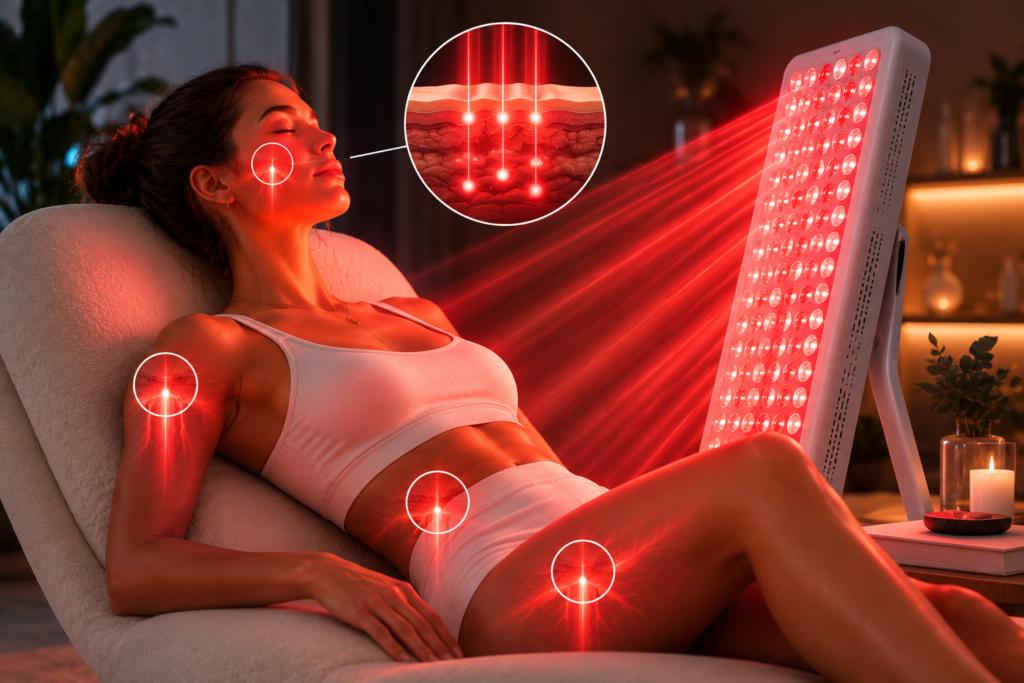
For people who enjoy it, a soft red glow can be a pleasant part of the environment in which they meditate or practice yoga. Harsh overhead lighting can feel stimulating, while a low, warm light often feels more conducive to stillness. Used this way, red light is essentially a lighting choice — ambient context, similar to a candle, soft music, or a comfortable mat.
It is important to be clear about what this is. Cleveland Clinic describes red light therapy as using low levels of red and near-infrared light, studied mainly for skin and tissue-related goals. There is no established evidence that the light itself enhances meditation, deepens mindfulness, or improves mood. If a soft red ambiance helps you feel settled enough to practice, that is a reasonable sensory preference — not a benefit of the light on your mind.
An Important Caution
Red light therapy is not a treatment or cure for anxiety, depression, or any other mental health condition, and it is not a substitute for professional mental health care. Mind-body practices can support wellbeing, but they too are not a replacement for professional support when you are struggling. If you are in distress, please reach out to a qualified professional. In the United States, you can call or text the 988 Suicide and Crisis Lifeline at any time.

Combining Red Light Therapy Mind Body Practices
If you would like to bring red light into a mind-body routine, the sensible approach keeps the practice firmly in the lead. You might set up your space with comfortable, low lighting, and if you enjoy a red glow you could run a device for a few minutes while you meditate or move through gentle yoga, following the manufacturer’s guidance on time and distance. The light simply sets the scene; your attention stays on the breath, the body, and the practice.
Approached this way, red light adds nothing false and takes nothing away. It is one more way to make a calming environment, while the meditation or mindfulness does the meaningful work. If you ever find the device distracting or fussy, it is perfectly reasonable to drop it; the practice does not depend on it.

Why Red Light Therapy Mind Body Starts With the Practice
It can be tempting to attribute a sense of calm after a session to whatever was novel about it — a new device, a particular light, a special setting. But the more likely explanation is far simpler. When you sit quietly, slow your breathing, and turn your attention inward, your body and mind respond to that deliberate shift.
The research on meditation and mindfulness points to these practices themselves as the meaningful contributors to stress relief and well-being for the people who benefit. A red glow in the room is part of the scenery; it is not doing the work.
Keeping this clear protects you from a common trap: gradually crediting an accessory for results that come from your own practice, and then feeling you need the accessory to practice at all. Meditation, mindfulness, and yoga require nothing but your attention and a little time. The most reliable way to deepen them is simply to do them regularly, not to add equipment.

Strengthening a Red Light Therapy Mind Body Routine
If your goal is to get more out of mind-body practice, the most effective steps have nothing to do with lighting. Practicing at a consistent time helps the habit take root. Starting small — even a few minutes — makes it easier to sustain than an ambitious session you struggle to keep up.
Guided recordings or classes can provide structure for beginners, and a quiet, comfortable space reduces friction. Gentleness with yourself matters too: a wandering mind is normal, and the practice is simply noticing and returning, not achieving perfect stillness. These unglamorous fundamentals are what actually build a durable practice. A pleasant ambient glow may make the space feel inviting, and that is a fine reason to use it, but it remains a backdrop to the real work of showing up consistently.
A Word on Safety During Practice
A few precautions help if you use a device while practicing. For most healthy adults, red light therapy at consumer doses is generally considered low-risk, with side effects that are typically mild and temporary, such as brief warmth or redness.
Protect your eyes from bright light, which matters especially during practices where your eyes may be closed and relaxed near a device, and follow the instructions for time and distance. The National Center for Complementary and Integrative Health notes that meditation and mindfulness are generally considered safe for most people, though anyone with a relevant health condition should use good judgment and seek guidance when appropriate.
Keeping Red Light Therapy Mind Body Expectations Honest
It is worth restating the boundary clearly. Mind-body practices have measured, encouraging evidence for supporting stress and wellbeing in some people, and they are well worth doing. Red light therapy does not share that evidence for the mind; its studied uses concern the skin and tissue. Blending the two can create a pleasant routine, but any sense of calm comes from the practice, not from the glow. Treating the light as the source of mental benefit would be reading far more into it than the science supports.
Within those honest limits, using red light as ambient context is a low-stakes, optional choice. The reason to meditate or practice yoga is the practice itself, and that is where the value lies.
The Bottom Line
Red light therapy mind body routines can create a calming environment, but the meaningful benefits come from meditation, mindfulness, yoga, and other evidence-based practices. Red light therapy can serve as pleasant ambient context for those who enjoy it, but it is not a treatment for any mental health condition and not a replacement for professional care. Let the practice lead, treat the light as an optional backdrop, and reach out for support — including the 988 Suicide and Crisis Lifeline when needed — whenever you require it.
Ready to get your red light therapy device? See our brand and product reviews, and try out our product comparison tool to inform your decision.
Frequently Asked Questions
Does red light therapy mind body practice improve meditation or yoga?
Current evidence does not show that red light therapy mind body practices enhance meditation, mindfulness, or yoga beyond serving as an optional ambient setting. A soft glow can be a pleasant ambient backdrop for people who enjoy it, but the benefits of mind-body practices come from the practices themselves, not from the light.
Why combine red light with mind-body practices at all?
Some people find low, warm lighting more conducive to stillness than harsh overhead light, so they use a red glow as ambient context for meditation or yoga. It is essentially a lighting preference, similar to a candle or soft music, not a source of mental benefit.
Do meditation and mindfulness actually help with stress?
They may help with stress and general wellbeing for some people, according to health authorities, though effects vary and the research continues to develop. They are generally considered safe for most people and are well worth doing as part of a routine.
Is red light therapy a treatment for anxiety or depression?
No. It is not a treatment or cure for any mental health condition, and it is not a substitute for professional care. If you are struggling, reach out to a qualified professional, and in the US you can call or text the 988 Suicide and Crisis Lifeline at any time.
Is it safe to use a red light device while meditating?
For most healthy adults at consumer doses it is generally considered low-risk, with mild, temporary side effects. Protect your eyes from bright light, which matters especially if your eyes are closed near a device, and follow the manufacturer’s guidance on time and distance.
This article is for general educational purposes only and is not medical advice. Red light therapy is not a substitute for professional care. Talk with a qualified healthcare professional about your individual situation.