
Search online for red light therapy and mental health, and you will find a confusing mix of cautious science and bold promises. Some pages suggest a panel can lift depression or melt away anxiety; others dismiss the whole idea. The honest picture sits between those extremes, and getting your expectations right from the start is the single most important thing you can do. This article explains red light therapy mental health expectations, what current research does and doesn’t show, and why professional care remains essential.
Setting red light therapy mental health expectations begins with one clear fact: red light therapy is not a treatment or cure for depression, anxiety, or any mental illness. At most, some people find a calming light routine pleasant and relaxing, and relaxation can be a small, supportive part of a broader wellbeing routine. That is a modest claim, and it is the only honest one.
Red Light Therapy Mental Health Expectations Start Here
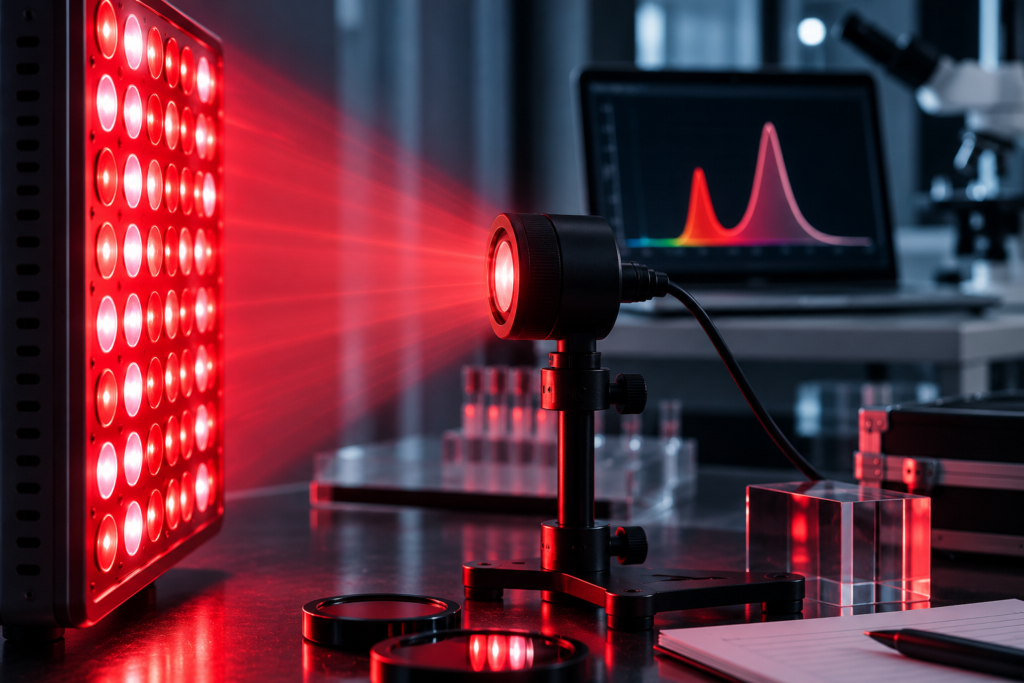
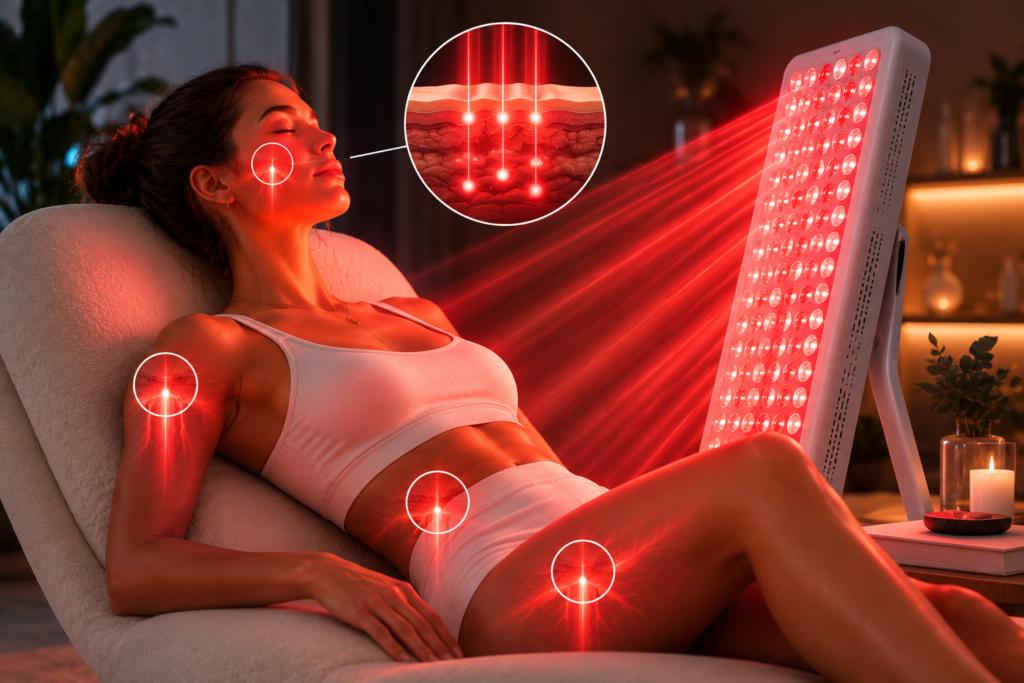
Red light therapy, also called photobiomodulation, uses low levels of red and near-infrared light. According to Cleveland Clinic, it delivers these wavelengths to the skin and tissues without the ultraviolet rays that cause sunburn, and it is studied mainly for skin and tissue-related goals. A consumer panel you might use at home is a wellness device, not a medical instrument calibrated for the brain.
This distinction matters enormously when people talk about mood. The marketing language that surrounds consumer panels often borrows excitement from a very different and much earlier area of research, and the two are not the same thing.
Red Light Therapy Mental Health Expectations and Early Research
There is a genuine scientific field exploring whether light aimed at the head — called transcranial photobiomodulation — might one day play a role in supporting mood. A review of current perspectives on transcranial photobiomodulation for depression describes this as an emerging area with small, preliminary studies. The authors are candid that the evidence is early, that questions about dose and delivery remain open, and that larger, rigorous trials are needed before any conclusions can be drawn.
Two cautions follow directly from that. First, this research is preliminary and not proven; promising early signals are not the same as established benefit. Second, those studies use specialized, clinic-based devices and protocols under research conditions. They are not the same as shining a consumer skincare or recovery panel at your face at home, and it would be a mistake to treat them as interchangeable.

Why Red Light Therapy Mental Health Expectations Matter
Setting expectations is not about being negative. It is about protecting your wellbeing and your wallet. When someone expects a light panel to resolve genuine depression or anxiety, a few things can go wrong. They may feel like a failure when it does not work, which can deepen low mood. They may spend money they cannot spare chasing a promise. Most seriously, they may delay or avoid effective professional care while waiting for a device to do something it cannot do.
The National Institute of Mental Health, in its guidance on caring for your mental health, frames wellbeing as something built from many supports: sleep, movement, connection, stress management, and, when needed, professional treatment. A relaxing routine can sit comfortably among those supports. It cannot replace the foundation.
Setting Red Light Therapy Mental Health Expectations
So what is fair to hope for? If you find sitting quietly with a warm red glow for a few minutes genuinely relaxing, that small ritual may help you unwind, much like a warm bath, a few minutes of stretching, or a calming playlist might. Some people enjoy pairing it with deep breathing or a quiet moment at the end of the day. That sense of calm is a legitimate, if modest, benefit.
What is not reasonable is expecting it to change a clinical condition. Red light therapy does not treat, cure, or prevent depression or anxiety, and it does not guarantee any improvement in mood. If your low mood, worry, or distress is persistent or interfering with your life, that is a signal to reach out for professional support, not to add another gadget to your routine.
A Helpful Way to Frame It
Think of a calming light routine the way you might think of a comfortable pair of slippers or a favorite mug of tea. These things can make a hard day a little softer. Nobody expects slippers to treat an illness, and that is exactly the spirit in which to approach red light therapy and mood. Pleasant and supportive, yes; medical, no.

Depression and Anxiety Are Real and Treatable
It is worth saying plainly: depression and anxiety are real medical conditions, and they are treatable. The National Institute of Mental Health explains that depression is common, that it is not a personal weakness, and that effective treatments — including talk therapy, medication, or a combination — help many people recover. The most hopeful message in this entire article is not about any device. It is that real help exists and works.
Viewed that way, a calming routine and professional care are not competitors. One is a small comfort; the other is the path to genuine treatment. Keeping that order straight is the heart of managing expectations well.
How to Evaluate Red Light Therapy Mental Health Expectations
Once you understand the gap between early brain research and consumer panels, the marketing around mood becomes easier to navigate. A few habits of mind help. Be cautious whenever a product page leaps from a phrase like “studies suggest” straight to a promise about your depression or anxiety; the distance between a small preliminary study and a guarantee for you personally is enormous. Be wary of testimonials presented as proof, since individual stories cannot establish that a device works and may reflect many other changes in a person’s life. And notice when a seller blurs the line between a clinic-based research protocol and the panel they are selling, because that blur is exactly where unrealistic expectations are born.
None of this means the people sharing such claims are ill-intentioned. Often they are simply enthusiastic, or repeating what they have read elsewhere. But your wellbeing deserves a steadier footing than enthusiasm. When a claim sounds like a breakthrough for mental illness, the most caring response to yourself is calm skepticism and, if the question really matters to you, a conversation with a healthcare professional who can give you grounded guidance.

If You Decide to Try It
If a gentle light routine appeals to you purely as a relaxing habit, there is generally little harm for most healthy adults at consumer doses, where side effects tend to be mild and temporary. Use the device as directed, protect your eyes from bright light, and check with a healthcare professional first if you are pregnant, take medication that increases light sensitivity, or have a relevant medical or eye condition. Approach it as one optional comfort among many, judge it only on whether it helps you relax, and never let it stand in for care you may need.
Important: This Is Not a Replacement for Care
Red light therapy is not a replacement for professional mental health care. If you are struggling, please consider reaching out to a doctor, therapist, or counselor. In the United States, the 988 Suicide and Crisis Lifeline offers free, confidential support by call or text at 988, any time of day or night, including for emotional distress, not only crises. There is no shame in asking for help, and doing so is a sign of strength.
The Bottom Line
Red light therapy mental health expectations should remain modest because current evidence does not support using consumer devices to treat depression, anxiety, or other mental illnesses. What it cannot do is treat or cure any mental illness, and the brain research that fuels the excitement is early, preliminary, clinic-based, and not the same as a home panel. Set your expectations there, keep professional care at the center of your mental health, and you will have approached this topic with exactly the honesty it deserves.
Ready to get your red light therapy device? See our brand and product reviews, and try out our product comparison tool to inform your decision.
Frequently Asked Questions
What are realistic red light therapy mental health expectations?
Realistic red light therapy mental health expectations focus on the possibility of a calming wellness routine—not treating depression, anxiety, or any mental illness.
What does the brain research on light actually show?
Research on transcranial photobiomodulation for mood is early, preliminary, and based on small, clinic-based studies using specialized devices. It is not proven, and it is not the same as using a consumer panel at home.
Is a home red light panel the same as the devices used in studies?
No. Brain and mood studies use specialized, clinic-based devices and protocols under research conditions. Consumer skincare or recovery panels are wellness devices and should not be treated as equivalent.
What is a realistic expectation for red light therapy and mood?
A reasonable hope is that a few quiet minutes with a warm light feel relaxing, much like a warm bath or calming music. It does not guarantee any mood improvement and cannot change a clinical condition.
What should I do if my mood is not improving?
Persistent low mood, worry, or distress is a signal to reach out for professional support rather than to add another device. A doctor, therapist, or the 988 Suicide and Crisis Lifeline (call or text 988) can help.
This article is for general educational purposes only and is not medical advice. Red light therapy is not a substitute for professional care. Talk with a qualified healthcare professional about your individual situation.