
There is a quiet kind of power in a steady routine. The same small actions, repeated at the same time each day, can make life feel a little more predictable and manageable — and that steadiness can support emotional wellbeing. This article explores how red light therapy emotional wellbeing routines can encourage consistency, why a calming light ritual may serve as an anchor habit, and why it should never be viewed as treatment.
One thing first, stated plainly: red light therapy is not a treatment or cure for any mental health condition, and it is not a replacement for professional mental health care. Red light therapy emotional wellbeing is best understood as one optional anchor within a broader routine of healthy habits rather than a treatment for mental health conditions.
How Red Light Therapy Emotional Wellbeing Starts With Routine
The National Institute of Mental Health, in its guidance on caring for your mental health, describes wellbeing as something supported by consistent everyday habits: regular sleep, physical activity, healthy eating, connection with others, and time for relaxation and reflection. The common thread is regularity. It is not any single perfect action but the steady rhythm of supportive habits that tends to help most.
Routines help for a few intuitive reasons. They reduce the number of decisions you have to make, which can ease mental load. They create predictable moments of care in a day that might otherwise feel chaotic. And they build momentum, so that healthy actions start to feel automatic rather than effortful. The American Psychological Association’s guidance on handling stress similarly emphasizes regular, repeated practices — movement, relaxation, connection — rather than one-off fixes.
Red Light Therapy Emotional Wellbeing and Anchor Habits
An anchor habit is a small, reliable action you return to consistently, often used to stabilize a daily rhythm or to attach other habits to. A morning cup of coffee, an evening walk, or a few minutes of stretching can all serve as anchors. Because they happen dependably, they become natural hooks for building a fuller routine around them.
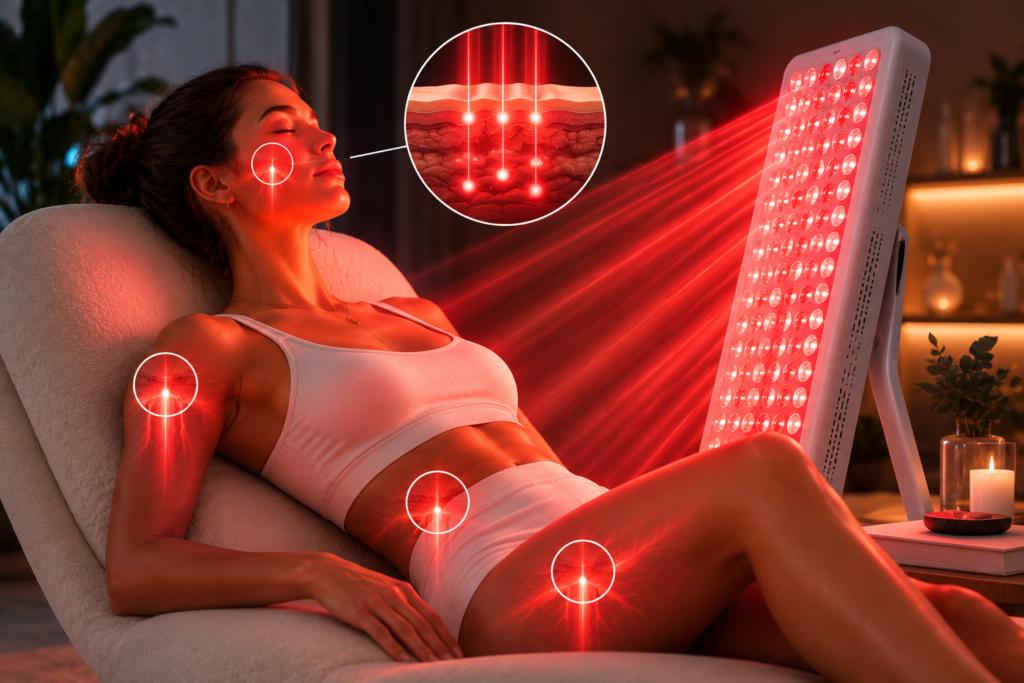
A calming red light session can play this anchor role for people who enjoy it. Suppose you decide to spend a few quiet minutes each evening with a warm red glow. That predictable moment can become a signal that the day is winding down, and you can build other supportive habits around it — slow breathing, a short gratitude note, or simply a screen-free pause. The benefit comes from the routine and the calm it creates, not from the light acting on your emotions directly.
Pairing Red Light Therapy Emotional Wellbeing With Mindfulness
The National Center for Complementary and Integrative Health notes that meditation and mindfulness practices are commonly used to support relaxation and stress management, and that for many people they are a low-risk way to bring a sense of calm into daily life. A few quiet minutes with a red light can be a natural occasion to practice a simple mindfulness exercise — noticing your breath, relaxing your shoulders, letting the day settle. In that pairing, the mindfulness is doing the meaningful work of fostering calm, and the light is simply a pleasant, consistent cue to begin.

Building a Red Light Therapy Emotional Wellbeing Routine
If you would like to experiment, the goal is to make the habit easy and consistent rather than intense. A few practical ideas can help. Choose a fixed time, such as right after brushing your teeth at night, so the session attaches to something you already do. Keep the device convenient and visible so starting takes no willpower. Pair the few minutes with one calming activity you want to encourage, like slow breathing or quiet reflection. And keep the whole ritual short and pleasant, so it feels like a small gift rather than a chore.
According to Cleveland Clinic, red light therapy uses low levels of red and near-infrared light and is generally low-risk for most healthy adults at consumer doses, with side effects that tend to be mild and temporary. That gentle profile is part of why it can work as a sustainable daily anchor. Still, use the device as directed, protect your eyes from bright light, and check with a healthcare professional first if you are pregnant, take medication that increases light sensitivity, or have a relevant medical or eye condition.

Why Consistency Matters for Red Light Therapy Emotional Wellbeing
When people adopt a new wellbeing habit, there is a temptation to go big: long sessions, elaborate setups, ambitious daily goals. With routines that support emotional wellbeing, the opposite approach usually works better. A small action you can repeat almost without thinking tends to outlast a demanding one you abandon after a week. The point of an anchor habit is durability, and durability comes from keeping it light enough to sustain on tired days as well as good ones.
This is also true of any calming light ritual. There is no benefit in turning a few relaxing minutes into a chore or in overusing the device in the hope of doing more good; research on red light therapy generally describes a moderate, as-directed dose as the sensible approach, and overuse is not rewarded. A short, consistent, genuinely pleasant ritual is far more valuable to your routine than an intense one you come to dread. If a habit starts to feel like pressure, scale it back until it feels easy again.
Letting the Routine Flex With Your Life
Finally, a good routine bends without breaking. Some days you will skip the ritual entirely, and that is fine; the value lies in the overall rhythm across weeks, not in a perfect, unbroken streak. Missing a day is not a failure and does not need to be made up with a longer session. Simply return to your usual pattern at the next natural opportunity. Holding routines loosely in this way keeps them supportive rather than turning them into one more source of stress — which would defeat the entire purpose.

Keeping Red Light Therapy Emotional Wellbeing Expectations Realistic
It is worth repeating the boundary clearly, because routines can quietly take on more meaning than they should. A consistent red light habit may help you feel calmer and more grounded in the sense that any pleasant, dependable ritual can. It does not treat, cure, or prevent depression, anxiety, or any other condition, and it does not guarantee improvements in mood. If you ever find yourself relying on the routine to manage genuine distress, that is a sign to widen your support rather than lean harder on the habit.
The healthiest framing is this: the routine is a supportive scaffold, and a calming light ritual is one optional plank within it. The structure as a whole — sleep, movement, connection, relaxation, reflection — is what supports emotional wellbeing, and professional care remains essential whenever it is needed.
When to Reach for More Support
Routines are wonderful for everyday maintenance, but they are not a substitute for help when something more is going on. If low mood, anxiety, or distress persists, interferes with daily life, or feels like more than a routine can hold, please reach out. Red light therapy is not a replacement for professional mental health care. A doctor, therapist, or counselor can help, and in the United States the 988 Suicide and Crisis Lifeline offers free, confidential support by call or text at 988, at any hour, including for emotional distress. Asking for help is a healthy part of caring for yourself.
The Bottom Line
Red light therapy emotional wellbeing routines can provide a calming daily anchor, but lasting emotional wellbeing comes from consistent healthy habits, supportive relationships, and professional care when needed. A gentle red light ritual can serve as one pleasant anchor habit for people who enjoy it, helping mark a moment of calm in the day and giving other supportive practices something to attach to. Treat it as a small, optional part of a fuller routine — never as a treatment — and keep professional support within reach whenever you need it.
Ready to get your red light therapy device? See our brand and product reviews, and try out our product comparison tool to inform your decision.
Frequently Asked Questions
Does red light therapy emotional wellbeing improve mood?
Not directly. Red light therapy emotional wellbeing should be viewed as an optional daily routine rather than a treatment for mood or mental health conditions. Consistency—not the light itself—is the central idea.
What makes routines helpful for wellbeing?
Routines reduce daily decisions, create predictable moments of self-care, and build momentum so healthy habits feel automatic. Regularity in sleep, movement, connection, and relaxation tends to support wellbeing more than any single action.
What is an anchor habit?
An anchor habit is a small, reliable action you do consistently, which can stabilize your day and give other habits something to attach to. A short, calming red light session can serve as an anchor for people who enjoy it.
How can I build a calming routine around red light therapy?
Attach a short session to something you already do, keep the device convenient, pair the few minutes with a calming activity like slow breathing, and keep it short and pleasant so it stays sustainable and easy to repeat.
Can a routine replace professional mental health care?
No. Routines support everyday wellbeing but are not a substitute for care. If distress persists or interferes with life, reach out to a professional or the 988 Suicide and Crisis Lifeline (call or text 988) for free, confidential support.
This article is for general educational purposes only and is not medical advice. Red light therapy is not a substitute for professional care. Talk with a qualified healthcare professional about your individual situation.